 AI
AISize-first identification
Small birds
“It was really small” becomes useful when you turn it into a comparison: smaller than a ground dove, Bananaquit-sized, or barely larger than a hummingbird?
Reviewed:Size opens the path; structure resolves it.
“Small bird” is not a taxonomic group. In Puerto Rico it may describe a hummingbird at flowers, a Puerto Rican Tody sitting still below the canopy, a restless warbler among leaves, a grassquit low in grass, or a Common Ground Dove walking on the ground. One impression spans very different families, foods, and habitats.
Begin with a familiar ruler visible in the same setting: Common Ground Dove, Bananaquit, House Sparrow, or Greater Antillean Grackle. Then compare bill shape, tail length, posture, and movement. Color confirms; it should never carry the identification alone.
Size-first identification
A map of possibilities
16linked profilesResidents, endemics, introduced birds, and migrants with visible status.
5focal endemicsTody, Emerald, Euphonia, and the two breeding warblers.
4structural cluesRelative size, bill, tail, and movement before color.
01
Build a scale a photograph cannot distort
A tight crop erases distance and turns medium birds into miniatures. Keep one wide frame with a wire, leaf, flower, sidewalk, or another bird; record whether the body—excluding bill and tail—looked smaller than, equal to, or larger than your reference. Do not treat a branch of unknown thickness as an absolute ruler.
Bill shape quickly divides the set: long and slender favors a hummingbird; short and flattened better fits Puerto Rican Tody; curved and pointed suggests Bananaquit; conical points toward a grassquit or sparrow; slender and straight requires checking warblers, euphonia, and elaenia with behavior and habitat.
02
Hummingbird, tody, or Bananaquit
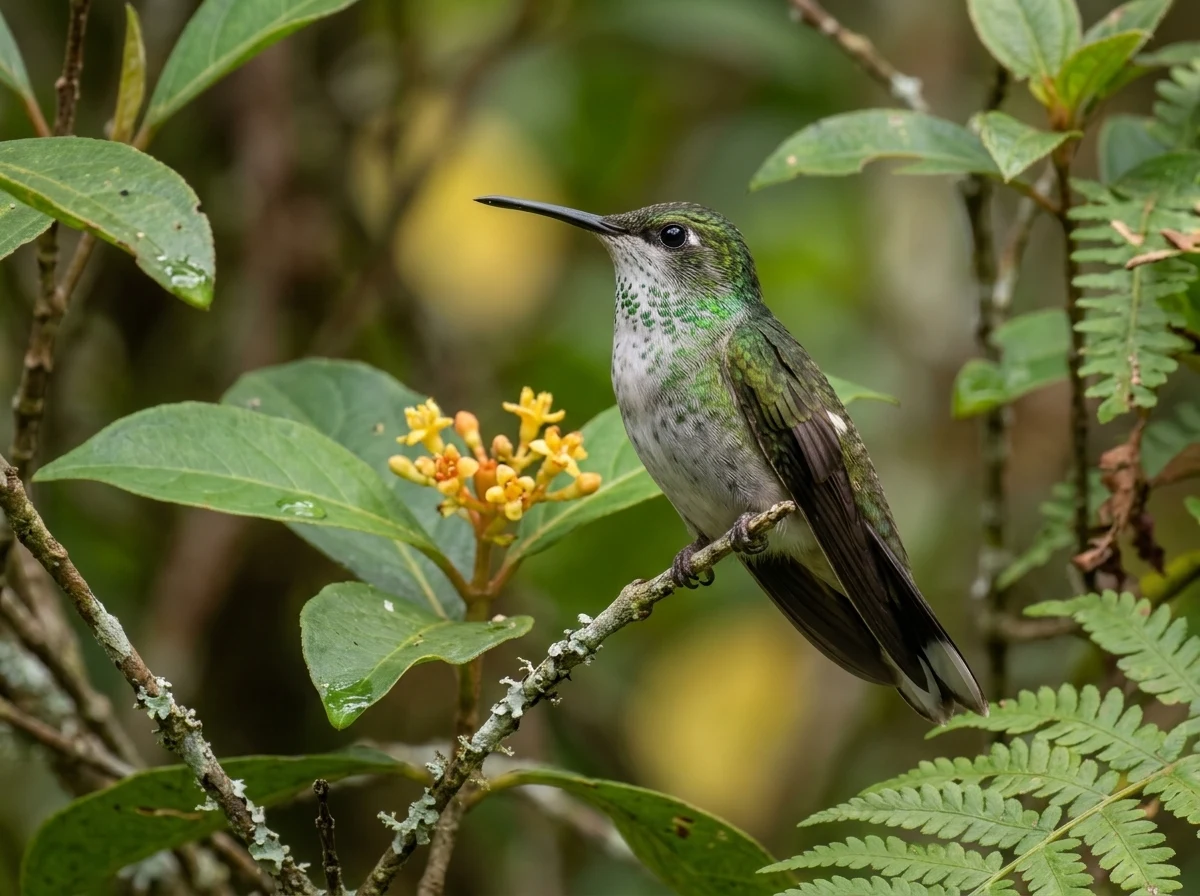
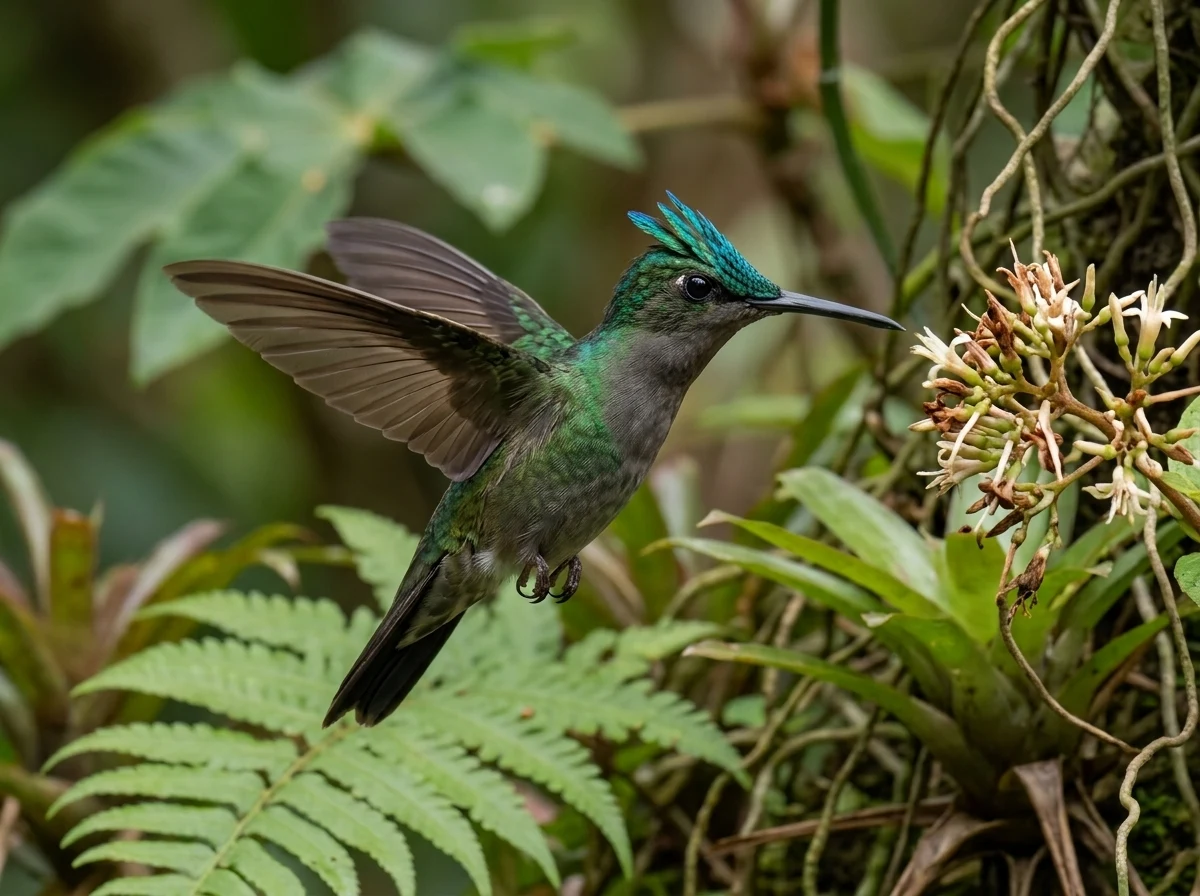
A hummingbird combines a very slender bill, rapid wings, and flower visits, but it does not always hover. Puerto Rican Emerald is endemic; Antillean Crested Hummingbird belongs to a different occurrence pattern documented in the atlas. Place, date, sex, and several views matter more than calling every small flash a hummingbird.
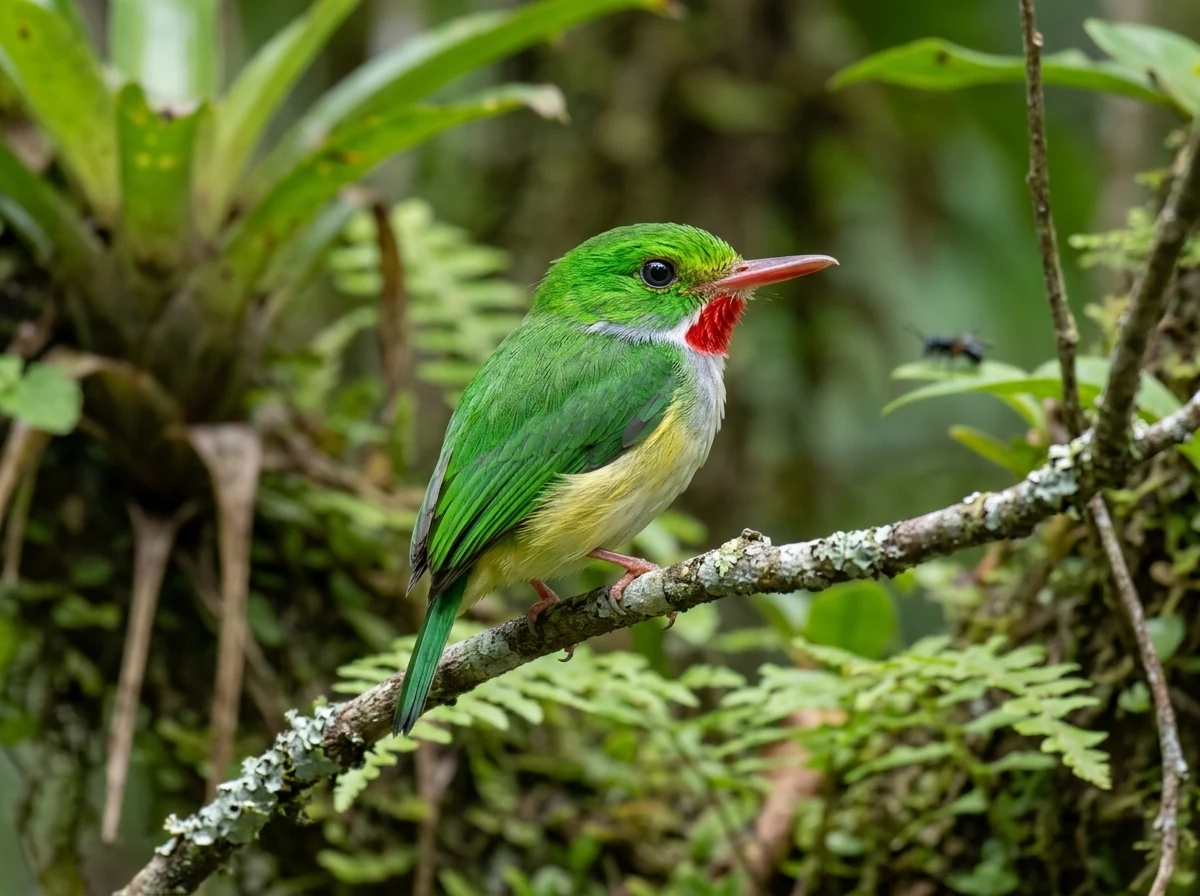
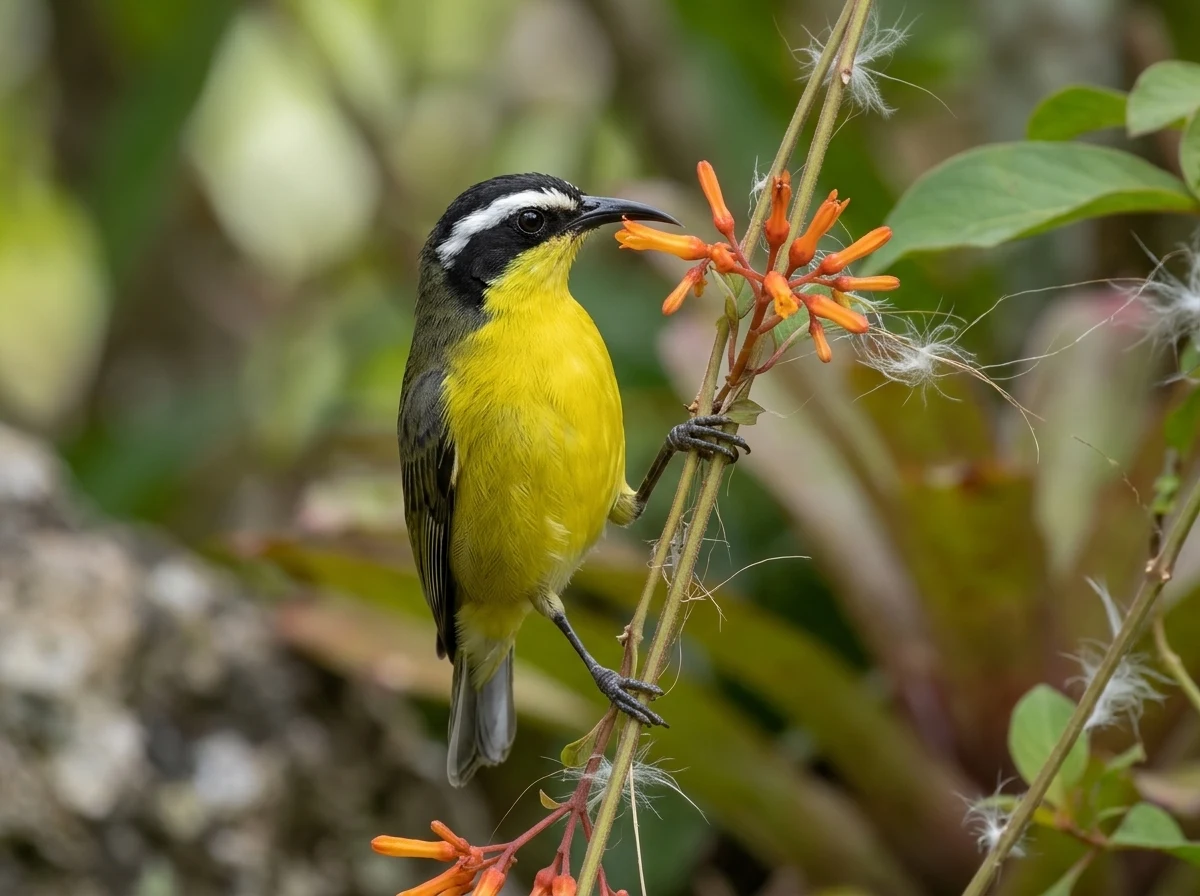
Puerto Rican Tody is compact, with a short flattened bill, green upperparts, and a red adult throat; it often waits on a low perch before darting after an insect. Bananaquit is more restless, with a curved bill, pale eyebrow, and yellow belly, and it explores flowers, foliage, and gardens. Movement and bill separate these three silhouettes better than green alone.
03
Yellow, olive, and black-and-white among leaves
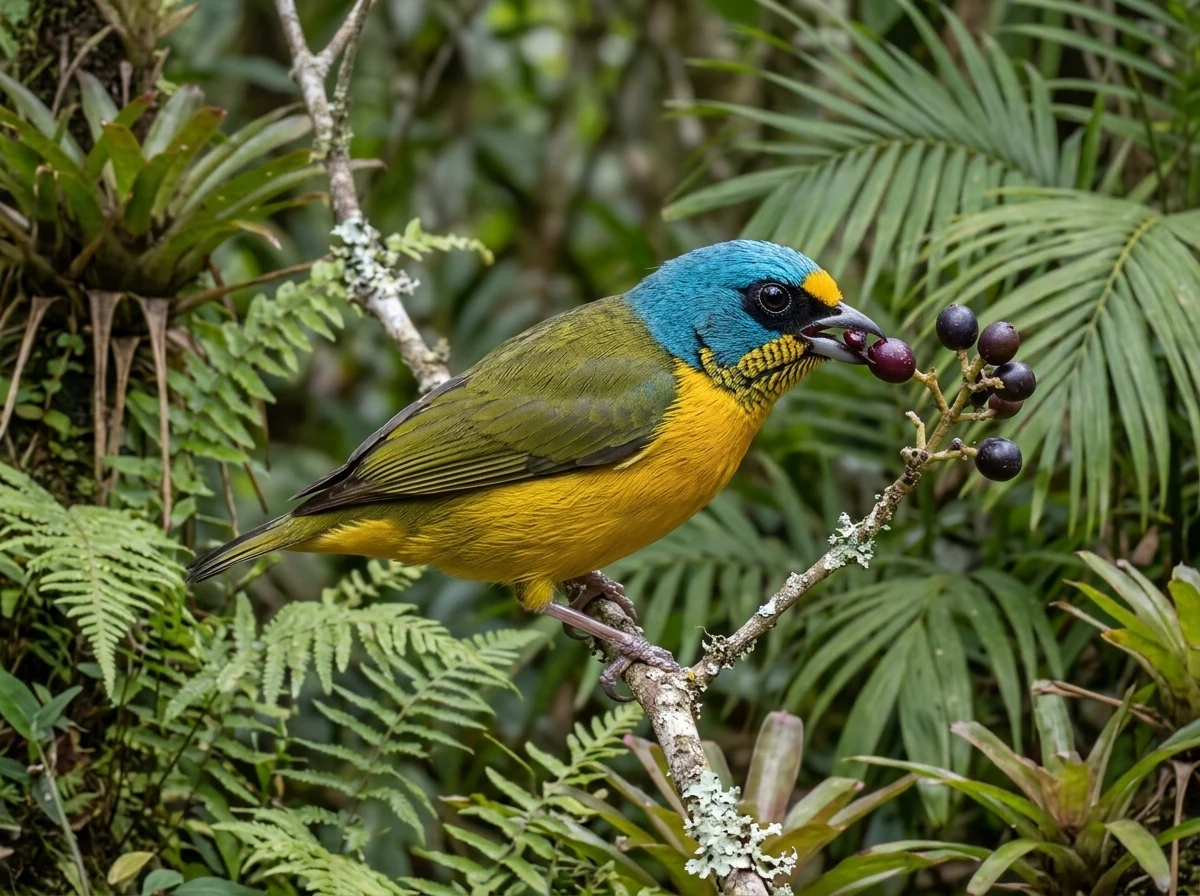
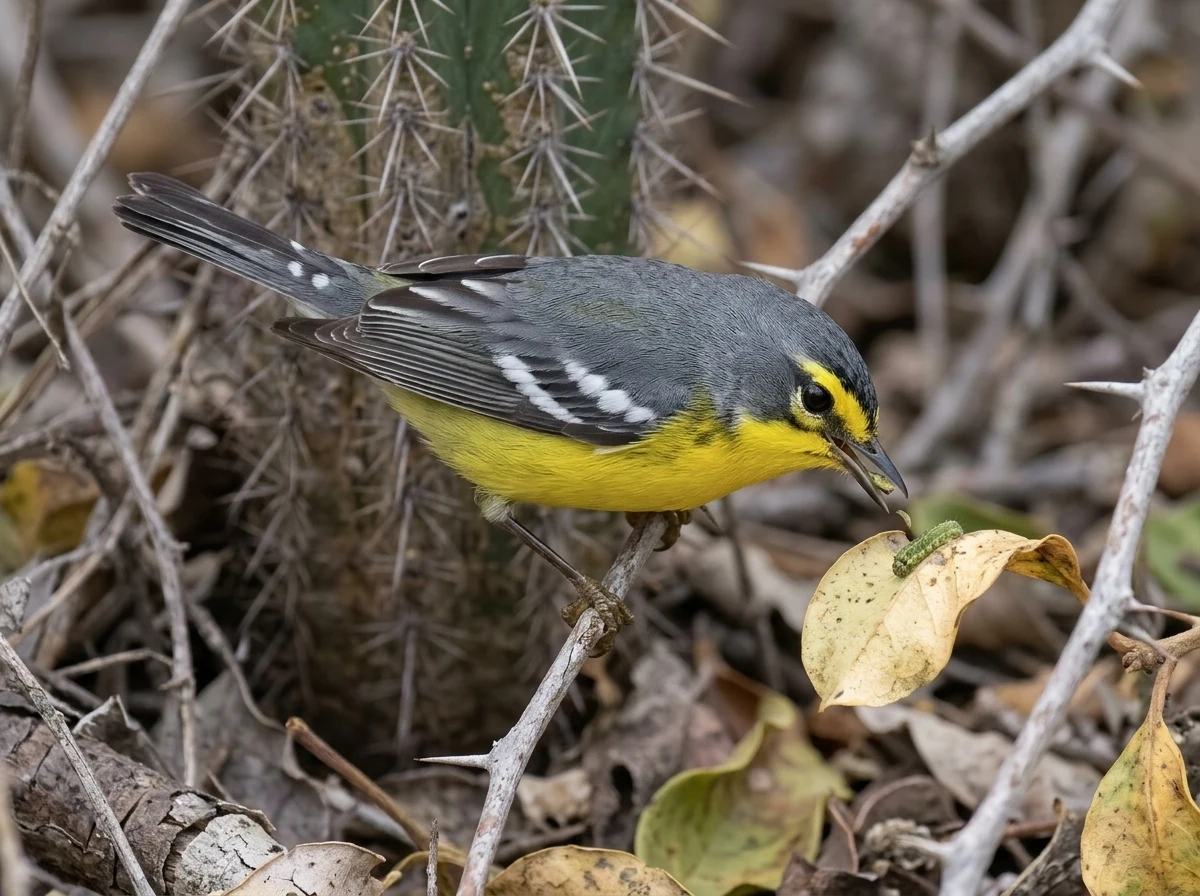
Puerto Rican Euphonia looks compact and short-billed around fruit; the male combines dark and yellow. Adelaide's Warbler shows yellow and gray in dry forest, scrub, and karst. Elfin-woods Warbler is black-and-white and tied to wet and montane forest. They are distinct endemics: similar color never replaces range, forest layer, or behavior.
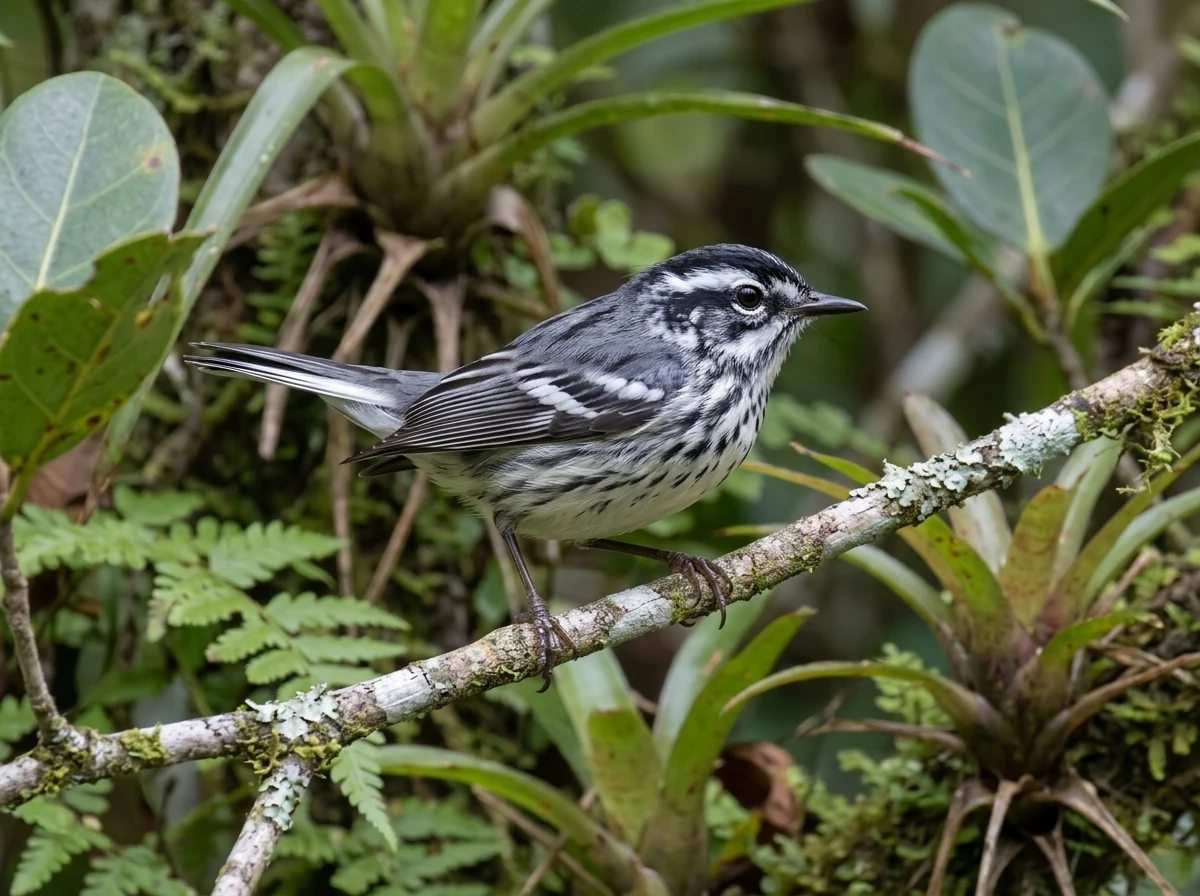
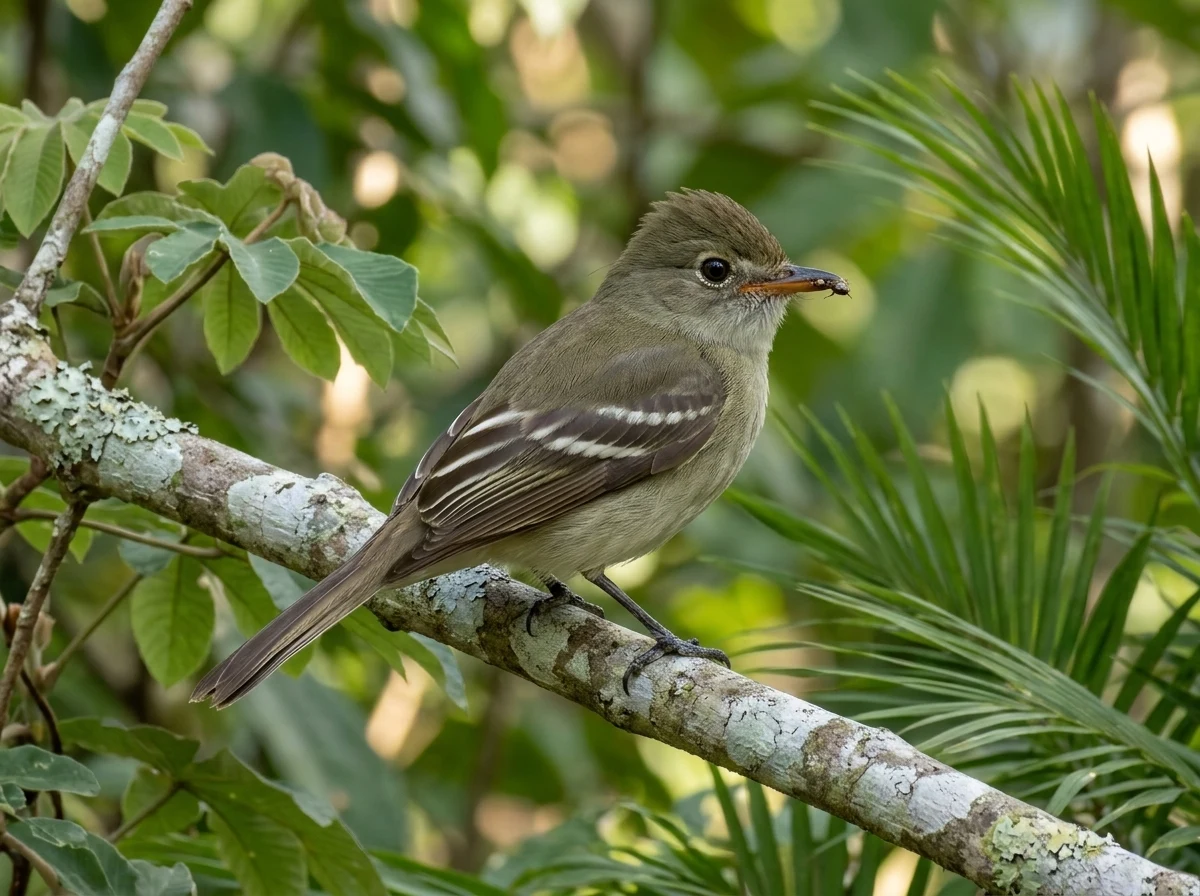
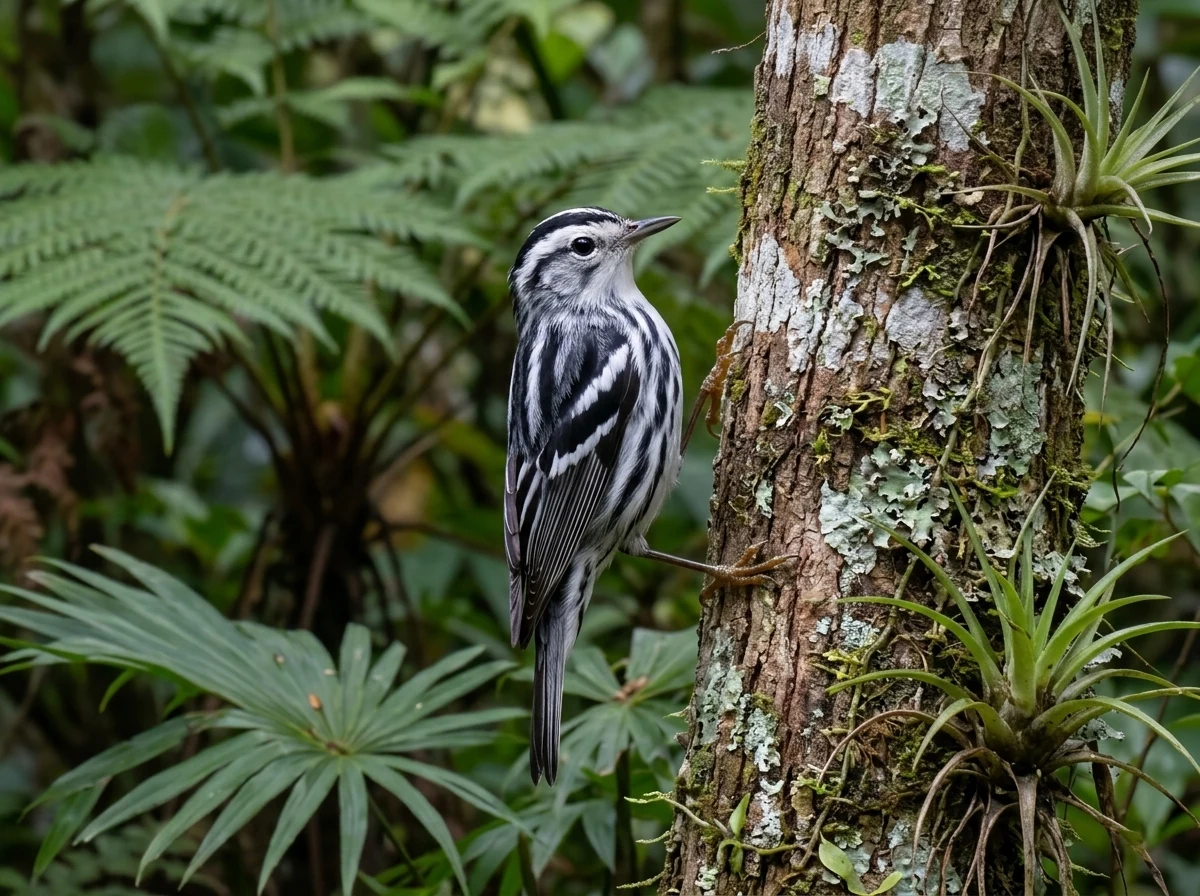
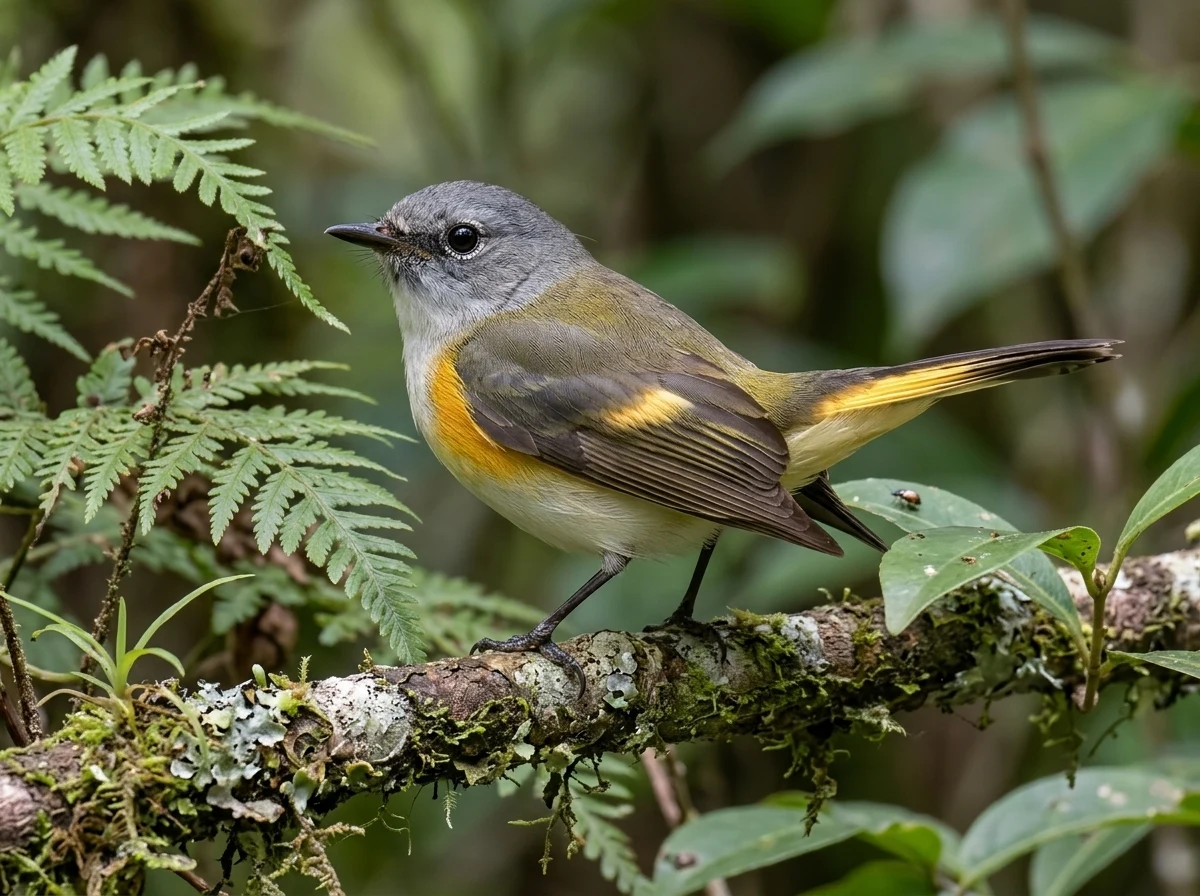
Caribbean Elaenia is olive and often reveals itself through voice, posture, and short sallies from foliage. During migration, Black-and-white Warbler and American Redstart add different patterns: one travels over trunks and branches; the other fans its tail while foraging. Date and microhabitat work as field marks, not guarantees.
04
The little black birds around town are not one species
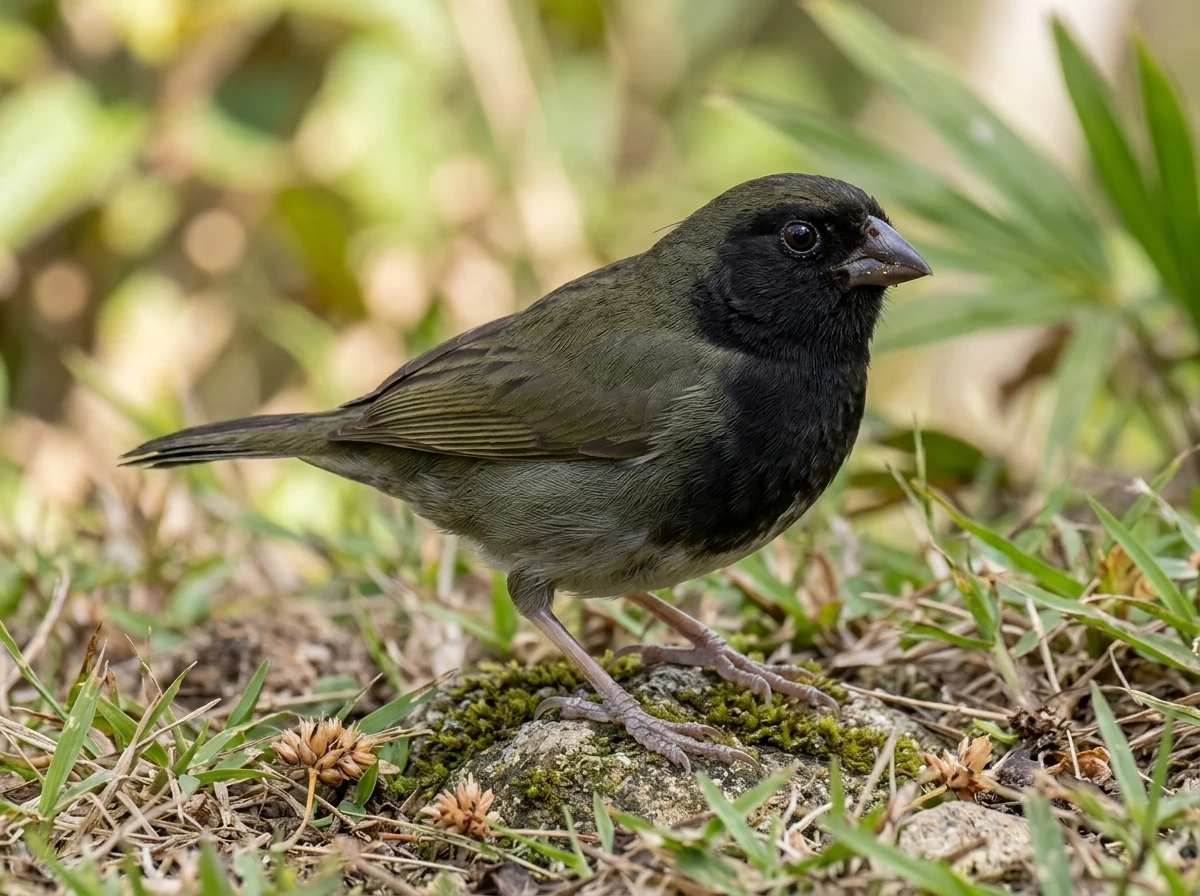
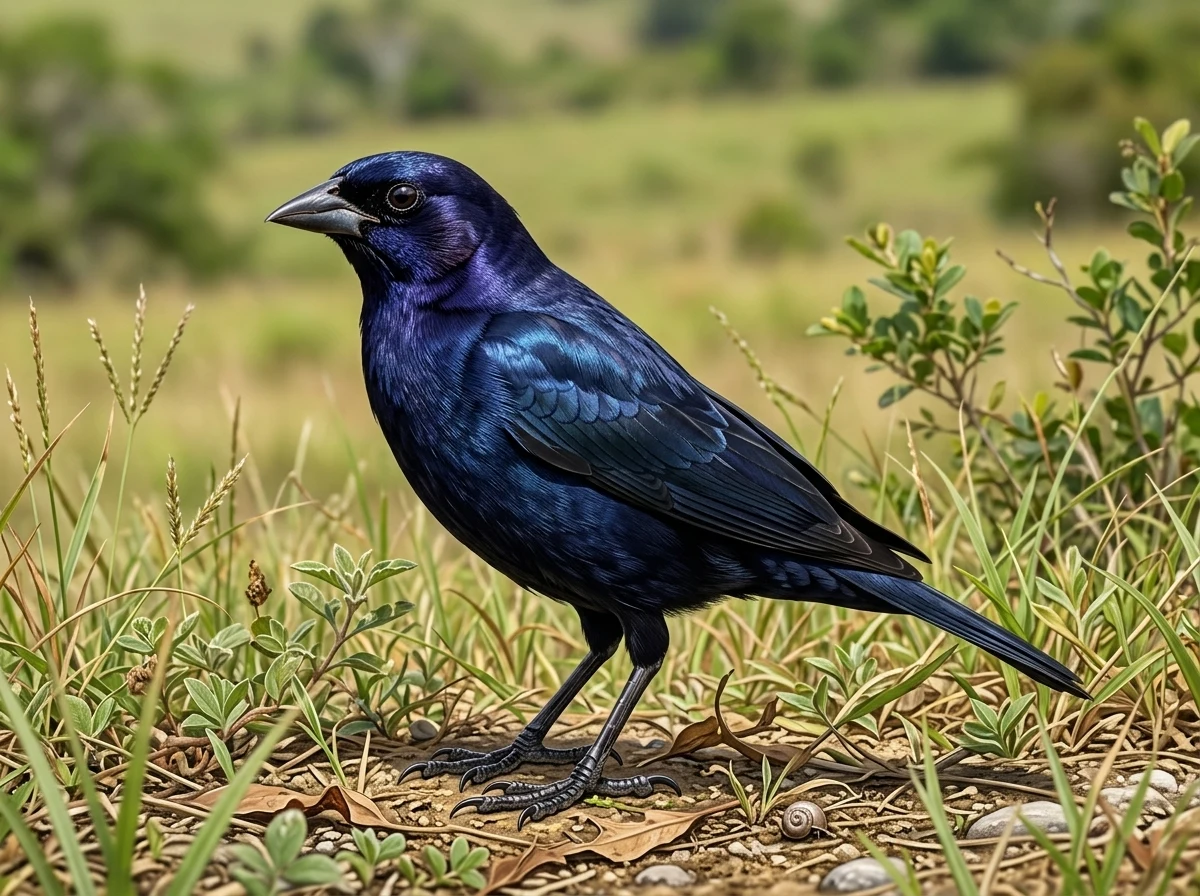
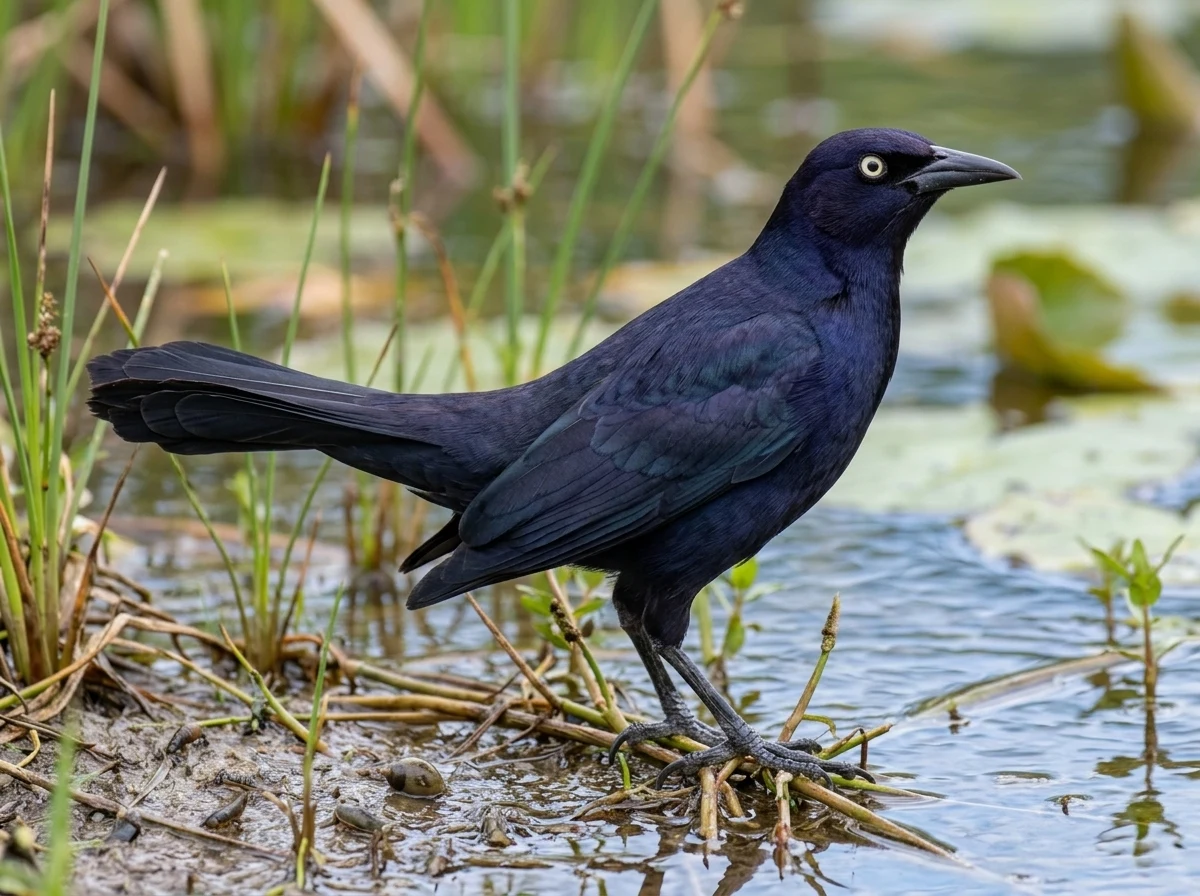
Searches for “little black birds” often begin with a scale illusion. A distant or young Greater Antillean Grackle seen without a reference can look small, but its long tail, sturdy bill, confident walk, and social behavior separate it from truly compact birds. Shiny Cowbird has a shorter tail and relatively finer bill; Black-faced Grassquit is tiny, conical-billed, and tied to grasses and seeds.
Do not decide from black color and apparent size. Record whether it walked on pavement or grass, ate seeds, joined a flock, showed gloss, and how long the tail looked against the body. The black-bird guide develops the grackle, cowbird, oriole, and Yellow-shouldered Blackbird comparison; this page adds scale and grassquit.
05
Ground, garden, and grassland change the answer
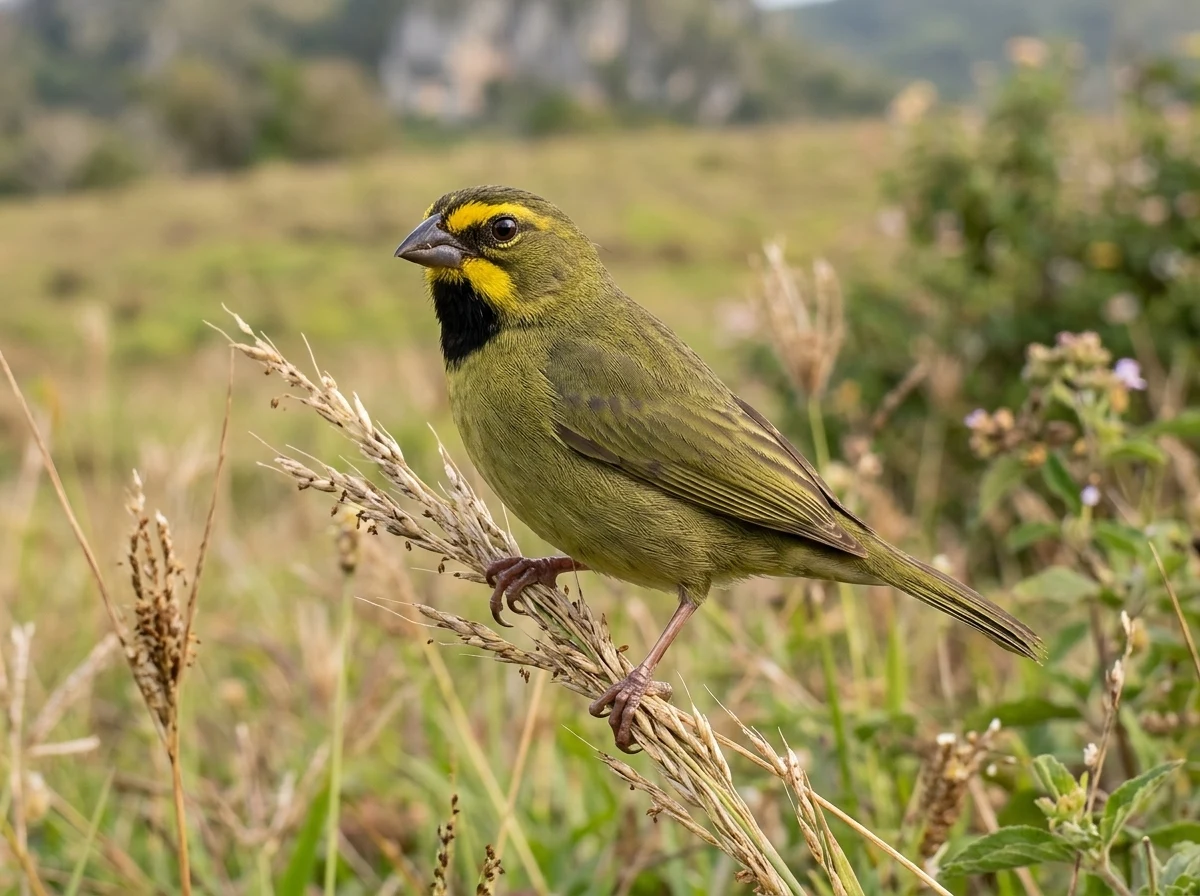
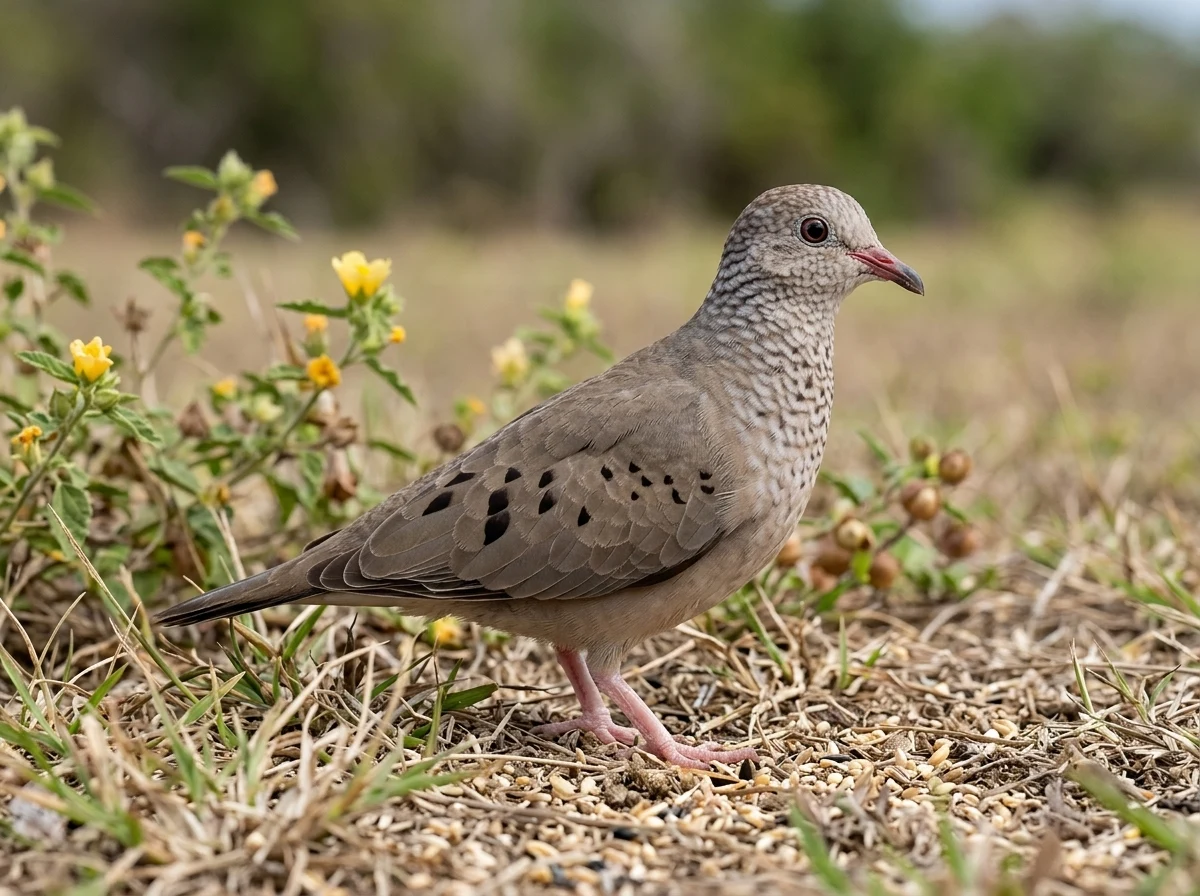
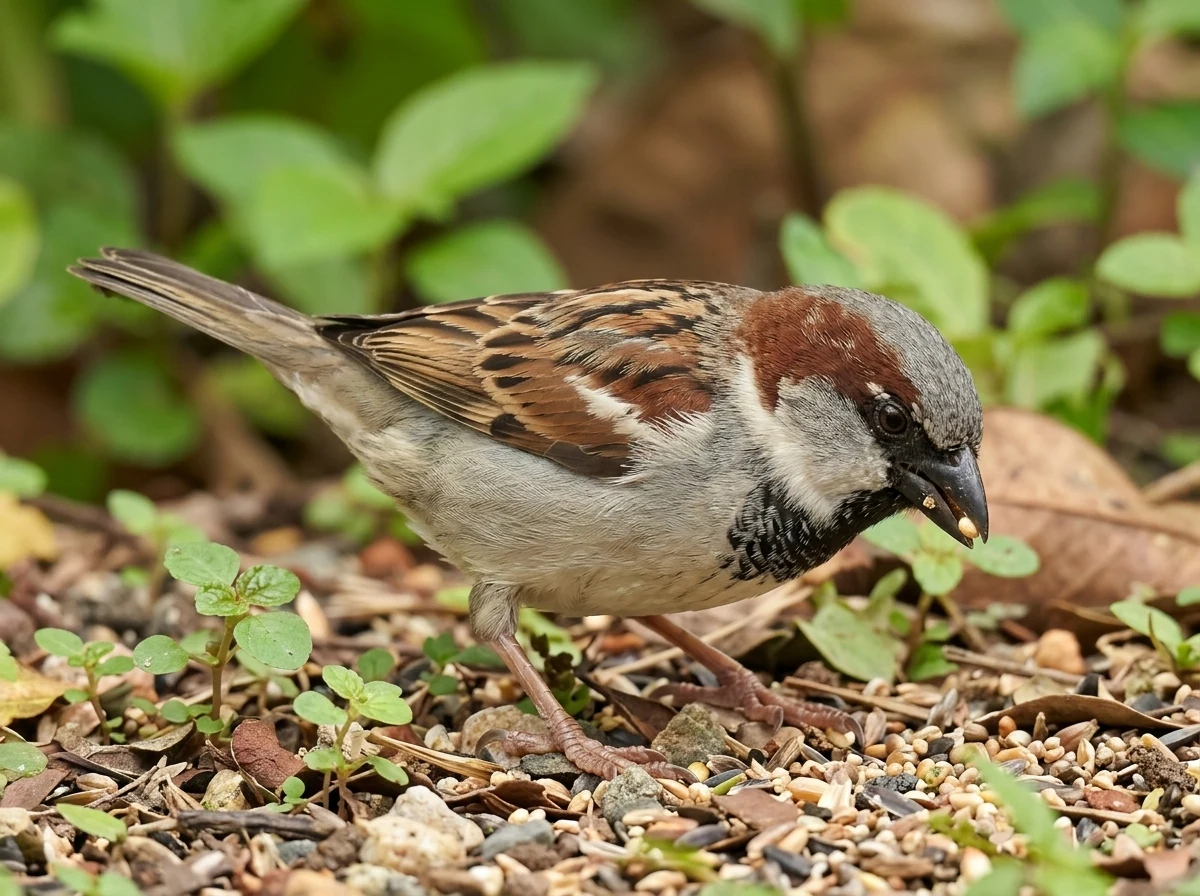
Common Ground Dove is a small rounded pigeon walking in open ground; in flight it keeps a dove's body and wings, not a songbird's horizontal posture. Yellow-faced and Black-faced Grassquits seek seeds among grasses with conical bills. House Sparrow is more closely associated with human structures and requires separating males, females, and young birds.
In gardens, look for Bananaquit's curved bill and flower use; in dry scrub, conical bills and low feeding for grassquits; in wet forest, layer, voice, and movement for warblers, euphonia, elaenia, and tody. Repeat the observation and open the profile: status, habitat, images, and audio narrow the set without turning an illustrated list into a promise of presence.
Linked profiles
Sixteen profiles to compare in context
Begin with shape and movement; open each profile to confirm names, status, habitat, images, audio, and sources.
Sound archive
Hear its voice
Explore real songs and calls. The spectrogram turns each sound into a visual trace of time and frequency.
XC796586Recording 1 of 3call

Play: call by Bobby Wilcox
Choose another recording
Sound recorded by Bobby Wilcox · XC796586 · CC BY-NC-SA 4.0. Visualization by Stichting Xeno-canto voor Natuurgeluiden.
Every recording retains the creator, catalogue number, and license published by Xeno-canto. Metadata via GBIF ↗
01
What is the tiny green-and-red bird in Puerto Rico?
Puerto Rican Tody is a strong possibility when it perched below the canopy with a compact body, short bill, and red throat. If it visited flowers with a slender bill and rapid wings, compare hummingbirds. Confirm place, behavior, and several views.
02
What are the little black birds seen all over Puerto Rico?
They are often Greater Antillean Grackles seen at a distance, but compare Shiny Cowbird and Black-faced Grassquit too. A long tail and sturdy bill favor grackle; compact body and short tail favor cowbird; a conical bill in low grass favors grassquit.
03
Is Bananaquit a true New World warbler?
No. Bananaquit is Coereba flaveola, currently placed in Thraupidae. A local common name does not substitute for scientific classification.
Keep exploring
Connected routes
Sources and review
The evidence is one link away.
These sources support the editorial scope of this guide. Bird profiles also retain their own taxonomy, occurrence, and conservation references.
Reviewed:
01↗02↗03↗04↗05↗06↗
Sociedad Ornitológica Puertorriqueña
Official bird list
Local names, occurrence categories, and the public summary of 17 endemics.U.S. Forest Service Research and Development
Puerto Rico Breeding Bird Atlas
Distribution and breeding timing for 130 species breeding in Puerto Rico and its satellite islands.Cornell Lab of Ornithology
Puerto Rico urban birds guide
Local names, behavior, and actions for living with urban birds.Biodiversidad de Puerto Rico
The hummingbirds of Puerto Rico
Field clues using size, bill, color, and local distribution for the five resident hummingbirds.U.S. Fish and Wildlife Service
Elfin-woods Warbler status
Range, habitat, and basis for federal status.American Ornithological Society
64th supplement to the AOS Check-list
Explains the 2023 Caribbean splits, including Puerto Rican Euphonia.The atlas continues