 AI
AIIdentification
Northern Mockingbird vs Pearly-eyed Thrasher
Two brown, active birds often confused at a distance. This guide resolves the comparison using visible traits and an observation procedure.
Reviewed: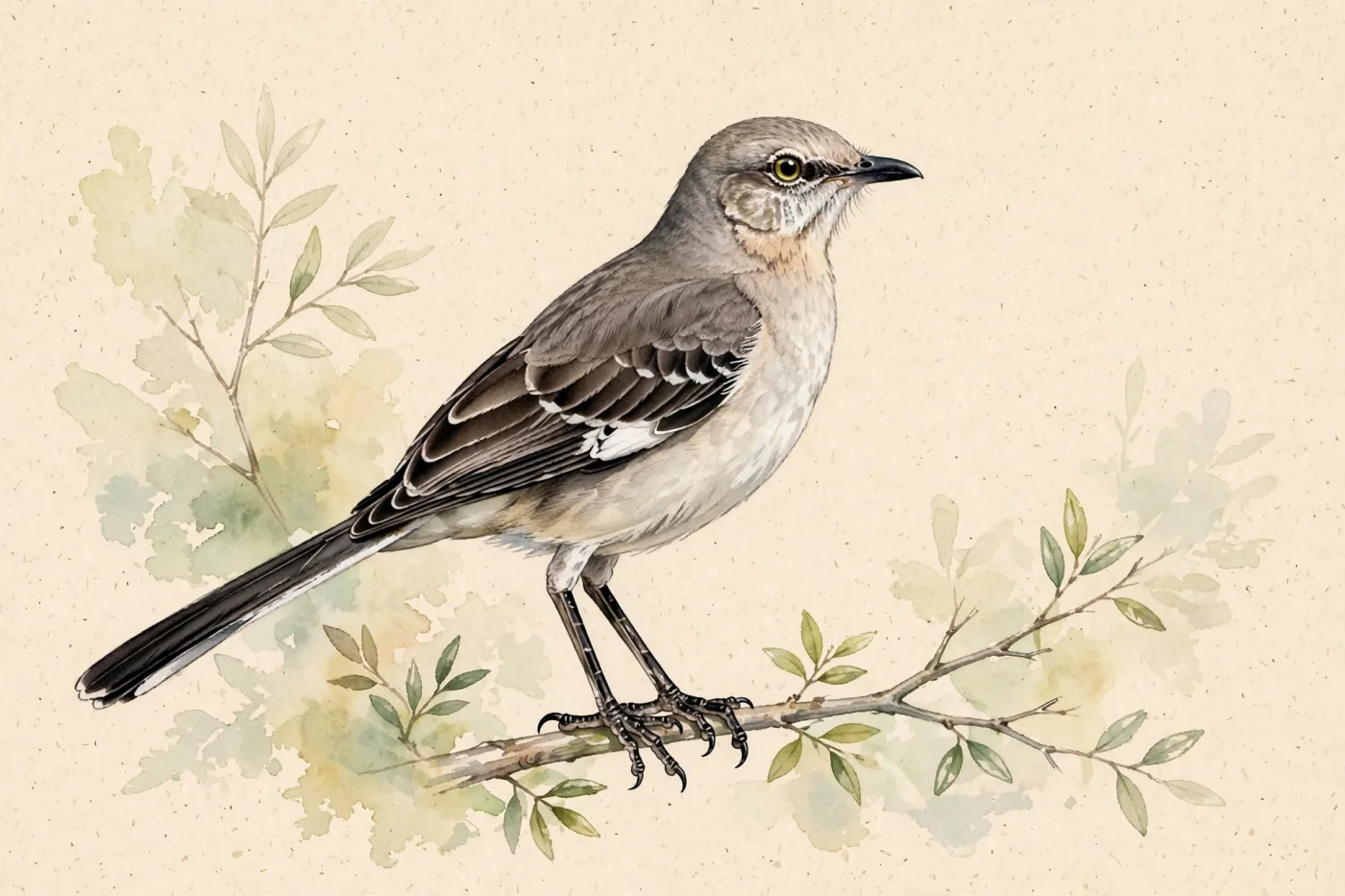
Prepared with AI assistance and linked sources. Illustrations are not field photographs.
Two birds that get confused
The Northern Mockingbird (Mimus polyglottos) and the Pearly-eyed Thrasher (Margarops fuscatus) are both members of the Mimidae family and both occur in Puerto Rico. At a distance, either can look like a brown, active bird, but several visible traits allow a confident separation.
This comparison focuses on what can be observed in the field: overall size, bill shape and color, plumage pattern, and behavior. It does not replace a general bird guide, but it answers the specific question of how to tell these two species apart.
Identification
Key points at a glance
PicoThe thrasher's bill is large and paleYellowish to horn-colored, not black like the mockingbird's.
TamañoThe thrasher is noticeably larger and heavierAbout 11 to 12 inches long according to BirdsCaribbean.
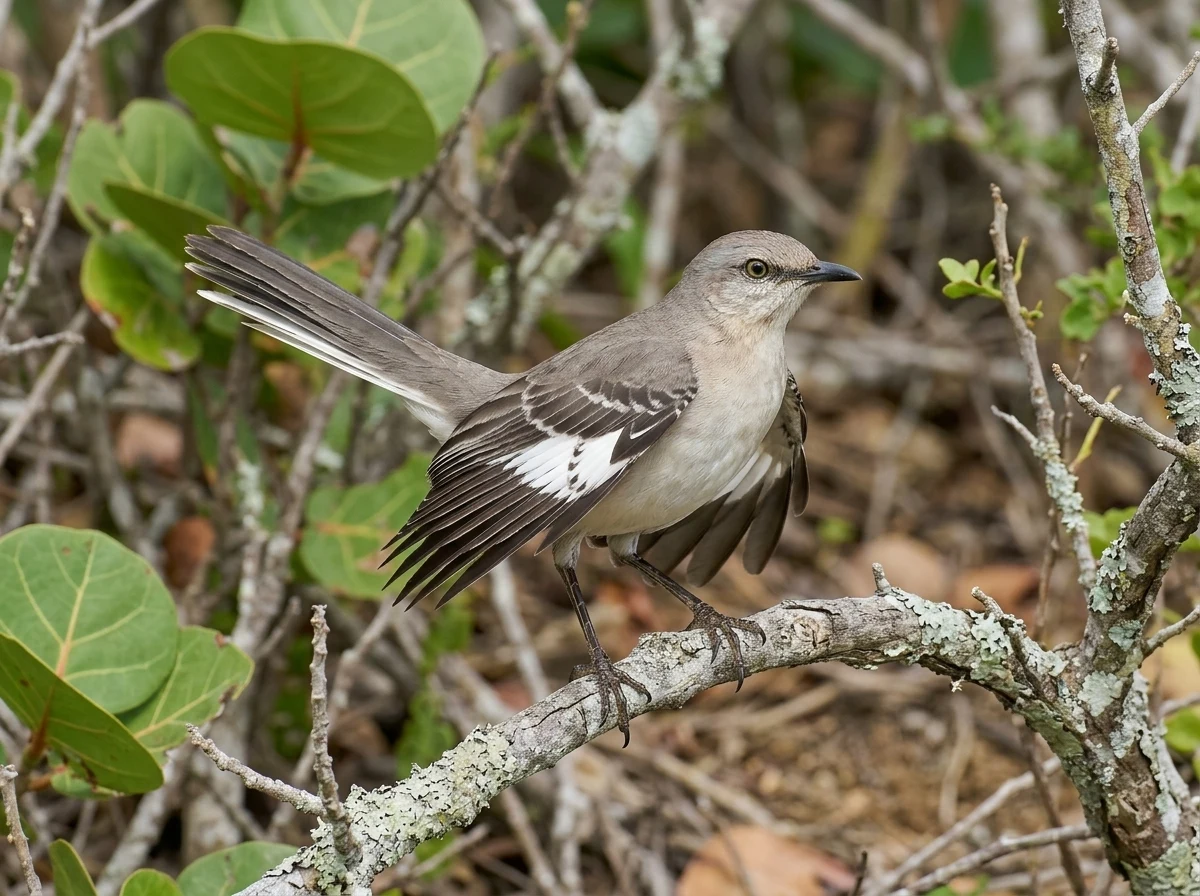
PlumajeThe mockingbird shows white patches on wings and tailThe thrasher lacks that bold white pattern.
01
Size, silhouette, and proportions
The Pearly-eyed Thrasher is a large, robust mimid. BirdsCaribbean states it measures about 11 to 12 inches long. Its body is heavy and the tail is long. The Northern Mockingbird, by contrast, is slimmer and lighter, with a long tail it often holds upright or in motion.
On a branch or on the ground, the size difference is usually evident when the two species are seen close together or at the same scale. The thrasher looks bulkier. The mockingbird has a finer body and long black legs, according to the species description.
02
Bill and plumage: the decisive marks
The Pearly-eyed Thrasher's bill is large, pale, and yellowish to horn-colored. BirdsCaribbean describes it as a large pale bill and notes it is yellowish to horn-colored, not black. The Northern Mockingbird has a black bill, shorter and thinner, minimally curved according to the species description.
Plumage also separates the two species. The Pearly-eyed Thrasher is medium to dark brown above and white with brown streaking below, according to BirdsCaribbean. The Northern Mockingbird is gray to brown above and paler below, with white patches on the wings and tail visible in flight. Its wings show fine white lines, and in flight it reveals white patches on the wings and two longitudinal white stripes on the tail.
03
Behavior and habitat
The Pearly-eyed Thrasher is an aggressive, opportunistic generalist. BirdsCaribbean describes it as occupying a variety of forest and scrub habitats, from seashore to mountain tops, and also living in urban areas, farms, and orchards. It is known for preying on eggs and chicks of other birds and for competing for nesting cavities. In Puerto Rico, it competes for nesting cavities with the Critically Endangered Puerto Rican Parrot.
The Northern Mockingbird is a bird of open areas, open woodlands, and forest edges, and is common in urbanized areas. It is omnivorous and consumes fruit, invertebrates, and small vertebrates. It feeds both on the ground and in vegetation. Its territorial behavior is aggressive: it defends its nest from other birds and animals, including humans, and can mimic calls of other birds and artificial sounds.
04
Observation procedure and checklist
To separate these two species, follow a fixed order using only traits supported by the sources. First, look at the bill: if it is large, pale, and yellowish to horn-colored, it is a Pearly-eyed Thrasher; if it is black, short, and thin, it is a Northern Mockingbird. Second, assess size and silhouette: a robust bird 11 to 12 inches long with a long tail suggests a thrasher; a slimmer bird with a long tail and long legs suggests a mockingbird. Third, look for white patterns: white patches on the wings and two white stripes on the tail indicate a mockingbird. Fourth, observe the breast pattern: brown streaking on a white background indicates a thrasher.
Checklist: 1) Is the bill large and pale? 2) Is the bird robust and about 11 to 12 inches long? 3) Does the breast have brown streaking on a white background? 4) Is the bird slim with a long tail and long legs? 5) Is the bill black and thin? 6) Are white patches visible on the wings and tail? If you answered yes to questions 1 through 3, it is likely a Pearly-eyed Thrasher. If you answered yes to questions 4 through 6, it is likely a Northern Mockingbird.
Linked profiles
The two species
Profiles of the birds compared in this guide.
AI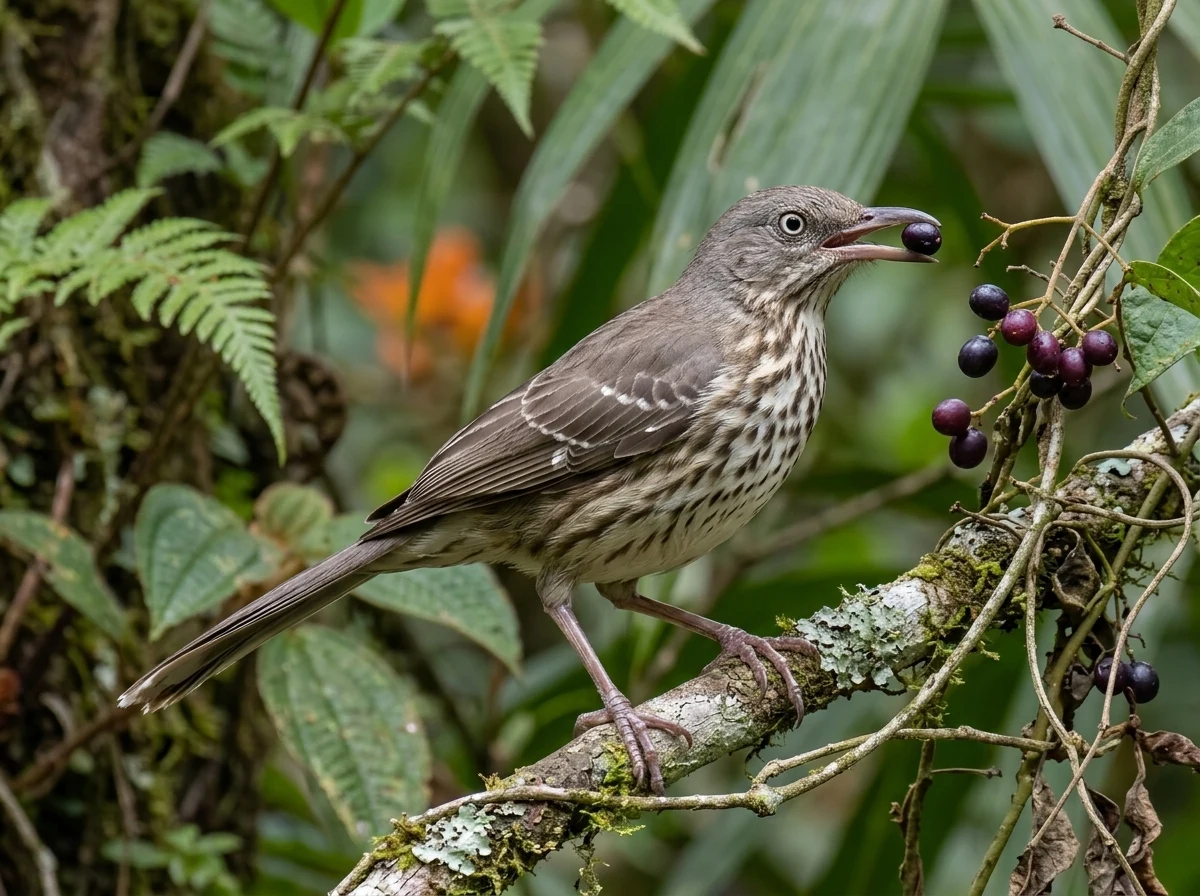 AI
AI01
What is the most reliable difference between the Northern Mockingbird and the Pearly-eyed Thrasher?
The bill. The Pearly-eyed Thrasher has a large, pale, yellowish to horn-colored bill, while the Northern Mockingbird has a black, shorter, and thinner bill. If the bill is clearly large and pale, it is a thrasher.
02
Is the Pearly-eyed Thrasher larger than the Northern Mockingbird?
Yes. The Pearly-eyed Thrasher measures about 11 to 12 inches long and is robust. The Northern Mockingbird is slimmer and lighter, with a more streamlined silhouette.
03
How does the thrasher's bill differ from the mockingbird's?
The thrasher's bill is large, pale, and yellowish to horn-colored. The mockingbird's is black, shorter, and thinner, minimally curved.
04
Do both species mimic sounds?
The Northern Mockingbird is known for mimicking calls of other birds and artificial sounds. The Pearly-eyed Thrasher gives one- to three-note whistled phrases and guttural calls, but mimicry is not highlighted in the consulted sources as its main trait.
05
Where is each species most likely to be seen in Puerto Rico?
The Pearly-eyed Thrasher occupies a variety of forest and scrub habitats, from seashore to mountain tops, and also urban areas, farms, and orchards. The Northern Mockingbird prefers open areas, open woodlands, forest edges, and urbanized areas. Both species are present in Puerto Rico according to the consulted sources.
Keep exploring
Connected routes
Sources and review
The evidence is one link away.
These sources support the editorial scope of this guide. Bird profiles also retain their own taxonomy, occurrence, and conservation references.
Reviewed:
The atlas continues