 AI
AIIdentification · Thrushes and thrashers
Pearly-eyed Thrasher vs. Red-legged Thrush: Puerto Rico's two 'zorzales'
Two birds of roughly similar size that share the name 'zorzal' in Puerto Rico, but belong to different families and behave very differently.
Reviewed:The short answer
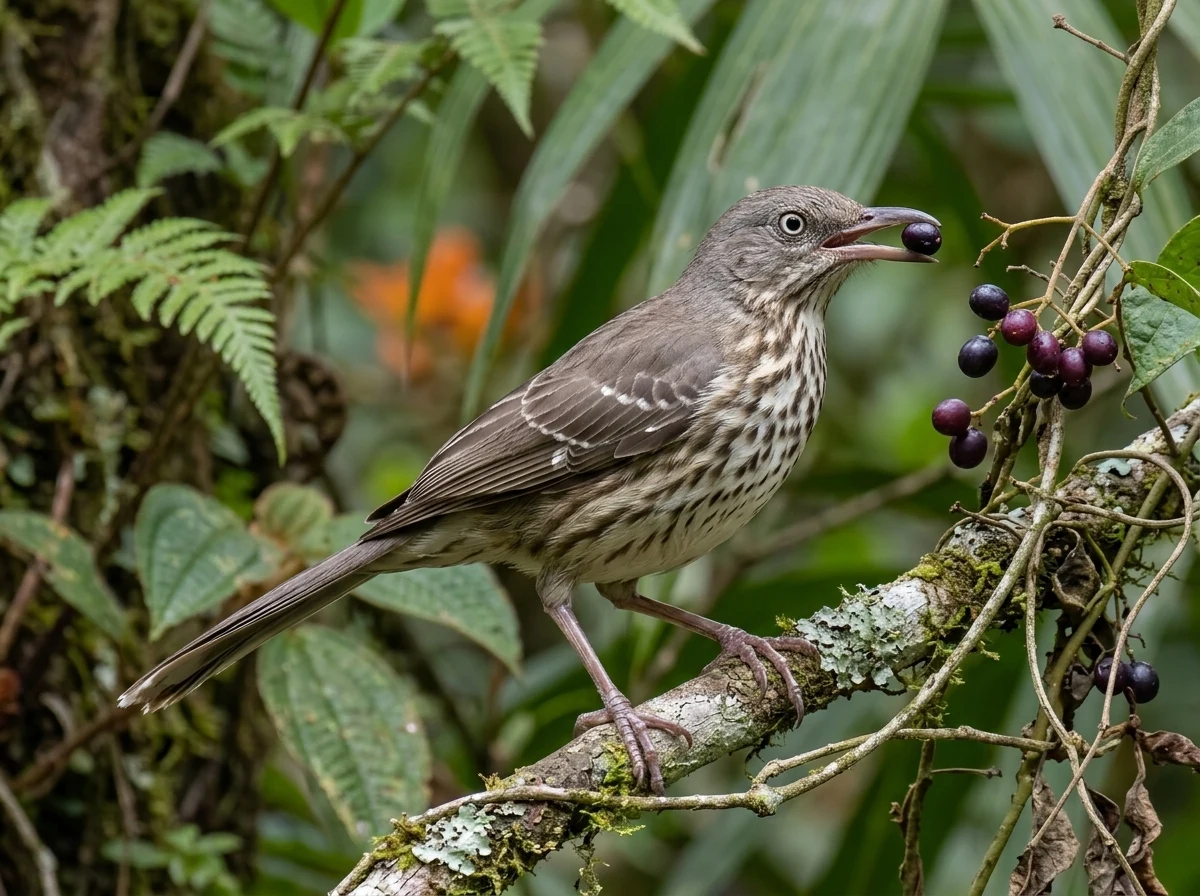
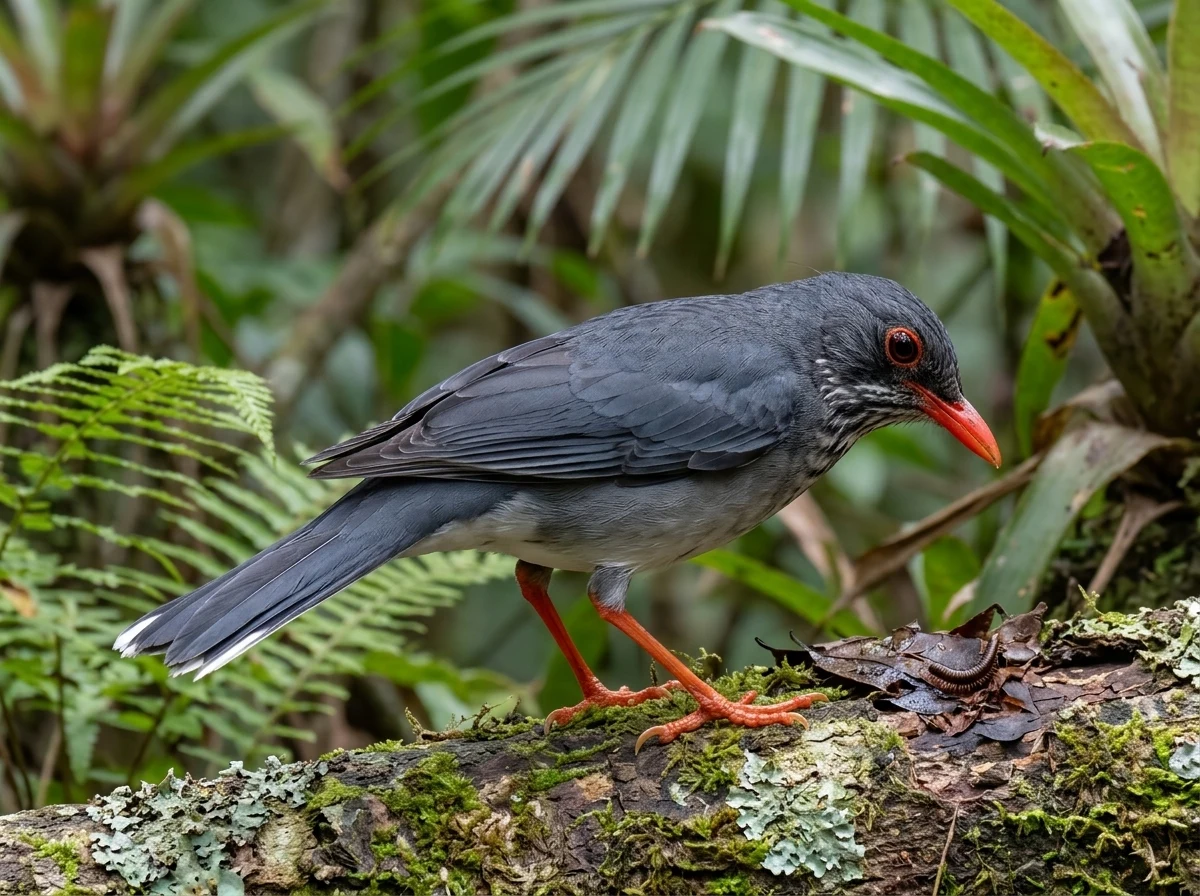
The Pearly-eyed Thrasher (Margarops fuscatus, Zorzal Pardo) is brown above, with a white, brown-streaked breast, a pale bill, and a whitish eye that gives it its name. The Eastern Red-legged Thrush (Turdus ardosiaceus, Zorzal Patirrojo), also called zorzal de patas coloradas, is blue-gray with red legs, bill, and eye-ring and a black-and-white throat.
Although people call both 'zorzal', the Pearly-eyed Thrasher is a mimid (the mockingbird family) and the Red-legged Thrush is a turdid, a true thrush. The Puerto Rico Ornithological Society's official catalog lists the thrasher as 'Zorzal Pardo/Chucho'. Both are common residents of the main island and neither is threatened, but the thrasher is known for eating other birds' eggs and nestlings and for competing with the Puerto Rican Parrot for nest cavities.
Identification · Thrushes and thrashers
The two zorzales by the numbers
77 %hexagons with Pearly-eyed Thrasher370 of 479 in the atlas, from 781 records.
63 %hexagons with Red-legged Thrush303 of 479, from 520 records.
~80islands with Pearly-eyed ThrasherAcross the Caribbean, but absent from Cuba, Hispaniola, and Jamaica.
01
Field marks: brown and streaked vs. gray and red
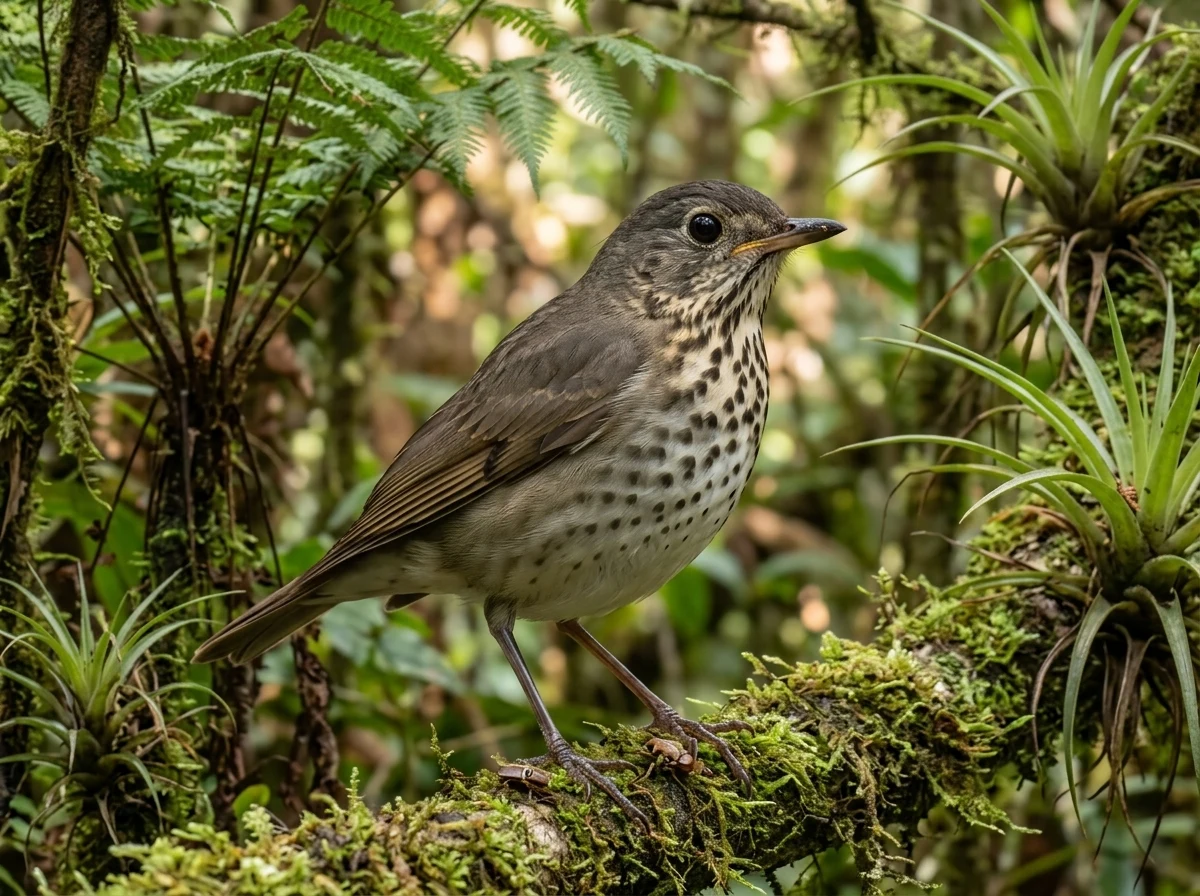
The Pearly-eyed Thrasher is a big, long-tailed bird with a heavy bill. Look for three things: brown back, white breast with brown streaks, and a pale, almost white eye that shows even at a distance. The tail corners are tipped white and the bill is pale, often yellowish. It weighs about 114 g.
The Red-legged Thrush is blue-gray above, with red or at least orange legs, a red to orange bill, a red eye-ring, and a black-and-white throat. Its tail corners are also white, and it often holds its tail somewhat raised. It weighs about 78 g. If you see red on the legs and bill, it is the thrush; if you see brown streaks on the breast, it is the thrasher.
02
Where each one lives
The Pearly-eyed Thrasher is a common resident throughout the main island and also on Mona, Vieques, and Culebra. It uses gardens, coffee farms, mountain forest, thickets, mangroves, coastal palm groves, summits, and urban areas at any elevation. Across the Caribbean it lives on about 80 mostly small islands and reaches its highest relative abundance in wet forest.
The Red-legged Thrush is common and widespread on the main island, but on Vieques it is only a rare visitor. It lives in forests and woodlands at all elevations, coffee farms, and gardens, and it tolerates disturbed areas and second growth. Outside Puerto Rico it occurs on Hispaniola and Dominica. In the atlas, the thrasher appeared in 77% of hexagons and the thrush in 63%.
03
The Pearly-eyed Thrasher as a nest predator
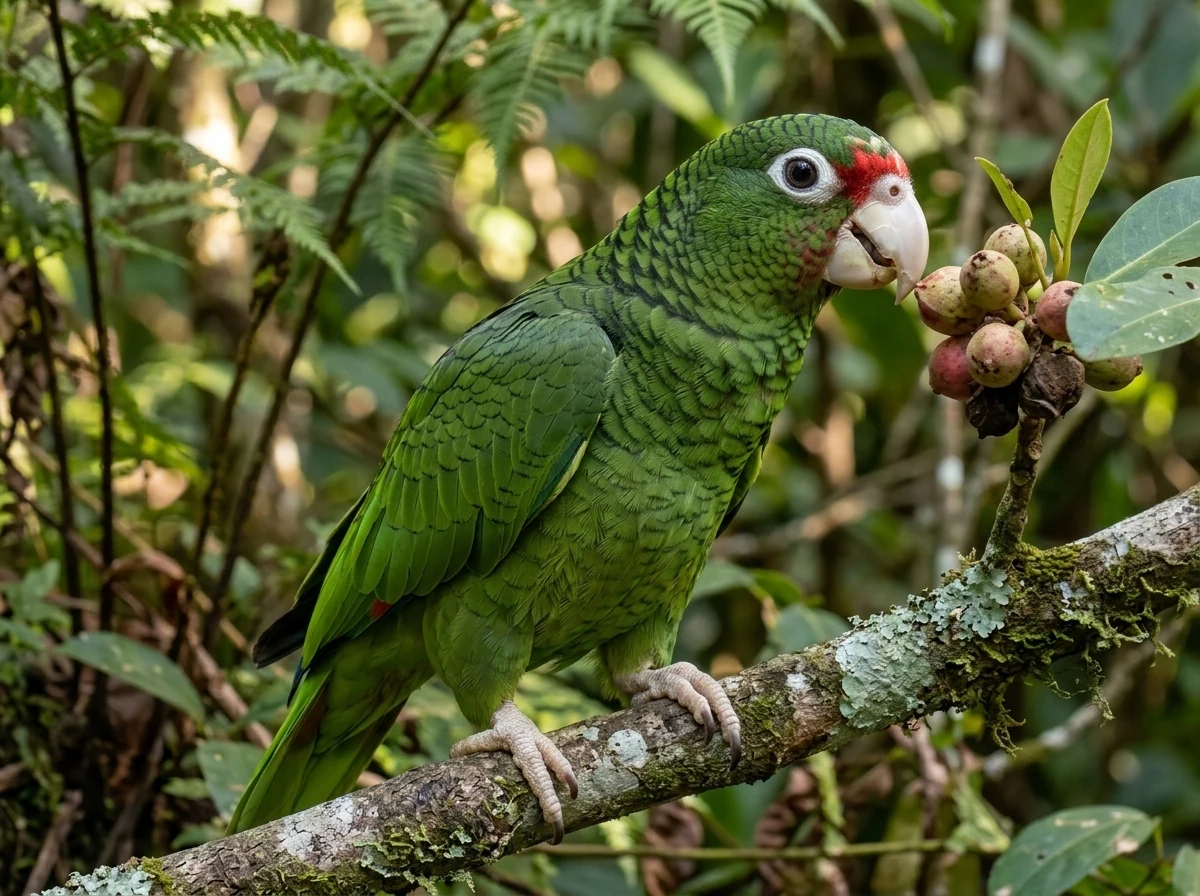
The Pearly-eyed Thrasher is an opportunistic omnivore, and specialists describe it as a persistent nest predator and a competitor for nest sites. It eats the eggs and nestlings of many small birds. In Puerto Rico it competes with the Puerto Rican Parrot for cavities and has been documented destroying parrot eggs and killing parrot nestlings.
It is also one of the predators of eggs and chicks of the ground-nesting Puerto Rican Nightjar. That behavior is why its name comes up so often in recovery programs for threatened species. Still, it is a native bird, a natural part of the ecosystem, and it should not be harassed or persecuted: nest management belongs to official programs.
04
Nests and breeding season
The Pearly-eyed Thrasher usually nests in cavities, though it sometimes builds open nests in shrubs or trees, and also on or inside buildings; on Mona, nests have been found in caves and cliff crevices. The nest is bulky, made of twigs, sticks, dry grasses, and roots. Published reports place breeding from December to September, with seasons of 8 to 11 months and two to six broods.
The Red-legged Thrush builds a bulky nest of leaves, grass, and other material, usually in a tree, sometimes in a palm or on a stump, and lays two to three eggs. The literature gives breeding from January to September with a peak from April to July. For both species, the atlas found activity throughout the year, most concentrated from March to June.
05
Diet and behavior in the yard
The Red-legged Thrush has a broad diet: fruit and seeds, invertebrates, and small vertebrates. It lives in forests, coffee farms, and gardens, tolerates second growth, and often holds its tail somewhat raised, a useful clue when glimpsed at a distance in vegetation.
The Pearly-eyed Thrasher is also omnivorous: it eats large insects, fruit, and occasionally lizards, frogs, and other birds' eggs or nestlings. Specialists describe it as belligerent and opportunistic, and it turns up in forests as well as yards, farms, and urban areas. The thrasher's page has a recording made in San Germán with its spectrogram.
06
Other 'zorzales' and 'zorzalitos' in Puerto Rico
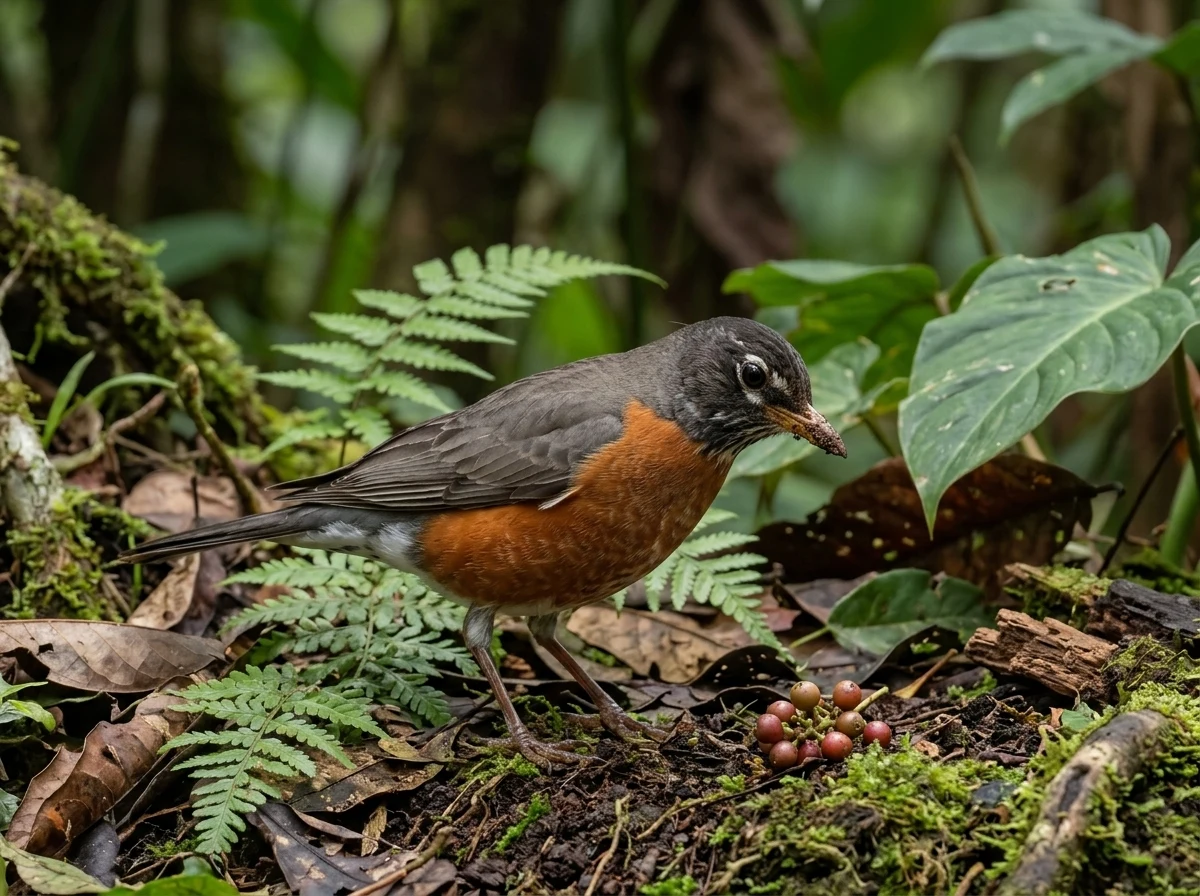
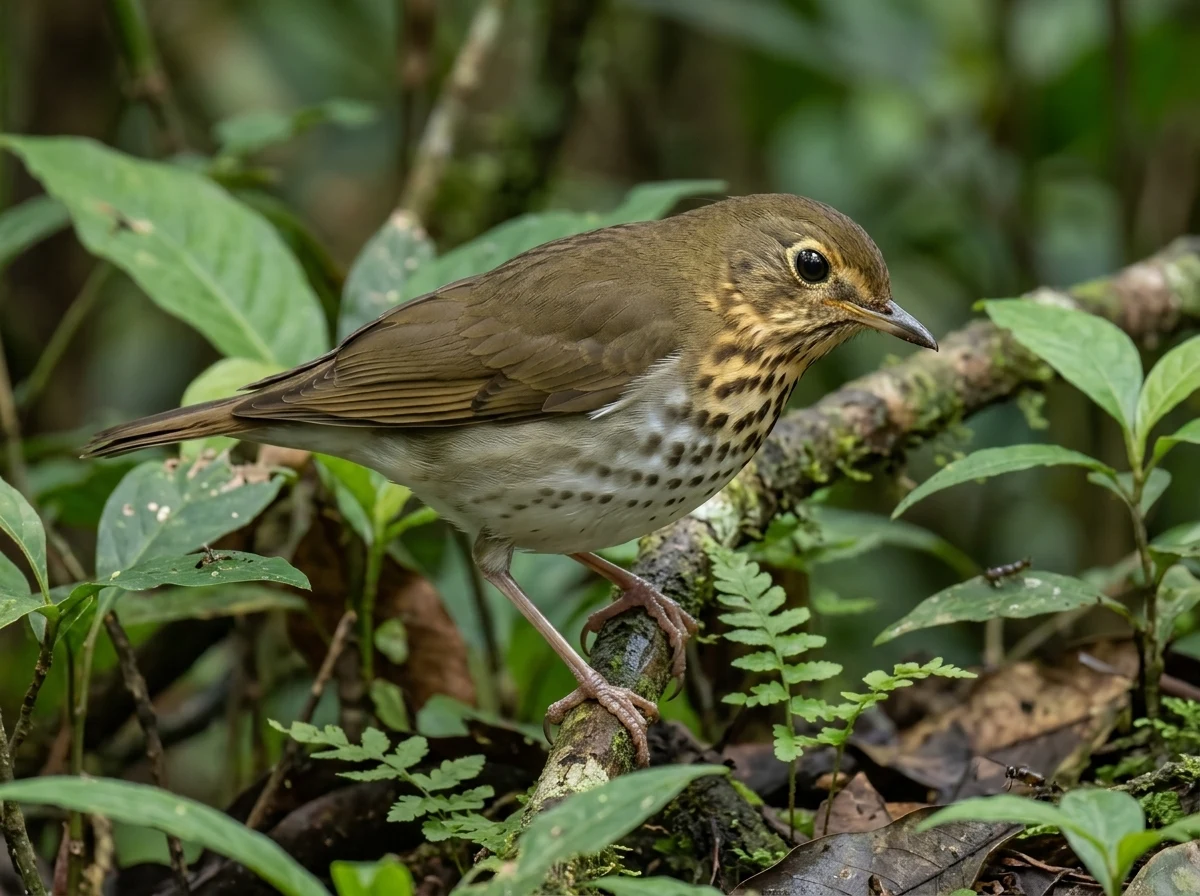
The official catalog includes other birds named zorzal: the American Robin (Zorzal Robín) and several migrant Catharus thrushes, such as Swainson's, Gray-cheeked, Bicknell's, Veery, and Wood Thrush (all called zorzalitos). All are accidental or rare on the island, so a sighting deserves photos.
Taxonomically, Puerto Rico's Red-legged Thrush is now treated as the Eastern Red-legged Thrush (Turdus ardosiaceus), split from the Western Red-legged Thrush (Turdus plumbeus); that is why many older sources and the atlas use the name Turdus plumbeus. The Pearly-eyed Thrasher is the only member of its genus, Margarops.
Linked profiles
Puerto Rico's zorzales
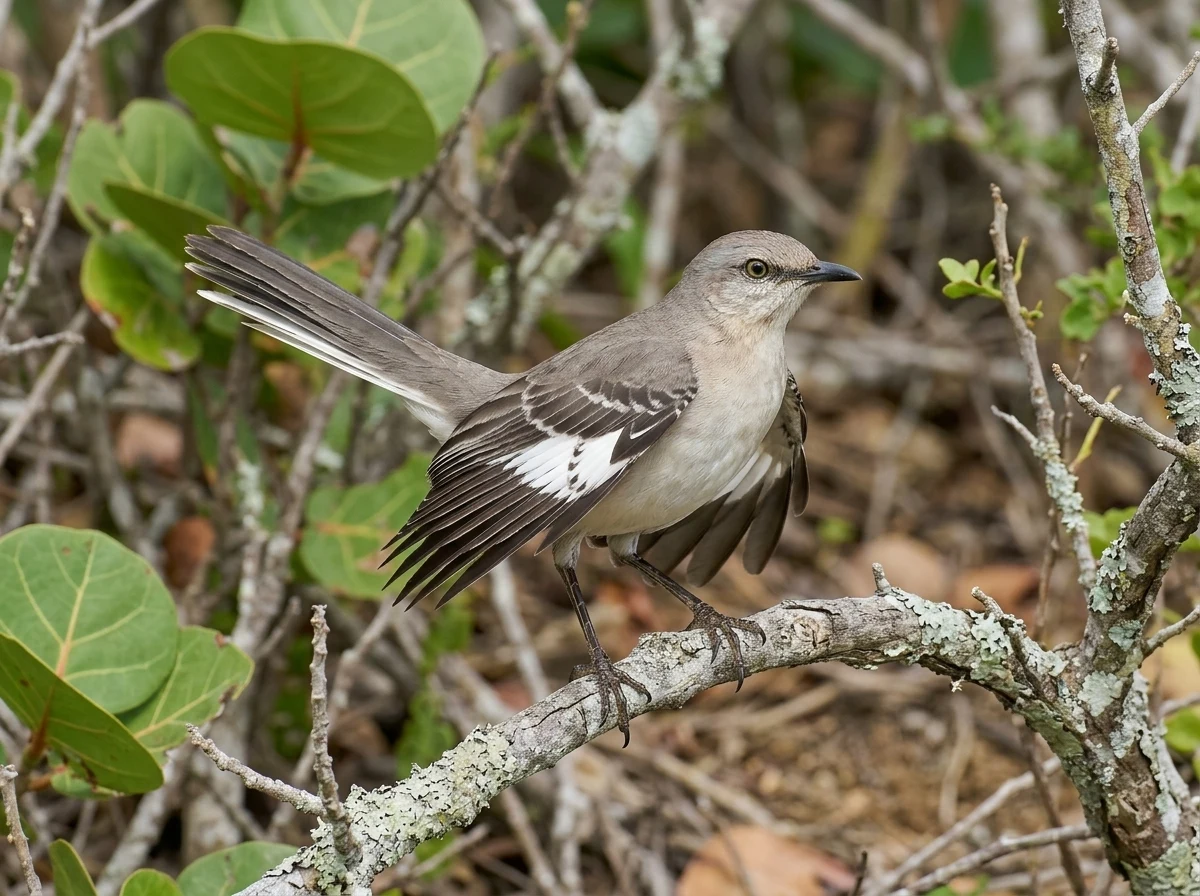
Compare the two resident zorzales with the migrant thrushes, the Northern Mockingbird (the thrasher's mimid relative), and the parrot the thrasher competes with.
Sound archive
Hear its voice
Explore real songs and calls. The spectrogram turns each sound into a visual trace of time and frequency.
XC877751Recording 1 of 3song

Play: song by Bobby Wilcox
Choose another recording
Sound recorded by Bobby Wilcox · XC877751 · CC BY-NC-SA 4.0. Visualization by Stichting Xeno-canto voor Natuurgeluiden.
Every recording retains the creator, catalogue number, and license published by Xeno-canto. Metadata via GBIF ↗
01
What is the zorzal pardo bird?
The zorzal pardo is the Pearly-eyed Thrasher (Margarops fuscatus), a common native bird in Puerto Rico. It is brown above, with a streaked white breast, a pale bill, and a whitish eye, and it is also known locally as chucho.
02
How do you tell a Pearly-eyed Thrasher from a Red-legged Thrush?
The Pearly-eyed Thrasher is brown and streaked, with a pale eye and pale bill. The Red-legged Thrush is blue-gray, with red legs, bill, and eye-ring and a black-and-white throat. They also belong to different families.
03
Why is the Pearly-eyed Thrasher a problem for the Puerto Rican Parrot?
The Pearly-eyed Thrasher competes with the Puerto Rican Parrot for nest cavities and has been documented destroying parrot eggs and killing nestlings. It is not 'bad': it is a native, opportunistic bird, but its impact matters for such a scarce species.
04
Is the Pearly-eyed Thrasher endangered?
No. The Pearly-eyed Thrasher is Least Concern on the IUCN Red List and is not in any threatened category with Puerto Rico's DNER or the federal government. It is one of Puerto Rico's most widespread residents, found in 77% of atlas hexagons.
05
Where does the Pearly-eyed Thrasher live?
In Puerto Rico it lives across the main island and on Mona, Vieques, and Culebra, from mangroves and urban areas to mountain forest. In the Caribbean it occurs on about 80 islands, but not on Cuba, Hispaniola, or Jamaica.
Keep exploring
Connected routes
Sources and review
The evidence is one link away.
These sources support the editorial scope of this guide. Bird profiles also retain their own taxonomy, occurrence, and conservation references.
Reviewed:
01↗02↗03↗04↗05↗06↗
Cornell Lab of Ornithology
Pearly-eyed Thrasher in Birds of the World
Range across about 80 Caribbean islands, absence from Cuba, Hispaniola, and Jamaica, long breeding seasons, and its role as a nest predator.Cornell Lab of Ornithology
Eastern Red-legged Thrush in Birds of the World
Blue-gray upperparts, red legs and bill, red eye-ring, black-and-white throat, diet, and range (Hispaniola, Puerto Rico, and Dominica).USDA Forest Service, International Institute of Tropical Forestry
The Puerto Rico Breeding Bird Atlas (PDF)
Species accounts: distribution, habitat, record and hexagon counts, nesting months, nests, Pin-tailed Whydah parasitism of Orange-cheeked Waxbill, and share of protected habitat.Sociedad Ornitológica Puertorriqueña
Catalog of the Birds of Puerto Rico
Official local names: Guabairo (de Puerto Rico), Yaboa Común, Yaboa Real, Yaboa Americana, Garza Real, Martinete, Comeñame, Zorzal Pardo/Chucho, Zorzal Patirrojo, Viuda, Viuda Colicinta, and Veterano.Xeno-canto Foundation / GBIF
Xeno-canto recordings published through GBIF
Metadata, authorship, licenses, and catalogue records for field recordings used by the atlas.Journal of Caribbean Ornithology (BirdsCaribbean)
Puerto Rican Nightjars on the Cabo Rojo National Wildlife Refuge
2021 records at Cabo Rojo, range from Cabo Rojo to Guayama, year-round singing, nesting season, predators, and the 14% of breeding habitat that is protected.The atlas continues