 AI
AIIdentification
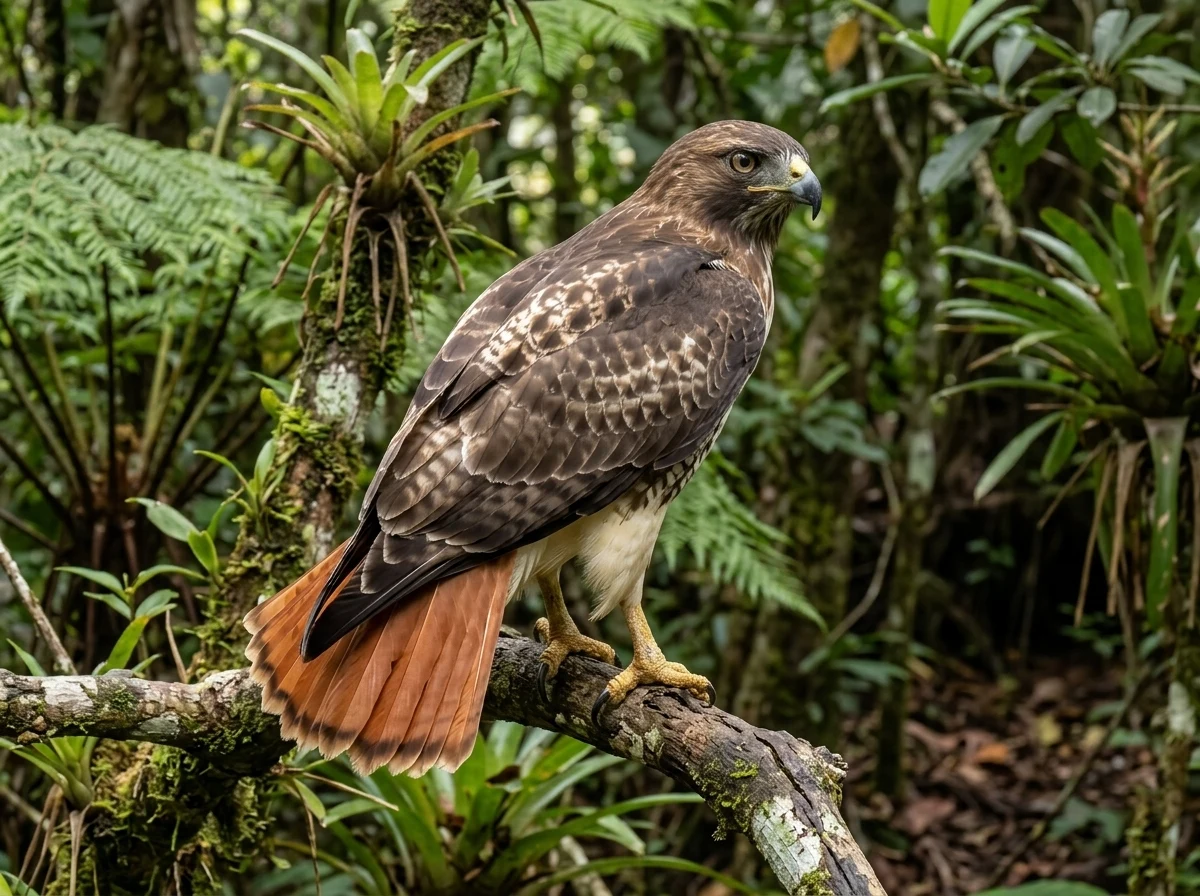
Red-tailed Hawk vs Osprey
Two large raptors that share Puerto Rico's skies, but are rarely confused once you watch their shape, flight, and behavior.
Reviewed: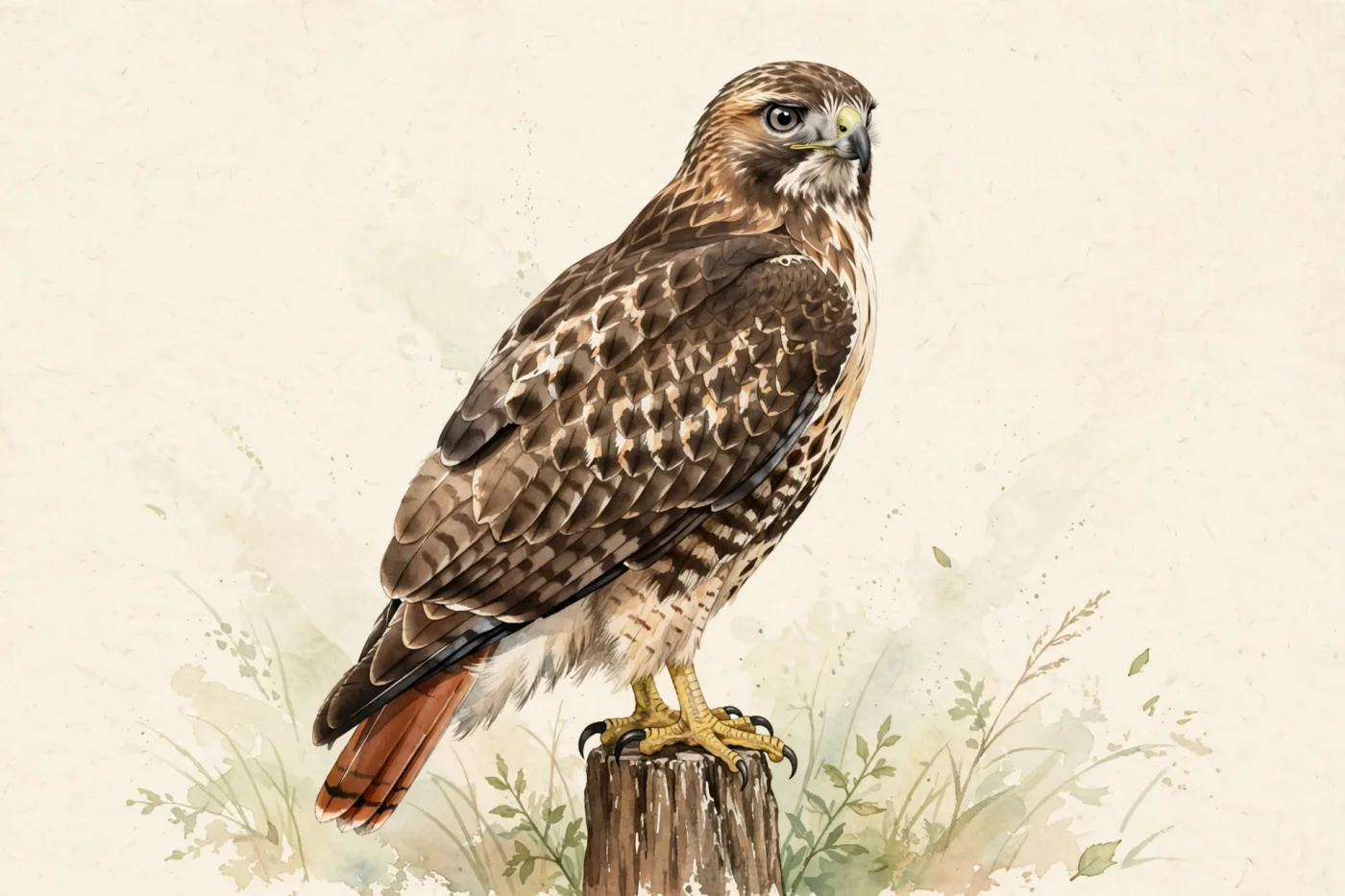
Prepared with AI assistance and linked sources. Illustrations are not field photographs.
Two Raptors, Two Ways to Fly
The Red-tailed Hawk (Buteo jamaicensis) and the Osprey (Pandion haliaetus) are two large raptors you can see in Puerto Rico. Although both soar and sometimes share the same sky, they belong to different families and have different shapes, diets, and behaviors. The Red-tailed Hawk is a stocky buteo with broad wings and a relatively short tail; the Osprey is a slimmer bird with long, angled wings and a longer, narrower tail.
This guide answers a specific question: how do you tell a Red-tailed Hawk from an Osprey by shape and flight? It is not a general species profile, but a practical comparison for the moment you see them flying. At the end you will find a checklist and an observation procedure you can use in the field.
Identification
Key Facts
Buteo jamaicensisScientific name of the Red-tailed HawkFamily Accipitridae; genus Buteo.
Pandion haliaetusScientific name of the OspreyFamily Pandionidae; only genus Pandion.
PescadoMain diet of the OspreyIt is the only raptor that plunge-dives to catch live fish as its main prey source.
01
Soaring Shape: Wings and Tail
When you see a Red-tailed Hawk soaring, the first thing that stands out is its stocky body and broad wings. It is a large buteo with a relatively short, broad tail. In a soar it holds its wings extended and slightly arched, with less pointed tips than an Osprey. The tail, even when not seen as red from below, usually appears as a short, rounded fan.
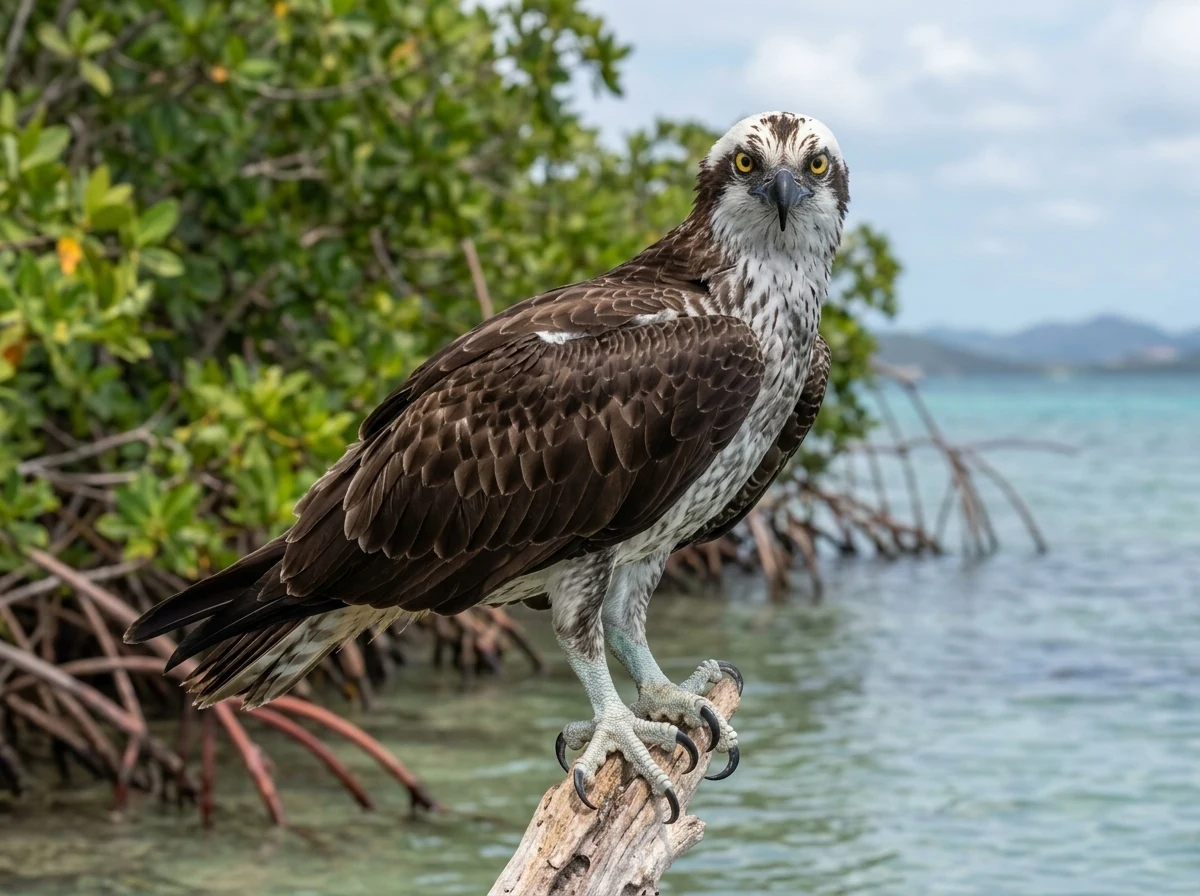
The Osprey, by contrast, has a slimmer shape. Its wings are long and narrow, and in a soar it holds them arched or in a gentle M shape, with a marked angle at the wrist. The tail is longer and narrower than the Red-tailed Hawk's, and the body looks less bulky. This combination of long, angled wings and a long tail gives it an oceanic glider look, very different from the buteo.
If the bird is perched, posture also helps: the Red-tailed Hawk often perches upright on branches or posts, while the Osprey often perches on tall structures near water. These differences in silhouette and posture are the most useful for separating the two species in the field.
02
Flight and Behavior: Soaring, Flapping, and Hunting
The Red-tailed Hawk is an ambush predator. It usually hunts from an elevated perch and drops onto its prey, or soars in wide circles over open areas with scattered trees. Its flight combines long glides with deep, slow wingbeats. The Birds of the World source cites Puerto Rico studies among its references, without detailing their findings. The catalog consulted records it as a native species, but does not carry resident or breeder flags for Puerto Rico.
The Osprey is a more direct and specialized flier. It plunge-dives feet first to catch fish, and only reaches about the top meter of water, so it depends on fish that swim near the surface. Its hunting flight often includes hovering or kiting over water before the dive. Outside the breeding season, it may soar and perch on poles, towers, or tall trees near the coast.
In Puerto Rico, the Osprey appears in the bird catalog as a native species, but the catalog does not flag it as resident or breeder. That absence of a flag is not proof that it does not nest on the island; it simply means the catalog data do not classify it that way. The Red-tailed Hawk also appears as a native species in the catalog, and it is likewise not flagged as resident or breeder in that data. Catalog status does not separate the two species: identification must rely on shape and behavior.
03
Field Checklist
Before you go out, keep this checklist in mind. You do not need to see every trait at once; two or three well-observed ones are usually enough to decide.
1. Size and build: does the bird look stocky and compact, or slim and elongated? 2. Wings: broad and rounded, or long and angled with a marked wrist? 3. Tail: short and broad, or long and narrow? 4. Behavior: does it circle over fields or forests, or fly directly over water and hover? 5. Habitat: is it over forest, open country, or near coast and lagoons? 6. Date and context: is it migration season? The catalog does not flag the Osprey as resident in Puerto Rico.
If you can, also note whether the bird is carrying a fish in its talons. That is an almost definitive sign of an Osprey. The Red-tailed Hawk rarely carries fish; its diet includes small mammals, birds, reptiles, amphibians, and arthropods.
04
Five-Step Observation Procedure
This procedure helps you identify a raptor in flight without relying on a single clue. Practice it every time you see a large raptor.
Step 1: Locate the bird and watch its overall shape for at least 10 seconds. Step 2: Focus on the wings. Are they broad and rounded, or long and angled? Step 3: Look at the tail. Is it short and broad, or long and narrow? Step 4: Watch the behavior. Does it circle, flap deeply, hover, or dive? Step 5: Note the habitat and date. If the bird is over water or near the coast and hovering, think Osprey. If it is over forest or open country and circling, think Red-tailed Hawk.
Repeat the exercise with every raptor you see. With practice, the combination of shape and behavior becomes automatic. If you are unsure, take a photo or a short video and review it later. The key is not to memorize a list, but to learn to read the bird's shape and movement in the air.
Linked profiles
The Two Species
See the individual guides for more details on each raptor.
01
Are the Red-tailed Hawk and Osprey closely related?
No. They belong to different families: the Red-tailed Hawk is an accipitrid of the genus Buteo, while the Osprey is in its own family, Pandionidae, and its own genus, Pandion. That separation reflects their very different adaptations, especially the Osprey's fish-based diet.
02
Which one is larger?
The Osprey can exceed 60 cm in length and reach a wingspan of up to 180 cm. The Red-tailed Hawk measures 45–65 cm in length, with a wingspan of 110–145 cm. Lengths overlap (the Red-tailed Hawk reaches 65 cm; the Osprey exceeds 60 cm), so wingspan, not length, is the clearer size difference.
03
Does the Osprey nest in Puerto Rico?
According to the catalog data consulted, the Osprey appears as a native species in Puerto Rico, but the catalog does not flag it as resident or breeder. That absence of a flag is not proof that it does not nest on the island; it only means the catalog data do not classify it that way. Abundance should not be inferred from this information.
04
What does each one eat?
The Osprey feeds almost exclusively on fish, which it catches by plunge-diving from the air. The Red-tailed Hawk has a more varied diet: small mammals, birds, reptiles, amphibians, arthropods, and fresh carrion. That difference explains why they often hunt in different habitats.
05
Can I confuse the Red-tailed Hawk with another raptor in Puerto Rico?
Yes. Another raptor that also soars in circles may have a bare, small head, while the Red-tailed Hawk has a feathered head. That head difference is a useful clue. See the comparison guide for more details.
Keep exploring
Connected routes
Sources and review
The evidence is one link away.
These sources support the editorial scope of this guide. Bird profiles also retain their own taxonomy, occurrence, and conservation references.
Reviewed:
The atlas continues