 AI
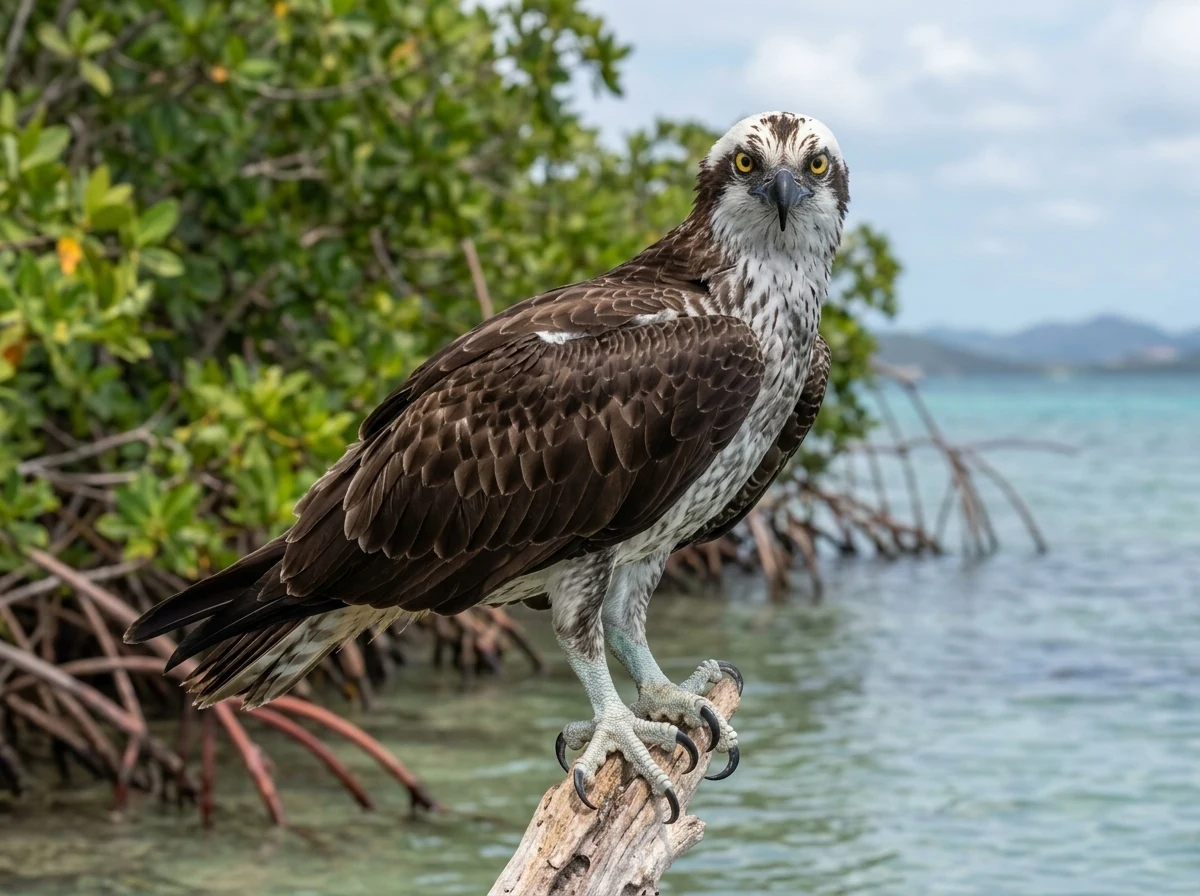
AIAI reconstruction created with Nano Banana 2 · 1K, grounded in the profile’s documented taxonomy, habitat, natural-history sources, and an open-license visual reference when available. It is an interpretive image, not documentary evidence. Image policy →
Osprey
Águila Pescadora
Pandion haliaetus
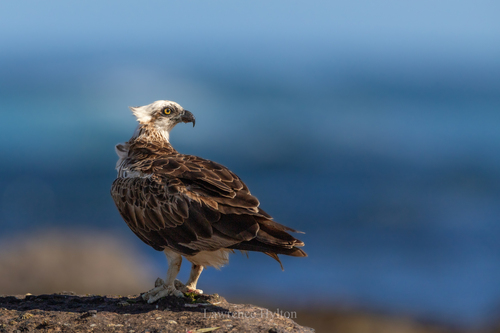
The osprey (; Pandion haliaetus), historically known as sea hawk, river hawk, and fish hawk, is a diurnal, fish-eating bird of prey with a cosmopolitan range. It is a large raptor, reaching more than 60 cm (24 in) in length and a wingspan of 180 cm (71 in). It is brown on the upperparts and predominantly greyish on the head and underparts. The osprey tolerates a wide variety of habitats, nesting in any location near a body of water providing an adequate food supply. It is found on all continents except Antarctica, although in South America it occurs only as a non-breeding migrant. As its other common names suggest, the osprey's diet consists almost exclusively of fish. It possesses specialised physical characteristics and unique behaviour in hunting its prey. Because of its unique characteristics it is classified in its own taxonomic genus, Pandion, and family, Pandionidae.
Sound archive
Hear its voice
Explore real songs and calls. The spectrogram turns each sound into a visual trace of time and frequency.

Play: call, begging call by Rory Nefdt
Choose another recording
Sound recorded by Rory Nefdt · XC1133704 · CC BY-NC-SA 4.0. Visualization by Stichting Xeno-canto voor Natuurgeluiden.
Every recording retains the creator, catalogue number, and license published by Xeno-canto. Metadata via GBIF ↗
Island profile
About the Osprey
This atlas includes Osprey (Pandion haliaetus) with atlas status “Native / natural occurrence” within scope “Avibase inferred core 380.” Global trait data associate it primarily with coastal; consult the linked records to resolve its Puerto Rico habitat use.
Conservation
Least Concern
IUCN LC
- Global IUCN
- LC
- Puerto Rico DNER
- No current listing in source crosswalk
- Federal ESA
- No current listing in source crosswalk
- Critical habitat
- Not identified in source crosswalk
Natural history
How it lives
- Habitat
- coasts
- Elevation
- 0–1000 m
- Nest
- Platform · Ground; Pole; Rock; Tree
- Clutch
- 1–4 eggs
- Social behavior
- Colonial; Social / flocking; Solitary
For kids and families
Turn this bird into your own artwork
Download a clean, print-ready coloring page, learn one quick fact, and color this Puerto Rico bird.
Keep exploring
This bird belongs to 5 paths through the atlas.
Guides featuring this bird
Follow this record beyond the profile.
Identification, sound, place, and explanatory guides connecting this species to larger questions.
See all related guides (19)
- Beaks and Diets: A Matching Game
- Engineering Challenge: Design a Beak
- Turkey Vulture in Puerto Rico: What It Is and How to Recognize It
- Turkey Vulture vs. Red-tailed Hawk: Telling Them Apart in Flight
- Osprey in Puerto Rico
- Birds Circling in the Sky in Puerto Rico: A Silhouette Guide
- Are there eagles in Puerto Rico?
- Birds of Laguna Tortuguero
- Raptors
- Red-tailed Hawk in Puerto Rico
- Birds of Humacao
- Birds of Jobos Bay
- Migratory birds
- Large birds of Puerto Rico
- Birds of Caño Tiburones
- Birds of San Juan's Lagoons: San José, Torrecilla, Condado, Martín Peña
- Beach Birds of Puerto Rico
- Birding San Juan in One Day from a Cruise Ship
- Birds of Old San Juan
Related in the atlas
Where to fly next
Connected by taxonomy, habitat, occurrence, and conservation.
 AI
AI AI
AI AI
AI AI
AI AI
AI AI
AI
Evidence trail