 AI
AIIdentification
Western Sandpiper vs Semipalmated Sandpiper
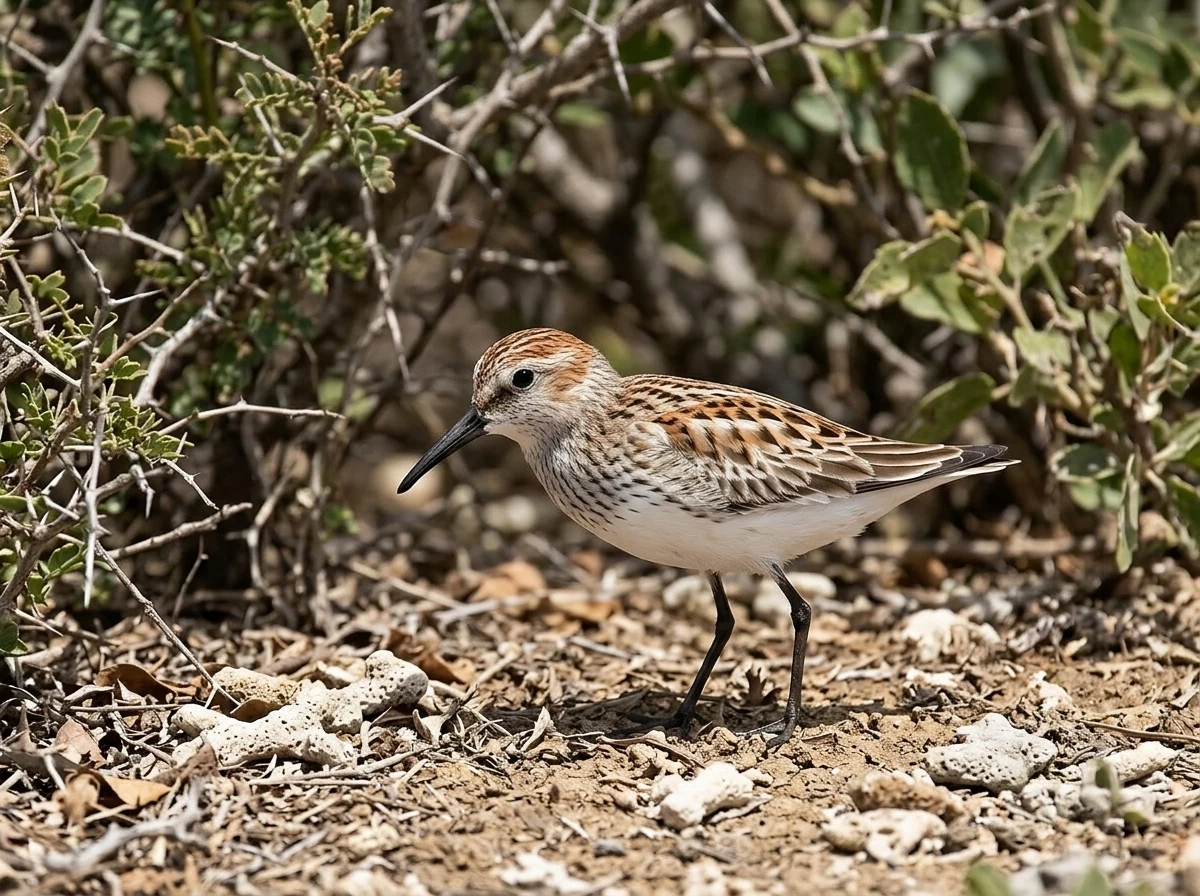
Two small, gray, dark-legged peeps that share beaches and mudflats. The key is not one single mark, but a combination observed calmly.
Reviewed:Prepared with AI assistance and linked sources. Illustrations are not field photographs.
Why this pair confuses birders
The Western Sandpiper (Calidris mauri) and the Semipalmated Sandpiper (Calidris pusilla) are two small shorebirds that share the same coasts and mudflats during migration. Both have dark legs, gray-brown upperparts, and pale underparts, and both belong to the informal group known as peeps. BirdsCaribbean notes that among the small sandpipers only these two species share partially webbed toes, which is where the name Semipalmated comes from.
The difficulty is real: BirdsCaribbean admits that separating them can be a challenge even for experienced observers. This article does not offer a magic formula, but an orderly procedure: what to look at, in what order, and when it is better to leave the identification as probable rather than certain.
Identification
Three key takeaways
Pico primeroThe bill is the starting pointSemipalmated tends to have a shorter, straighter, blunter bill; Western a longer bill with a slight downward curve at the tip.
SiluetaBody shape helpsWestern can look chunkier and barrel-chested; Semipalmated more compact and lighter.
ConjuntoNo single mark is enoughBill length overlaps; combine several marks and observe in good light.
01
The bill: first mark, but not definitive
BirdsCaribbean recommends starting with bill length and shape. The Semipalmated Sandpiper usually has a shorter, blunter, straighter bill than the Western. The Western tends to have a longer bill that curves slightly downward at the tip. That difference is the most cited and the most useful starting point.
However, the same source warns that bill length overlaps between the two species. So a bill that looks intermediate should not decide the identification on its own. Use it as a first clue and confirm or discard it with the following marks.
02
Shape and proportions: the body speaks too
BirdsCaribbean describes the Western as a bird that can look chunkier and barrel-chested. The Semipalmated, by contrast, tends to look more compact and lighter. This general impression is subjective, but it becomes more reliable when you see several individuals together and can compare proportions.
The practical recommendation is to observe the relationship between body and head, and between body and bill. A Western with a long bill and robust body projects a different image from a Semipalmated with a short bill and slighter body. Do not force the comparison if you only have one bird at a distance.
03
Legs, color, and the toe detail
Both species have dark legs, so leg color does not separate them from each other. BirdsCaribbean uses that mark to distinguish them from the Least Sandpiper, which has yellow legs, a thinner and slightly curved bill, and warmer brown upperparts. That contrast is useful as an initial filter: if you see yellow legs, it is neither of the two species in this article.
The mark that gives the Semipalmated its name is partially webbed toes. BirdsCaribbean states that among the small sandpipers only the Western shares that feature. In practice, seeing the membrane between the toes requires a very close view or a sharp photograph; it is not a routine field mark. Use it as an exceptional confirmation, not a requirement.
04
A five-step observation procedure
Step 1: confirm it is a peep and rule out yellow legs. Step 2: observe the bill in good side light; note relative length and whether the tip curves. Step 3: look at overall shape and chest. Step 4: compare with nearby birds if any. Step 5: decide whether the identification is certain, probable, or only possible. If you cannot complete steps 2 and 3, write probable or possible, not certain.
This procedure is a methodological suggestion, not a published rule. Its value lies in avoiding the common mistake of deciding from a single mark. The main source insists that separation is difficult and that bill overlap forces you to look at more than one character.
05
Puerto Rico occurrence and migratory context
The local catalog records both species as native natural occurrences in Puerto Rico, neither resident nor breeding. Abundance must not be inferred from that presence. The Birds of the World source on the Semipalmated mentions Puerto Rico in the context of shorebird abundance and distribution studies at the Cabo Rojo salt flats, which confirms the species has been the subject of local work, but that mention does not turn into an estimate of current abundance.
The Semipalmated is a long-distance migrant that breeds in the Arctic and passes through the Caribbean as a stopover. BirdsCaribbean describes it as a traveler of thousands of kilometers that uses the Caribbean to refuel. That migratory condition explains why it appears on coasts and mudflats, and why careful identification matters: a mislabeled observation distorts the record of two species at once.
Linked profiles
The two species in the catalog
Reference profiles for the Western and Semipalmated Sandpipers, with their recorded occurrence in Puerto Rico.
AI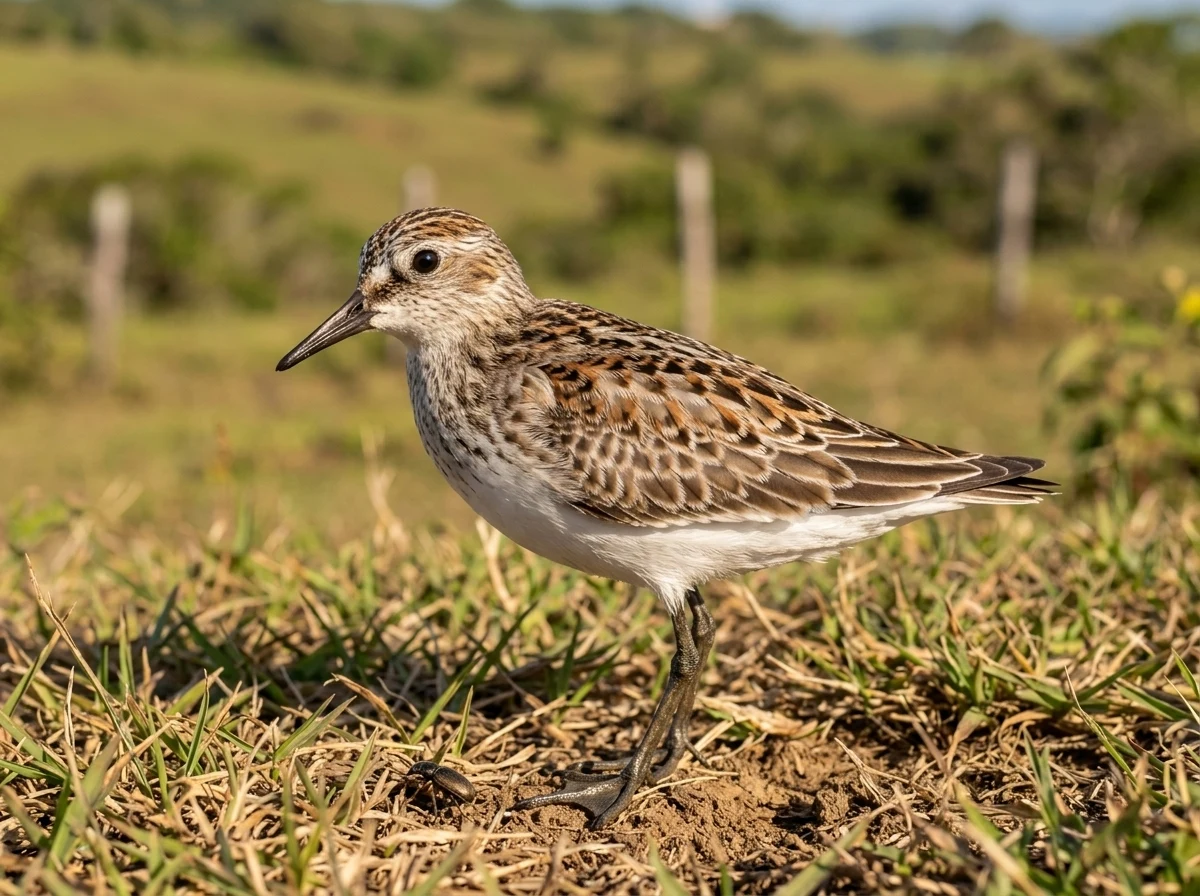 AI
AI01
What is the most reliable difference between Western and Semipalmated Sandpipers?
The bill is the starting point: Semipalmated tends to have a shorter, straighter, blunter bill, and Western a longer one with a slight curve at the tip. But overlap exists, so combine it with shape and chest.
02
Does leg color help separate them?
Not from each other, because both have dark legs. Leg color helps rule out the Least Sandpiper, which has yellow legs.
03
What does semipalmated mean?
It refers to partially webbed toes. Among the small sandpipers, only the Western shares that feature, according to BirdsCaribbean.
04
Can I identify a single bird at a distance?
Often no. If you cannot properly assess bill and shape, it is better to record probable or possible than to force a certain identification.
05
Are both species recorded in Puerto Rico?
The local catalog records them as native natural occurrences, neither resident nor breeding. That presence does not imply abundance.
Keep exploring
Connected routes
Sources and review
The evidence is one link away.
These sources support the editorial scope of this guide. Bird profiles also retain their own taxonomy, occurrence, and conservation references.
Reviewed:
The atlas continues