 AI
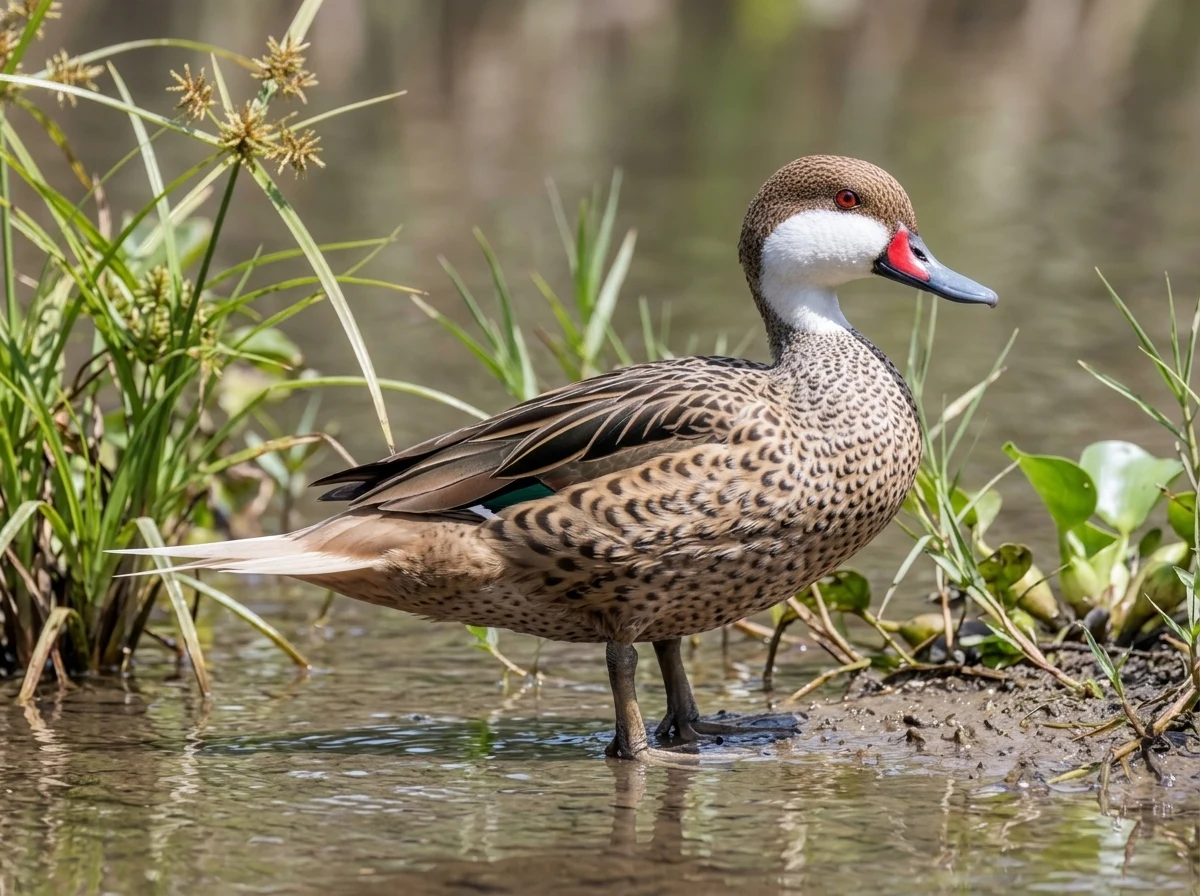
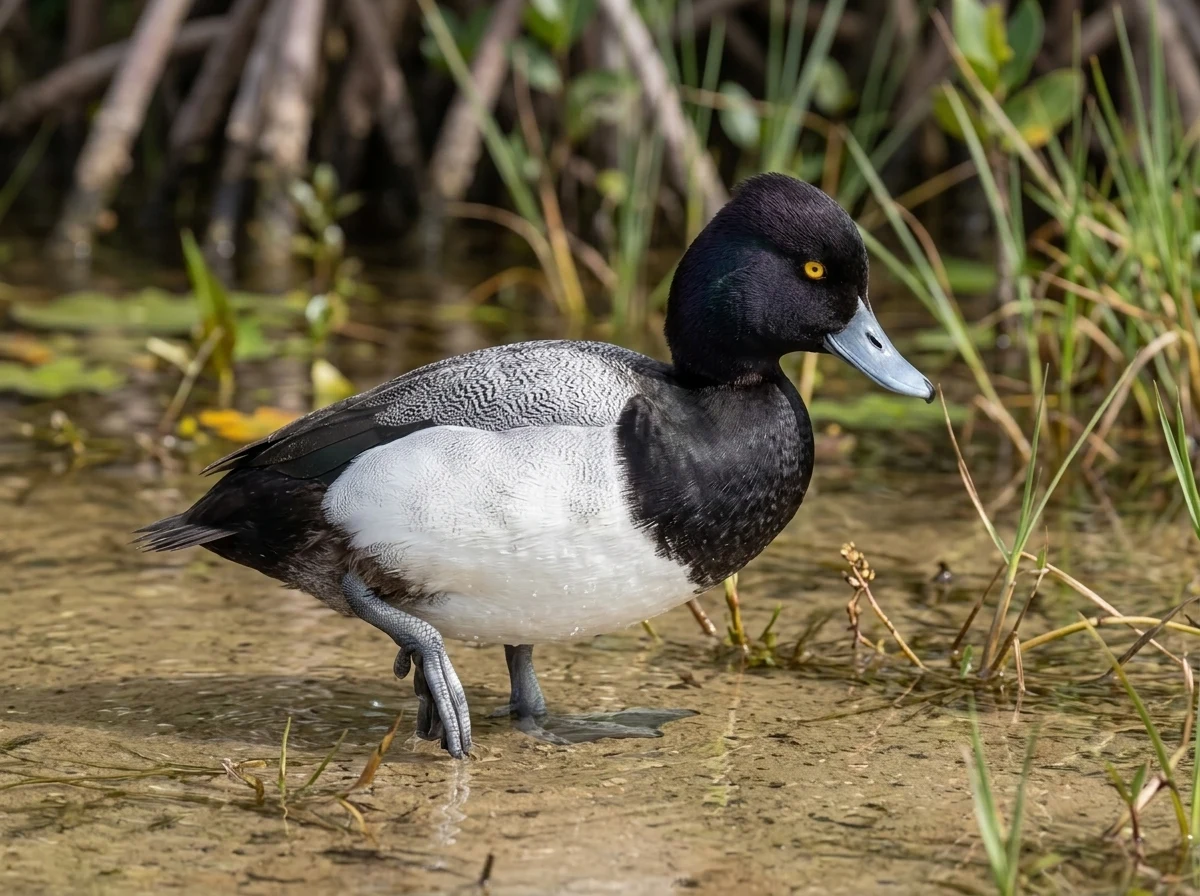
AIAI reconstruction created with Nano Banana 2 · 1K, grounded in the profile’s documented taxonomy, habitat, natural-history sources, and an open-license visual reference when available. It is an interpretive image, not documentary evidence. Image policy →
White-cheeked Pintail
Pato Quijada Colorada
Anas bahamensis
The white-cheeked pintail (Anas bahamensis), also known as the Bahama pintail or Bahama duck, is a species of dabbling duck that is patchily distributed throughout South America and the Caribbean. It was first described by Carl Linnaeus in his landmark 1758 10th edition of Systema Naturae under its current scientific name.
Sound archive
Hear its voice
Explore real songs and calls. The spectrogram turns each sound into a visual trace of time and frequency.

Play: call by Fernando Igor de Godoy
Choose another recording
Sound recorded by Fernando Igor de Godoy · XC714001 · CC BY-NC-SA 4.0. Visualization by Stichting Xeno-canto voor Natuurgeluiden.
Every recording retains the creator, catalogue number, and license published by Xeno-canto. Metadata via GBIF ↗
Island profile
About the White-cheeked Pintail
This atlas includes White-cheeked Pintail (Anas bahamensis) with atlas status “Resident” within scope “Avibase inferred core 380.” Puerto Rico context sources associate it with Salt ponds; coastal lagoons; freshwater and brackish wetlands.
Conservation
Least Concern
IUCN LC; DNER VU
- Global IUCN
- LC
- Puerto Rico DNER
- VU
- Federal ESA
- No current listing in source crosswalk
- Critical habitat
- Not identified in source crosswalk
Natural history
How it lives
- Habitat
- Salt ponds; coastal lagoons; freshwater and brackish wetlands
- Elevation
- 0–2500 m
- Nest
- Shrub / bush / vine
- Clutch
- 5–12 eggs
- Social behavior
- Pairs / family groups
Keep exploring
This bird belongs to 9 paths through the atlas.
Guides featuring this bird
Follow this record beyond the profile.
Identification, sound, place, and explanatory guides connecting this species to larger questions.
Related in the atlas
Where to fly next
Connected by taxonomy, habitat, occurrence, and conservation.
 AI
AI AI
AI AI
AI AI
AI AI
AI AI
AI
Evidence trail
Sources, media & further reading
Research note: Status retained in both 2004 and 2026 Commonwealth sources