 AI
AILagoons, marshes, and reservoirs
Ducks of Puerto Rico: residents, migrants, and whistling-ducks
Few residents, many rare visitors, and names that change from island to island: this guide sorts Puerto Rico's ducks by what you can realistically find.
Reviewed:Wild ducks do live here, but most are rare.
Yes, Puerto Rico has wild ducks all year: four species nest on the island—West Indian Whistling-Duck, White-cheeked Pintail, Ruddy Duck, and Masked Duck—and migrants such as Blue-winged Teal arrive in winter and spring. Almost every other duck on the list, including the Gadwall, is a rare or accidental visitor.
Our catalog lists 31 species in the family Anatidae recorded in Puerto Rico, including three geese and one swan; most are accidental or vagrant. The four residents share one thing: Puerto Rico's Department of Natural and Environmental Resources (DNER) treats all of them as locally threatened. West Indian Whistling-Duck is critically endangered, Masked Duck is endangered, and White-cheeked Pintail and Ruddy Duck are vulnerable.
The Puerto Rico Breeding Bird Atlas, with fieldwork from 2004 to 2009, documented breeding by those four species mostly in lowland wetlands. So this guide starts with the residents, moves on to migrants, and ends with the names that cause the most confusion when people search for a "gray duck" or a "black duck" in Puerto Rico.
Lagoons, marshes, and reservoirs
Puerto Rico ducks by the numbers
4breeding ducksWest Indian Whistling-Duck, White-cheeked Pintail, Ruddy Duck, and Masked Duck; all four carry DNER threat status.
3,755estimated White-cheeked PintailsPuerto Rico population estimate cited by the Atlas (Rivera-Milán and Bonilla-Martínez 2007).
153whistling-ducks in one nightHighest count at Laguna Cartagena between January and April 2016.
~50Masked Duck pairsApproximate size of the local population mentioned by the Atlas.
01
White-cheeked Pintail: the easiest resident to see
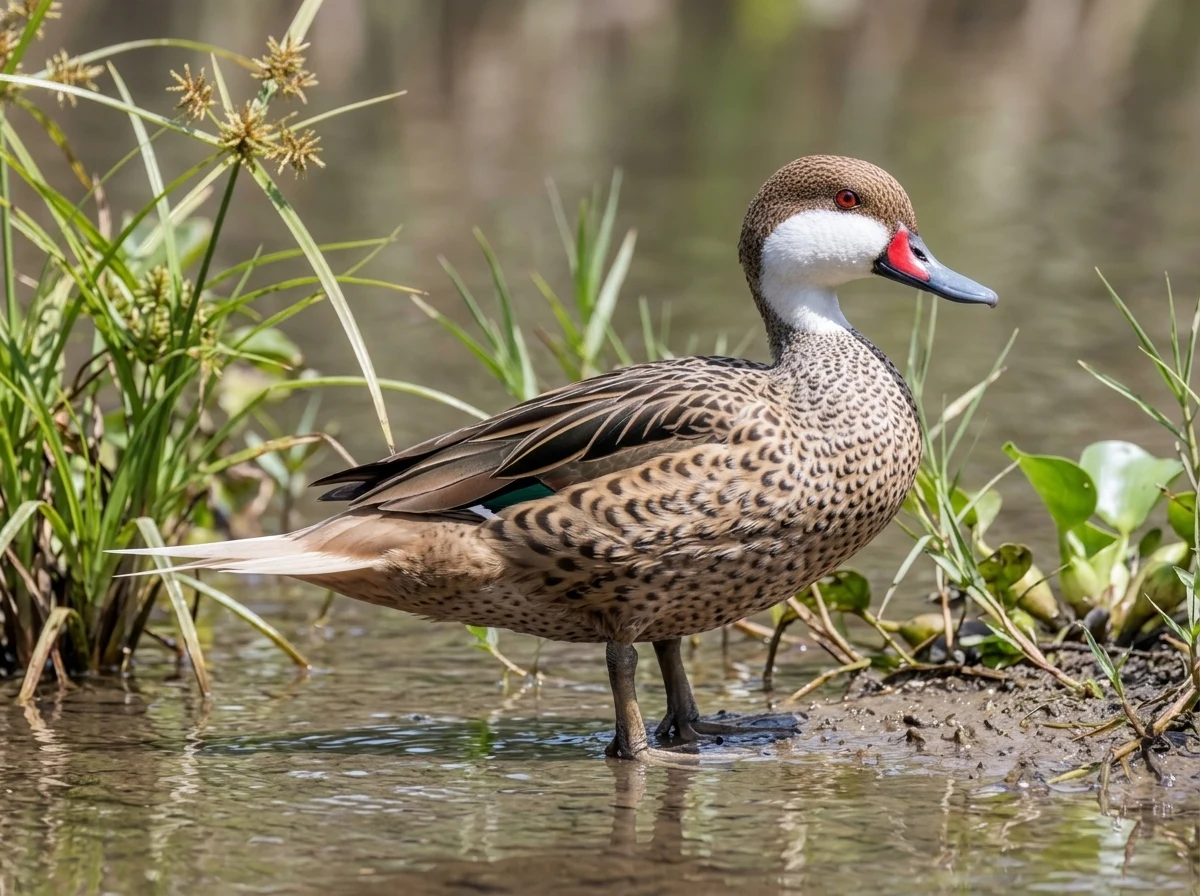
White-cheeked Pintail is a dabbling duck of about 17 inches, warm brown, with white cheeks and throat, a dark crown, red at the base of the bill, and a pointed buff tail. No other resident combines that white face with that bill: when you see all three marks together, you have it.
It uses fresh, brackish, and hypersaline water: ponds, coastal lagoons, salt flats, and mangroves. The Atlas found it in 59 hexagons and shows breeding throughout the year, peaking from May to July, mostly in the southern dry forest zone. Round trips between Culebra and the Humacao marshes have also been documented. The Atlas lists habitat loss and illegal hunting as its main threats.
02
West Indian Whistling-Duck: the duck that whistles at night
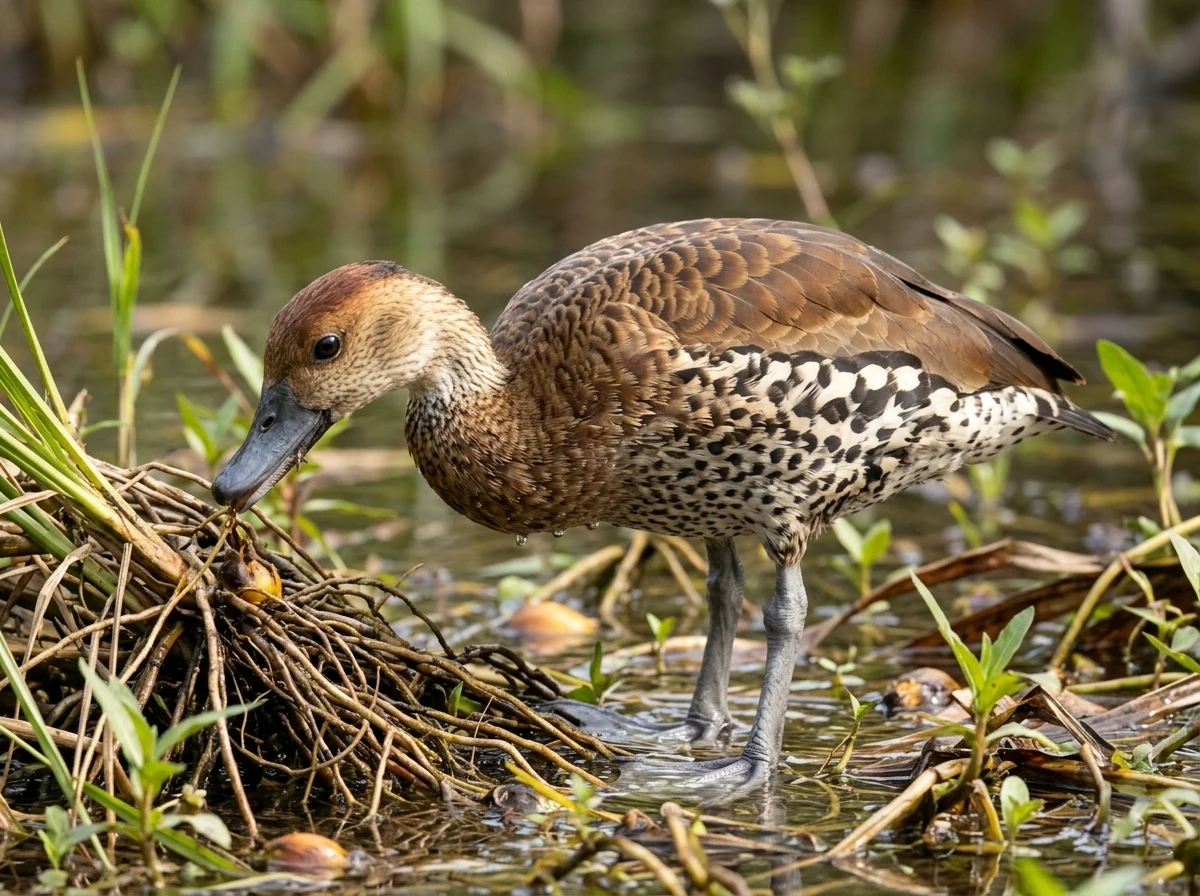
West Indian Whistling-Duck is a long-legged, long-necked Caribbean whistling-duck that feeds at night. It lives in mangroves, swamps, lagoons, and palm savannas, and sometimes farm fields. Its nest of dry leaves and twigs sits in a cluster of palm fronds or a tree cavity. Puerto Rico lists it as critically endangered; the IUCN rates it Near Threatened.
A 2016 study counted whistling-ducks over ten 8-hour nights at Laguna Cartagena National Wildlife Refuge: the average was 131.8 birds per night and the high count 153. They arrived from the west shortly after sunset and left before sunrise, which suggests they spend the day in the mangroves of Boquerón Wildlife Refuge. The result points to a larger population than the earlier estimate of about 100 birds.
03
Stiff-tailed divers: Ruddy Duck and Masked Duck
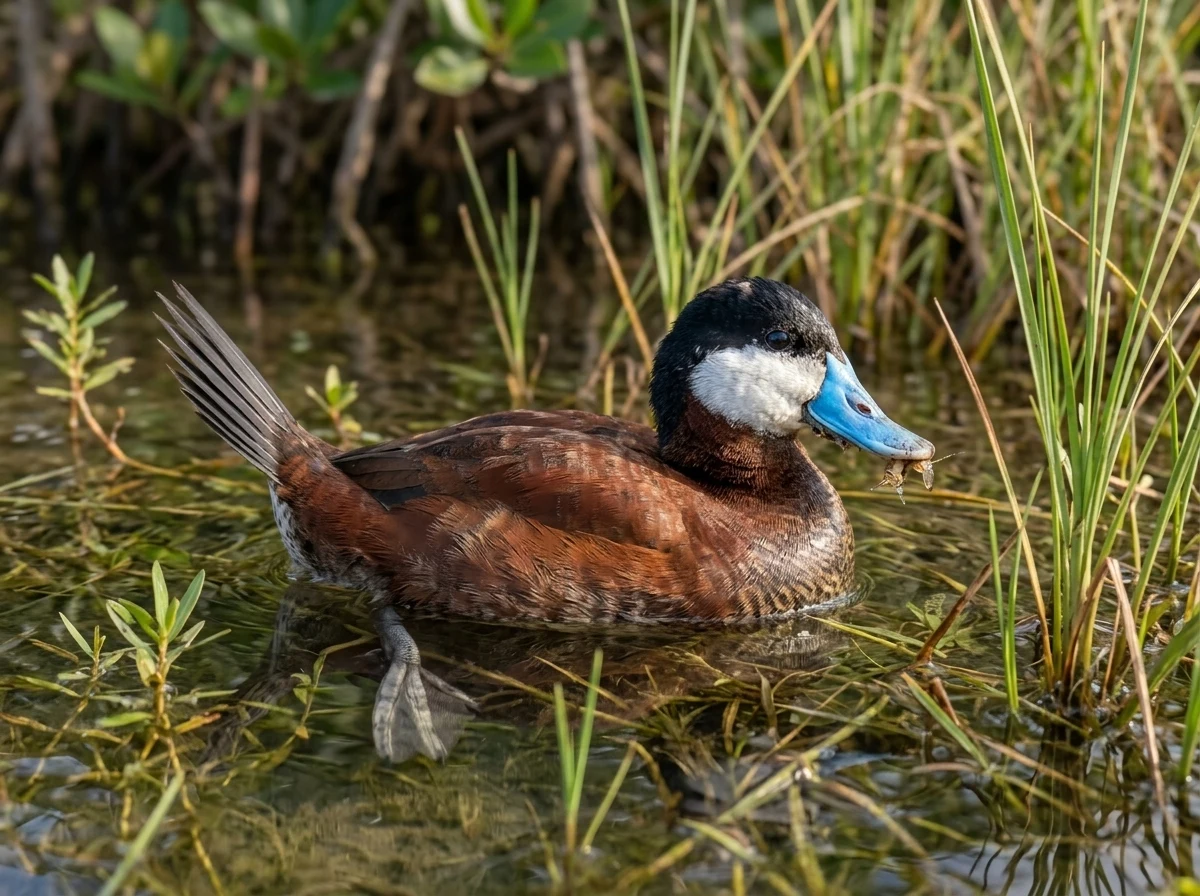
Ruddy Duck and Masked Duck are stiff-tailed ducks that dive rather than tip up at the surface. The male Ruddy has a dark cap, white cheeks, a ruddy body, and a bright blue bill in breeding season; the female has a pale cheek crossed by a dark line. In Puerto Rico it is seen at Humacao Natural Reserve, Caño Tiburones, and the Serrallés lakes near Ponce.
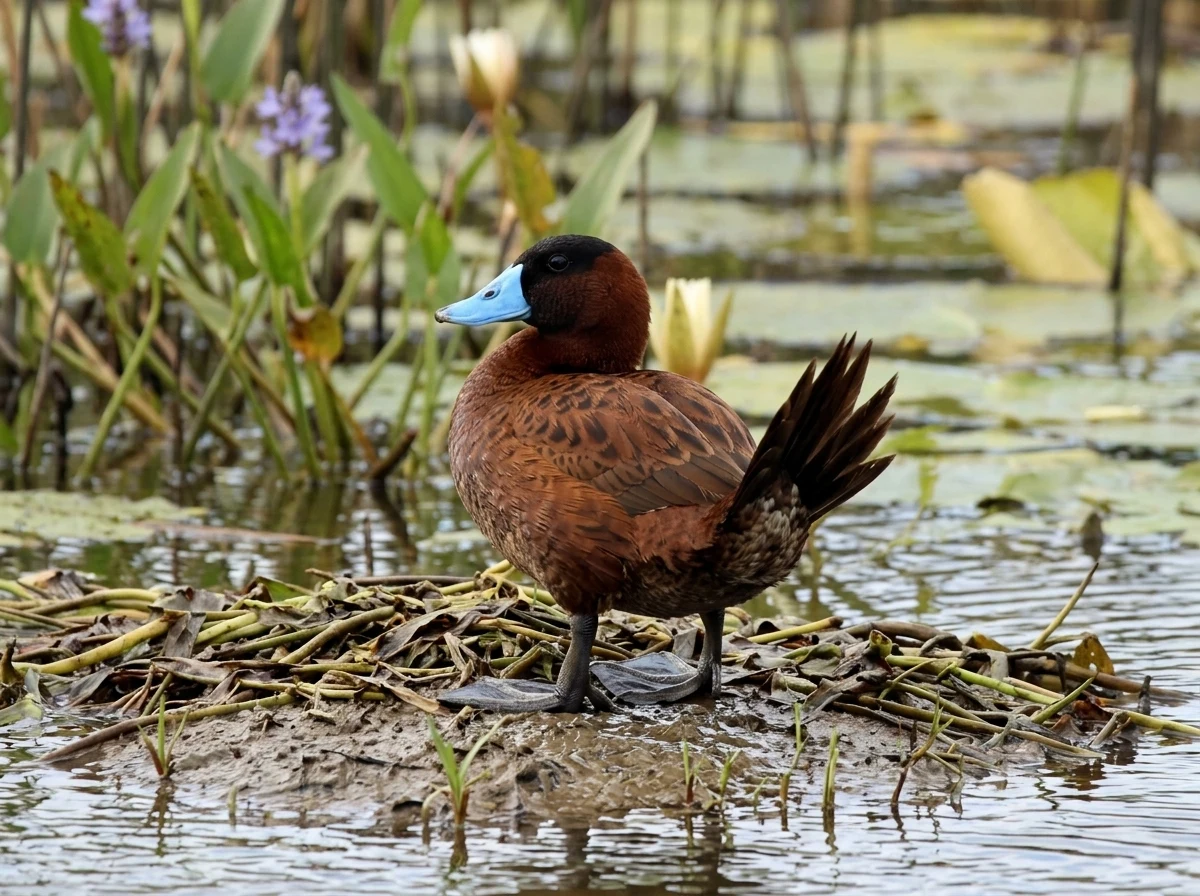
Masked Duck is smaller and secretive: the breeding male has a black face, and the female shows two dark stripes across a buffy face; in flight it shows a white wing patch. It spends much of its time hidden in marsh and canal vegetation. The Atlas found it in only 11 hexagons and mentions a population of around 50 pairs under pressure from illegal hunting and habitat degradation.
04
Migrants: Blue-winged Teal and the rare visitors
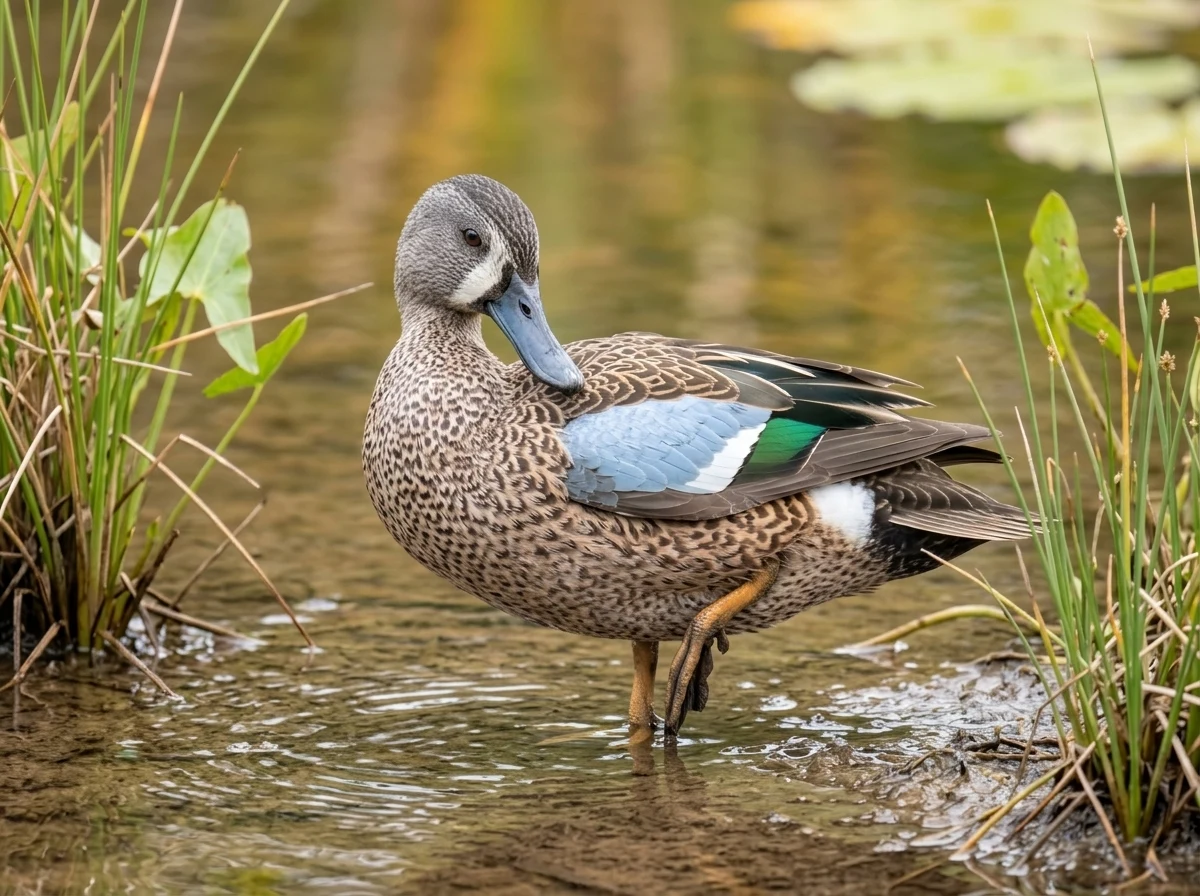
Blue-winged Teal is the migrant duck you are most likely to see. Both sexes have a pale blue wing patch that shows in flight, and the spring male wears a white crescent on a gray face. It is one of the longest-distance dabblers, wintering through the Caribbean, Central America, and South America. On the Laguna Cartagena refuge checklist it is common in spring and occasional in fall and winter.
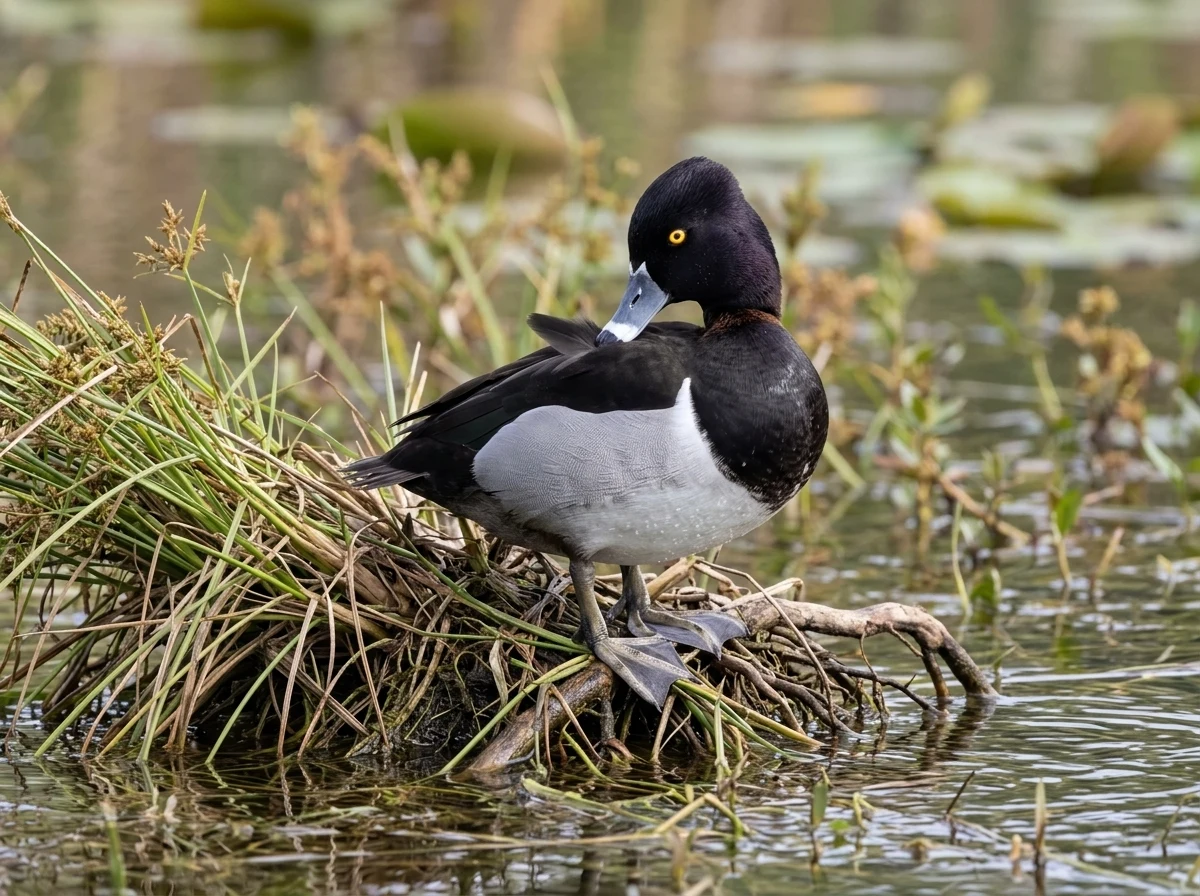
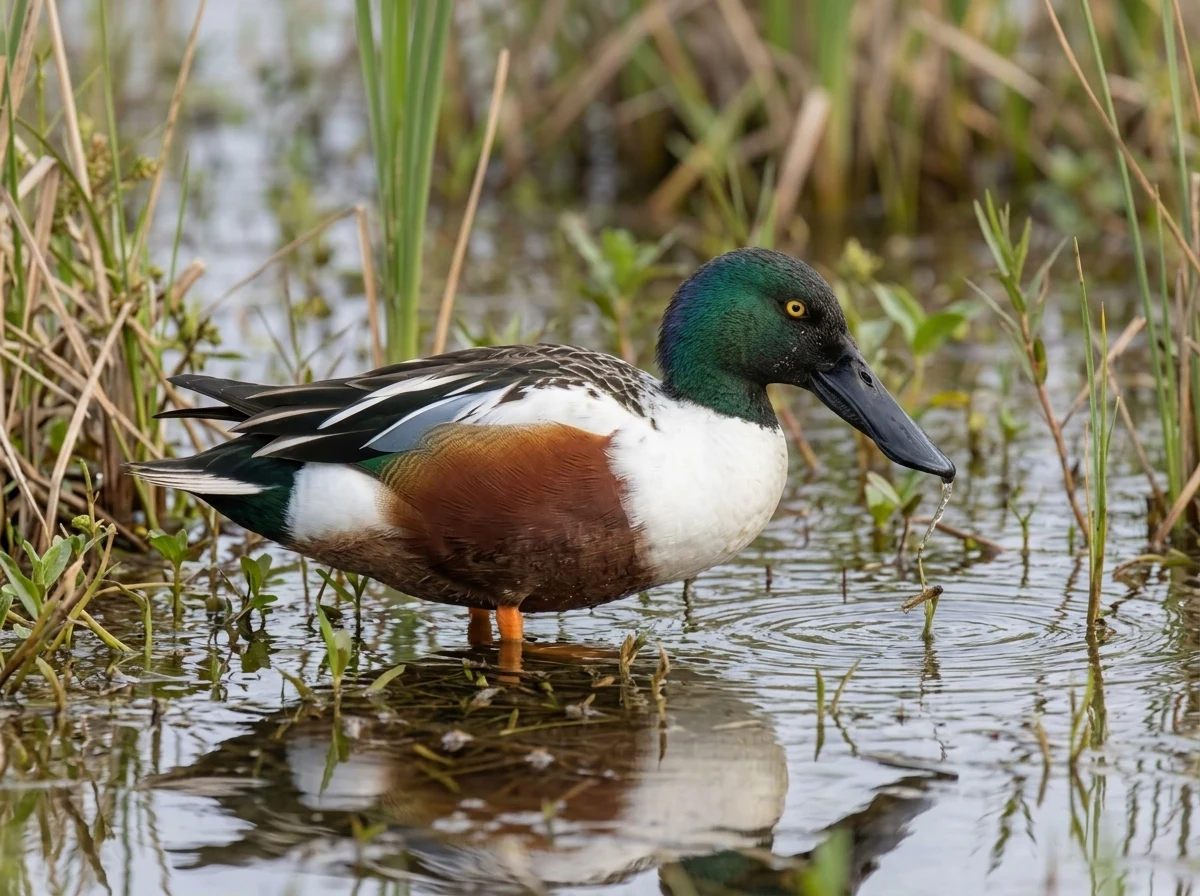
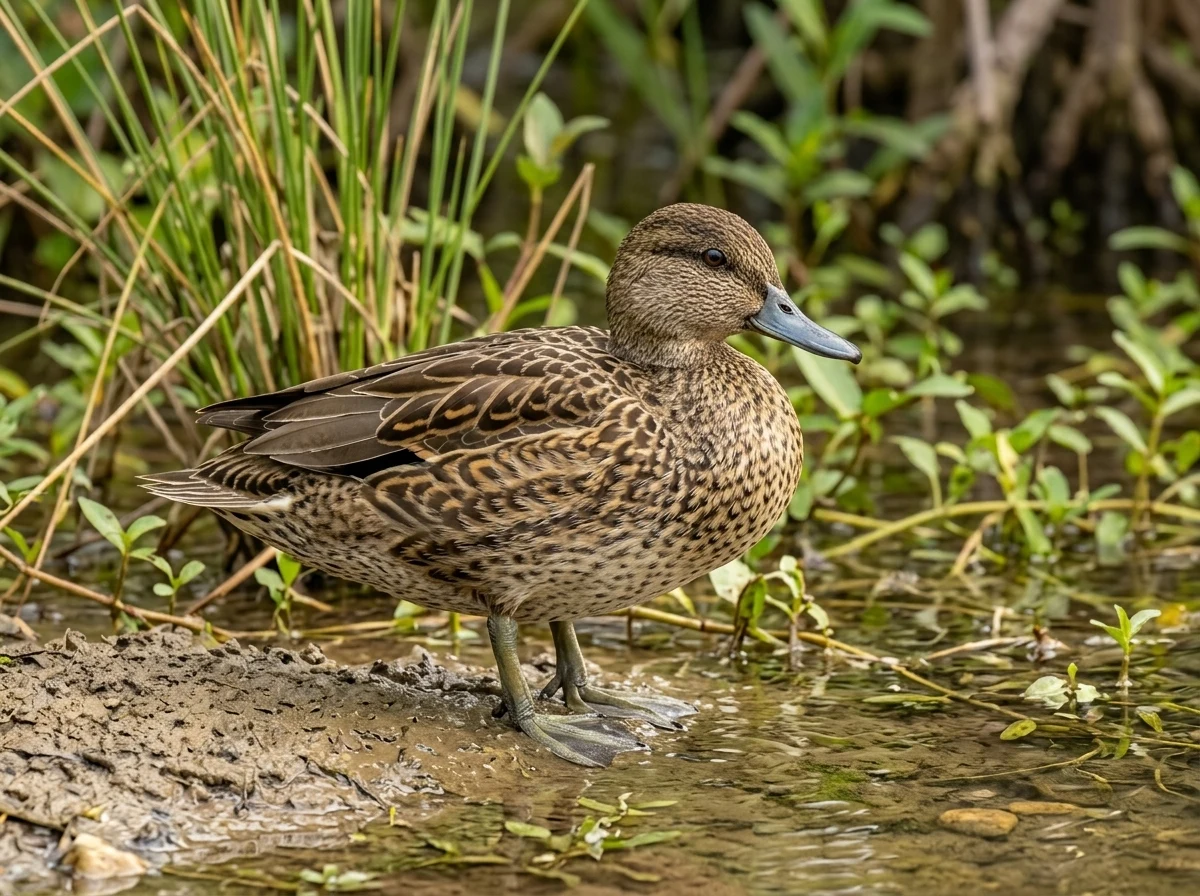
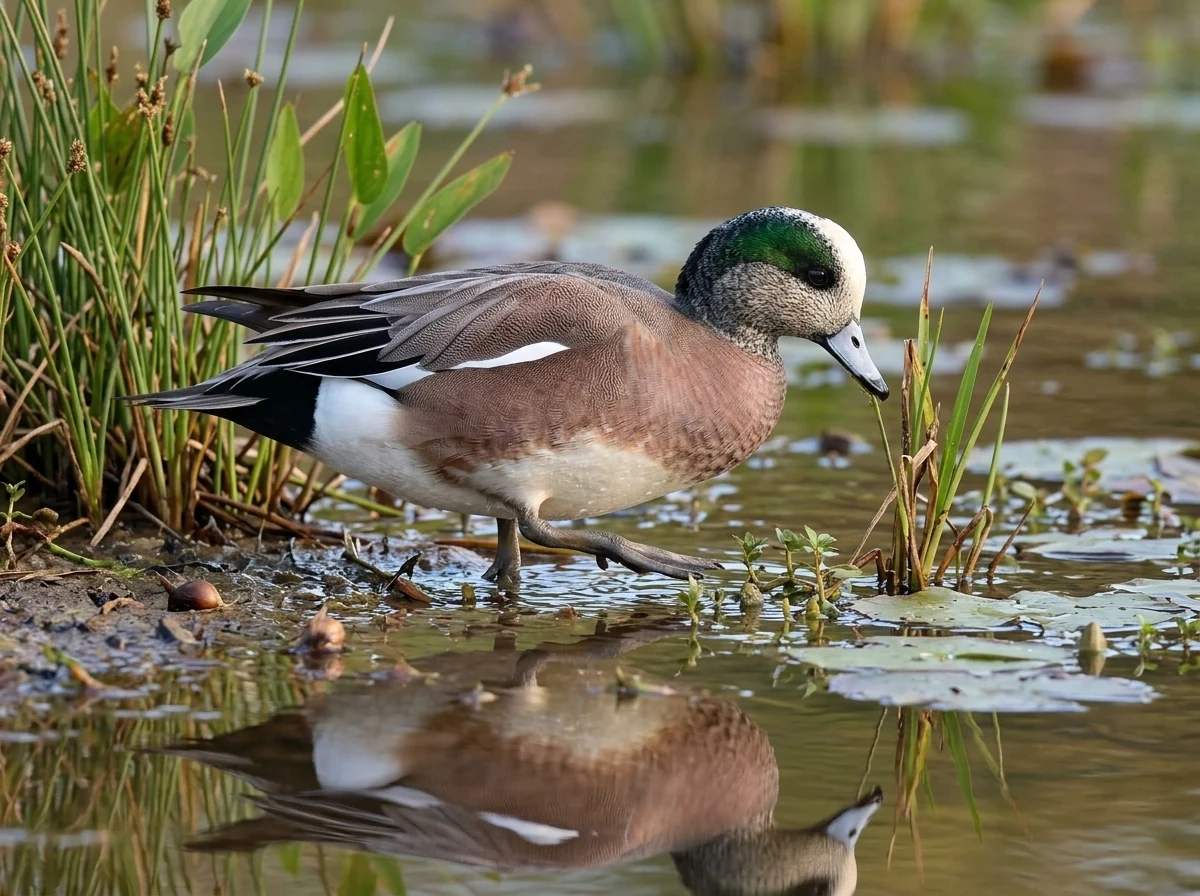
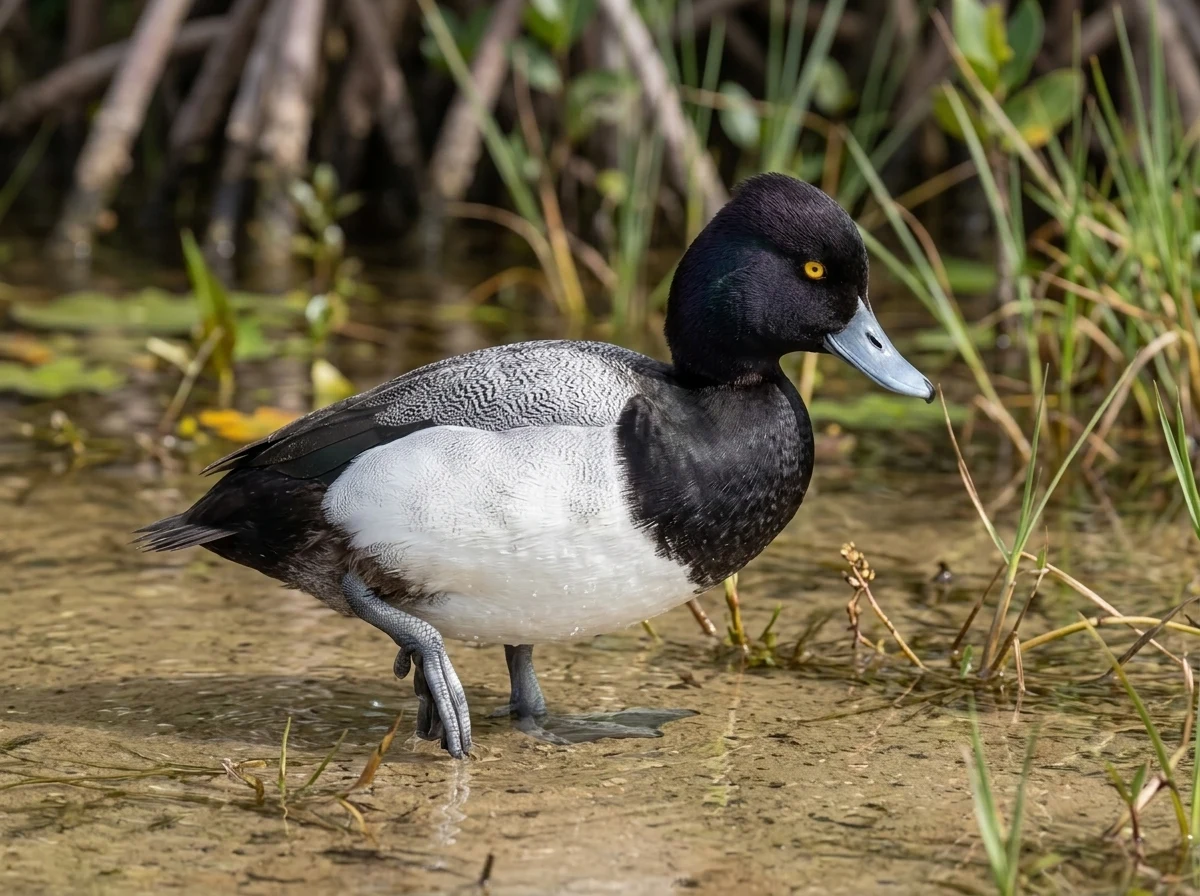
On the same checklist, Green-winged Teal, American Wigeon, Northern Shoveler, Ring-necked Duck, and Lesser Scaup are rated rare, meaning seen at intervals of two to five years. A North American duck on a Puerto Rico pond deserves photos of the wing, head, and bill, plus an exact date and place: that evidence is what allows an unusual record to be accepted.
05
What is the "pato gris"? Names that confuse
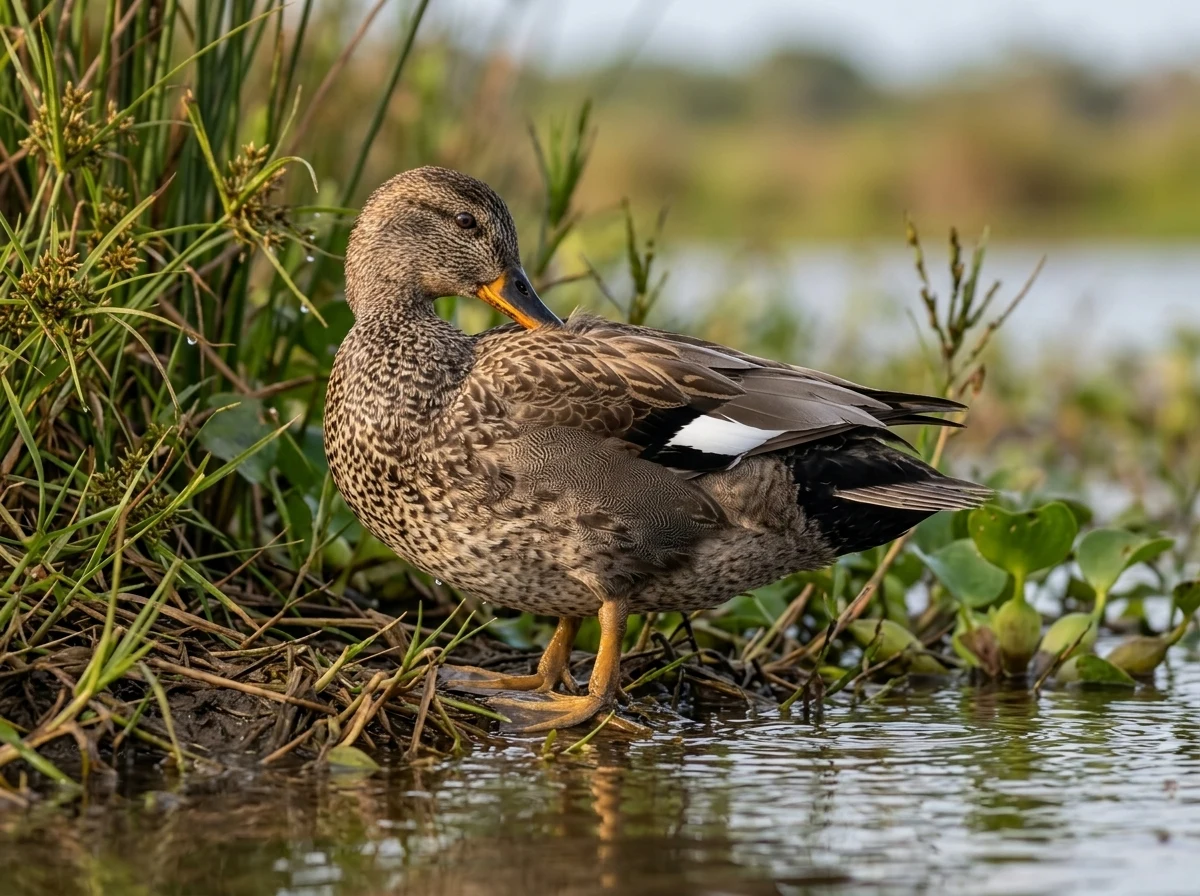
In Puerto Rico's naming, Pato Gris is the Gadwall (Mareca strepera), a North American dabbling duck that occurs in Puerto Rico only as an accidental. The male is mostly gray with a black stern; the female is mottled brown with a gray-and-orange bill, and both show a square white patch on the trailing edge of the wing. A tame gray duck on a park pond that matches no profile may be a domestic bird: photograph it before reporting it.
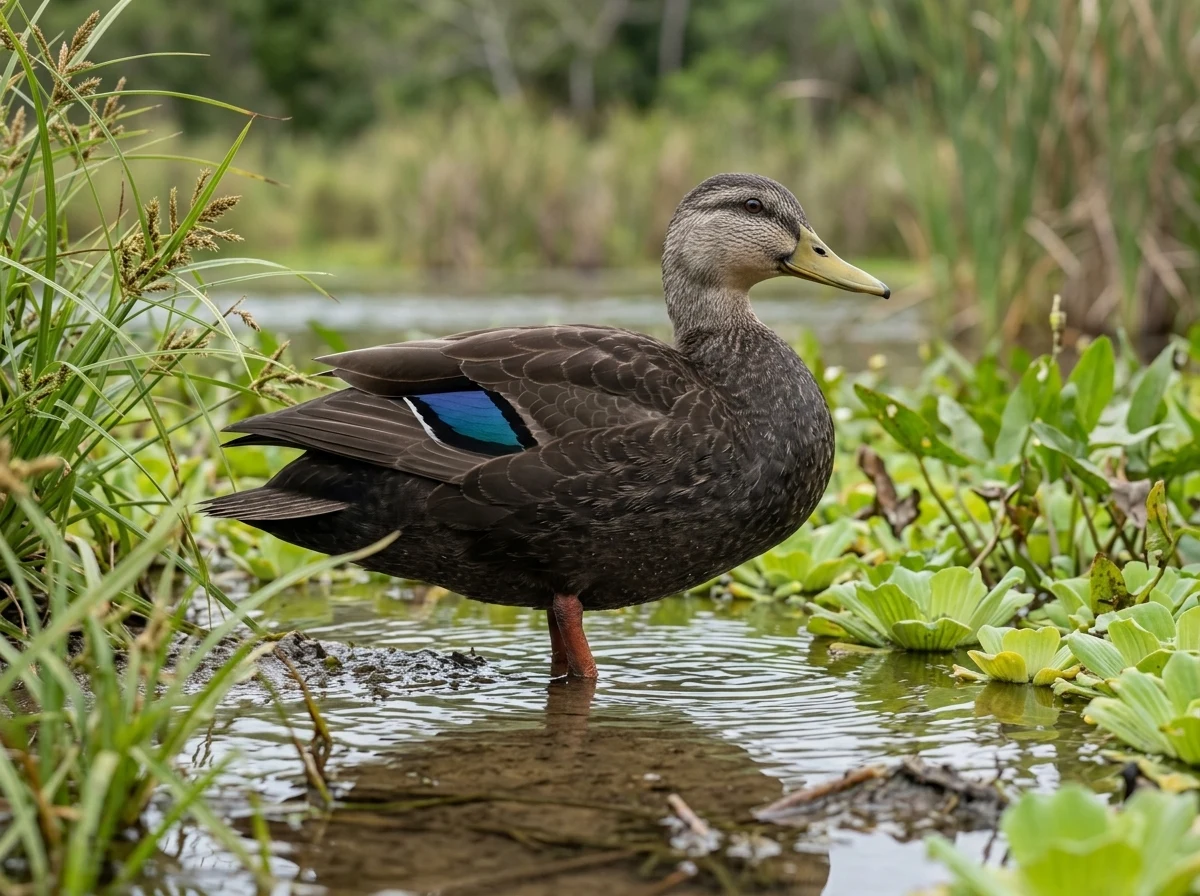
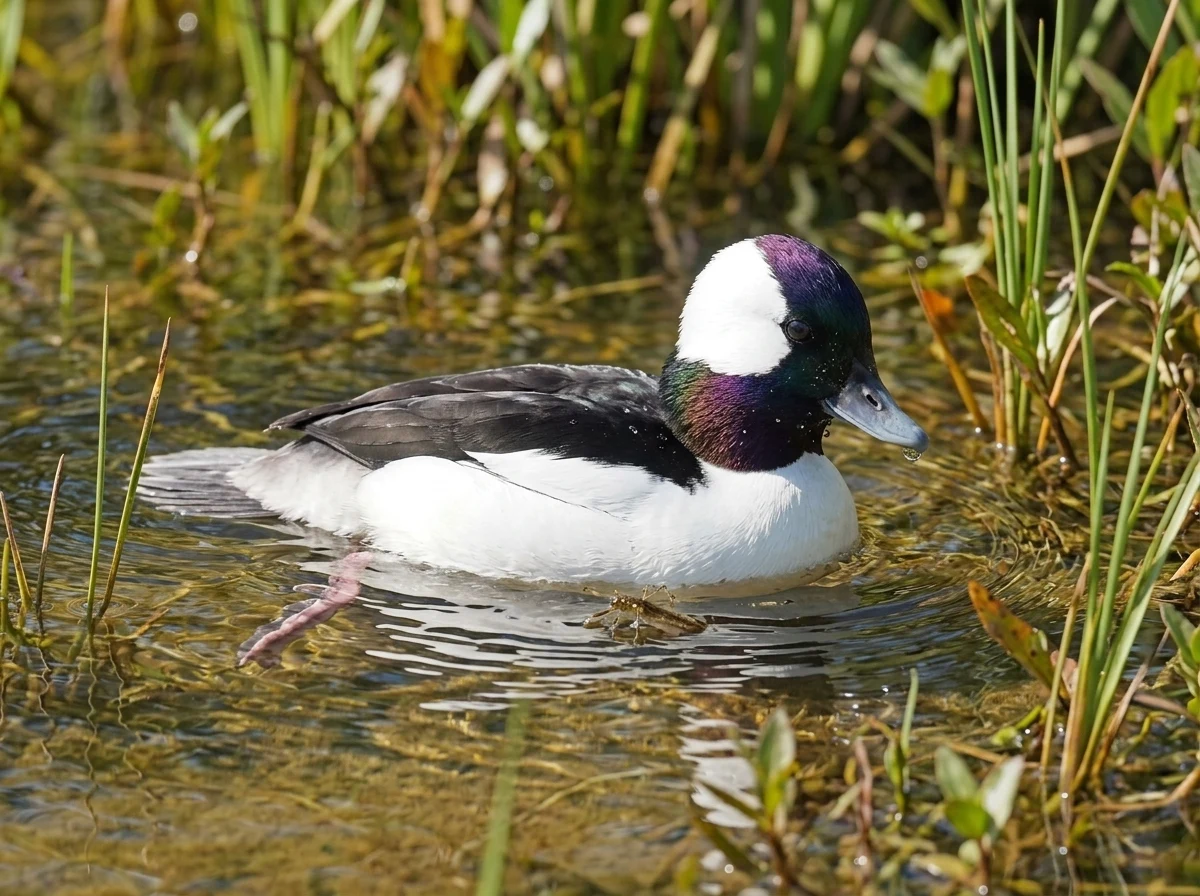
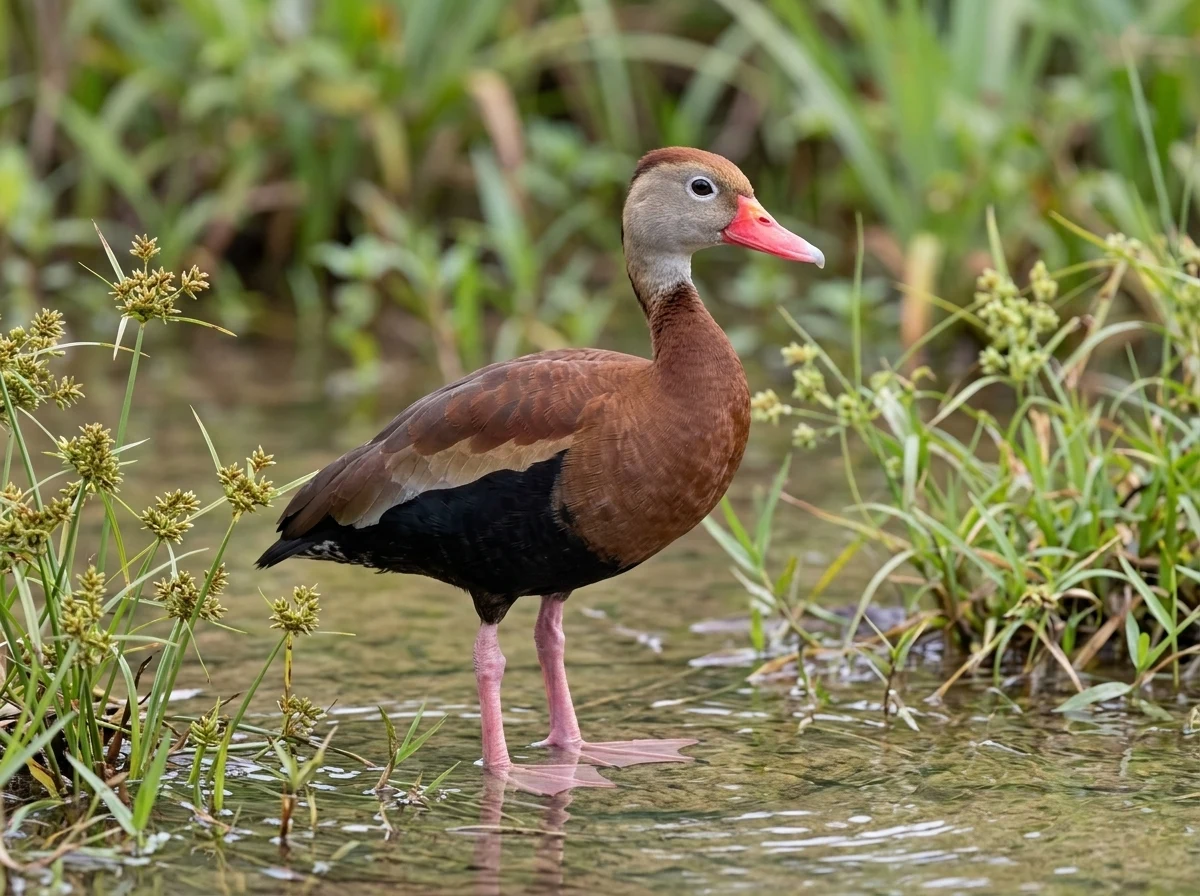
"Pato negro" (black duck) is confusing too. The Ring-necked Duck, called Pato Acollarado in Puerto Rico, is the bird known as Pato Negro in the Dominican Republic, while Pato Oscuro is the American Black Duck, another accidental. The same happens with "pinto": Pato Pinto is the Bufflehead, while Chiriría Pinta is the Black-bellied Whistling-Duck. Always check the scientific name so you do not mix species.
06
Where to watch them without disturbance
Laguna Cartagena in Lajas is the only freshwater marsh of significant size left in southwestern Puerto Rico: the refuge covers 773 acres, more than 300 of them lagoon, although by 2004 over 90 percent was covered by cattails. Humacao, Caño Tiburones, and the Boquerón area round out the wetlands where the Atlas places the resident species.
Resident ducks are few and under pressure, so watch from roads, trails, and towers without entering the vegetation or approaching females with young. Arrive early or at dusk—whistling-ducks move at night—and use a scope. If you see signs of hunting or wetland filling, note the place and date and report it to the DNER.
Linked profiles
Fifteen ducks to compare before heading to the lagoon
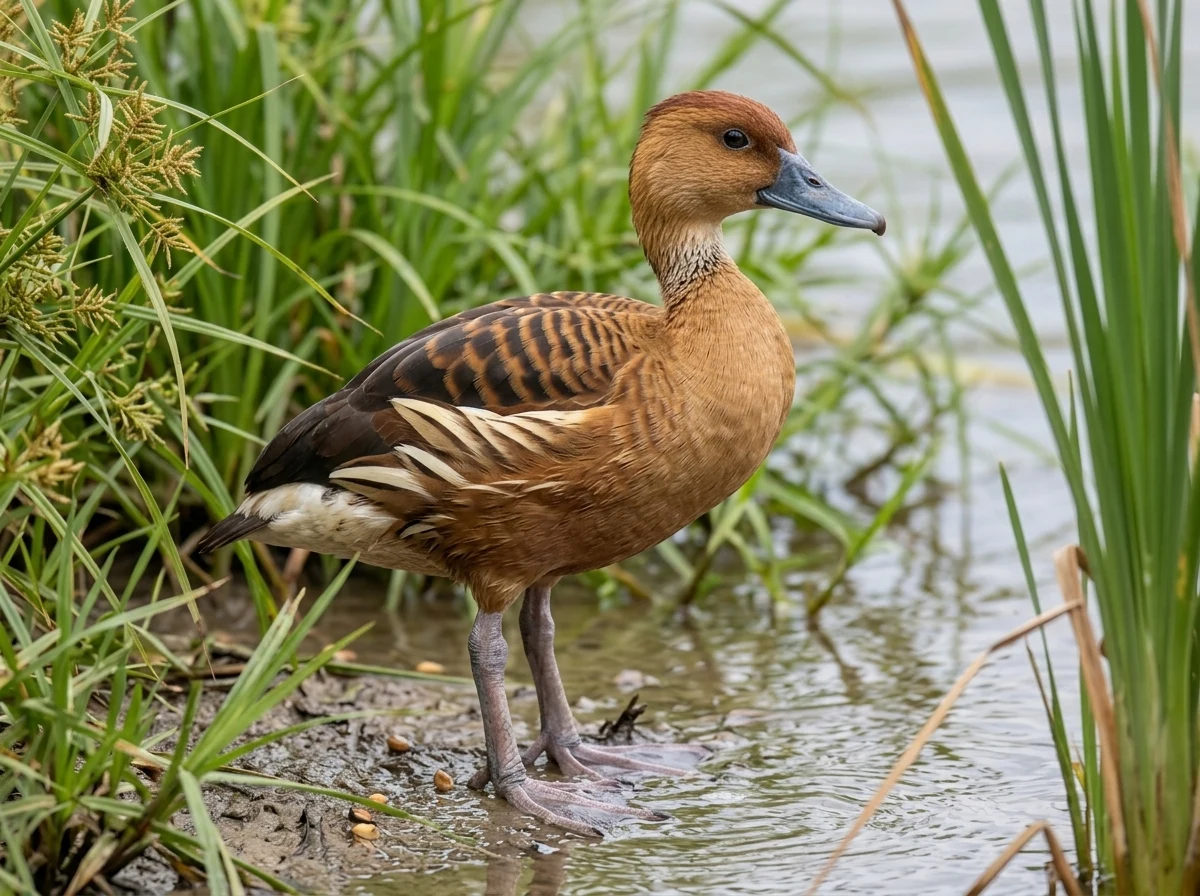
The four residents come first, then the common migrant and the rare visitors whose names get mixed up most.
Sound archive
Hear its voice
Explore real songs and calls. The spectrogram turns each sound into a visual trace of time and frequency.
XC173684Recording 1 of 3call

Play: call by Eric DeFonso
Choose another recording
Sound recorded by Eric DeFonso · XC173684 · CC BY-NC-SA 4.0. Visualization by Stichting Xeno-canto voor Natuurgeluiden.
Every recording retains the creator, catalogue number, and license published by Xeno-canto. Metadata via GBIF ↗
01
What ducks live in Puerto Rico?
Four ducks breed in Puerto Rico: West Indian Whistling-Duck, White-cheeked Pintail, Ruddy Duck, and Masked Duck. Blue-winged Teal is the most frequent migrant, and most other recorded ducks are rare or accidental visitors.
02
What is the pato gris?
Pato Gris is the Puerto Rican name for the Gadwall (Mareca strepera), a North American duck that is accidental in Puerto Rico. The male is gray with a black stern, and both sexes show a white wing patch. A tame gray duck on a city pond may be domestic.
03
What is the black duck called?
It depends on the country. In the Dominican Republic, Pato Negro is the Ring-necked Duck, called Pato Acollarado in Puerto Rico. In Puerto Rico, Pato Oscuro is the American Black Duck. Both are rare visitors here.
04
What is a chiriría?
Chiriría is the Puerto Rican name for whistling-ducks (genus Dendrocygna). The only one that breeds in Puerto Rico is the West Indian Whistling-Duck, a nocturnal Caribbean duck the DNER lists as critically endangered. Black-bellied and Fulvous Whistling-Ducks are accidental.
05
Are there ducks endemic to Puerto Rico?
No. No duck is found only in Puerto Rico. West Indian Whistling-Duck is restricted to the West Indies, but it also lives in Cuba, Hispaniola, Jamaica, the Bahamas, and other islands.
06
When is the best time to see ducks in Puerto Rico?
The four residents are present year-round, although water levels affect where they are. Migrants such as Blue-winged Teal occur from fall through spring and are most common at Laguna Cartagena in spring. Early morning and dusk are the best times.
Keep exploring
Connected routes
Sources and review
The evidence is one link away.
These sources support the editorial scope of this guide. Bird profiles also retain their own taxonomy, occurrence, and conservation references.
Reviewed:
01↗02↗03↗04↗05↗06↗07↗08↗09↗10↗11↗
U.S. Forest Service Research and Development
Puerto Rico Breeding Bird Atlas
Distribution and breeding timing for 130 species breeding in Puerto Rico and its satellite islands.Journal of Caribbean Ornithology
Flock size of West Indian Whistling-Ducks in Puerto Rico
2016 night counts at Laguna Cartagena (mean 131.8, high 153) and the daily movement to Boquerón Wildlife Refuge.U.S. Fish and Wildlife Service (archivo NPS History)
Cabo Rojo and Laguna Cartagena refuges bird list
Seasonal abundance of ducks, rails, grebes, and pelicans; Laguna Cartagena size and cattail cover.BirdsCaribbean
Resident and migratory ducks of the West Indies
Common names for each duck in Puerto Rico and the Dominican Republic.Sociedad Ornitológica Puertorriqueña
Official bird list
Local names, occurrence categories, and the public summary of 17 endemics.National Audubon Society
White-cheeked Pintail field guide
Field marks: white cheeks, red bill base, and pointed tail.U.S. Fish and Wildlife Service
Laguna Cartagena National Wildlife Refuge
Importance of the freshwater wetland for resident and migratory waterbirds.National Audubon Society
Ruddy Duck field guide
Male plumage, stiff tail, and diving behavior.National Audubon Society
Masked Duck field guide
Male black face, female facial stripes, and secretive habits.National Audubon Society
Blue-winged Teal field guide
Male white crescent, blue wing patch, and long migration.National Audubon Society
Gadwall field guide
Gadwall marks: gray male with black stern and white wing patch.The atlas continues