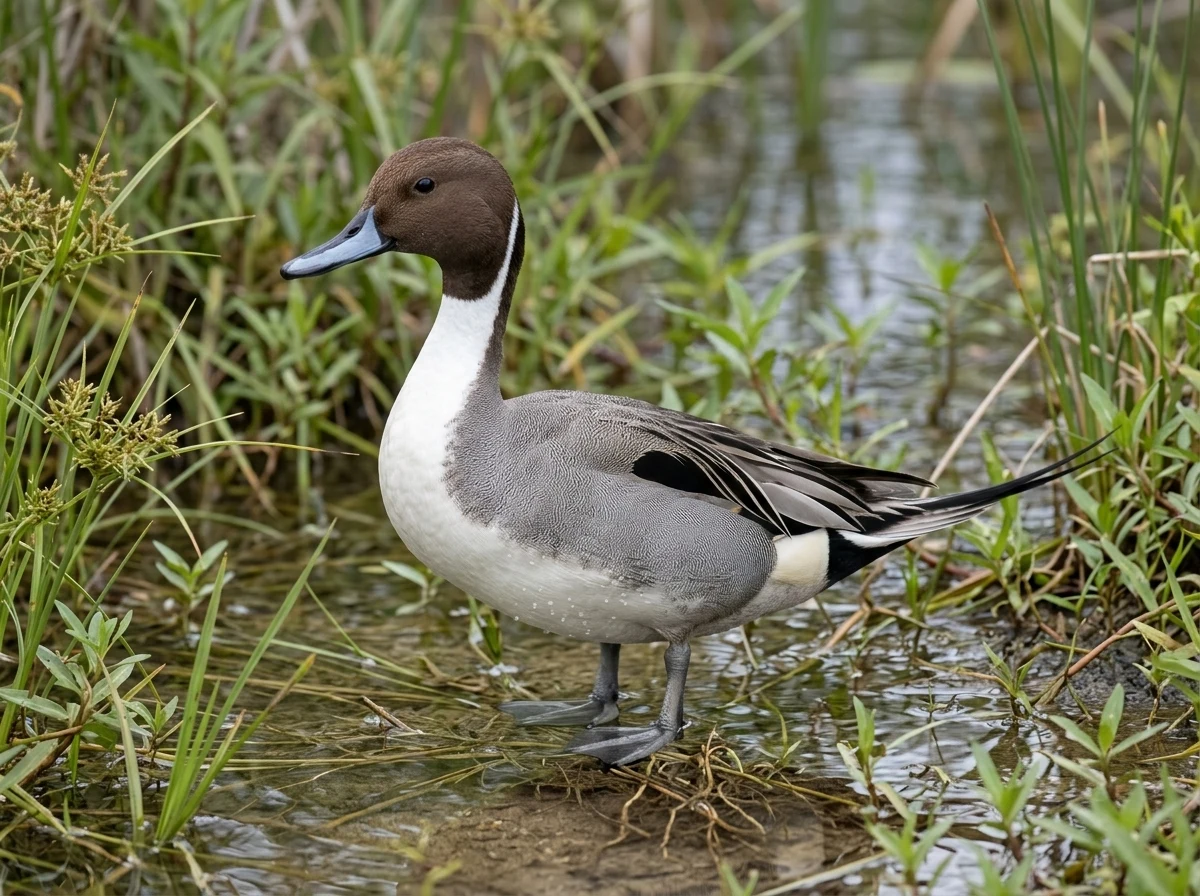
 AI
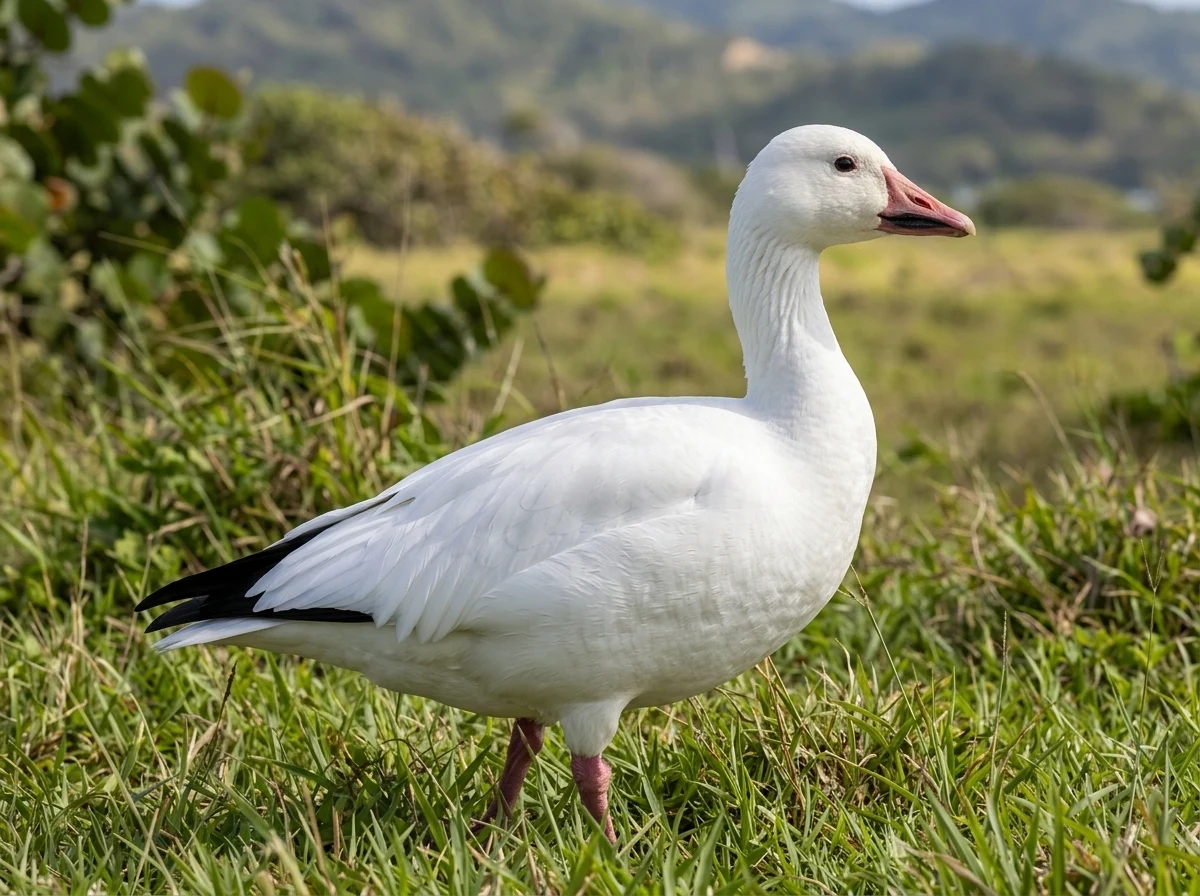
AIAI reconstruction created with Nano Banana 2 · 1K, grounded in the profile’s documented taxonomy, habitat, natural-history sources, and an open-license visual reference when available. It is an interpretive image, not documentary evidence. Image policy →

Northern Pintail
Pato Pescuecilargo
Anas acuta
The pintail or northern pintail (Anas acuta) is a duck species with wide geographic distribution that breeds in the northern areas of Europe and across the Palearctic and North America. It is migratory and winters south of its breeding range as far as the equator. Unusually for a bird with such a large range, it has no geographical subspecies, although the possibly conspecific duck Eaton's pintail is considered to be a separate species. The Northern Pintail is a large duck, and the long central tail feathers of the male give the species its English and scientific names. Both sexes have blue-grey bills and grey legs and feet. The drake is more striking, with a thin white stripe running from the back of its chocolate-coloured head down its neck to its mostly white underparts. The drake also has attractive grey, brown, and black markings on its back and sides. The hen's plumage is more subtle and subdued, with drab brown feathers similar to those of other female dabbling ducks. Hens make a rough quacking sound and the drakes a flute-like whistle. The Northern Pintail is a bird of open wetlands that nests on the ground, often some distance from water. It feeds by dabbling for plant food, adding small invertebrates to its diet during the nesting season. It is highly gregarious when not breeding, forming large mixed flocks with other duck species. This duck's population is affected by predators, parasites and avian diseases. Human activities, such as agriculture, hunting and fishing, have also had a significant impact on numbers. Despite this, the species is not globally threatened due to its large range and abundance.
Sound archive
Hear its voice
Explore real songs and calls. The spectrogram turns each sound into a visual trace of time and frequency.

Play: nocturnal flight call by Vandousselaere Patrick
Choose another recording
Sound recorded by Vandousselaere Patrick · XC1073332 · CC BY-NC-SA 4.0. Visualization by Stichting Xeno-canto voor Natuurgeluiden.
Every recording retains the creator, catalogue number, and license published by Xeno-canto. Metadata via GBIF ↗
Island profile
About the Northern Pintail
This atlas includes Northern Pintail (Anas acuta) with atlas status “Accidental / vagrant” within scope “Avibase inferred core 380.” Global trait data associate it primarily with wetland; consult the linked records to resolve its Puerto Rico habitat use.
Conservation
Least Concern
IUCN LC
- Global IUCN
- LC
- Puerto Rico DNER
- No current listing in source crosswalk
- Federal ESA
- No current listing in source crosswalk
- Critical habitat
- Not identified in source crosswalk
Natural history
How it lives
- Habitat
- wetlands
- Elevation
- 0–4000 m
- Nest
- Scrape · Ground
- Clutch
- 3–12 eggs
- Social behavior
- Pairs / family groups
Keep exploring
This bird belongs to 6 paths through the atlas.
Related in the atlas
Where to fly next
Connected by taxonomy, habitat, occurrence, and conservation.
 AI
AI AI
AI AI
AI AI
AI AI
AI AI
AI
Evidence trail