 AI
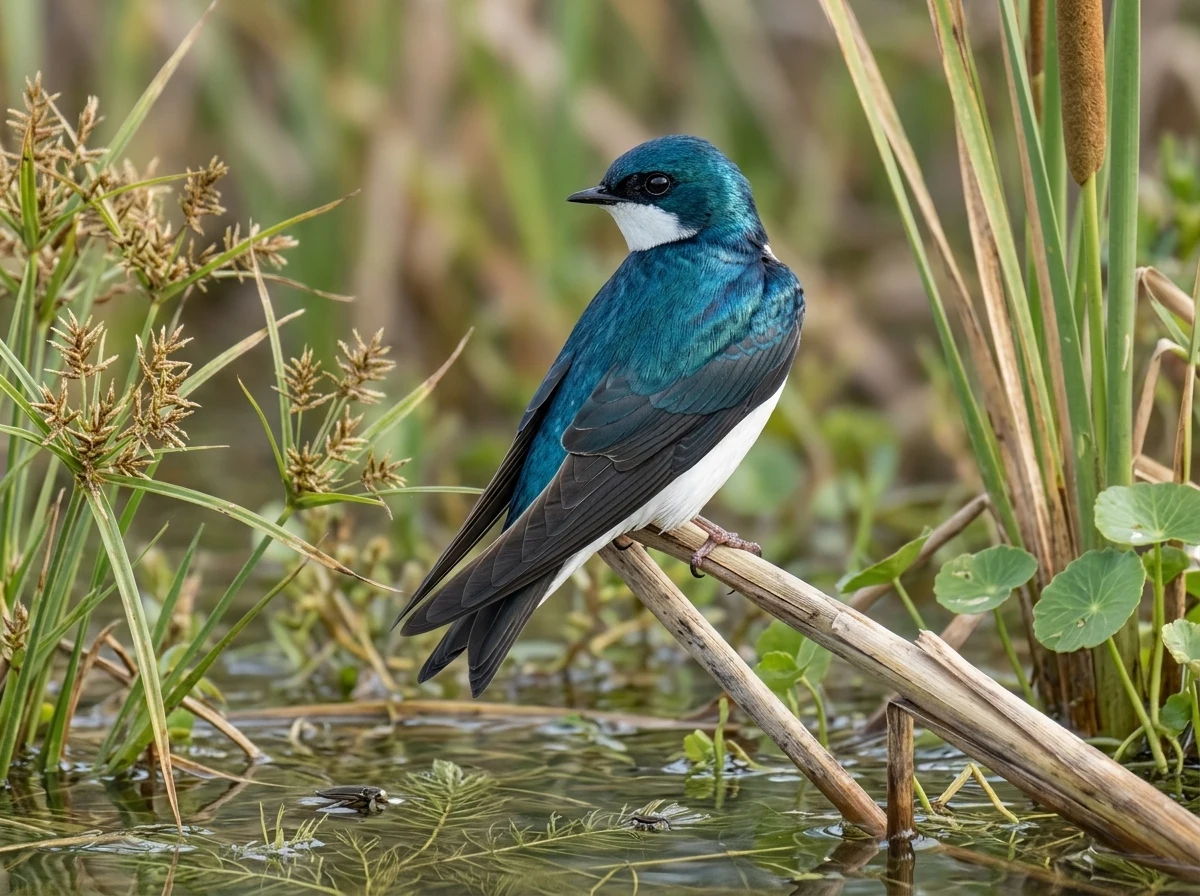
AIAI reconstruction created with Nano Banana 2 · 1K, grounded in the profile’s documented taxonomy, habitat, natural-history sources, and an open-license visual reference when available. It is an interpretive image, not documentary evidence. Image policy →
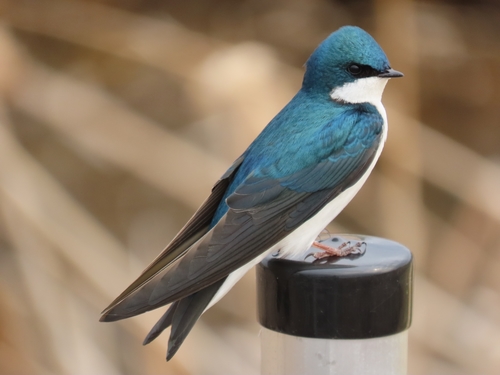
Tree Swallow
Golondrina Bicolor
Tachycineta bicolor
The tree swallow (Tachycineta bicolor) is a migratory bird of the family Hirundinidae. Found in the Americas, the tree swallow was first described in 1807 by French ornithologist Louis Vieillot as Hirundo bicolor. It has since been moved to its current genus, Tachycineta, within which its phylogenetic placement is debated. The tree swallow has glossy blue-green upperparts, with the exception of the blackish wings and tail, and white underparts. The bill is black, the eyes dark brown, and the legs and feet pale brown. The female is generally duller than the male, and the first-year female has mostly brown upperparts, with some blue feathers. Juveniles have brown upperparts, and gray-brown-washed breasts. The tree swallow breeds in the US and Canada. It winters along southern US coasts south, along the Gulf Coast, to Panama and the northwestern coast of South America, and in the West Indies. The tree swallow nests either in isolated pairs or loose groups, in both natural and artificial cavities. Breeding can start as soon as early May, although this date is occurring earlier because of climate change, and it can end as late as July. This bird is generally socially monogamous (although about 8% of males are polygynous), with high levels of extra-pair paternity. This can benefit the male, but since the female controls copulation, the lack of resolution on how this behavior benefits females makes the high level of extra-pair paternity puzzling. The female incubates the clutch of two to eight (but usually four to seven) pure white eggs for around 14 to 15 days. The chicks hatch slightly asynchronously, allowing the female to prioritize which chicks to feed in times of food shortage. They generally fledge about 18 to 22 days after hatching. The tree swallow is sometimes considered a model organism, due to the large amount of research done on it. An aerial insectivore, the tree swallow forages both alone and in groups, eating mostly insects, in addition to mollusks, spiders, and fruit. The nestlings, like the adult, primarily eat insects, fed to it by both sexes. This swallow is vulnerable to parasites, but, when on nestlings, these do little damage. The effect of disease can become stronger as a tree swallow gets older, as some parts of the immune system decline with age. Acquired T cell-mediated immunity, for example, decreases with age, whereas both innate and acquired humoral immunity do not. Because of its large range and stable population, the tree swallow is considered to be least concern by the International Union for Conservation of Nature. In the US, it is protected by the Migratory Bird Treaty Act of 1918, and in Canada by the Migratory Birds Convention Act. This swallow is negatively affected by human activities, such as the clearing of forests; acidified lakes can force a breeding tree swallow to go long distances to find calcium-rich food items to feed to its chicks.
Sound archive
Hear its voice
Explore real songs and calls. The spectrogram turns each sound into a visual trace of time and frequency.

Play: song, call by Ed Pandolfino
Choose another recording
Sound recorded by Ed Pandolfino · XC1089600 · CC BY-NC-SA 4.0. Visualization by Stichting Xeno-canto voor Natuurgeluiden.
Every recording retains the creator, catalogue number, and license published by Xeno-canto. Metadata via GBIF ↗
Island profile
About the Tree Swallow
This atlas includes Tree Swallow (Tachycineta bicolor) with atlas status “Accidental / vagrant” within scope “Avibase inferred core 380.” Global trait data associate it primarily with wetland; consult the linked records to resolve its Puerto Rico habitat use.
Conservation
Least Concern
IUCN LC
- Global IUCN
- LC
- Puerto Rico DNER
- No current listing in source crosswalk
- Federal ESA
- No current listing in source crosswalk
- Critical habitat
- Not identified in source crosswalk
Natural history
How it lives
- Habitat
- wetlands
- Elevation
- 0–2500 m
- Nest
- Tree cavity · Pole; Tree
- Clutch
- 2–8 eggs
- Social behavior
- Social / flocking; Pairs / family groups; Singly and pairs; Solitary
Keep exploring
This bird belongs to 6 paths through the atlas.
Related in the atlas
Where to fly next
Connected by taxonomy, habitat, occurrence, and conservation.
 AI
AI AI
AI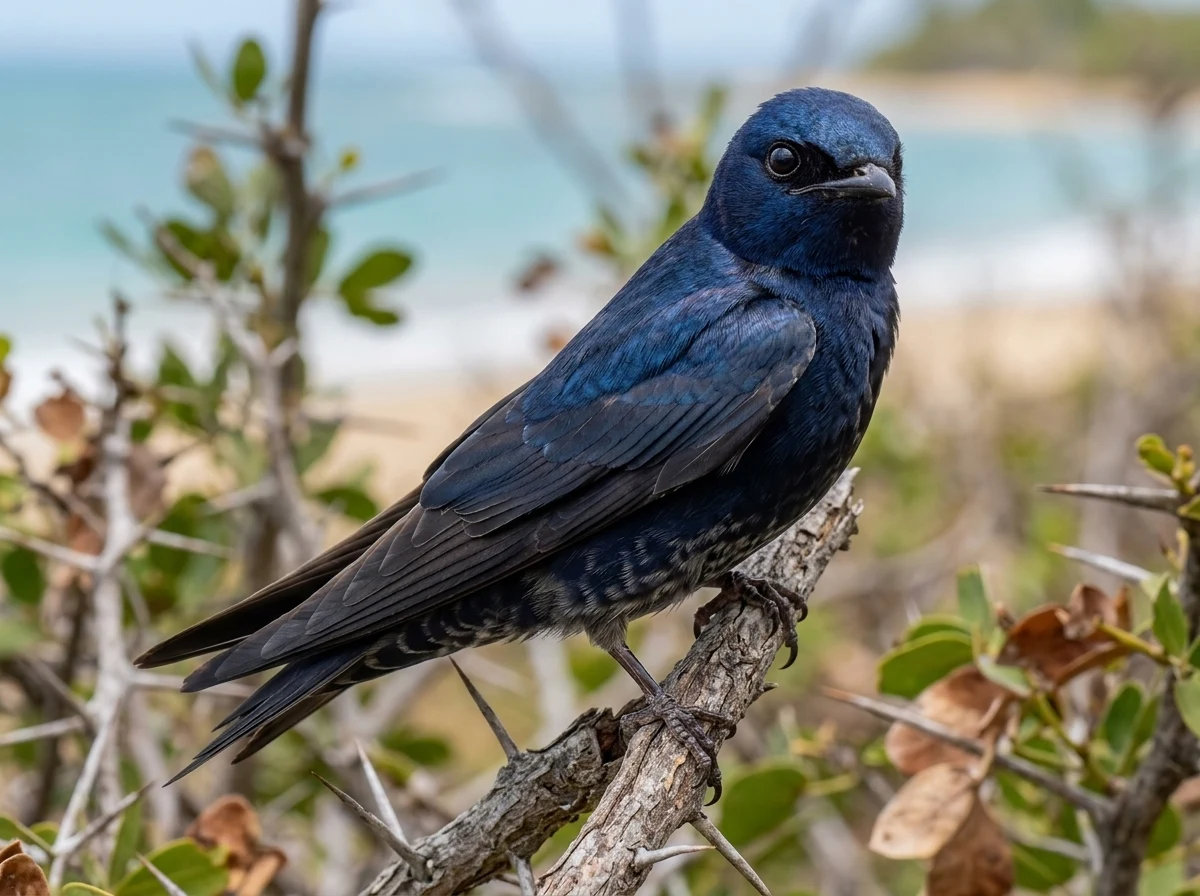 AI
AI AI
AI AI
AI AI
AI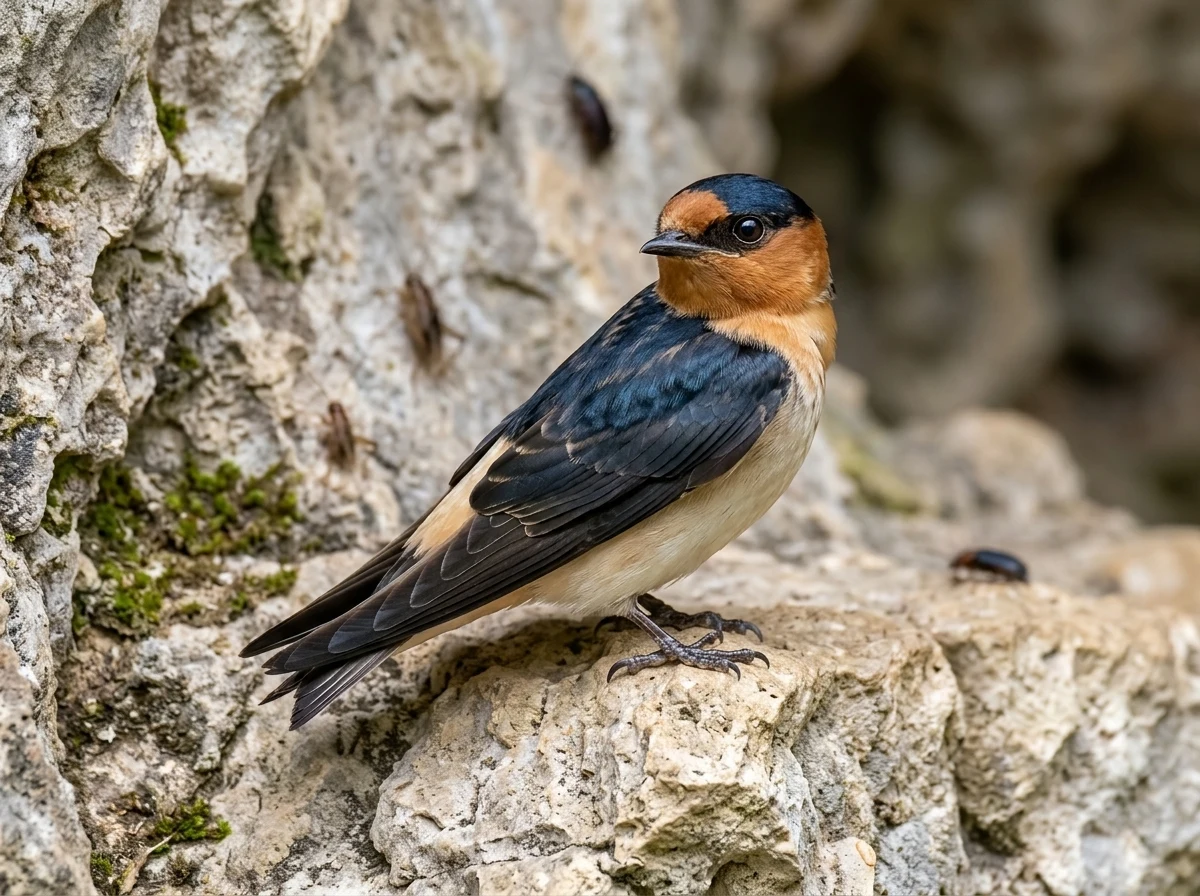
Evidence trail