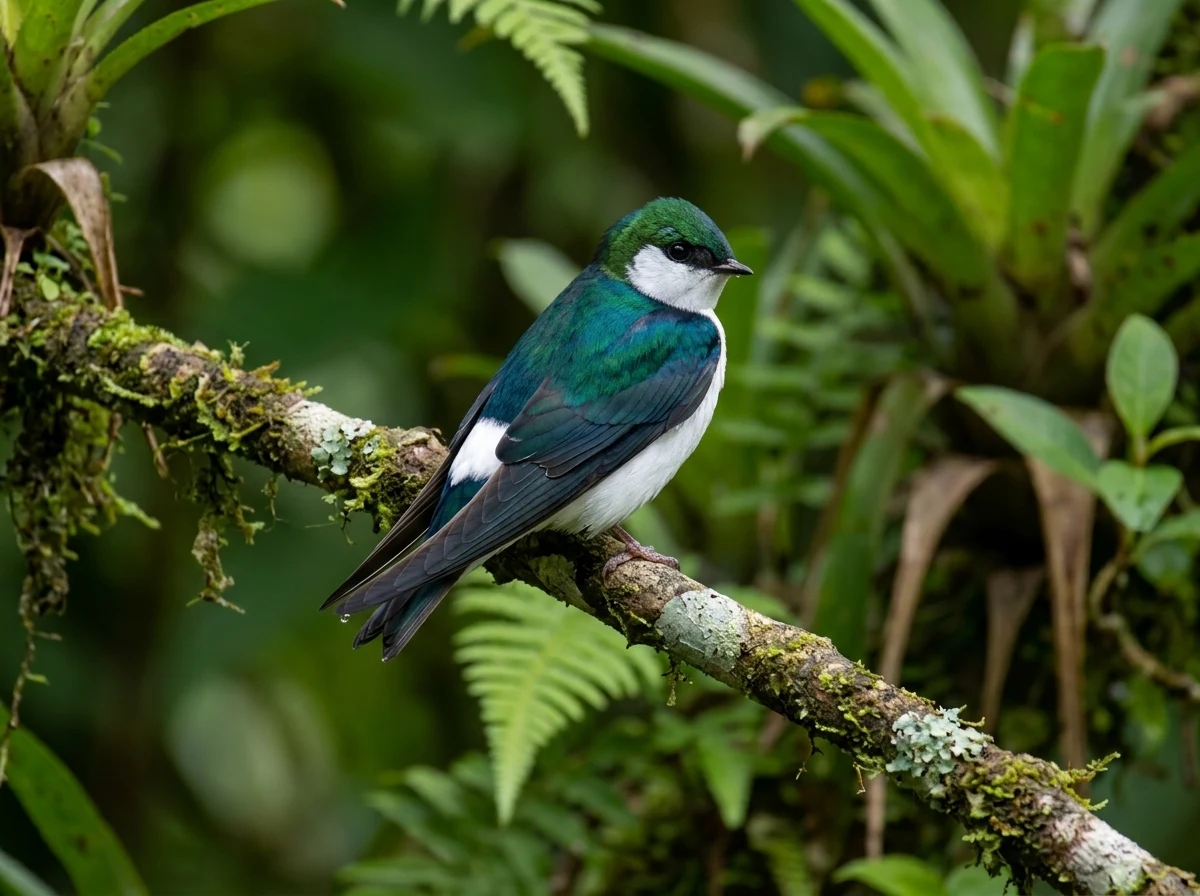
 AI
AIAI reconstruction created with Nano Banana 2 · 1K, grounded in the profile’s documented taxonomy, habitat, natural-history sources, and an open-license visual reference when available. It is an interpretive image, not documentary evidence. Image policy →
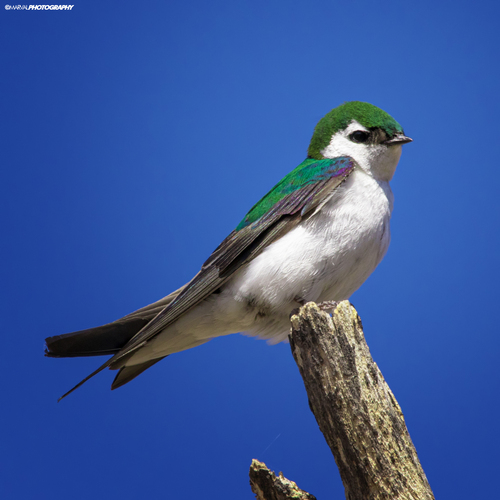
Violet-green Swallow
Golondrina Verdemar
Tachycineta thalassina
The violet-green swallow (Tachycineta thalassina) is a small North American passerine bird in the swallow family. These aerial insectivores are distributed along the west coast from Alaska to Mexico, extending as far east as Montana and Texas. With an appearance very similar to the tree swallow, these individuals can be identified by the white rump side-patches that appear to separate their green back and purple tail. Violet-green swallows are secondary cavity nesters, found in a number of habitats including deciduous and coniferous forest. In addition to nesting in tree holes within these habitats, they are also widely observed nesting in the cracks of large cliffs.
Sound archive
Hear its voice
Explore real songs and calls. The spectrogram turns each sound into a visual trace of time and frequency.

Play: flight call by Greg Irving
Choose another recording
Sound recorded by Greg Irving · XC1133656 · CC BY-NC-SA 4.0. Visualization by Stichting Xeno-canto voor Natuurgeluiden.
Every recording retains the creator, catalogue number, and license published by Xeno-canto. Metadata via GBIF ↗
Island profile
About the Violet-green Swallow
This atlas includes Violet-green Swallow (Tachycineta thalassina) with atlas status “Accidental / vagrant” within scope “Avibase inferred core 380.” Global trait data associate it primarily with woodland; consult the linked records to resolve its Puerto Rico habitat use.
Conservation
Least Concern
IUCN LC
- Global IUCN
- LC
- Puerto Rico DNER
- No current listing in source crosswalk
- Federal ESA
- No current listing in source crosswalk
- Critical habitat
- Not identified in source crosswalk
Natural history
How it lives
- Habitat
- forests
- Elevation
- 0–3500 m
- Nest
- Tree cavity; Other bird's nest · Building; Ground; Rock; Tree
- Clutch
- 2–7 eggs
- Social behavior
- Social / flocking; Pairs / family groups; Singly and pairs; Solitary
Keep exploring
This bird belongs to 6 paths through the atlas.
Related in the atlas
Where to fly next
Connected by taxonomy, habitat, occurrence, and conservation.
 AI
AI AI
AI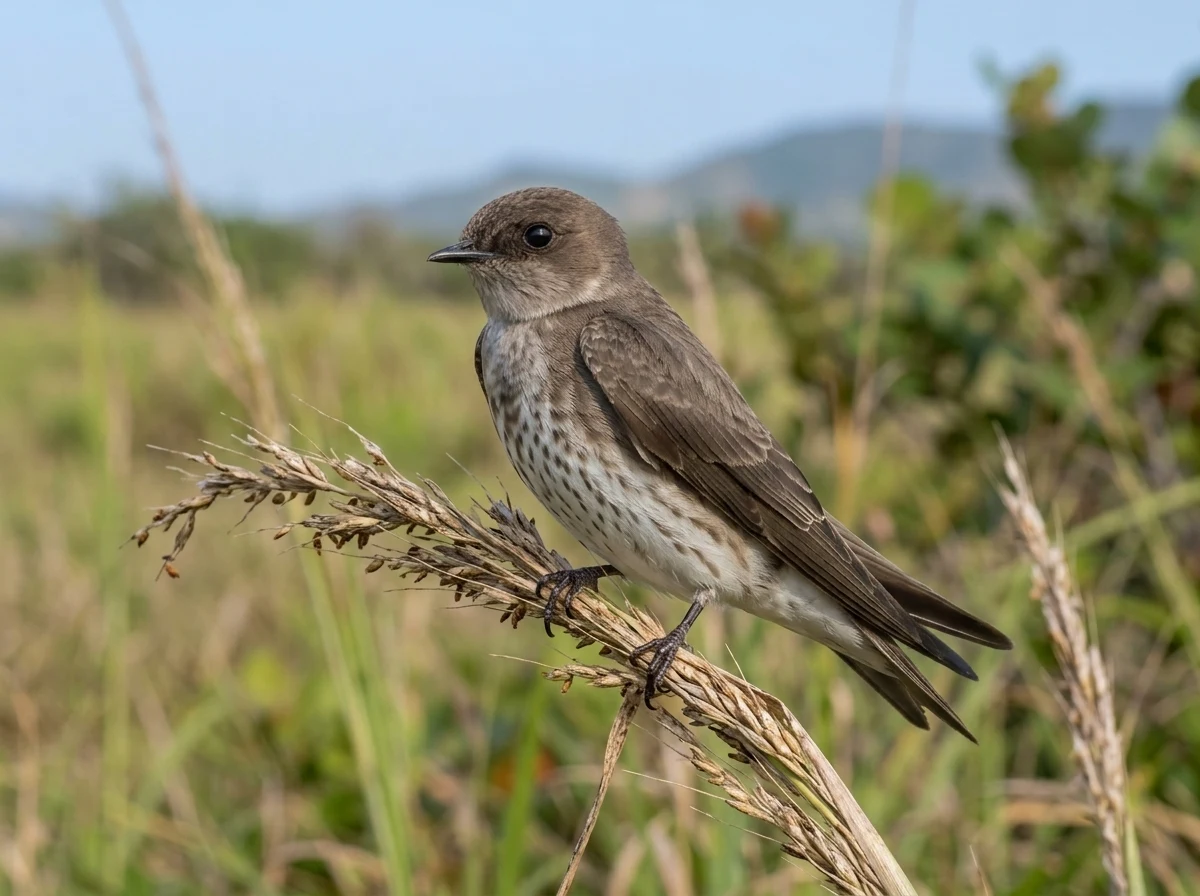 AI
AI AI
AI AI
AI AI
AI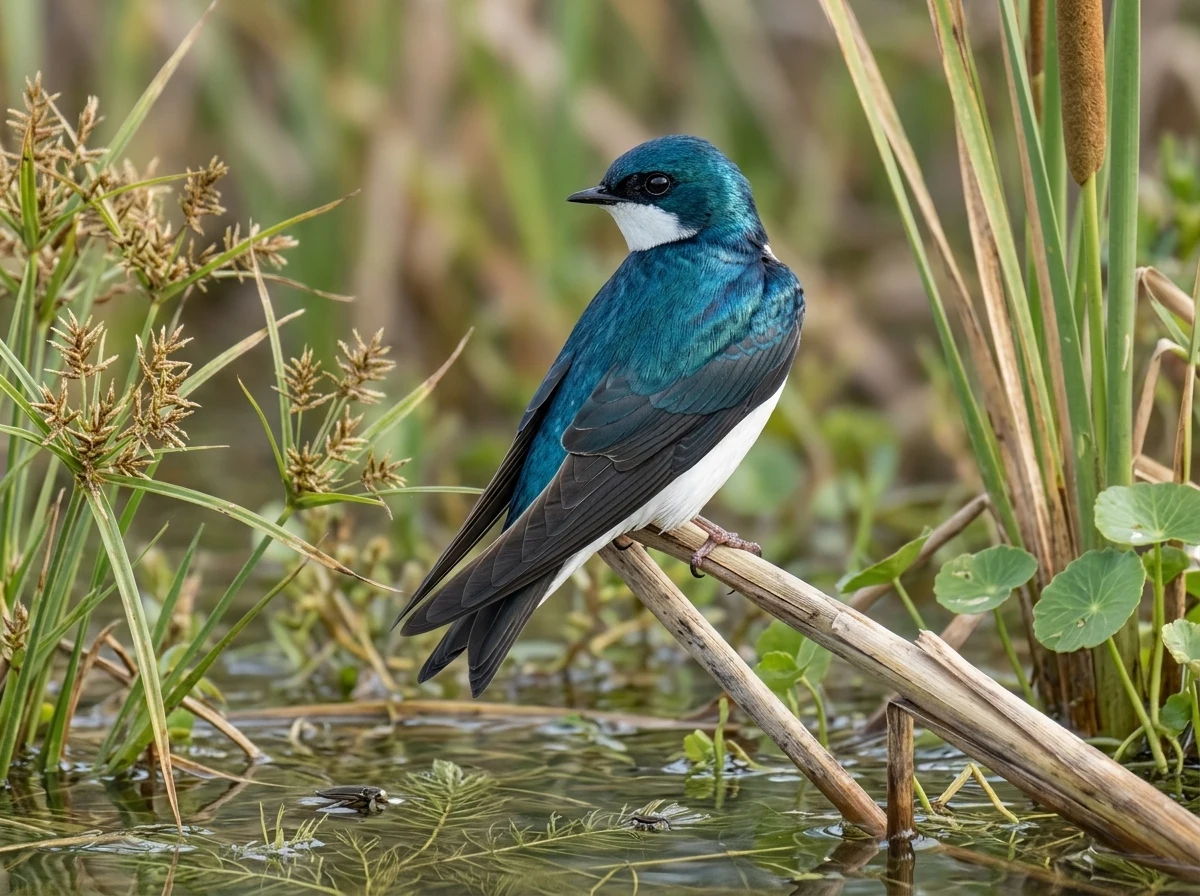
Evidence trail