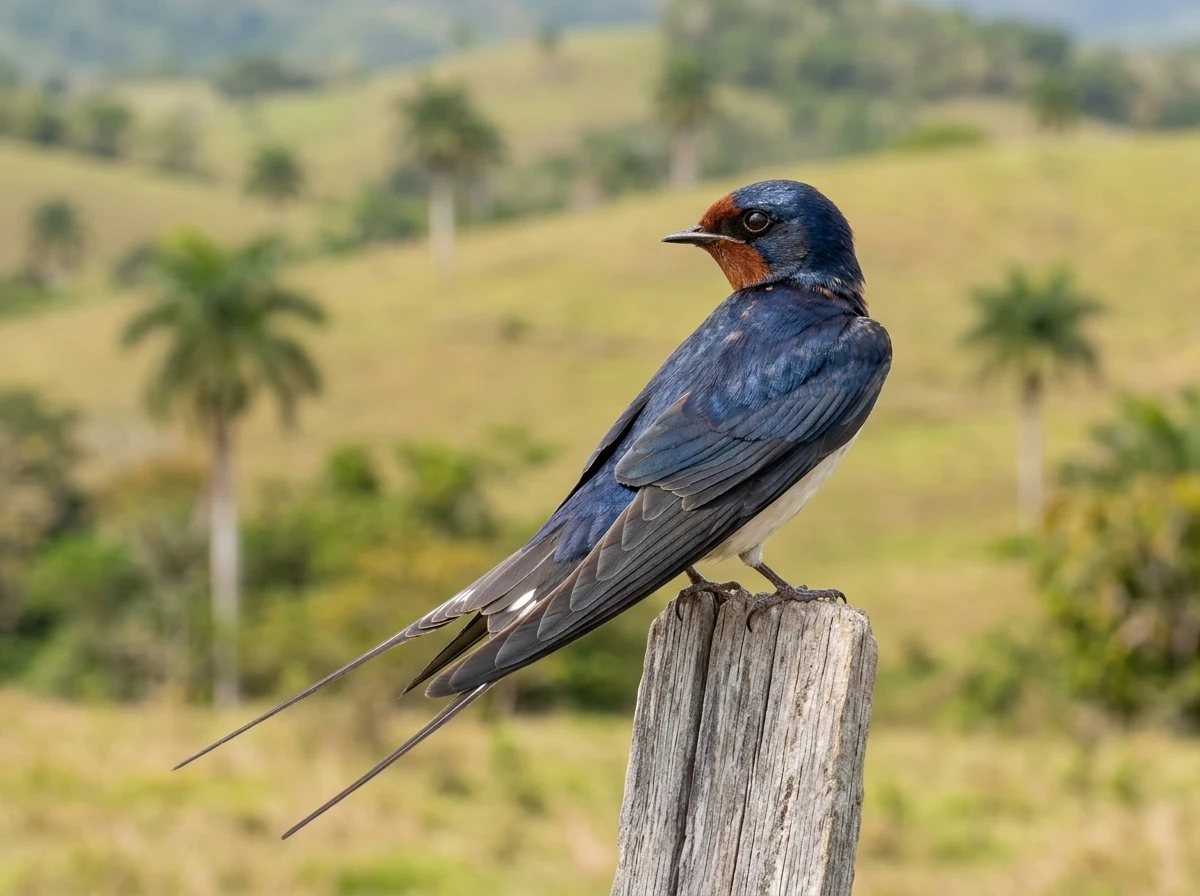
 AI
AIAI reconstruction created with Nano Banana 2 · 1K, grounded in the profile’s documented taxonomy, habitat, natural-history sources, and an open-license visual reference when available. It is an interpretive image, not documentary evidence. Image policy →
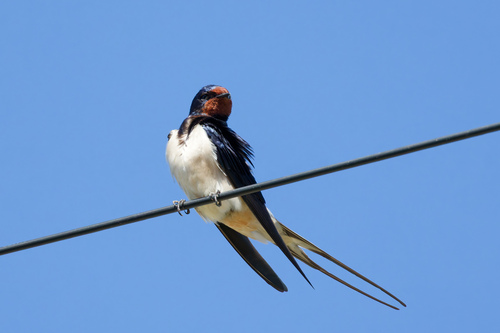
Barn Swallow
Golondrina Horquillada
Hirundo rustica
The barn swallow (Hirundo rustica) is the most widespread species of swallow in the world, occurring on all continents, with vagrants reported even in Antarctica. It is a distinctive passerine bird with blue upperparts and a long, deeply forked tail. In Anglophone Europe, it is just called the swallow; in northern Europe, it is the only member of family Hirundinidae called a "swallow" rather than a "martin". There are eight subspecies of barn swallow, which breed across the Northern Hemisphere. Two subspecies (H. r. savignii and H. r. transitiva) have fairly restricted ranges in the Nile valley and eastern Mediterranean, respectively. The other six are more widespread, with winter ranges covering much of the Southern Hemisphere. The barn swallow is a bird of open country that normally nests in man-made structures and consequently has spread with human expansion. It builds a cup nest from mud pellets in barns or similar structures and feeds on insects caught in flight. This species lives in close association with humans, and its insect-eating habits mean that it is tolerated by humans; this acceptance was reinforced in the past by superstitions regarding the bird and its nest. There are frequent cultural references to the barn swallow in literary and religious works due to both its living in close proximity to humans and its annual migration. The barn swallow is the national bird of Austria and Estonia.
Sound archive
Hear its voice
Explore real songs and calls. The spectrogram turns each sound into a visual trace of time and frequency.

Play: flight call by Uku Paal
Choose another recording
Sound recorded by Uku Paal · XC1096504 · CC BY-NC-SA 4.0. Visualization by Stichting Xeno-canto voor Natuurgeluiden.
Every recording retains the creator, catalogue number, and license published by Xeno-canto. Metadata via GBIF ↗
Island profile
About the Barn Swallow
This atlas includes Barn Swallow (Hirundo rustica) with atlas status “Native / natural occurrence” within scope “Avibase inferred core 380.” Global trait data associate it primarily with plains; consult the linked records to resolve its Puerto Rico habitat use.
Conservation
Least Concern
IUCN LC
- Global IUCN
- LC
- Puerto Rico DNER
- No current listing in source crosswalk
- Federal ESA
- No current listing in source crosswalk
- Critical habitat
- Not identified in source crosswalk
Natural history
How it lives
- Habitat
- grasslands
- Elevation
- 0–3000 m
- Nest
- Cup / bowl · Building; Rock; Tree
- Clutch
- 2–7 eggs
- Social behavior
- Colonial; Social / flocking; Pairs / family groups; Singly and pairs; Solitary
Keep exploring
This bird belongs to 5 paths through the atlas.
Guides featuring this bird
Follow this record beyond the profile.
Identification, sound, place, and explanatory guides connecting this species to larger questions.
Related in the atlas
Where to fly next
Connected by taxonomy, habitat, occurrence, and conservation.
 AI
AI AI
AI AI
AI AI
AI AI
AI AI
AI
Evidence trail