 AI
AILearning guide
Build a Bird Food Web with Puerto Rico Birds
A practical template to connect producers, insects, fruits, insectivorous, frugivorous and omnivorous birds, and raptors, and to reason about what happens when a node disappears.
Reviewed: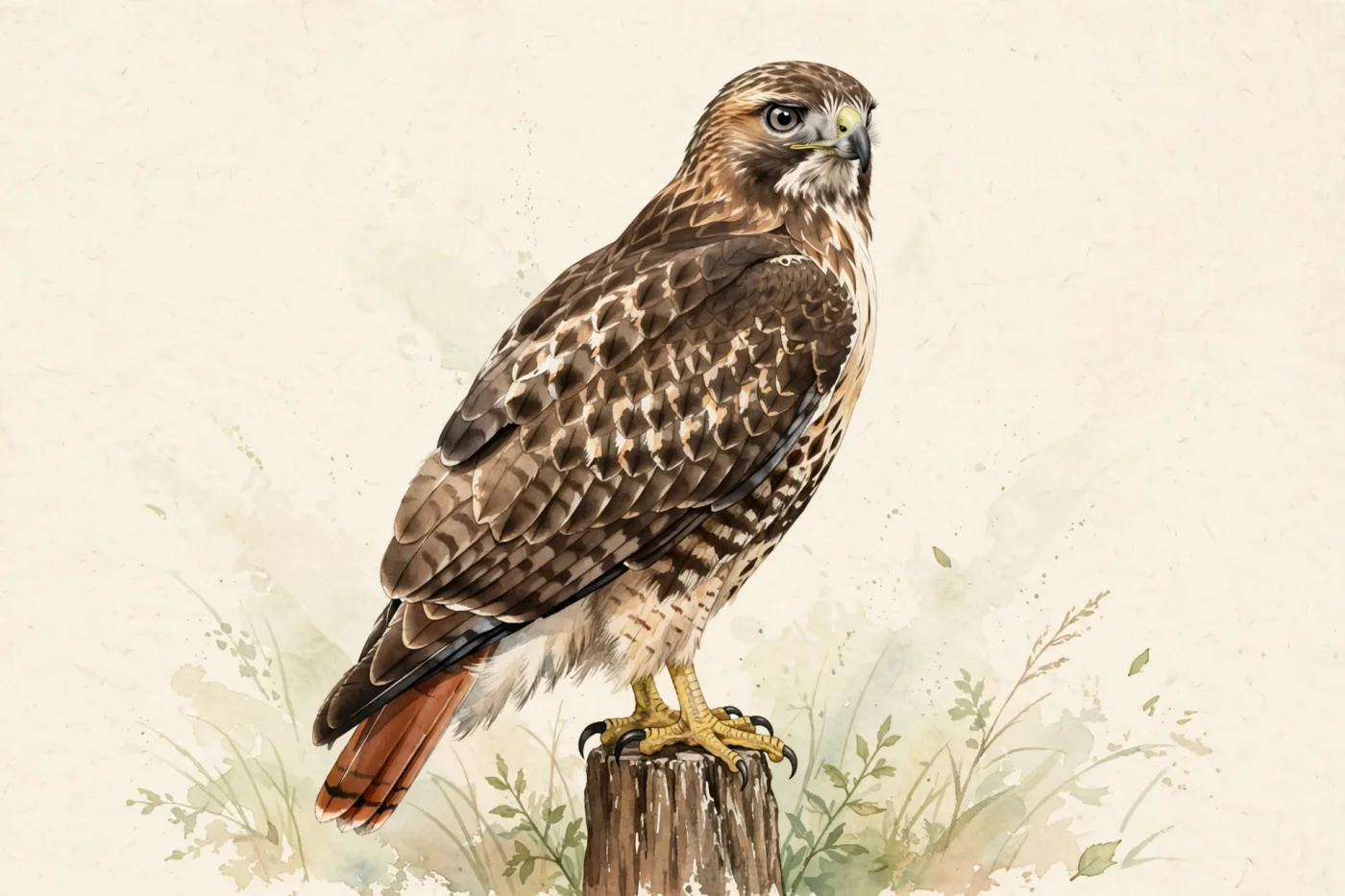
Prepared with AI assistance and linked sources. Illustrations are not field photographs.
A web, not a chain
A food web shows who eats whom and how energy moves from plants to animals. In Puerto Rico, that web includes producers such as leaves, nectar and fruits; consumers such as insects and other invertebrates; and birds that play different roles. Some birds eat mostly invertebrates, others feed on fruits or nectar, and others capture larger prey. Building the web with cards or drawings helps show that many species do not fit a single category.
This guide uses five birds documented in the catalog: the Puerto Rican Tody (Todus mexicanus), the Puerto Rican Euphonia (Chlorophonia sclateri), the Red-tailed Hawk (Buteo jamaicensis), the Green Heron (Butorides virescens) and the Bananaquit (Coereba flaveola). It is not a complete list of the island's food web, but a template for practicing connections with available evidence. The goal is for the reader to draw arrows, discuss information gaps and ask questions about the effect of removing a node.
Learning guide
Three takeaways
Cinco aves, varios papelesTemplate birdsTody, Euphonia, Red-tailed Hawk, Green Heron and Bananaquit occupy different positions in the web.
Insectos, frutos, néctar y presasResources and preyArrows can start from producers, invertebrates, fruits, nectar, fish and small vertebrates.
Quitar un nodo cambia la redKey questionThe activity asks you to predict which connections are lost or redirected if a node disappears.
01
What the evidence says about each bird
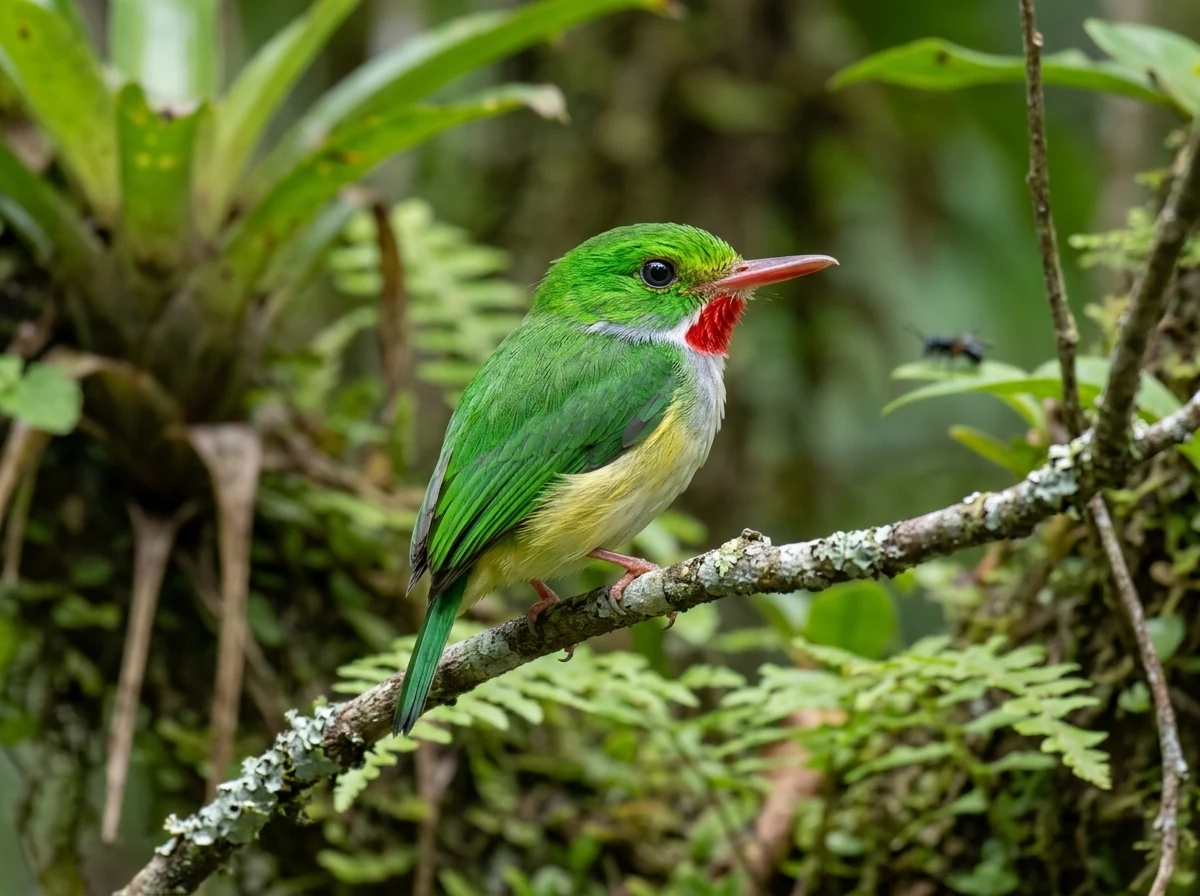
The Puerto Rican Tody is endemic to Puerto Rico and, according to its species account, eats mainly insects and spiders, which it usually plucks from the undersides of leaves; it is also known to eat small Anolis lizards, and adults have been observed feeding fruits to nestlings. That combination places it as a consumer of invertebrates and, to a lesser extent, small vertebrates and plant material. In a food web, its arrows can come from insects, spiders, lizards and fruits.
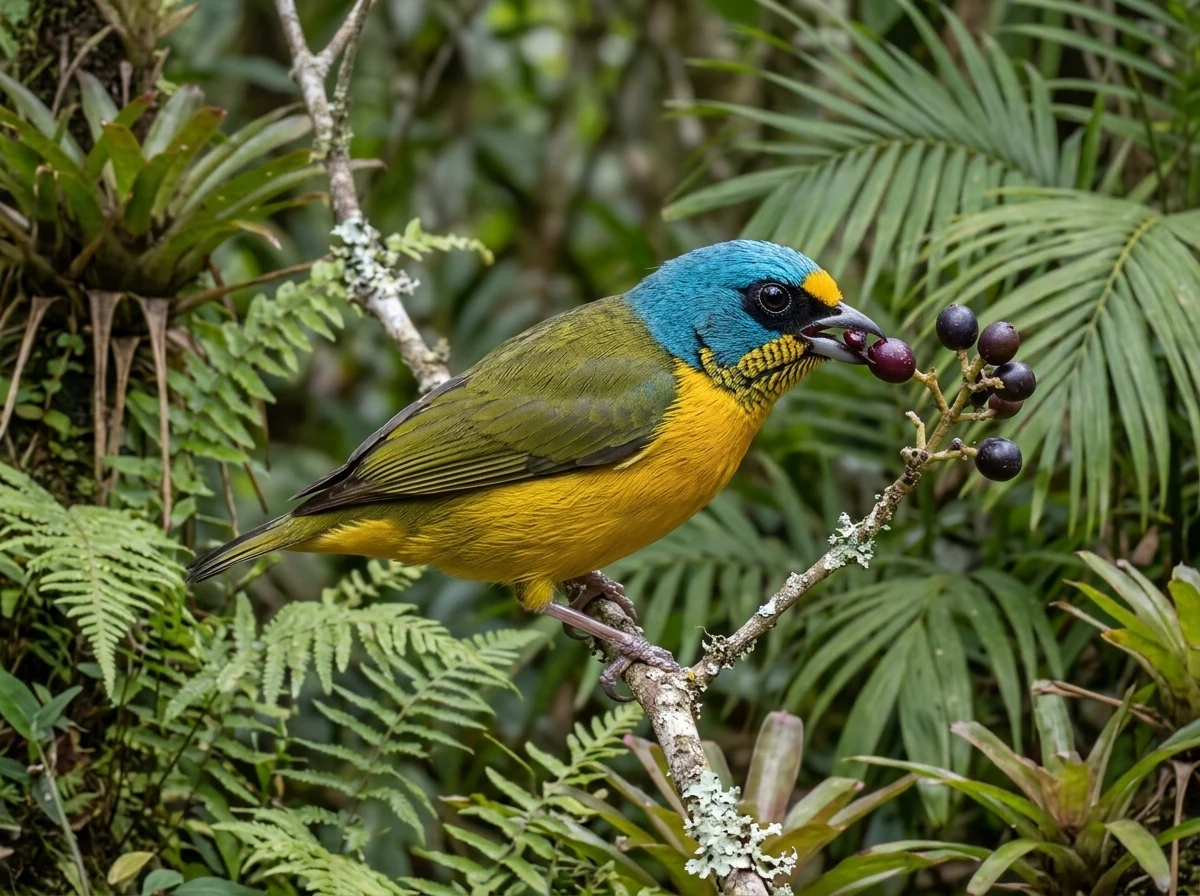
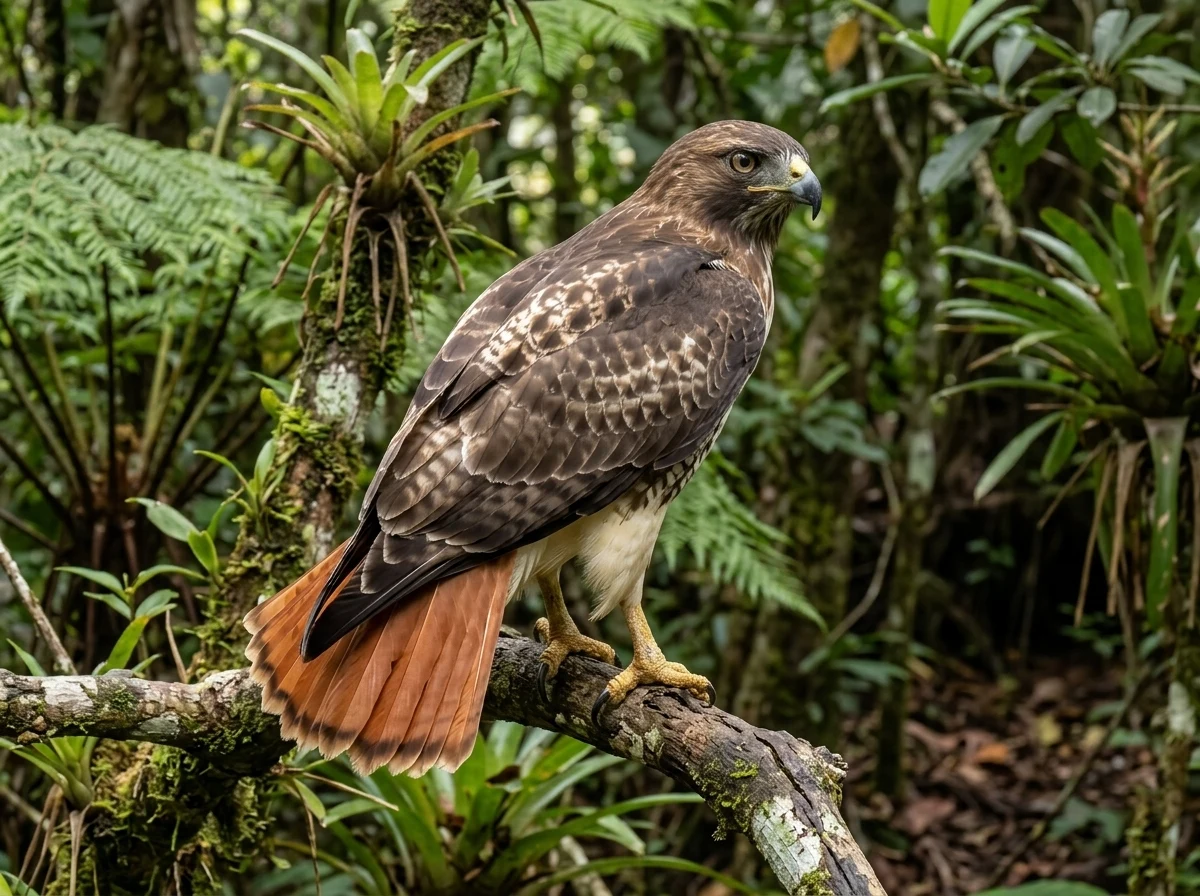
The Puerto Rican Euphonia is endemic and is associated with forests, edges, fruiting trees and shade coffee. The catalog classifies it with a fruit diet, and its account notes that it sometimes joins mixed-species flocks containing insectivores and frugivores. That suggests its main role is as a frugivore, although the web can include indirect interactions with insects and plants. The Red-tailed Hawk is a raptor that feeds on a wide range of small animals, such as rodents, birds and reptiles, according to the available source. In the web, it occupies a high level as a predator of vertebrates.
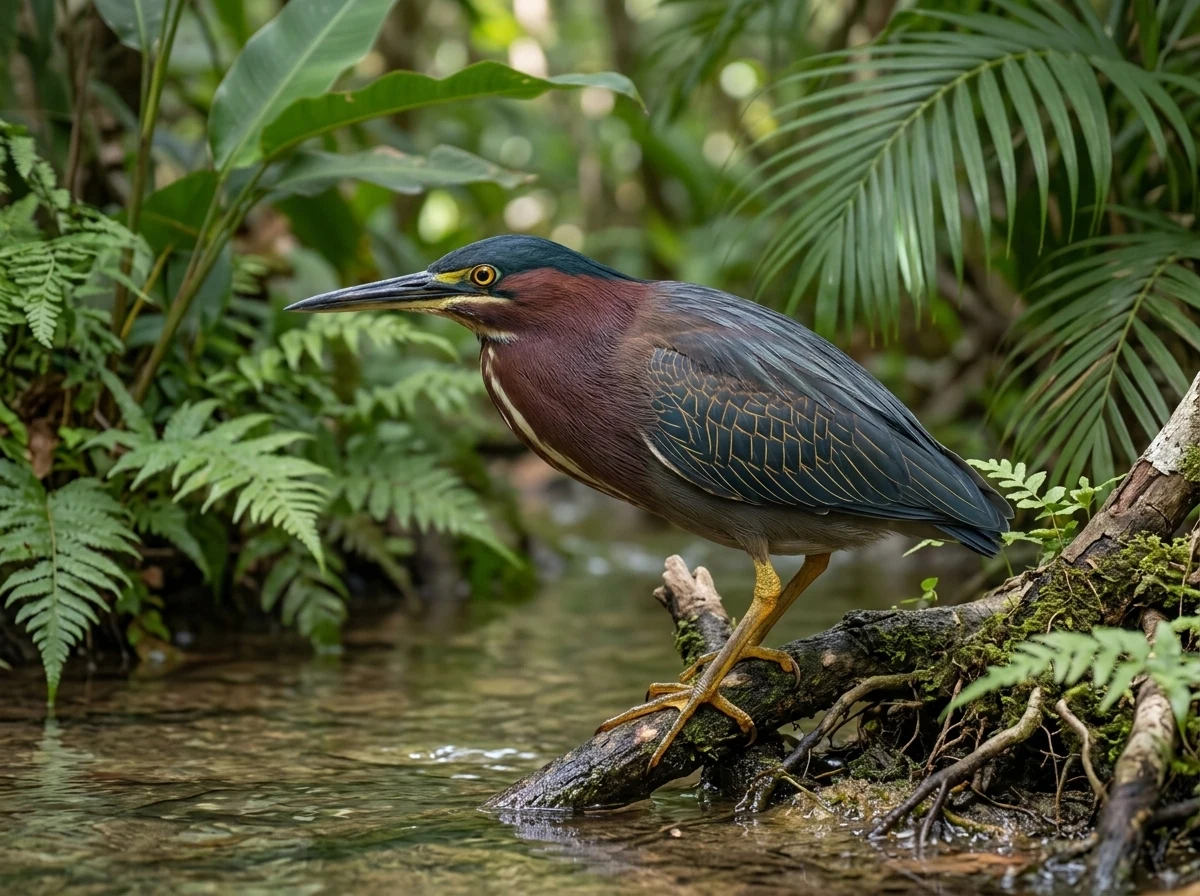
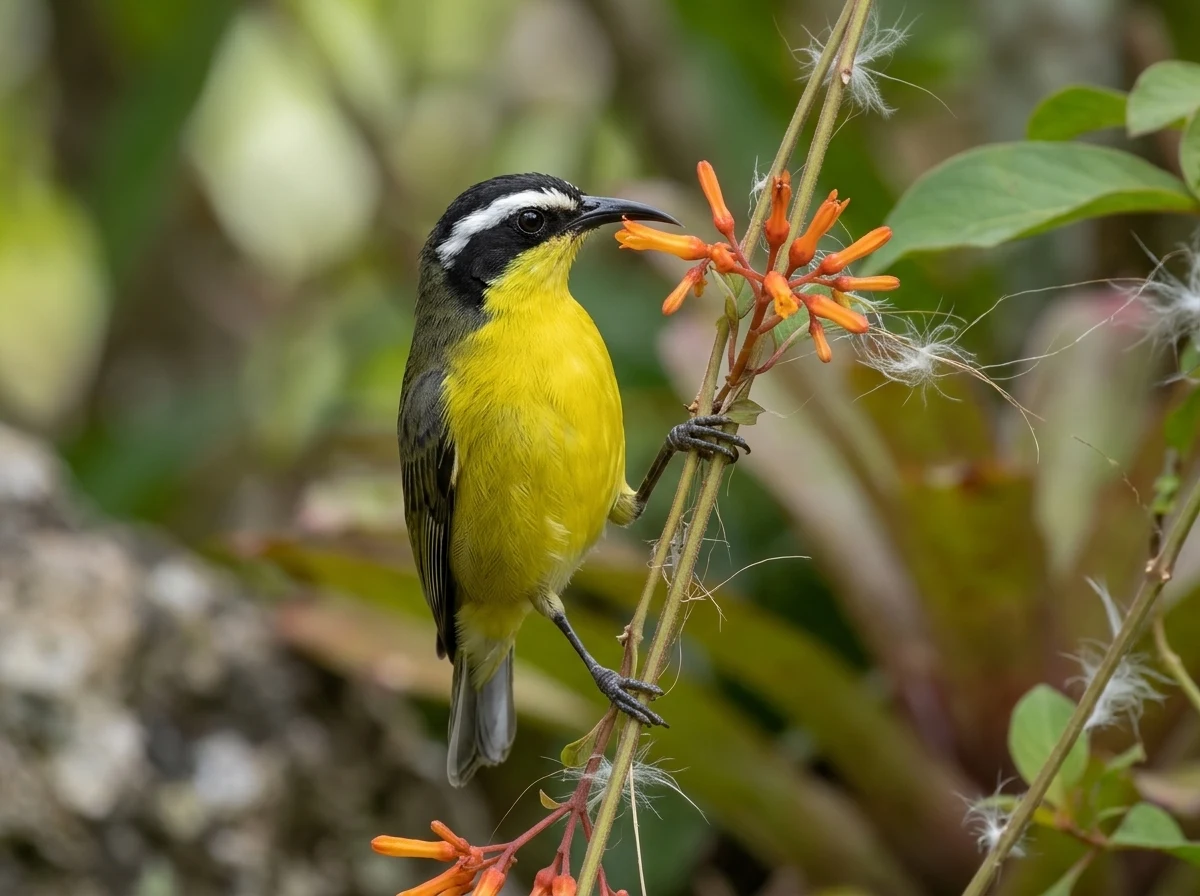
The Green Heron is documented with a fish diet and as an aquatic predator. Its presence adds a link between aquatic and terrestrial environments: fish, aquatic invertebrates and other small organisms can pass through this bird. The Bananaquit is described as a nectarivore, with a nectar diet, and it inhabits forests, shrublands, gardens and modified environments. In the web, it connects flowering plants and nectar with birds, and it may also visit fruits or insects opportunistically, although the main source presents it as a nectarivore.
02
How to build the web step by step
Materials: cards or slips of paper, markers, a large surface and paper arrows or a pencil. Write one node per card. Include producers such as leaves, nectar and fruits; consumers such as insects, spiders, lizards, fish and rodents; and the five template birds. If you like, add a sun node as the initial energy source. You do not need scientific names for every plant or insect: you can use broad categories and note the uncertainty.
Procedure: place producers on the left or at the bottom. Add small consumers in the middle. Place birds according to their documented diet. Draw arrows that start at the resource and point to the consumer. For example, an arrow from insects to Tody; an arrow from fruits to Euphonia; an arrow from nectar to Bananaquit; an arrow from fish to Green Heron; and arrows from rodents, birds or reptiles to Red-tailed Hawk. Check that every arrow has a reason based on evidence or is marked as a question.
Checklist: does every bird have at least one incoming arrow? Does every arrow represent a documented relationship or a clearly marked hypothesis? Are there nodes with no outgoing arrows? Are there nodes with no incoming arrows? Does the web show connections between water and land? Does it include producers, not only animals? Did you note what information is missing? If any answer is no, adjust the web or write a note.
03
Compare roles: insectivore, frugivore, omnivore and predator
Use a four-column table: insectivore, frugivore, omnivore and predator. Place each bird where the evidence allows. The Tody goes in insectivore and can also appear in omnivore if you include fruits and lizards. The Euphonia goes in frugivore. The Bananaquit goes in nectarivore, a category you can add next to frugivore or herbivore. The Green Heron goes in aquatic predator. The Red-tailed Hawk goes in vertebrate predator. If a bird appears in two columns, write why.
Then compare arrows. Which bird has the most incoming connections? Which has the fewest? Which nodes are shared by several birds? For example, fruits can connect with Euphonia and, as documented, with Tody when it feeds its nestlings. Insects can connect with Tody and with insectivorous birds not included in this template. The web becomes more realistic when you recognize that species are missing and that some relationships are opportunistic or seasonal.
Questions about removing a node: if you remove insects, which bird loses a main source? If you remove fruits, which bird loses its main resource? If you remove the Red-tailed Hawk, what happens to the prey it consumes? If you remove the Green Heron, how does the connection between water and land change? If you remove the Bananaquit, what happens to plants that depend on flower visitors? There is no single correct answer: the value is in justifying each prediction with available evidence and marking the gaps.
04
Limits and good practices
This template is not a published study of a Puerto Rican forest food web. The consulted sources describe the diet and foraging of two endemic species, and the catalog provides trophic traits for the five birds. No specific food web study for Puerto Rico was reviewed in these documents. Therefore, each arrow should be labeled as documented, inferred or unknown. That honesty is part of scientific learning.
Do not invent local observations or breeding months. Do not present migratory or resident species without clarifying their status. The Red-tailed Hawk and Green Heron appear in the catalog as native but not endemic; the Tody and Euphonia are endemic. The Bananaquit is native and not endemic. Use those categories carefully. If you share the activity, avoid claiming that a drawing proves a field identification: the diagram is a model, not proof of field marks.
To go further, look for published studies on food webs in Puerto Rico forests and compare their methods with this template. You can link the activity to related guides on yard birds, raptors and herons to connect the web with specific habitats and groups.
Linked profiles
The birds in this web
Five species to practice connections: two endemics, a raptor, a heron and a widespread nectarivore.
01
What does the Puerto Rican Tody eat?
The consulted source states that it eats mainly insects and spiders, which it usually plucks from the undersides of leaves, and that it is also known to eat small Anolis lizards. Adults have been observed feeding fruits to nestlings.
02
Is the Puerto Rican Euphonia a frugivore?
The catalog classifies it with a fruit diet. Its species account associates it with forests, edges, fruiting trees and shade coffee, and notes that it sometimes joins mixed-species flocks containing insectivores and frugivores.
03
What role does the Red-tailed Hawk play in the web?
The available source states that it feeds on a wide range of small animals, such as rodents, birds and reptiles. In the web, it is placed as a predator of vertebrates.
04
Does the Green Heron eat only fish?
The catalog classifies it with a fish diet and as an aquatic predator. In the activity, you can add other aquatic organisms as a marked hypothesis, but the main source is fish.
05
Is the Bananaquit a nectarivore?
The catalog describes it as a nectarivore, with a nectar diet, and the source presents it as a small, active nectarivore. In the web, it connects flowering plants and nectar with birds.
06
Are there published food web studies for Puerto Rico forests?
The consulted documents do not include a specific food web study for Puerto Rico. This guide uses the documented diet of two species and catalog traits as the basis for an activity, not as a published food web.
Keep exploring
Connected routes
Sources and review
The evidence is one link away.
These sources support the editorial scope of this guide. Bird profiles also retain their own taxonomy, occurrence, and conservation references.
Reviewed:
01↗02↗
Birds of the World, Cornell Lab of Ornithology / BirdsCaribbean
Diet and Foraging — Puerto Rican Tody (Todus mexicanus)
Evidence for cited sections; consult the original document.Birds of the World, Cornell Lab of Ornithology / BirdsCaribbean
Diet and Foraging — Puerto Rican Euphonia
Evidence for cited sections; consult the original document.The atlas continues