 AI
AIBird guides · Habitats and storms
Comparing Bird Records Before and After a Storm
A useful comparison is not just subtracting two lists: you must match effort, separate occurrence from abundance, and distinguish mortality from displacement.
Reviewed:Prepared with AI assistance and linked sources. Illustrations are not field photographs.
The right question is not only how many birds are missing
After a hurricane it is natural to want to compare what used to be seen with what is seen now. But a responsible comparison begins by recognizing that bird counts are not perfect censuses: they depend on search effort, time of day, weather, access, and each species' detectability. In Puerto Rico, the Fajardo Christmas Bird Count compared December 2016 with December 2017 after Hurricanes Irma and Maria; effort dropped from 54 to 45 party hours, and even so raw totals went from 2,579 birds and 97 species to 1,934 birds and 82 species.
This guide answers one focused question: how to compare records before and after a storm without drawing conclusions the data cannot support. The main evidence comes from that Fajardo count, the Caribbean hurricane-and-birds symposium, and news coverage of the 2017 count. The central idea is to separate three things that often get mixed together: occurrence (whether a species appears), abundance (how many individuals), and detectability (how easy it is to see or hear).
Bird guides · Habitats and storms
Three keys for reading the comparison
EsfuerzoParty hoursIn Fajardo effort fell from 54 to 45 hours between 2016 and 2017; without correcting for effort, the raw drop overstates the change.
DetectabilidadNot every increase is recoveryAfter the storm, some birds wandered more or vocalized more; that can raise counts without the population having grown.
IncertidumbreMortality or displacementThe proportion of declines attributable to mortality versus emigration out of the count circle is unknown.
01
1. Match effort before comparing
The first step is to document how much searching was done. In the Fajardo count, effort was measured in party hours: 54 before the hurricane and 45 after. That difference matters because fewer hours usually produce fewer species and individuals. That is why the report calculated species per party hour: the result was identical before and after (1.8), while individuals per party hour fell from 47.8 to 42.9, a 10.2% reduction. That corrected figure is far more informative than the raw drop from 2,579 to 1,934 birds.
In your own comparisons, always record date, duration, number of observers, route or area, weather, and start time. If effort changed, calculate rates (birds per hour, species per hour) instead of totals. If you cannot match effort, present totals as context, not as proof of population change.
02
2. Separate occurrence, abundance, and detectability
A species can disappear from a list because it died, because it moved out of the area, or because it is no longer detected the same way. The Fajardo report notes that insectivores increased substantially after the hurricanes, probably in part due to greater detectability: some birds vocalized more, and others that normally foraged high in the canopy were easier to see once they foraged at ground level in the fallen canopy. The Puerto Rican Woodpecker (Melanerpes portoricensis) increased 57% in that count, and the Puerto Rican Tody 92%.
That does not mean the population grew. It means the probability of detection changed. When comparing, ask: was the species seen before in the same habitat and at the same height? Was its song or call equally audible? Did fallen foliage make it more visible? Occurrence (whether it appears) is more robust than abundance when the method changes; abundance requires more caution.
03
3. Interpret increases and decreases with diet and habitat in mind
The Caribbean hurricane-and-birds symposium summarizes useful patterns: direct effects (mortality from winds, rain, or storm surge) are most evident in aquatic and seabirds; indirect effects (habitat damage) are most evident in land birds. Declines in land birds are often related to diet: nectarivores and frugivores or seedeaters are most likely to decline, while insectivores and raptors are more resistant. The symposium also identifies tree cavity-nesting birds, such as the Puerto Rican Woodpecker, as vulnerable, and notes that declines can be most severe at high elevations, where vegetation recovers more slowly.
In Fajardo, nectarivores (hummingbirds and Bananaquit) declined, probably from loss of flowers. Some frugivores and seedeaters also fell (White-crowned Pigeon -82%, Puerto Rican Bullfinch -70%), perhaps from mortality or because they moved elsewhere. Others increased (Scaly-naped Pigeon +82%, Red-legged Thrush +100%, Pearly-eyed Thrasher +124%, Puerto Rican Oriole +140%), possibly because they wandered more in search of food and became more detectable. The lesson: do not read every change as a population change.
04
4. A concrete procedure for your comparison
Before the storm, establish a baseline: choose a fixed area, a route, and a protocol (for example, 30 minutes per point, early morning, same season). Record date, time, weather, observers, and effort. Store lists on a platform such as eBird so they are documented. The symposium insists that quantitative before-and-after data are essential to evaluate effects and to persuade decision-makers.
After the storm, repeat the same protocol when it is safe. Compare occurrence first (does the species appear?), then rates per effort, and only then totals. Note habitat changes: fallen trees, missing flowers, open canopy. If a species is missing, do not conclude mortality: it may have been displaced. The Fajardo report warns that the 2017 count occurred when many birds were wandering widely in search of resources, and that future counts will be needed, after species return to a more sedentary existence, to assess population status.
05
5. Checklist for an honest comparison
Use this checklist before publishing or sharing a comparison: (1) Was effort equal or documented? (2) Do season and time match? (3) Was weather comparable? (4) Are area and route the same? (5) Were occurrence and abundance separated? (6) Was detectability considered? (7) Were habitat changes noted? (8) Was every absence avoided as mortality? (9) Are verifiable sources cited? (10) Is uncertainty stated?
If you cannot answer yes to several, present your comparison as a preliminary observation, not a conclusion. The Fajardo evidence shows that even with similar procedures and experienced volunteers, interpretation requires caution: the proportion of declines from mortality versus emigration out of the count circle is unknown.
Linked profiles
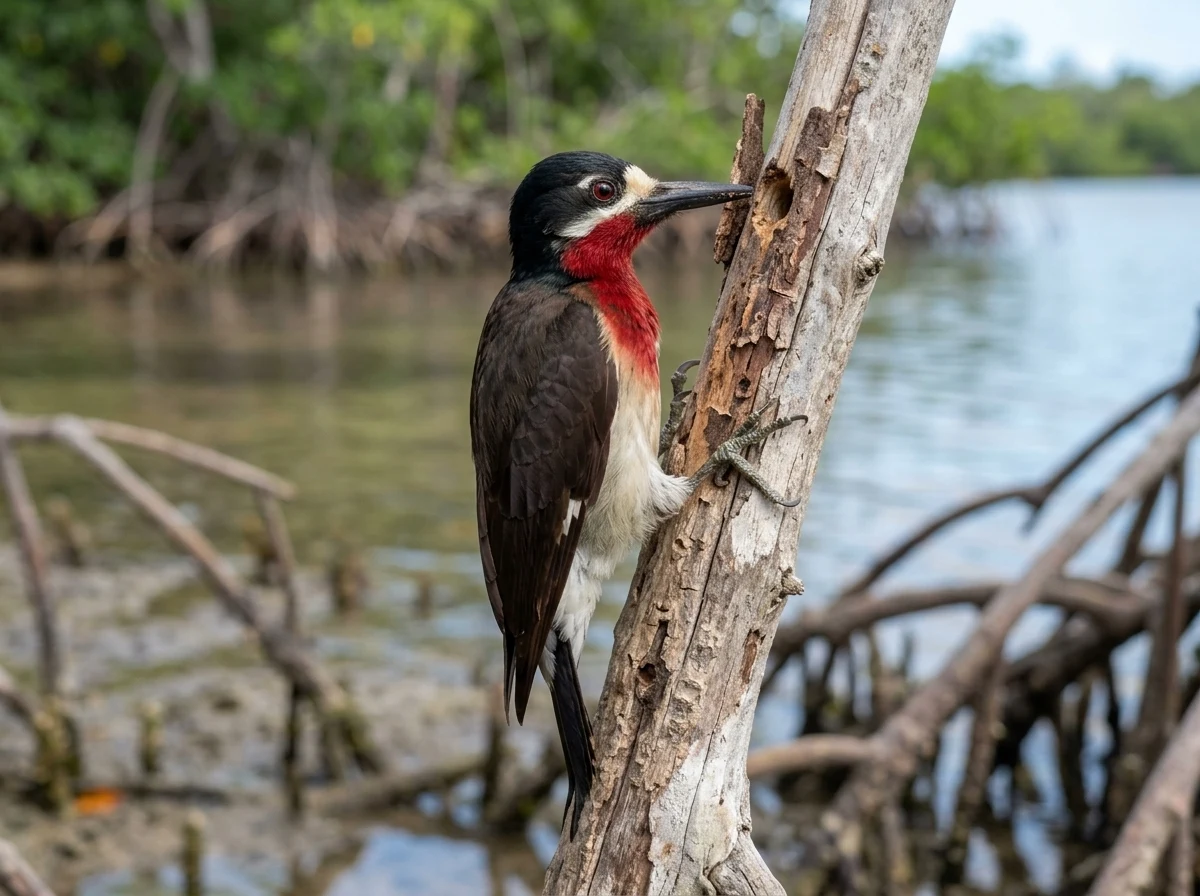
The Puerto Rican Woodpecker as an example
Endemic, resident, and cavity-nesting: a useful case for practicing the separation of occurrence and abundance.
AI01
Can I directly compare the total number of birds before and after a hurricane?
Not directly if effort changed. In Fajardo, effort fell from 54 to 45 party hours. Raw totals (2,579 to 1,934 birds) are not comparable without correction; rates per party hour are, and they showed a 10.2% drop in individuals.
02
If a species disappears from my list, did it die?
Not necessarily. It may have moved out of the area, changed its behavior, or become less detectable. The Fajardo report notes that the proportion of declines from mortality versus emigration out of the count circle is unknown.
03
Why did some birds increase after the hurricane?
It may be due to greater detectability, not population growth. The report indicates that some frugivores wandered more in search of food and some insectivores vocalized more or foraged at ground level in the fallen canopy, making them easier to detect.
04
What should I record to make my comparison useful?
Date, time, duration, number of observers, route or area, weather, and effort. The symposium recommends having monitoring programs established before the storm to have quantitative baseline data.
05
When should the count be repeated after the storm?
When it is safe and with the same protocol. The Fajardo report warns that the immediate count occurred when many birds were wandering widely, and that future counts will be needed, after species return to a more sedentary existence, to assess population status.
Keep exploring
Connected routes
Sources and review
The evidence is one link away.
These sources support the editorial scope of this guide. Bird profiles also retain their own taxonomy, occurrence, and conservation references.
Reviewed:
01↗02↗03↗04↗
USDA Forest Service, International Institute of Tropical Forestry (Acta Científica)
Effects of hurricanes Irma and Maria on birds in the Fajardo Christmas Bird Count in northeastern Puerto Rico: a preliminary assessment
Evidence for cited sections; consult the original document.BirdsCaribbean / Journal of Caribbean Ornithology
Hurricanes and the Fate of Caribbean Birds—What Do We Know (SCSCB symposium report)
Evidence for cited sections; consult the original document.Audubon Magazine
Puerto Ricans Band Together to Survey Birds in Hurricane Maria's Aftermath
Evidence for cited sections; consult the original document.Cornell Lab of Ornithology / eBird
Hurricane Irene redux (eBird hurricane birding primer)
Evidence for cited sections; consult the original document.The atlas continues