 AI
AIHabitats guide
How Artificial Light Affects Migratory Birds
Artificial light at night attracts migratory birds from far away, makes them circle illuminated areas and drains the energy they need to travel. Here we explain the mechanism, compare two migratory warblers and propose a responsible observation activity.
Reviewed:Prepared with AI assistance and linked sources. Illustrations are not field photographs.
The night that throws them off course
Every spring and every fall, millions of birds migrate at night. The natural cycle of day and night is essential for their rhythms and for the navigation of those nighttime migrations. Artificial light created by people alters that night sky, and lighting directed outward or upward creates unnecessary and excessive light.
The problem is not only aesthetic. Lighting can attract large numbers of night-migrating birds from as far as 5 kilometers away. Once drawn in, birds often circle the illuminated area, wasting critical energy needed for migration and increasing their risk of collisions with buildings and other structures. This guide explains the mechanism, compares two migratory species documented in Puerto Rico and offers an activity to observe with judgment, without inventing local data.
Habitats guide
Three key ideas
Hasta 5 kmAttraction distanceLighting can attract night-migrating birds from that far away, according to the U.S. Fish and Wildlife Service.
2% anualIncrease in artificial lightBirdsCaribbean states that artificial light is increasing by at least 2% annually worldwide.
Abril-mayo y agosto-octubreHigher-risk monthsRisk is greater during spring and fall migration, especially on cloudy nights.
01
The mechanism: attraction, disorientation and exhaustion
Artificial light at night works like a trap. It attracts migratory birds from far away and, once inside the illuminated area, the birds become disoriented and begin to circle. That circling flight is not a simple route change: it consumes the energy reserves the bird accumulated to complete its migration. The result can be exhaustion, greater risk of predation and fatal collisions with buildings and structures.
The phenomenon worsens on nights with a low cloud ceiling or fog. Under those conditions, birds tend to migrate at lower altitudes and light reflecting on clouds may disorient them and attract them even more toward illuminated areas. Multiple mass-mortality events, each involving hundreds of birds, have been documented on such nights. In addition, nighttime lighting can affect birds year-round by illuminating their habitats, which may cause birds to avoid habitats essential for their survival and alter local ecosystem dynamics.
02
Why blue and white light is worse for birds
Not all artificial light has the same effect. According to the U.S. Fish and Wildlife Service, amber, orange, red or warmer-toned LEDs are less harmful for several species because they are less likely to trigger a behavioral response. Warmer colors have longer wavelengths (more than 560 nm) and lower correlated color temperatures (less than 2700 Kelvin).
By contrast, blue, white or cooler-toned LEDs should be avoided; they are least favorable for birds, other wildlife and people, and contribute more to skyglow. Cooler colors have shorter wavelengths (less than 560 nm) and higher correlated color temperatures (more than 2700 Kelvin). Intensity also matters: light should be as dim as possible, adjusted to local conditions and ambient lighting.
03
Comparison: the Blackpoll Warbler and the American Redstart
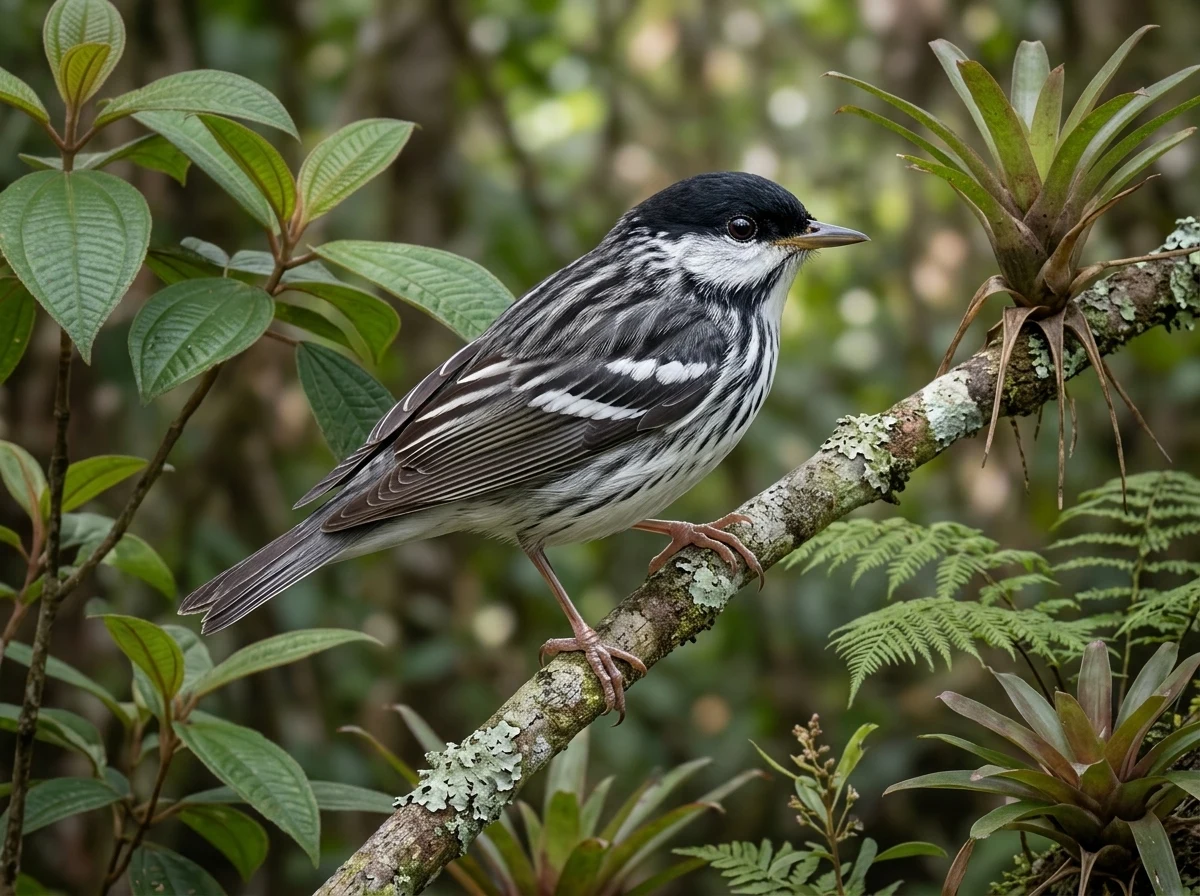
To understand the risk, let us compare two migratory warblers documented in Puerto Rico. The Blackpoll Warbler (Setophaga striata) is a long-distance migrant: in fall it flies south to the Greater Antilles and the northeastern coasts of South America in a non-stop migration over open water averaging 2,500 km, one of the longest non-stop overwater flights ever recorded for a migratory songbird. The American Redstart (Setophaga ruticilla) is also a long-distance migrant: it breeds in northern and eastern North America and winters in the southern United States, Central America, the Antilles and northern and northwestern South America.
Both species appear in the Puerto Rico bird catalog as native and natural in occurrence, neither resident nor breeding on the island. That migrant condition places them directly in the group vulnerable to artificial light at night. The comparison is not about which is more abundant in Puerto Rico, a fact we do not assert here, but about their migratory biology: both depend on energy reserves for long flights, and both can be attracted and disoriented by nighttime lights during migration.
04
What can be done: turn off, direct, dim
The good news is that simple actions help. If lighting is not needed, it can be turned off permanently or temporarily. Birds are at greater risk during spring and fall migration on cloudy nights, so consider temporarily turning off lighting in April-May and August-October, or at least on cloudy nights during those months. If birds become entrapped in an area of bright light that cannot be turned off permanently, turning lights off for 15 to 20 minutes can allow them to escape the disorienting light and return to normal behavior.
Direction also matters: turn off lights that face up into the sky or that illuminate the surrounding landscape, avoid upward skyglow with pre-certified fixtures or shielding, and keep lighting as low to the ground as possible. To prevent light spill from windows, close blinds, shades or curtains at night and use automatic controls. In the Caribbean, BirdsCaribbean notes that light pollution is not as significant an issue as in continental neighbors, but we can still take action: turn off unnecessary outdoor lights, use motion sensor lights, close curtains, lobby for downward-facing street lights and raise awareness about dark skies.
05
Responsible observation activity
This activity requires no special equipment and can be done at home or at school. The goal is to observe how the presence of birds around an artificial light changes when it is turned off, without capturing, touching or disturbing the birds. Choose an outdoor light that can be safely turned off and that is visible from a fixed observation point. Over several migration nights (spring or fall), note the time, sky conditions (clear or cloudy) and whether you see or hear birds near the light. Then turn the light off for 15 to 20 minutes and note again whether the birds disperse or change behavior.
Record only what you directly observe, without inferring abundance or identifying species you cannot confirm. If you see no birds, that is also valid data. This activity is based on the U.S. Fish and Wildlife Service recommendation that turning lights off for 15 to 20 minutes can allow birds to escape the disorienting light. For context on the migratory species that pass through Puerto Rico, see the general guides linked at the end.
Linked profiles
The birds in this guide
Two migratory warblers documented in Puerto Rico that illustrate why artificial light at night matters for passing birds.
AI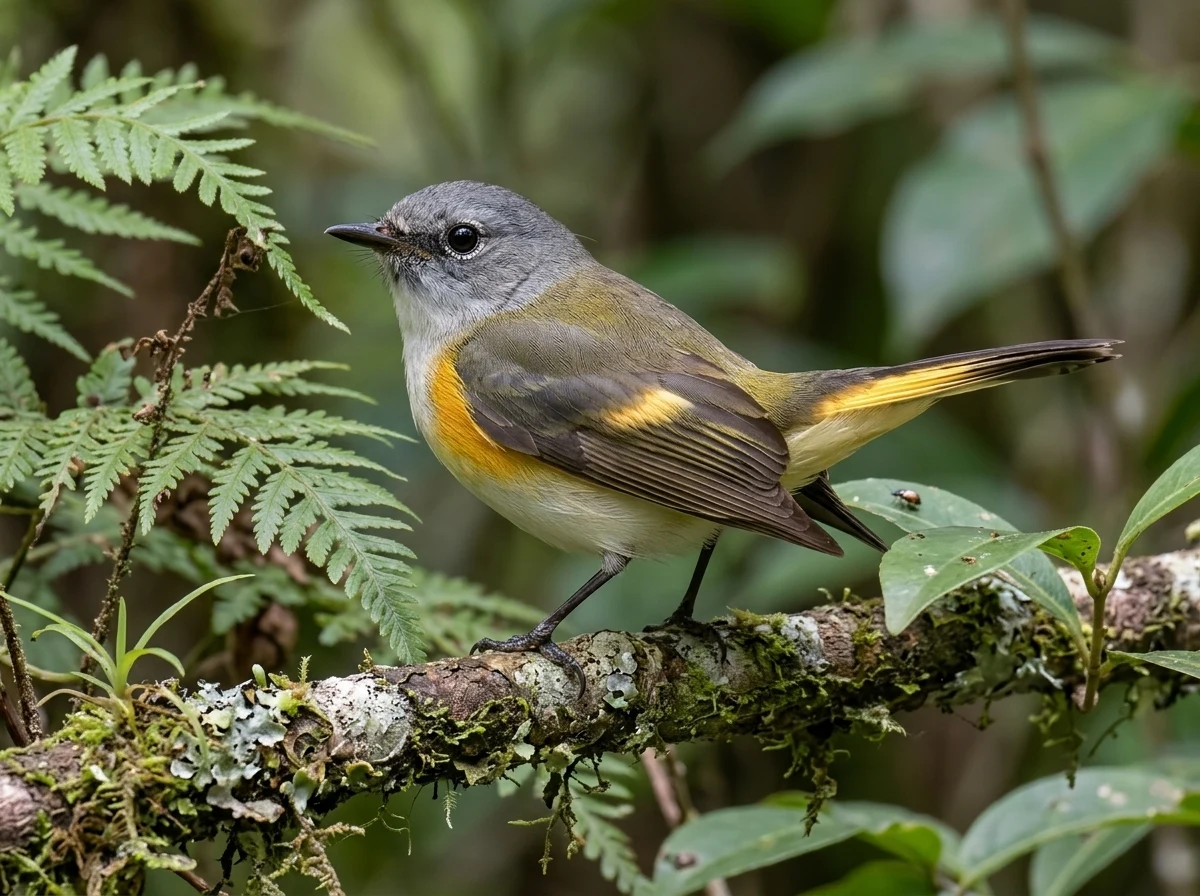 AI
AI01
Why does artificial light attract migratory birds?
Lighting can attract large numbers of night-migrating birds from as far as 5 kilometers away. Once drawn in, birds often circle the illuminated area, which drains their energy and increases collision risk.
02
Which light colors are less harmful to birds?
Amber, orange, red or warmer-toned LEDs are less harmful because they are less likely to trigger a behavioral response. Blue, white or cooler-toned lights should be avoided.
03
When is the risk greatest for migratory birds?
Risk is greatest during spring and fall migration, especially on cloudy or foggy nights, when birds migrate at lower altitudes and light reflecting on clouds disorients them more.
04
What can I do at home to help?
Turn off unnecessary outdoor lights at night, use motion sensors, close curtains or blinds so indoor light does not escape, and consider turning off or dimming lights during April-May and August-October, especially on cloudy nights.
05
Do the Blackpoll Warbler and American Redstart breed in Puerto Rico?
No. According to the Puerto Rico bird catalog, both species are native and natural in occurrence on the island, but they are neither resident nor breeding there. They are migratory birds that pass through during their movements.
Keep exploring
Connected routes
Sources and review
The evidence is one link away.
These sources support the editorial scope of this guide. Bird profiles also retain their own taxonomy, occurrence, and conservation references.
Reviewed:
01↗02↗
U.S. Fish and Wildlife Service
Threats to Birds: Collisions (Nighttime Lighting)
Evidence for cited sections; consult the original document.BirdsCaribbean
Get Ready to Celebrate World Migratory Bird Day 2022: Dim the Lights for Birds at Night
Evidence for cited sections; consult the original document.The atlas continues