 AI
AIBird-safe glass
How to Stop Birds from Hitting Your Windows
Nearly half of bird–building collisions happen at homes. The fix is cheap, takes an afternoon, and works if you follow two rules: outside, and 2 by 2 inches.
Reviewed:Why they hit, and what stops it.
Birds hit windows because glass reflects trees, shrubs, and sky, or because they see an open path through it. To prevent it, break up the reflection on the outside of the glass with a pattern of dots, lines, or cords spaced no more than 2 inches (about 5 cm) apart, and place feeders closer than 3 feet or farther than 30 feet from the window.
This is not only a skyscraper problem. The Loss et al. (2014) analysis in The Condor estimated that 365 to 988 million birds die each year in the United States from building collisions, and that 44% of that mortality happens at residences. In Puerto Rico, where many homes have glass doors facing yards with fruit trees, the balcony or living-room window is the most important spot you can fix.
Bird-safe glass
Glass by the numbers
365–988 Mbirds killed per year in the U.S.From building collisions; median 599 million (Loss et al. 2014).
44 %at residencesAnother 56% at low-rises and under 1% at high-rises.
2 x 2inches maximum spacingAbout 5 cm between marks, vertically, horizontally, or diagonally.
10 piesdistance the marks should be visible fromAbout 3 meters, per American Bird Conservancy.
01
Why birds collide with glass
A bird does not read glass as a wall. If a window reflects the tree across the yard, the bird flies toward that tree; if it sees another bright window straight through the room, it flies toward that exit. That is why collisions concentrate at large panes, glass corners, and sliding doors facing the yard.
American Bird Conservancy recommends identifying problem windows first: those across from feeders, birdbaths, and fruit-bearing plants. In a yard designed to attract birds, those are exactly the windows that need the most attention, and it is best to treat them before planting or hanging a feeder.
02
The 2-by-2-inch rule
According to American Bird Conservancy, patterns with vertical, horizontal, or diagonal spaces of two inches or less will prevent most collisions. Marks need a minimum size: dots at least ¼ inch in diameter (about 6 mm) or stripes at least ⅛ inch wide (about 3 mm), and they should be visible from 10 feet away. Larger patterns are more effective.
One or two scattered decals, such as a single hawk silhouette in the middle of the pane, leave too much open space and do not meet that rule. What works is covering the whole surface with an even pattern. The design can be decorative as long as it respects the spacing and minimum size.
03
Always on the outside: the most overlooked detail
American Bird Conservancy stresses that treatments go on the exterior surface of the glass. Applied inside, they disappear behind the outside reflection when light is strong, and the bird still sees the reflected tree. In Puerto Rico, with intense sun much of the day, that difference is decisive.
Options the organization lists include patterned tapes and films, non-toxic tempera or longer-lasting acrylic paint applied with brushes or stencil rollers, oil-based pens, hanging cords such as Acopian BirdSavers, and standard commercially available screens. Tempera is the cheapest option to try and washes off with water; films and cords last longer.
04
Feeders, baths, and plants: how far away
Humane World for Animals recommends placing feeders more than 30 feet (about 9 m) from a window or closer than 3 feet (under 1 m). Far away, reflections confuse less; very close, a startled bird cannot build enough speed for a fatal strike. The middle zone is the riskiest.
If you cannot move the feeder or the fruit tree, treat the window facing it. The same applies to a birdbath and a hummingbird feeder: a Puerto Rican Emerald that bolts when another hummingbird arrives can head straight for the reflection if glass is only a few meters away.
05
If a bird hits your window
A stunned bird may sit motionless for several minutes and is easy prey for a cat. Mass Audubon recommends placing it in an enclosed, ventilated box, or under a colander, in a quiet spot to keep it safe while it recovers, and releasing it once it is alert. Do not give it food or water.
If it does not recover, has a drooping wing, is bleeding, or cannot perch, call the DRNA Ranger Corps at 787-724-5700 or DRNA at 787-999-2200. And treat that window the same day: one collision shows that the reflection at that spot fools birds, and it is likely to happen again.
06
Which birds are at risk in Puerto Rico
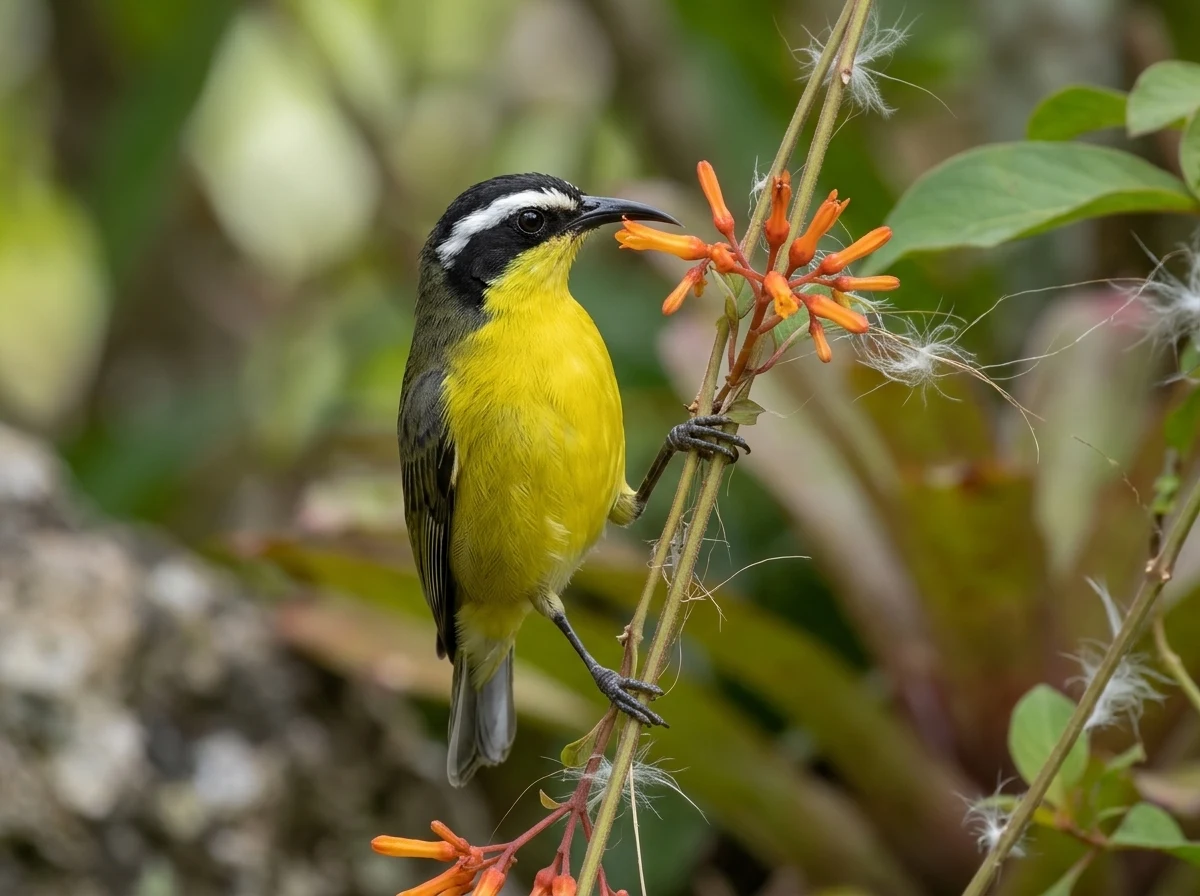
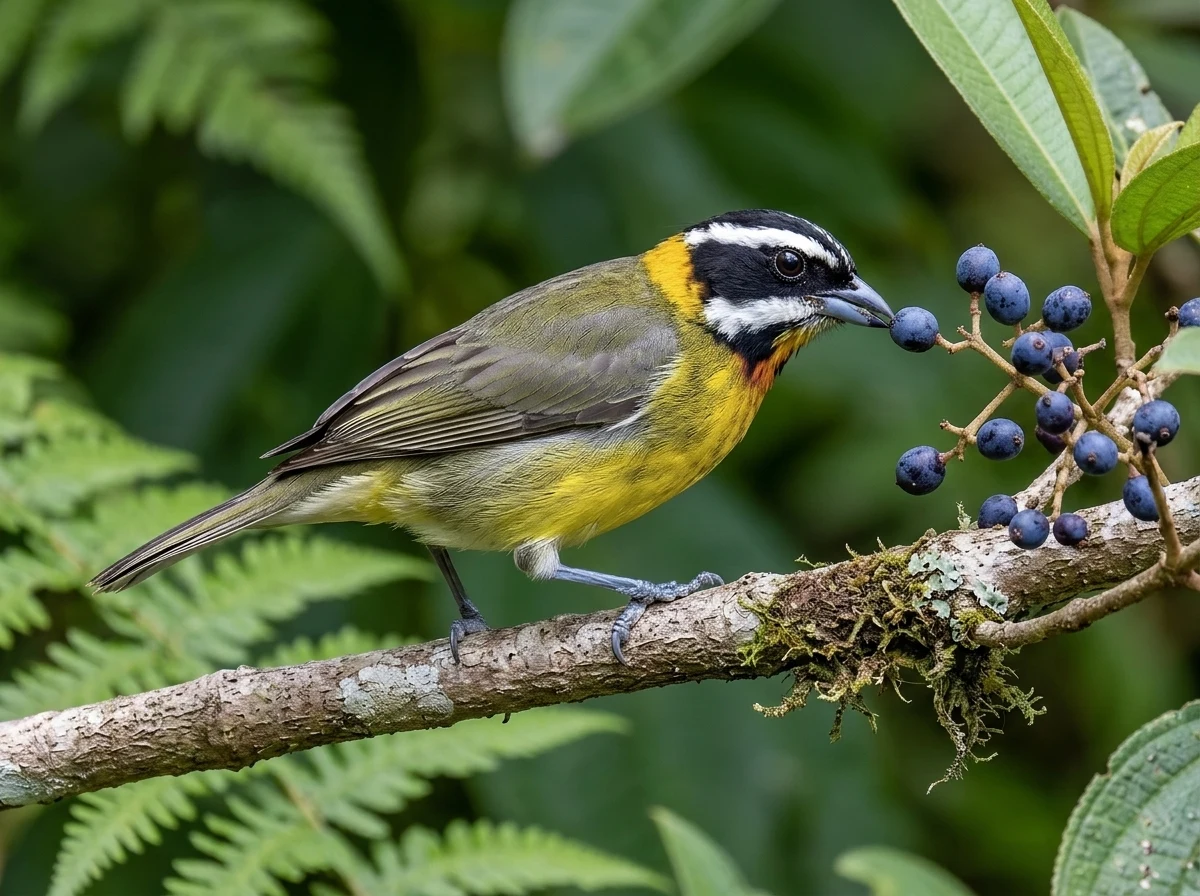
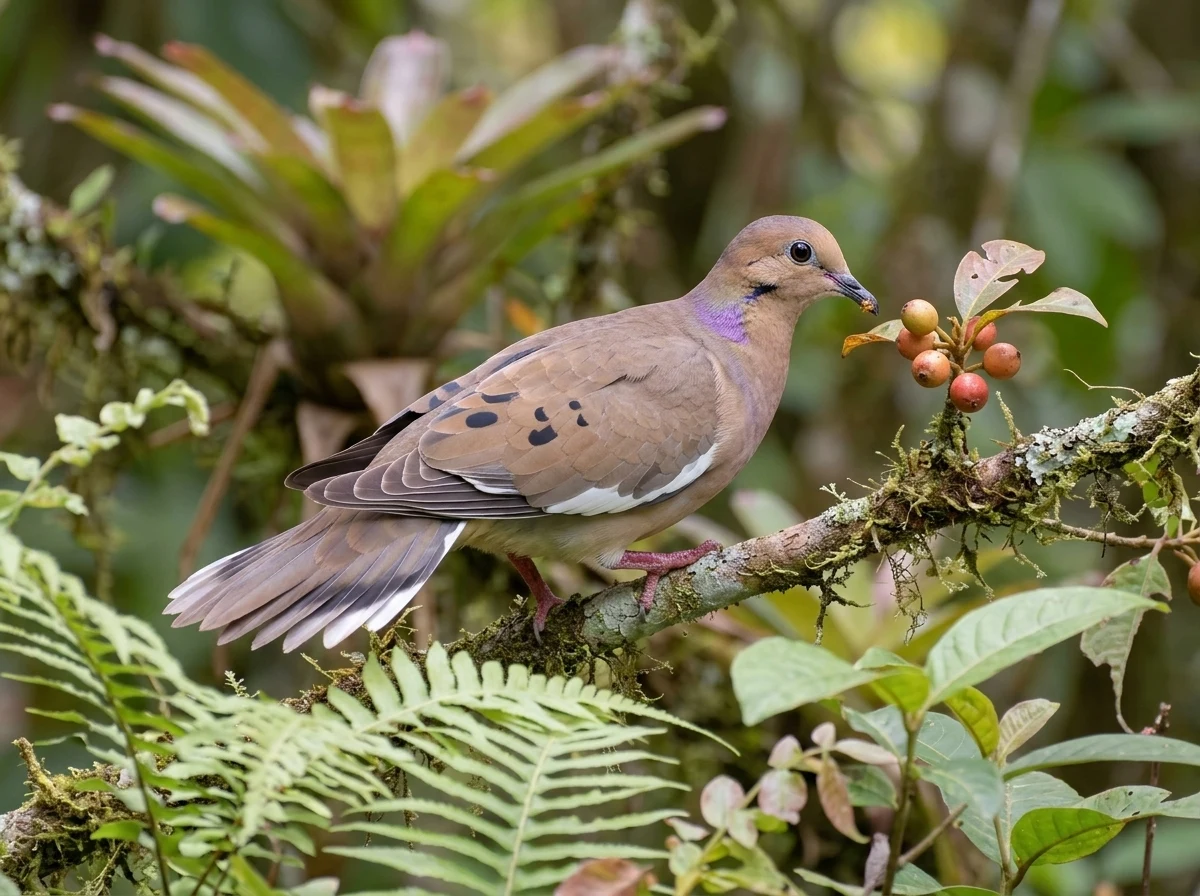
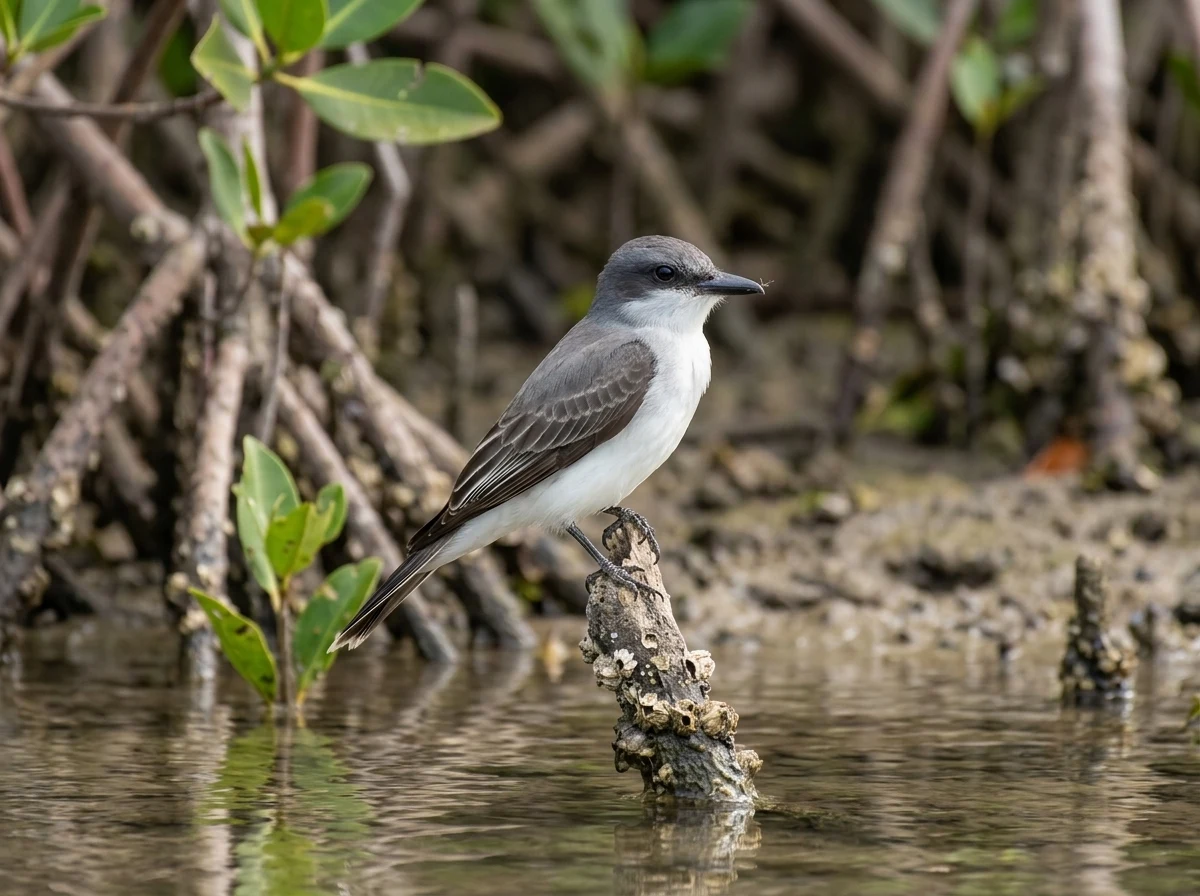
Any bird that uses your yard can collide: Bananaquit, Puerto Rican Spindalis, Zenaida Dove, Gray Kingbird, and hummingbirds spend the day moving between trees and houses. In migration season, warblers arriving from North America, which do not know your neighborhood, join them, such as Black-and-white Warbler or Black-throated Blue Warbler.
The Loss et al. study identified species disproportionately vulnerable to collisions in the United States, including Worm-eating Warbler, which also has records in Puerto Rico, although it is uncommon here. That study's data come from the continental United States; there is no equivalent estimate for the island, but the reflection mechanism is the same.
Linked profiles
Yard birds and migrants that pass by your glass
Residents that live between trees and houses, and migrant warblers that arrive each fall; open each profile for habitat and season.
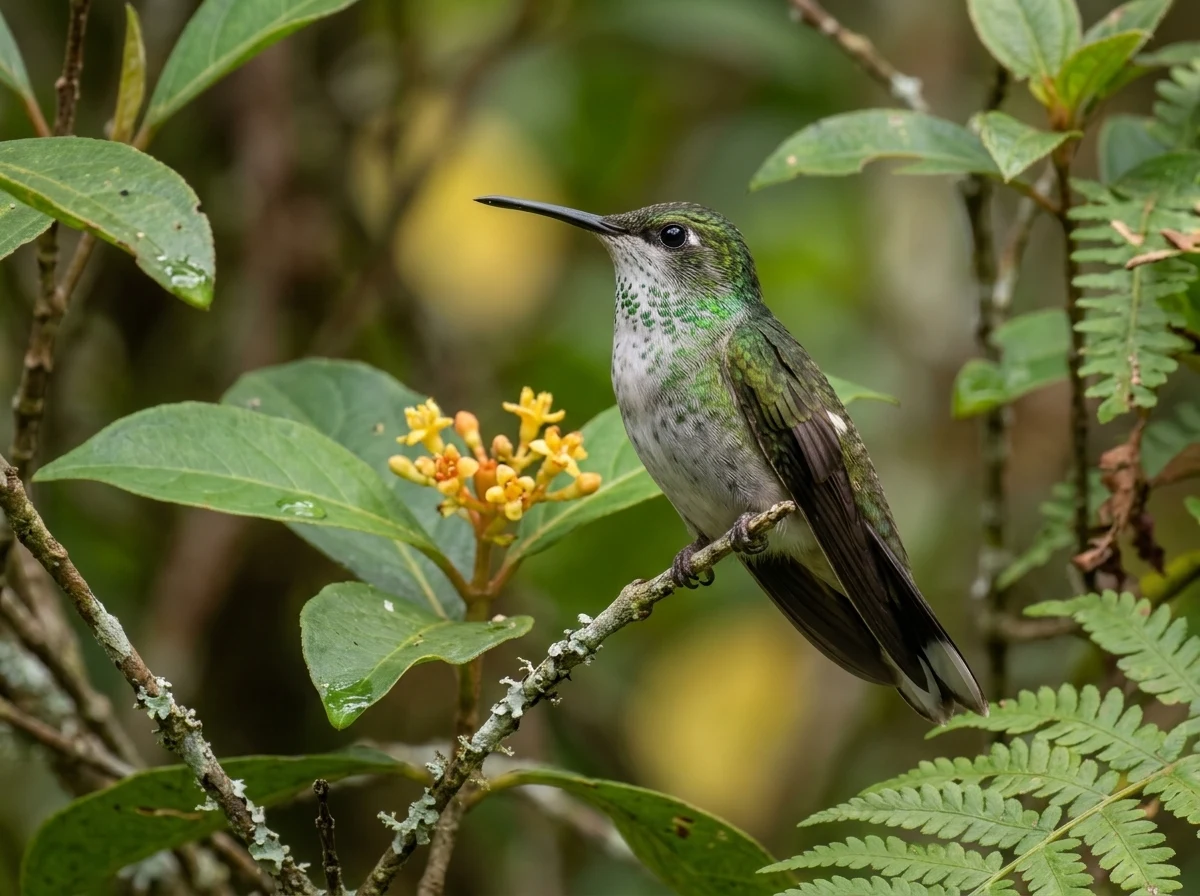
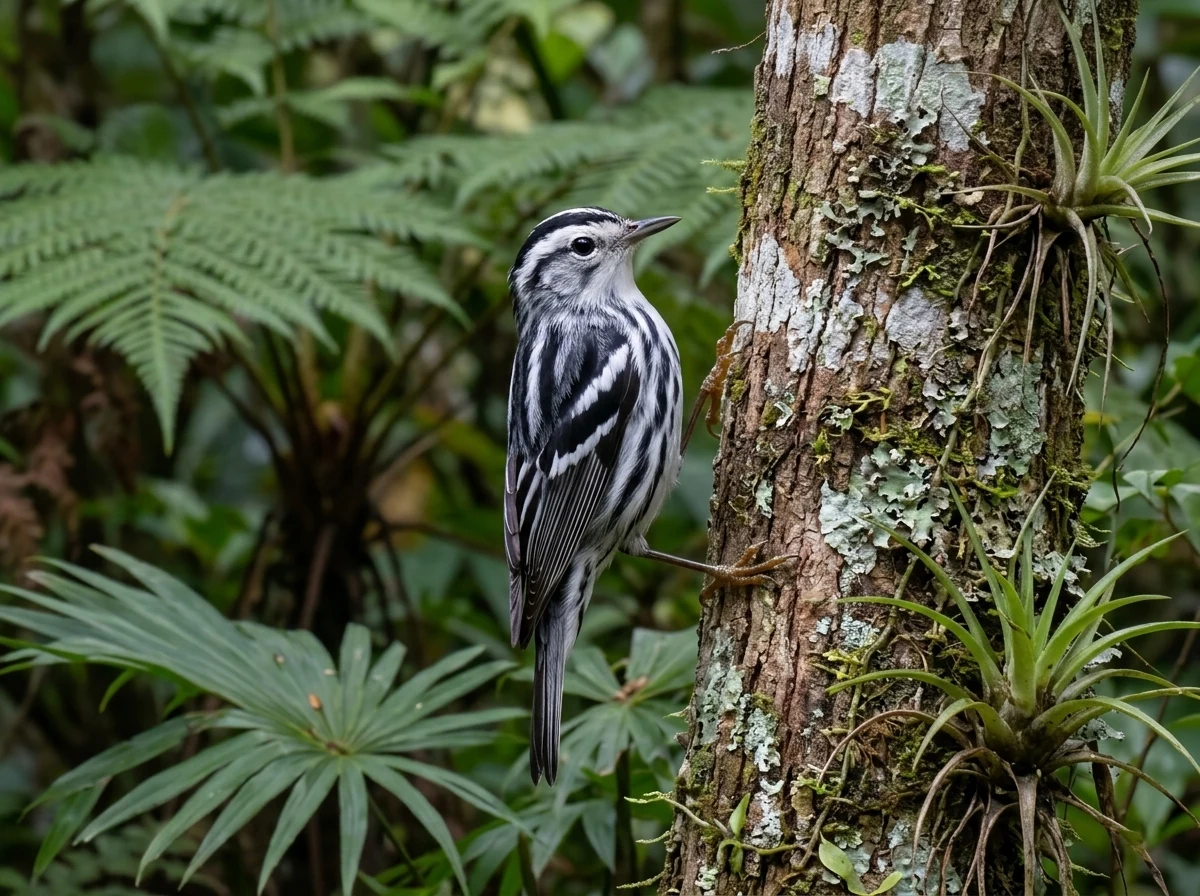
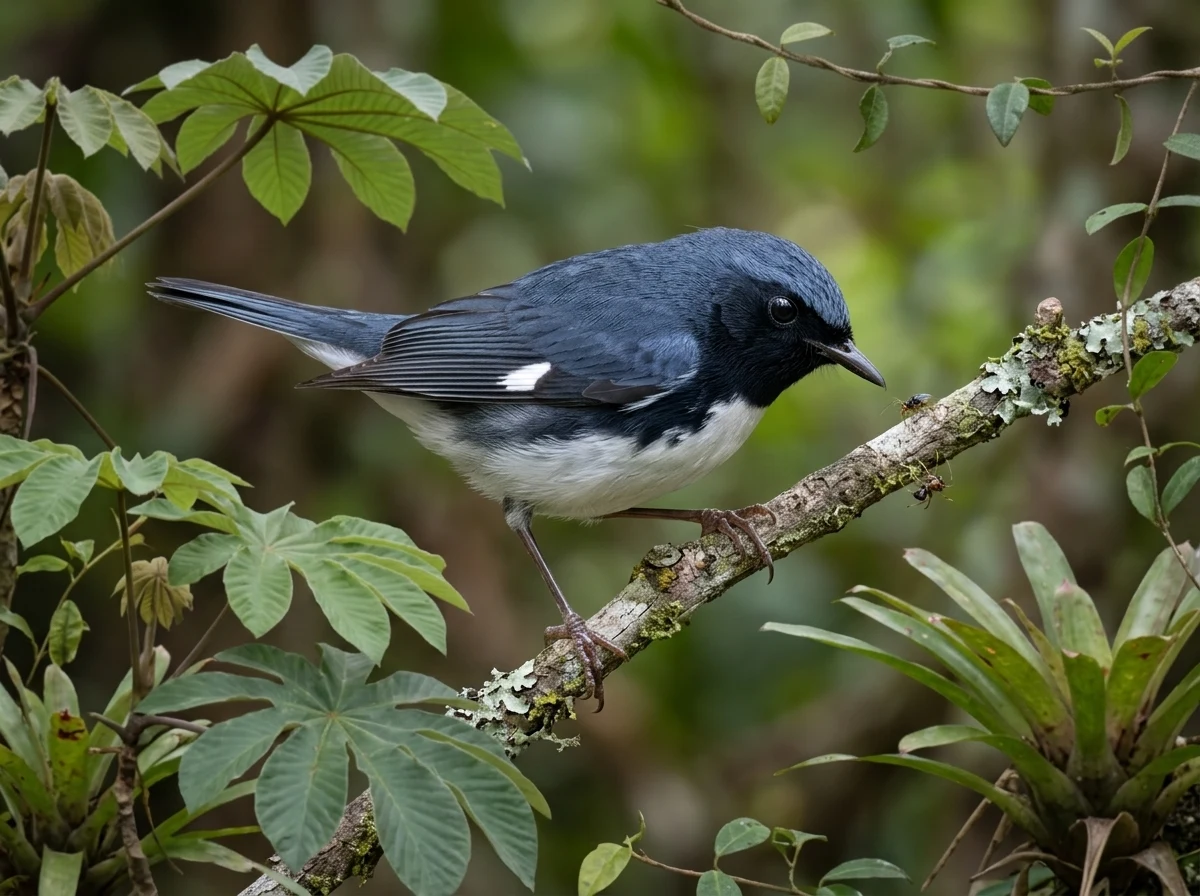
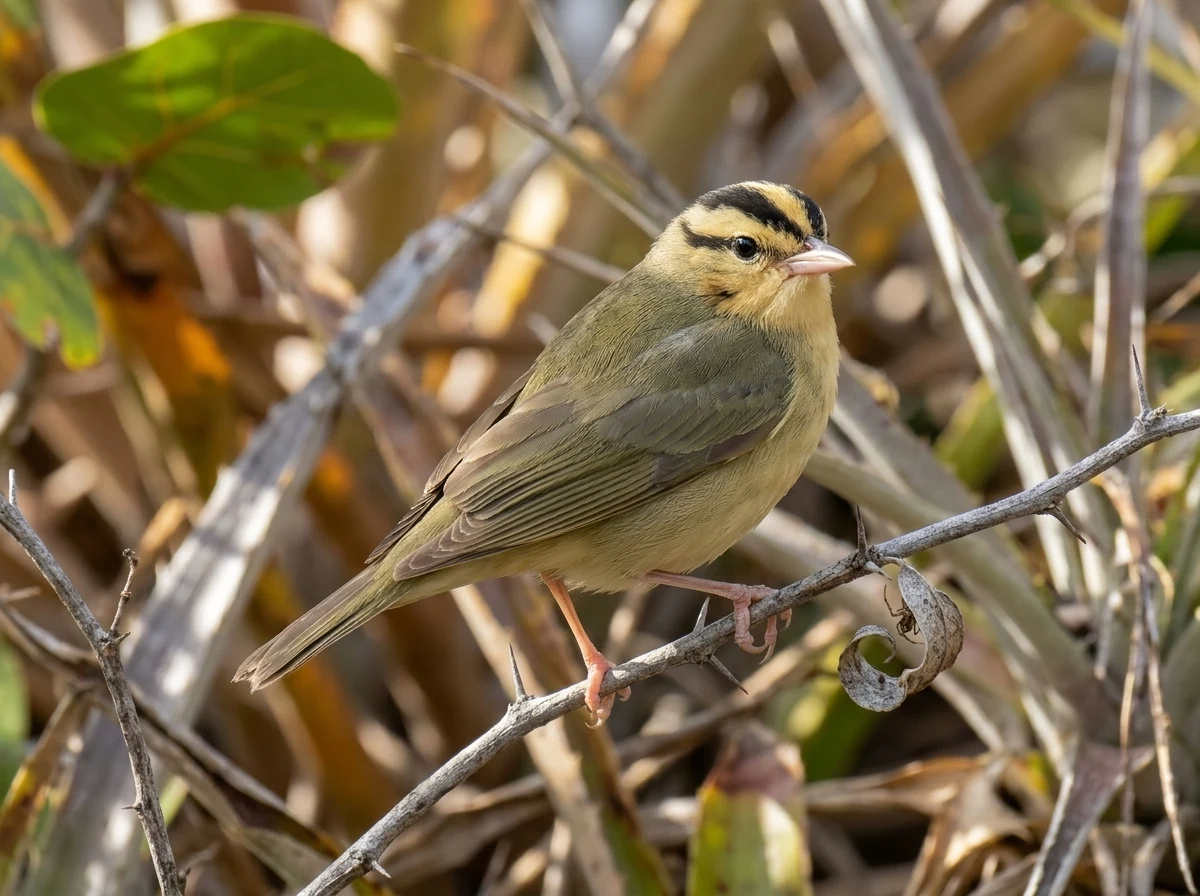
Sound archive
Hear its voice
Explore real songs and calls. The spectrogram turns each sound into a visual trace of time and frequency.
XC1001887Recording 1 of 3song

Play: song by Lionel FREDERIC
Choose another recording
Sound recorded by Lionel FREDERIC · XC1001887 · CC BY-NC-SA 4.0. Visualization by Stichting Xeno-canto voor Natuurgeluiden.
Every recording retains the creator, catalogue number, and license published by Xeno-canto. Metadata via GBIF ↗
01
Why do birds fly into windows?
Because glass reflects trees, shrubs, and sky, or shows an open path straight through, and the bird does not recognize it as an obstacle. Windows facing feeders, birdbaths, and fruiting plants are the most problematic.
02
How do I stop birds from hitting my window?
Mark the outside of the glass with dots at least ¼ inch or stripes at least ⅛ inch wide, spaced 2 inches or less apart, as American Bird Conservancy recommends. You can use patterned film, hanging cords, screens, or tempera paint, and place feeders closer than 3 or farther than 30 feet from the window.
03
Do hawk silhouette decals work on windows?
A single silhouette leaves too much open glass and does not meet the 2-by-2-inch rule American Bird Conservancy recommends. What prevents collisions is a pattern covering the whole outside of the pane, with marks spaced 2 inches or less apart.
04
What should I do if a bird hits my window?
Place it in an enclosed, ventilated box, or under a colander, in a quiet spot, without giving it food or water, and release it when it is alert. If it does not recover, is bleeding, or has a drooping wing, call DRNA at 787-724-5700.
05
Do window markings go inside or outside the glass?
Outside. American Bird Conservancy explains that markings applied inside become invisible to birds when outside reflections are strong, which is common under Puerto Rico's sun.
06
How many birds die from window collisions?
In the United States, Loss et al. (2014) estimated 365 to 988 million birds per year from building collisions, 44% of them at residences; American Bird Conservancy now cites more than one billion. There is no equivalent estimate for Puerto Rico.
Keep exploring
Connected routes
Sources and review
The evidence is one link away.
These sources support the editorial scope of this guide. Bird profiles also retain their own taxonomy, occurrence, and conservation references.
Reviewed:
01↗02↗03↗04↗05↗06↗
American Bird Conservancy
Solutions for homes: glass collisions
The 2-by-2-inch rule, minimum dot and stripe size, exterior application, and priority windows facing feeders and fruiting plants.The Condor: Ornithological Applications
Bird–building collisions in the United States (Loss et al. 2014)
Estimate of 365 to 988 million birds killed per year, 44% at residences, and disproportionately vulnerable species.Humane World for Animals
When and what to feed birds
Feeder distance from windows (under 3 or over 30 feet), 1:9 bleach cleaning, distance from shrubs, and foods to avoid such as bread.Mass Audubon
Helping injured birds
Watch for a couple of hours before intervening, give no food or water, and use a ventilated box for stunned birds.Departamento de Recursos Naturales y Ambientales
DRNA and Ranger Corps contacts
Published numbers: Ranger Corps 787-724-5700 and DRNA 787-999-2200 (ext. 2910 and 2911).Sociedad Ornitológica Puertorriqueña
Official bird list
Local names, occurrence categories, and the public summary of 17 endemics.The atlas continues