 AI
AIHabitat guides
How Bird Communities Change as Forests Regrow
A growing forest does not just gain height: its structure changes, and with it the birds that find food, cover, and nesting sites.
Reviewed:Prepared with AI assistance and linked sources. Illustrations are not field photographs.
The direct question
When a forest regrows, the bird community does not change all at once or in a single direction. What changes first is vegetation structure: how much canopy cover there is, how tall young trees become, how diverse the understory is, and how many large or old trees remain standing. That structure is what offers or denies resources to different birds.
In this guide we answer the specific question with a forest-succession framework and a comparison exercise you can apply in the field. It is not a species profile or a site list: it is a way to read the forest to understand why the bird community changes as the forest grows.
Habitat guides
Three key takeaways
EstructuraWhat changes firstCanopy cover, sapling height, and understory diversity change with stand development phase.
FasesDevelopment stagesStudies compare phases such as early initiation, late initiation, and early stem exclusion.
GremiosResponses by groupShrub-nesting, tree-nesting, and foliage-gleaning birds decrease with stand development; forest ground-nesting birds increase.
01
What it means for a forest to "grow"
In forest ecology, forest growth is described as a sequence of stand development phases. A study in temperate broadleaf forests defined phases such as early initiation, late initiation, and early stem exclusion, and compared them with unmanaged mature forest. In early initiation the canopy remains largely open and the understory regenerates; in late initiation the canopy begins to close and excludes some herbs and shrubs; in early stem exclusion the canopy has fully closed, stem density decreases through competition, and remaining trees gain height and diameter.
That change is not only a tree story. As the canopy closes, light reaching the ground decreases, the understory simplifies, and the forest's vertical structure transforms. For birds, that means places that once held dense shrubs and low foliage can become shaded and have fewer layers. The question "how does the bird community change?" is answered largely by following that structural change.
02
The central comparison: shrub birds and closed-forest birds
The succession study in temperate forests found a clear pattern: total bird abundance, species richness, and diversity decreased significantly between early initiation and unmanaged stands. When birds were grouped by guild, shrub-nesting, tree-nesting, and foliage-gleaning birds decreased with stand development phase; forest ground-nesting birds increased. Much of the loss of abundance and richness was attributed to changes in shrub-nesting and foliage-gleaning birds.
The lesson for a comparison is this: not all birds respond the same way to the same forest. A young, open stand may support birds that depend on shrubs and low foliage, while a closed-canopy stand may favor those that nest on the forest floor. The community does not simply "improve" or "worsen": it reorganizes according to the structure the forest offers at each phase.
03
The Puerto Rico case: structure, not just age
In Puerto Rico, the Luquillo Experimental Forest is one of the most active ecological research sites in the Neotropics. A summary of avian studies there indicates that the forest supports 23 breeding bird species and another 76 known species, mostly migrants. The same summary notes that high densities of Eleutherodactylus frogs and Anolis lizards may reduce insect densities and contribute to the low species richness and densities of many insectivorous birds.
That context matters because it shows that the bird community of a growing forest does not depend only on stand age. It also depends on the food web, on predators and competitors, and on forest structure. In Puerto Rico, hurricanes are also a frequent disturbance; the same summary indicates that studies in Luquillo have contributed to understanding the effects of hurricanes on forest ecosystems, including bird populations and their resources. So when observing a regenerating forest, record structure, not just elapsed years.
04
Field exercise: comparing two forest phases
Choose two nearby points that represent different phases: one with an open canopy and dense low vegetation, and another with a more closed canopy and simpler understory. You do not need to identify every bird to do the exercise; the goal is to relate structure to what you observe. At each point, stand still for a few minutes and note four structural variables: approximate canopy cover, average height of young trees, presence of shrubs, and presence of large or old trees. Then record the birds you see or hear, grouping them by what they do: do they use the ground, the understory, the foliage, or the canopy?
Then compare your two lists. Ask yourself: were birds that use shrubs and foliage more frequent at the open point? Did birds that use the forest floor appear more at the closed point? This exercise does not prove a causal relationship, but it trains you to read forest structure as the variable that connects succession with the bird community. If you repeat the exercise over several visits, note the date and conditions so your notes are comparable.
05
Checklist for observing succession
Before heading out, prepare a notebook or phone note with these columns: date, time, point, canopy cover (open, partial, or closed), height of young trees (low, medium, or high), shrubs (absent, scattered, or dense), large or old trees (present or absent), birds observed, and the layer they use. This list helps you avoid relying on memory and compare points consistently.
During observation, avoid concluding that a bird "belongs" to a phase just because you saw it once. The study evidence compares averages between phases and guilds, not individual observations. Your list is a tool for practicing comparison, not a census. If you want to contribute useful data, consider participating in citizen science and recording your observations on recognized platforms, as long as you follow their protocols.
Linked profiles
Two birds for thinking about succession
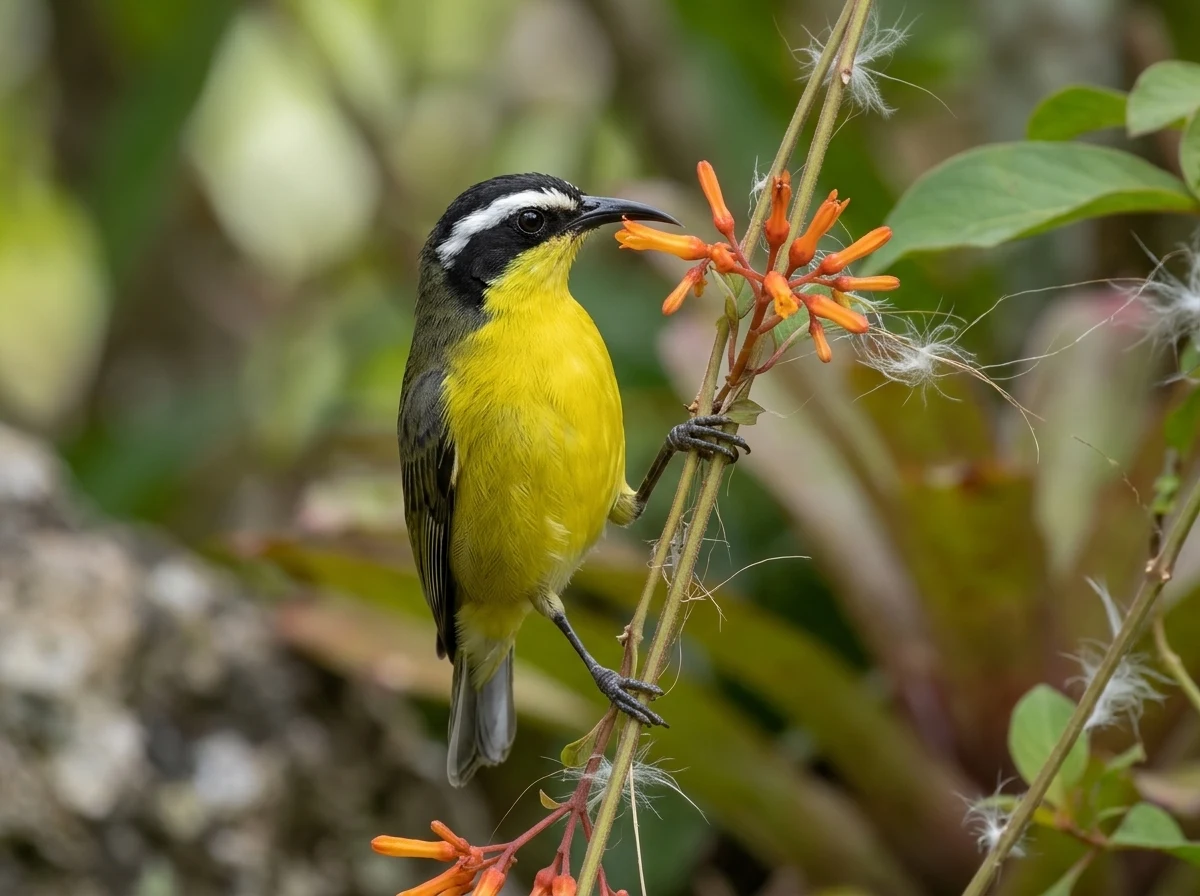
These species appear in the avespuertorico.com catalog and help illustrate how different birds use different forests.
AI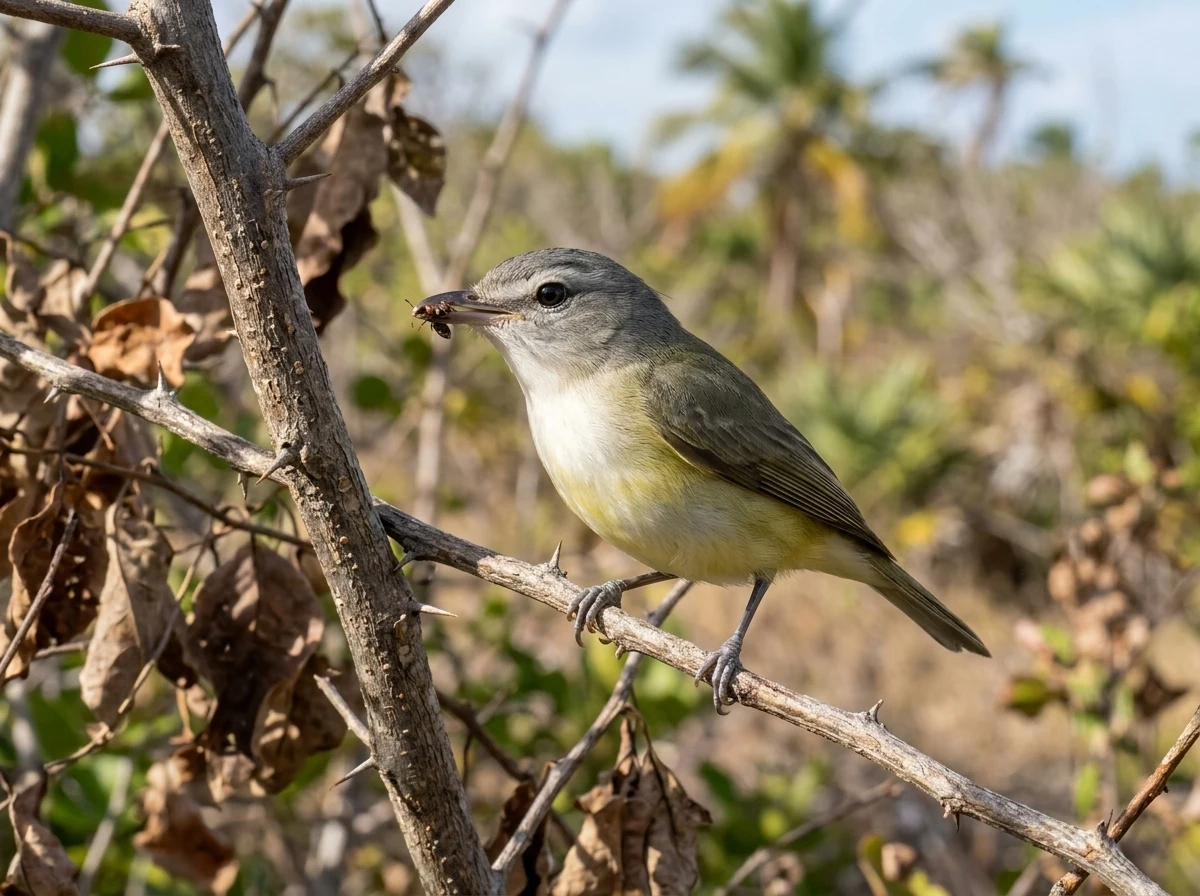 AI
AI01
Does the bird community always increase as the forest grows?
Not necessarily. In the temperate forest succession study, total abundance, richness, and diversity decreased between early initiation and unmanaged stands. What happens is a reorganization: shrub-nesting, tree-nesting, and foliage-gleaning birds decrease, while forest ground-nesting birds increase.
02
Which structural variable best explains the changes?
The study identified canopy cover, ground-story diversity, and canopy structure diversity as the most powerful and consistent explanatory variables. Canopy cover, for example, correlated negatively with total bird abundance, richness, and shrub-nesting and foliage-gleaning birds, and positively with forest ground-nesting birds.
03
Does this apply the same way in Puerto Rico?
The stand development study was conducted in temperate broadleaf forests in the northeastern United States, not in Puerto Rico. However, the summary of avian studies in the Luquillo Experimental Forest shows that forest structure, the food web, and disturbances such as hurricanes influence birds. The structure-based comparison is a useful framework, but local details may vary.
04
Can I use the Bananaquit or the Puerto Rican Vireo as phase indicators?
Not with this evidence. The catalog indicates that the Bananaquit is native and resident in Puerto Rico and uses nearly all wooded and human-modified habitats, including gardens. The Puerto Rican Vireo is endemic and resident, and uses dry and moist forest, woodland, karst, and thickets. Neither habitat description equals a measure of abundance by succession phase, so they should not be presented as quantitative indicators.
Keep exploring
Connected routes
Sources and review
The evidence is one link away.
These sources support the editorial scope of this guide. Bird profiles also retain their own taxonomy, occurrence, and conservation references.
Reviewed:
01↗02↗
USDA Forest Service, International Institute of Tropical Forestry
Avian studies and research opportunities in the Luquillo Experimental Forest: a tropical rain forest in Puerto Rico
Evidence for cited sections; consult the original document.Ecology and Evolution (PMC)
Legacy forest structure increases bird diversity and abundance in early succession
Evidence for cited sections; consult the original document.The atlas continues