 AI
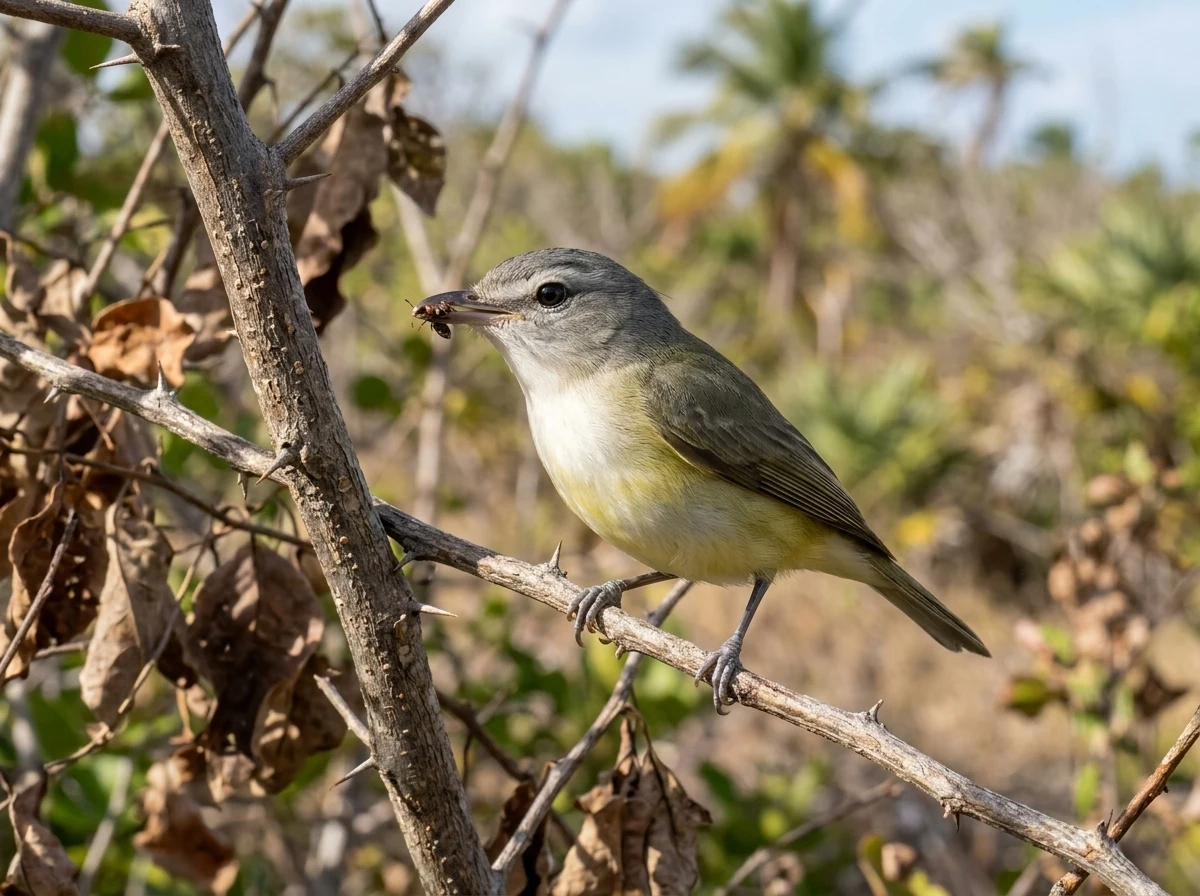
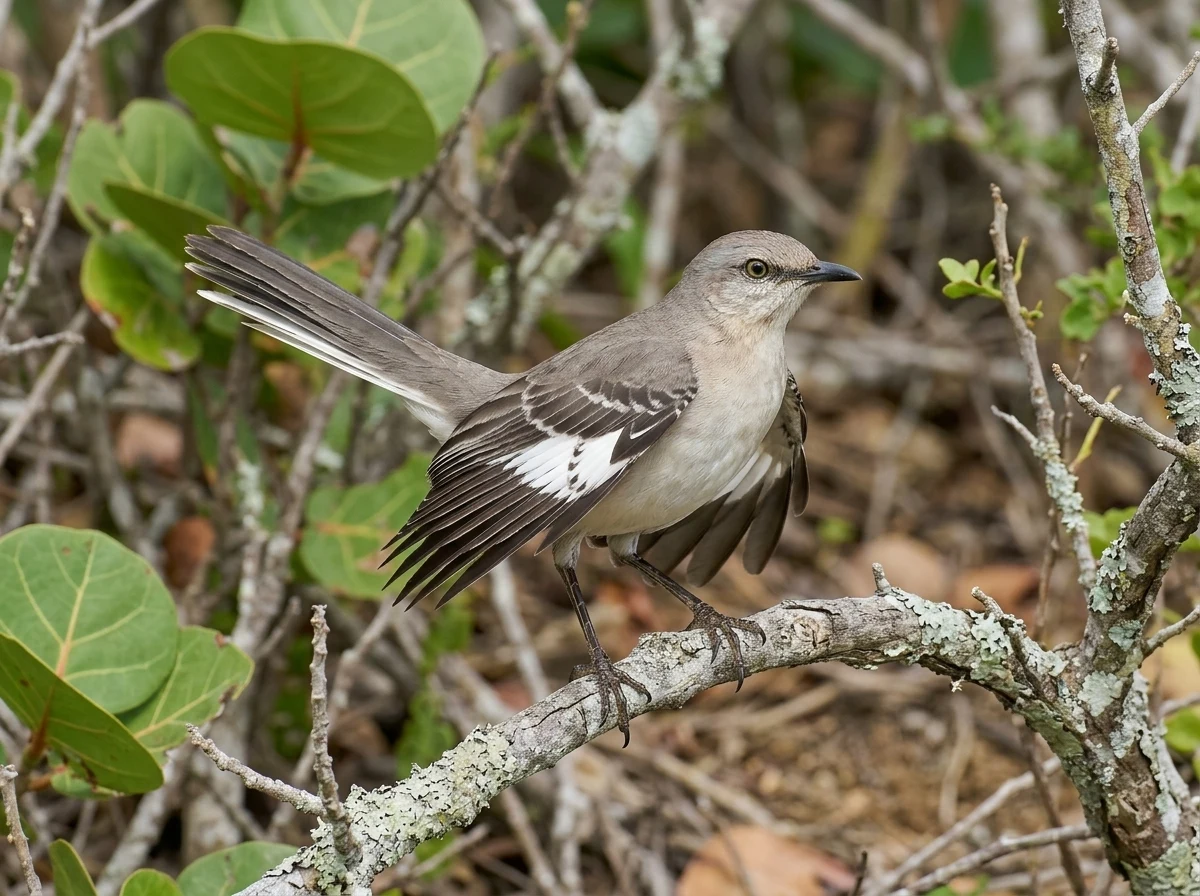
AIAI reconstruction created with Nano Banana 2 · 1K, grounded in the profile’s documented taxonomy, habitat, natural-history sources, and an open-license visual reference when available. It is an interpretive image, not documentary evidence. Image policy →
Puerto Rican Vireo
Bienteveo
Vireo latimeri
The Puerto Rican vireo (Vireo latimeri) is a small bird endemic to the archipelago of Puerto Rico and one of the 31 species belonging to the genus Vireo of the family Vireonidae. Its local name is bien-te-veo ("see-you-well", after the call), not to be confused with the unrelated great kiskadee - also known as bien-te-veo - which is found elsewhere. The Puerto Rican vireo has a gray head, a white breast and a yellowish belly. The species measures, on average, 12 cm (4.72 in) and weighs from 11 to 12 grams (0.388–0.423 oz). The Puerto Rican vireo is found in various forested areas of all elevations in Puerto Rico, in wet and dry forests, and mangroves. The birds have been found to be living in the various shade coffee plantations. Breeding starts from March to July where they lay clutches of 2–3 eggs, that are palish pink with brownish brown spot. Typically, the vireos usually only have enough resources to sustain one chick, and the parents share equal responsibility in caring for the chick by gathering resources and defending the nest from other birds. An insectivore, the species's diet consists of grasshoppers, caterpillars, cicadas, beetles and aphids and is complemented with spiders, anoles, and berries. From 1973 until at least 1996, the species suffered a population decline in the Guánica State Forest. The primary reason for this decline was brood parasitism by the shiny cowbird (Molothrus bonariensis). A study from the 1973–1996 measured the survival rates of Puerto Rican Vreo, by using mist netting techniques in Guiana forest which is 4000 hectares. Since there were no captures in the six of the past ten years this was evident enough to suggest a 5% decrease. Seven nets showed a decrease of from 27 in 1989 to eight captures in 1995. The original net line had a survival rate of 0.68, between 1973–1990, to 0.61 when adding 6 more years to 1996. There was an analysis done which showed after 1994 there was 0.54 annual survival rate. This suggests that either the Vireo emigrated or suffered morality. A leading cause of this was Shiny Cowbirds after being introduced had a severe reaction to the vireo population, of 83% of nests being parasited, leading to 82% of reduction in fledglings. This was evident as the main problem because of no negative decrease in other insectivore birds such as Puerto Rican Flycatcher(Myiarchus antillarum) and the Adelaide's Warblerr (Dendroica adelaidae). Reasons for population decline are competition over nesting spots with other birds, The shiny cowbird commonly lays it's eggs in the Vireo's nest. As well as, animals brought to hunt rats like mongooses, and cats commonly all threaten their existence. Deforestation and removal of shade coffee plantations also destroys the local ecosystem displacing the vireos. The birds population has been declining for 20 years. Annual survival rates for the Puerto Rican vireos are 0.74, and the survival rate for the first fledging was 0.40. The longevity record for the Puerto Rican Vireo is 13 years and 2 months this was found through banding and recapturing. 51 males, 14 females, and 13 fletchings, and 10 of unknown sex were the sample and the recapture rate for males was 0.92. Another study conducted after the Hurricane Georges, where they found that overall nest survival was 0.932. They found a 26% decrease in density of territorial males observed the post hurricane year. There was a return rate of 39% of color marked adults the year of the hurricane and 72% the year without the hurricane. A study was done on genetic diversity of different vireo species, by using random ampifiled polymorphic DNA markers, they found that White-Eyed Vireo(Vireo griseus) had much higher genetic diversity with 67% being polymorphic. The island species like Puerto Rican Vireo(V. latimeri) had 38%, Jamaican Vireo (V. modestus) had 34%, and lastly the Blue Mountain Vireo (V. osburni) had 32%.
Sound archive
Hear its voice
Explore real songs and calls. The spectrogram turns each sound into a visual trace of time and frequency.

Play: call by Barry Edmonston
Choose another recording
Sound recorded by Barry Edmonston · XC793967 · CC BY-NC-SA 4.0. Visualization by Stichting Xeno-canto voor Natuurgeluiden.
Every recording retains the creator, catalogue number, and license published by Xeno-canto. Metadata via GBIF ↗
Island profile
About the Puerto Rican Vireo
This atlas includes Puerto Rican Vireo (Vireo latimeri) with atlas status “Puerto Rico endemic” within scope “Avibase inferred core 380.” Puerto Rico context sources associate it with Dry and moist forest; woodland; karst and thickets.
Conservation
Least Concern
IUCN LC; DNER VU
- Global IUCN
- LC
- Puerto Rico DNER
- VU
- Federal ESA
- No current listing in source crosswalk
- Critical habitat
- Not identified in source crosswalk
Natural history
How it lives
- Habitat
- Dry and moist forest; woodland; karst and thickets
- Elevation
- 0–900 m
- Nest
- Cup / bowl · Tree
- Clutch
- 2–3 eggs
- Social behavior
- Social / flocking
For kids and families
Turn this bird into your own artwork
Download a clean, print-ready coloring page, learn one quick fact, and color this Puerto Rico bird.
Keep exploring
This bird belongs to 10 paths through the atlas.
Guides featuring this bird
Follow this record beyond the profile.
Identification, sound, place, and explanatory guides connecting this species to larger questions.
See all related guides (19)
- How to keep a field notebook for birds in Puerto Rico
- How to assign breeding codes in eBird for Puerto Rico
- Conserving Elfin-woods Warbler
- Birds of Guánica
- Songs and calls
- Call vs. song
- Birds of El Yunque
- Birds of the karst
- Birds of Guajataca State Forest
- Birds of Río Abajo
- Puerto Rico in three days
- Birds of Maricao
- Shiny Cowbird in Puerto Rico
- How to Attract Birds to Your Yard in Puerto Rico
- Birds of Cambalache State Forest
- Birds of Bosque del Pueblo, Adjuntas
- Birds of Susúa State Forest
- Endangered Birds of Puerto Rico: The Complete List
- Endemic birds
Related in the atlas
Where to fly next
Connected by taxonomy, habitat, occurrence, and conservation.
 AI
AI AI
AI AI
AI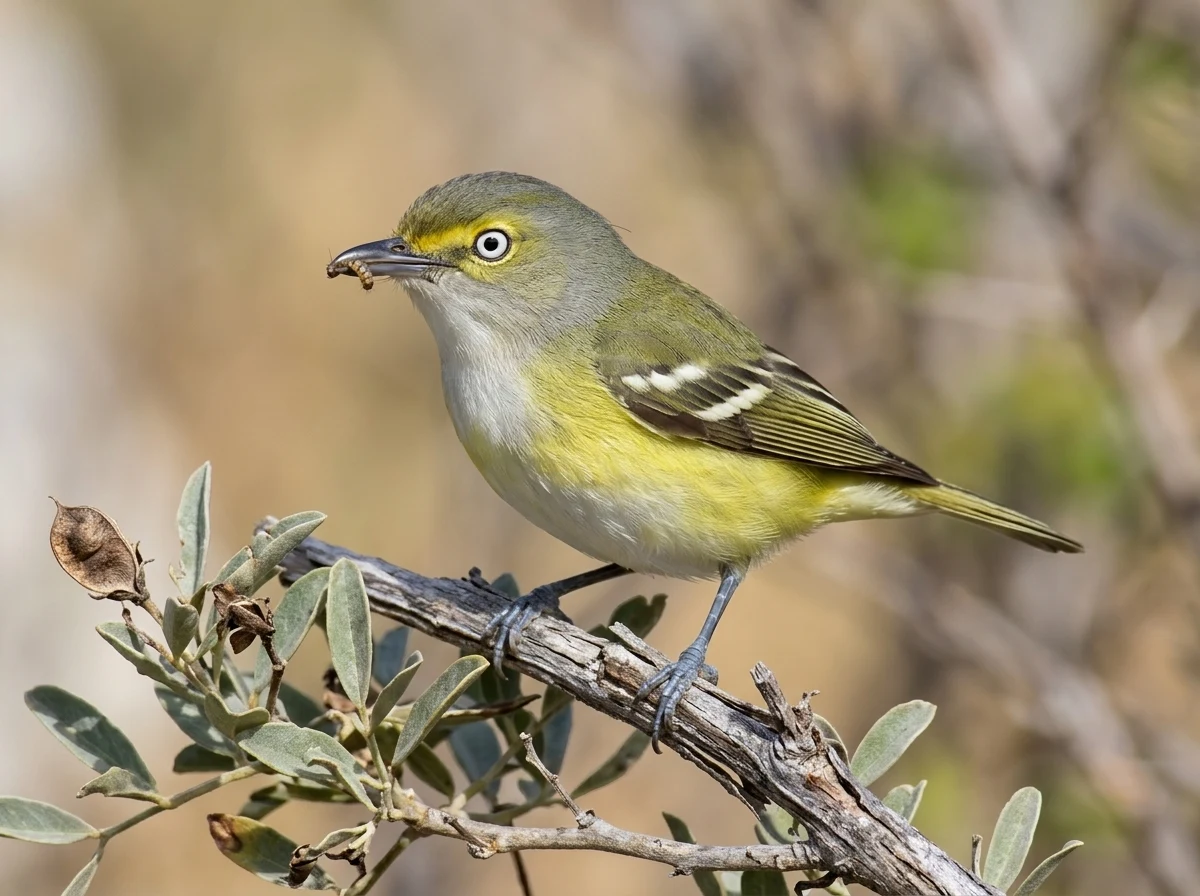 AI
AI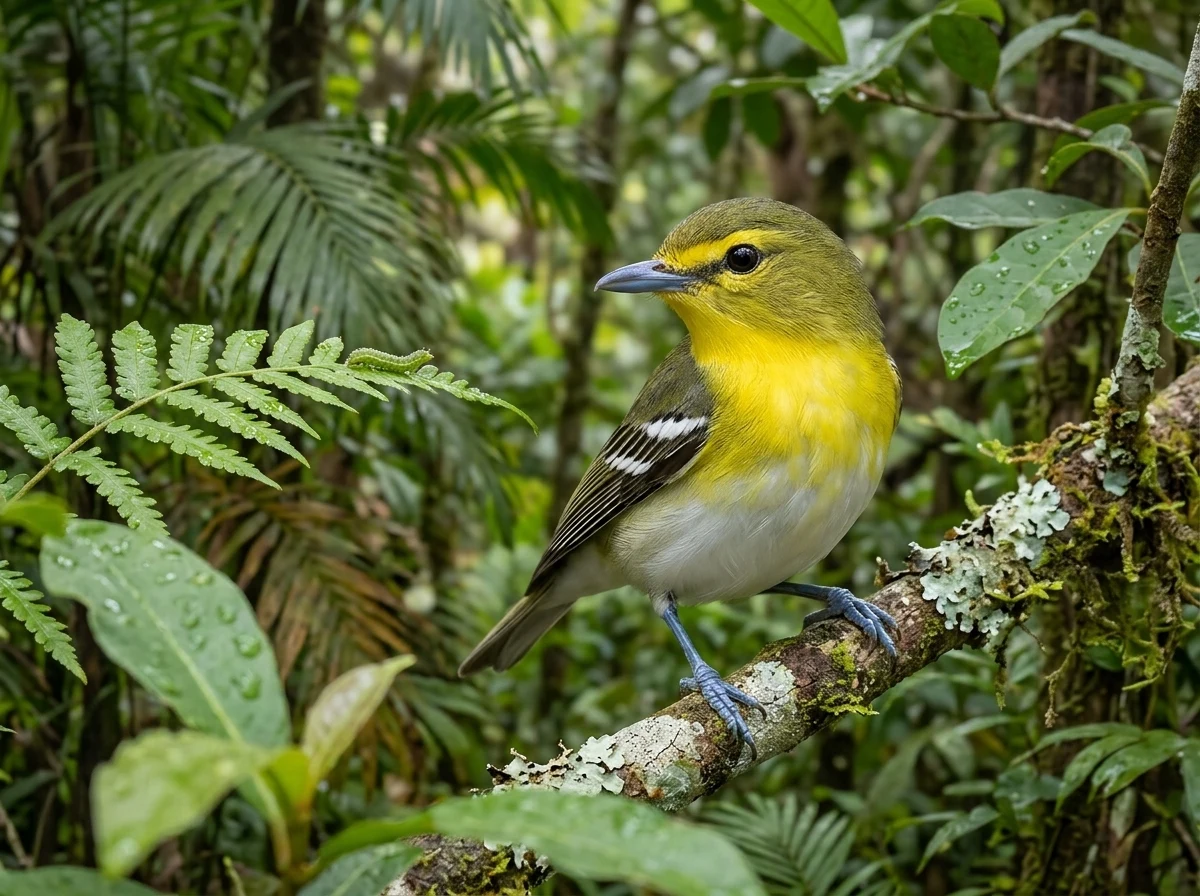 AI
AI AI
AI
Evidence trail
Sources, media & further reading
Research note: 2004 LR category and 2026 VU must remain separate dated fields