 AI
AIHabitat guide
How Birds Use Rocky Shores
Two shorebirds, two strategies: a practical comparison for reading a rocky shore and knowing what to look for.
Reviewed: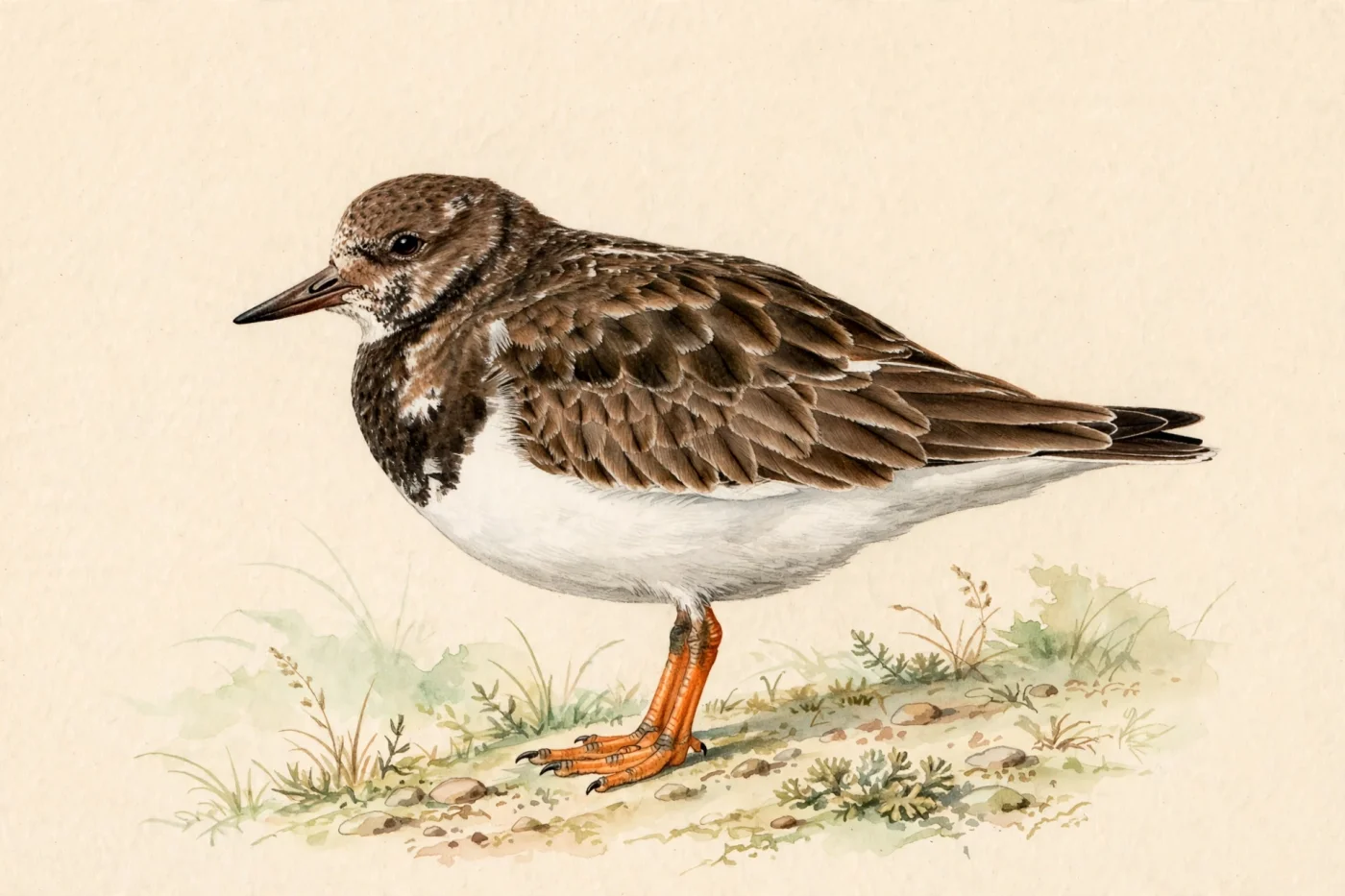
Prepared with AI assistance and linked sources. Illustrations are not field photographs.
The rocky shore as a working zone
A rocky shore is not a uniform wall. It is a mosaic of platforms, crevices, tide pools, loose blocks and algae that change with every tide. Birds do not use that mosaic in the same way: some search for prey hidden among rocks, others walk over exposed surfaces, and others merely pass through between one resting area and another.
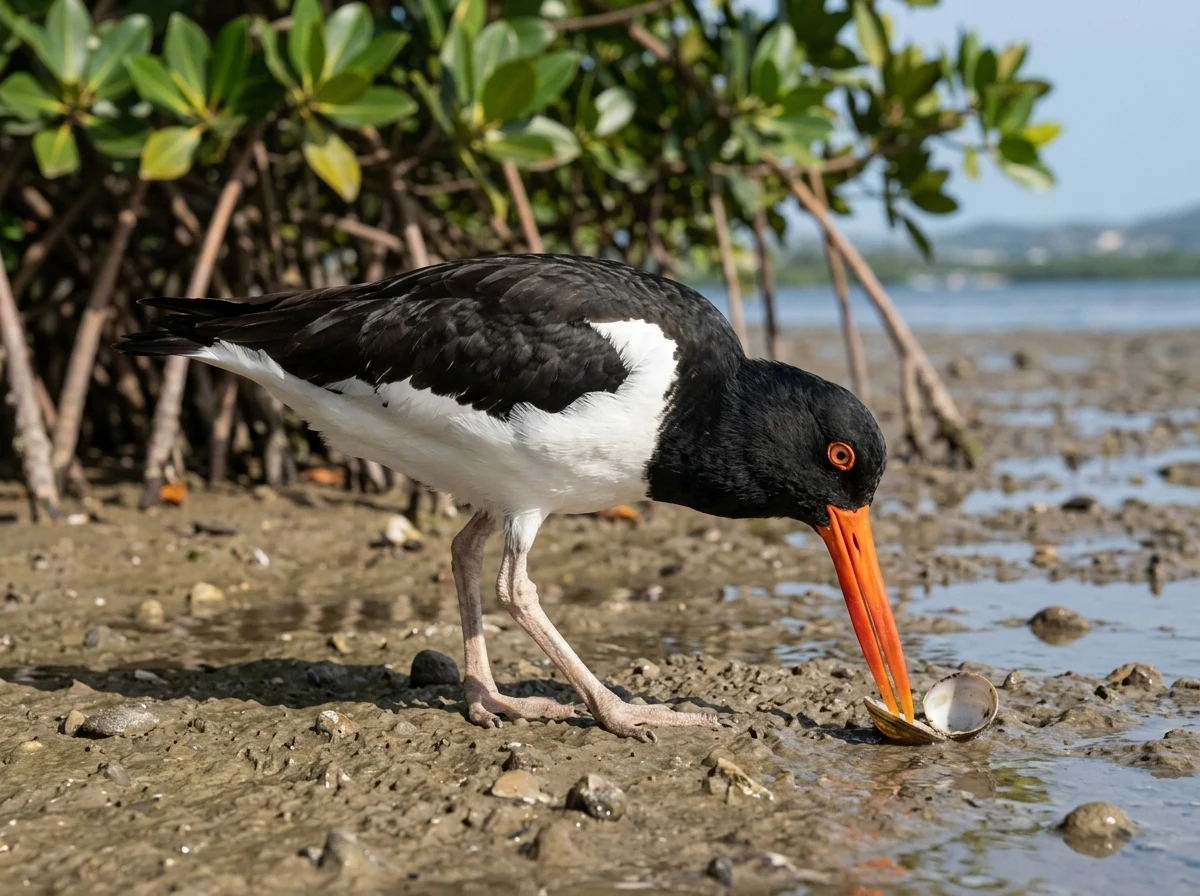
This guide answers a concrete question: how birds use rocky shores. To do so, we compare two species that the local catalog records in Puerto Rico: the American Oystercatcher (Haematopus palliatus) and the Ruddy Turnstone (Arenaria interpres). The comparison helps turn a coastal walk into an observation with a hypothesis, not just a list of names.
Habitat guide
Three ideas to take into the field
Dos estrategiasOystercatcher and Ruddy TurnstoneThe local catalog records both species in Puerto Rico, but does not claim abundance or frequency.
MareaThe shore's clockRising and falling water changes which part of the rock is accessible to birds.
SustratoRock, crevice or blockNoting the substrate helps explain why a bird is at one spot and not another.
01
What a rocky shore offers birds
The Guide to the Ecological Systems of Puerto Rico (USDA Forest Service, IITF-GTR-35) includes a rocky shoreline habitat section within coastal ecosystems. That description treats the rocky shore as a system of its own, distinct from sandy beach, and not merely as an edge between land and sea. For birds, that distinction matters: rock offers footholds, crevices and surfaces where water leaves or uncovers food.
The same document describes the coast as an environment shaped by waves, tides and substrate materials. You do not need to know every alga or invertebrate species to watch birds there. It is enough to recognize that the rocky shore changes in shape and accessibility through the day, and that birds respond to that change.
02
Two ways of working the rock: American Oystercatcher and Ruddy Turnstone
The local catalog describes the American Oystercatcher as a bird of rocky and sandy coasts, mudflats and cays, with an invertebrate diet and a long, thick bill. The catalog also indicates that it nests on the ground or on rock, in a shallow scrape, reinforcing its link to stable coastal surfaces. A reasonable field hypothesis is that the bird uses its bill to probe crevices and the rock-water interface; that idea should be tested by observation, not assumed.
The Ruddy Turnstone appears in the catalog with coastal habitat and an invertebrate diet. The supplied occurrence fields do not mark it as a resident or as a breeder in Puerto Rico. That status distinction is what this guide can state; one should not infer a migratory presence category that the fields do not declare. On a rocky shore, the useful comparison is about relationship to place: one species with a documented breeding link in the catalog and another without one.
03
How to observe: a four-step procedure
First, choose a fixed point from which you can see a strip of rock without walking on it. Second, note the time and an estimate of the tide: high, falling, low or rising. Third, for ten minutes, record every bird using the rock and note which part of the substrate it occupies: exposed platform, crevice, pool, loose block or water's edge. Fourth, repeat the same count at another point in the tidal cycle, if you can, and compare.
This procedure requires no special equipment. What matters is separating observation from interpretation: first describe where the bird is and what it does; then propose why. If you see an American Oystercatcher probing a crevice, you can write 'probing in crevice'. If you see a Ruddy Turnstone walking over an exposed platform, write 'walking and pecking on surface'. The comparison between those notes is the exercise.
04
Field checklist and common mistakes
Carry a short checklist: time, tide state, substrate type, species observed, behavior (probing, walking, pecking, resting, flying), approximate distance, and whether the bird was alone or in a group. That list turns a walk into a comparable record. You do not need to identify every invertebrate or alga for the observation to be useful.
A common mistake is assuming every bird on rock is feeding. Another is confusing presence with abundance: seeing an American Oystercatcher or a Ruddy Turnstone does not mean they are common at that spot. The local catalog records their occurrence in Puerto Rico, but does not provide an abundance measure. Honest observation describes what you saw, when and where, without extrapolating.
Linked profiles
The two species in this guide
Reference profiles for comparing their strategies on the rocky shore.
AI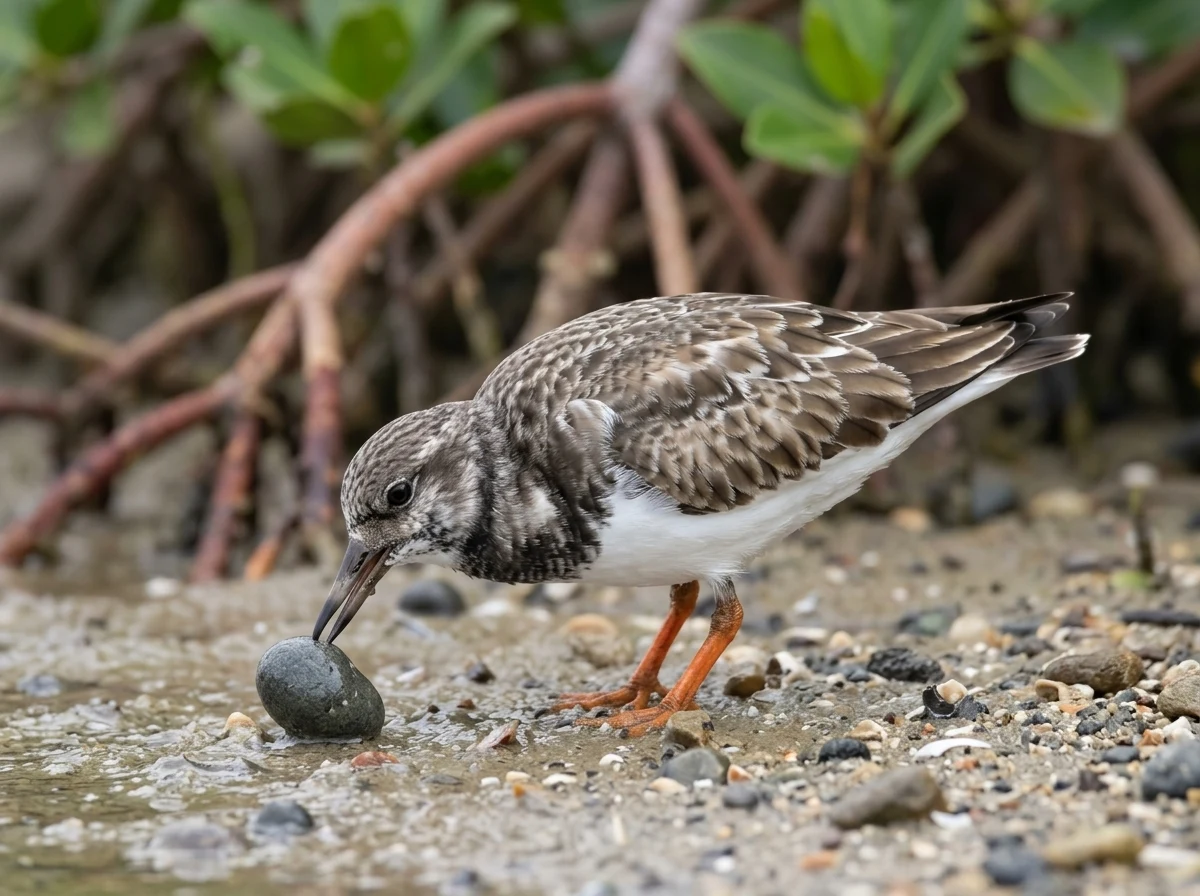 AI
AI01
What is the main difference between the American Oystercatcher and the Ruddy Turnstone on a rocky shore?
The local catalog describes the American Oystercatcher as a resident and breeder in Puerto Rico, associated with rocky and sandy coasts. For the Ruddy Turnstone, the supplied fields do not mark it as a resident or as a breeder on the island. That status difference suggests two different ways of using the same substrate.
02
Do I need to identify invertebrates to watch birds on a rocky shore?
No. The Guide to the Ecological Systems of Puerto Rico describes the rocky shoreline as a coastal system, but to watch birds it is enough to record substrate and behavior. Identifying every invertebrate is not a requirement for a useful observation.
03
Can I say a species is abundant if I see it several times?
No. The local catalog records occurrence in Puerto Rico, but does not provide an abundance measure. Seeing a bird several times at one spot is not equivalent to a population estimate. It is better to note 'observed at this place, at this time' than to claim it is common.
04
Why does the tide matter in this observation?
Because the tide changes which part of the rock is accessible. The Guide to the Ecological Systems of Puerto Rico describes the coast as an environment shaped by waves and tides. Noting the tide state helps explain why a bird is on a platform, in a crevice or at the water's edge.
05
Does this guide confirm that both species nest on Puerto Rico's rocky shores?
No. The local catalog indicates that the American Oystercatcher is a resident and breeder in Puerto Rico, with a ground or rock nest. For the Ruddy Turnstone, the supplied fields do not mark it as a resident or as a breeder on the island. One species' nesting should not be generalized to the other.
Keep exploring
Connected routes
Sources and review
The evidence is one link away.
These sources support the editorial scope of this guide. Bird profiles also retain their own taxonomy, occurrence, and conservation references.
Reviewed:
The atlas continues