 AI
AIBehavior guide
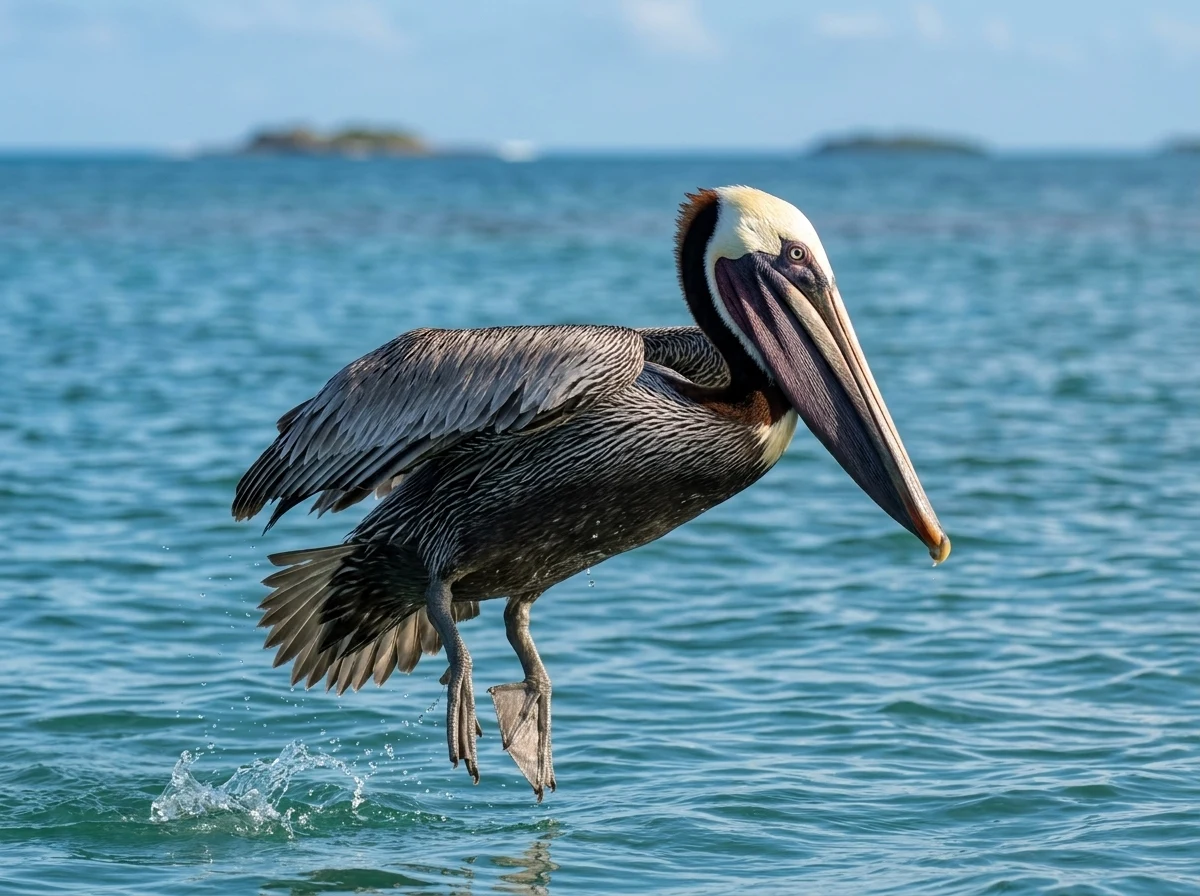
How Brown Pelicans Catch Fish
The Brown Pelican catches fish by diving head-first into the water and trapping them in an expandable gular pouch. Here we break down the mechanism, compare it with other birds, and suggest a structured observation.
Reviewed:Prepared with AI assistance and linked sources. Illustrations are not field photographs.
A technique that defines a family
The Brown Pelican (Pelecanus occidentalis) is one of the most recognizable seabirds in Puerto Rico. Its fishing method—plunging head-first from the air and trapping fish in a gular pouch—sets it apart from most birds that feed in coastal waters. According to Birds of the World, of the world's eight pelican species, only the Brown Pelican and the closely related Peruvian Pelican (P. thagus) feed by this plunge-diving method.
This guide directly answers how Brown Pelicans catch fish. We describe the dive sequence, the role of the gular pouch, feeding variations, and offer a comparison with other seabirds and an observation activity. For general context on the species in Puerto Rico, see the seabirds guide and the pelicans in Puerto Rico guide.
Behavior guide
Key facts
2.6 galonesWater the gular pouch can holdAccording to BirdsCaribbean, the pouch expands and can fill with up to 2.6 gallons of water during the dive.
Solo 2 de 8Pelicans that plunge-diveOf the world's eight pelican species, only the Brown Pelican and Peruvian Pelican feed this way (Birds of the World).
Giro a la izquierdaRotation during the diveBirdsCaribbean notes that the pelican rotates its body to the left as it dives, possibly to protect the trachea and esophagus from impact.
01
The plunge-dive sequence
The Brown Pelican feeds mainly on small fish swimming near the surface. It flies over the water, locates a school of fish, and dives head-first from the air. During the fall, the bird tucks its neck and rotates its body to the left, a detail documented by BirdsCaribbean that possibly protects the trachea and esophagus from the impact with the water.
Upon entering the water, the gular pouch—the expandable skin hanging from the lower jaw—opens and traps both fish and water. The pouch can hold up to 2.6 gallons of water, according to BirdsCaribbean. The pelican does not swallow immediately: it first drains the water from the pouch before swallowing the fish. This sequence is quick and occurs at or just below the surface.
Birds of the World describes this technique as a remarkable adaptation: the impact of the dive stuns or immobilizes fish near the surface, which become trapped in the pouch. The pelican's head and neck are reinforced to withstand the blow, and the pouch acts as a flexible net.
02
The gular pouch: a living net
The gular pouch is the key structure that allows the Brown Pelican to capture fish so efficiently. It is not a permanent storage bag: it is an elastic membrane that stretches upon contact with water and then contracts to expel the water and retain the prey. BirdsCaribbean describes that the pouch expands and captures fish, and that the bird then drains the water before swallowing.
This adaptation also explains why the pelican cannot dive to great depths like other seabirds. Its method depends on surprise and on fish density near the surface. The pouch is not designed to withstand deep-water pressure, but to act as a large-volume trap in the surface layer of the sea.
The pelican sometimes feeds in other ways: it may sit on the water's surface and capture prey with its bill, or steal food from other seabirds, according to BirdsCaribbean. These variations do not replace the plunge-dive, but they show flexibility in its foraging behavior.
03
Comparison with other seabirds
The Brown Pelican is not the only seabird feeding in coastal waters, but its technique is distinctive. Other seabirds in Puerto Rico, such as gulls and terns, capture fish at the surface or dive partially, but they do not have an expandable gular pouch. The pelican's plunge-dive is deeper and more spectacular than that of most surface-feeding birds.
Unlike birds that dive from the surface, such as cormorants, the pelican attacks from the air. This difference is important: the pelican does not chase fish underwater, but surprises them from above. Its body is adapted for impact, not for prolonged underwater pursuit.
Another useful comparison is with the American White Pelican (Pelecanus erythrorhynchos), which does not plunge-dive but captures fish while swimming at the surface. Birds of the World notes that only the Brown and Peruvian Pelicans share the plunge-dive, making this technique a diagnostic behavioral trait of the Brown Pelican.
04
Observation activity: follow a plunge-dive
If you observe Brown Pelicans along the Puerto Rico coast, try this activity. Find an elevated spot with a view of the sea, such as a seawall or a rocky beach. Watch the pelicans flying over the water. When one prepares to dive, you will notice it reduces altitude and points its bill downward. Use binoculars to follow the fall and the moment of entry into the water.
After the dive, observe whether the pelican remains on the surface for a few seconds. During that time, it is draining water from the pouch before swallowing. Note how many dives you see in 10 minutes and whether any are followed by a visible capture. You do not need to identify the fish: the goal is to document the behavioral sequence.
You can repeat this observation at different times of day. Compare the frequency of dives and the height from which they launch. This activity requires no specialized equipment, just patience and binoculars. If you wish to contribute to citizen science, you can record your observations on platforms like eBird, but avoid inferring abundance from a single visit.
Linked profiles
The Brown Pelican in Puerto Rico
The Brown Pelican is a resident and breeds in Puerto Rico. Do not infer abundance from isolated sightings; see the general guide for context.
AI01
Do Brown Pelicans only catch fish by plunge-diving?
No. Although plunge-diving is their main method, BirdsCaribbean notes that they sometimes sit on the water's surface and capture prey with their bills, or steal food from other seabirds. Plunge-diving is the most characteristic technique and the one that distinguishes them from other pelicans.
02
What happens to the water that enters the pouch?
The pelican drains the water before swallowing the fish. The pouch can hold up to 2.6 gallons of water, according to BirdsCaribbean. The bird contracts the pouch to expel the water and then swallows the prey that remains trapped.
03
Why does the pelican rotate to the left when diving?
BirdsCaribbean states that the pelican rotates its body to the left during the dive, possibly to protect the trachea and esophagus from the impact with the water. This is a documented observation, although the exact reason remains a functional interpretation.
04
Can I see this technique in Puerto Rico?
The Brown Pelican is a resident and breeds in Puerto Rico, according to the bird catalog. It is found in marine coasts, bays, mangroves, and cays. To observe it fishing, look for coastal areas with calm waters and small fish. Do not infer abundance from a single visit.
05
Is this the same as what the American White Pelican does?
No. The American White Pelican does not plunge-dive; it captures fish while swimming at the surface. Birds of the World notes that only the Brown Pelican and the Peruvian Pelican share the plunge-dive. This difference is key to identifying the Brown Pelican's behavior.
Keep exploring
Connected routes
Sources and review
The evidence is one link away.
These sources support the editorial scope of this guide. Bird profiles also retain their own taxonomy, occurrence, and conservation references.
Reviewed:
The atlas continues