 AI
AIHabitats guide
How Forest Fragmentation Affects Birds
When a forest is split into small patches, light, wind, predators, and food change. This guide explains the mechanism and proposes a practical comparison between a small and a large patch.
Reviewed:Prepared with AI assistance and linked sources. Illustrations are not field photographs.
The core idea in two steps
Forest fragmentation happens when a continuous forest is split into smaller patches separated by roads, pastures, housing, or crops. The result is not just 'less forest': it is more edge, more isolation, and less deep interior. A global study cited by Audubon found that 70 percent of the world's forests lie within half a mile of their edge, and almost 20 percent have only 100 meters of buffer. That means very few forests function as pure interior.
For birds, the effect is felt in two ways. First, the habitat changes: the edge has more light, more wind, more pioneer plants, and less humidity. Second, the community changes: predators and edge species increase, while species that need interior decrease. In Puerto Rico, Hurricane Maria defoliated and toppled trees across the island, and a 2019 study found that more species declined than increased in occupancy, with obligate frugivores among the most affected. That is a lesson in how a sudden change in forest structure reorganizes the community.
Habitats guide
Three ideas to remember
70%of the world's forests within half a mile of an edgeFigure from the global study cited by Audubon (2015).
Más especies disminuyeronthan increased after the 2017 hurricanes in Puerto RicoStudy by Lloyd, Rimmer, and Salguero-Faría (2019) in PLOS ONE.
Frugívoros obligadoswere the most sensitive to loss of forest structureThe same study found that all obligate frugivores declined.
01
What changes at the forest edge
The edge is the zone where forest meets open habitat. More light enters, wind runs stronger, and the soil dries faster. Those conditions favor vines, dense shrubs, and pioneer trees, and reduce the humidity that many interior plants need. For birds, the edge can offer food and cover, but it also concentrates nests and predator activity.
The U.S. Forest Service study on eastern forests proposes that fragmentation effects operate at several levels: region, landscape, and local patch. At the landscape level, the amount of forest affects the number of predators and parasitic cowbirds. At the local level, patch size and amount of edge affect bird abundance and nesting success. In other words, looking at a single patch is not enough: you have to look at the surrounding context.
02
Patch size and isolation
A small patch has less interior and proportionally more edge. That means a larger part of its area is exposed to edge conditions. Also, an isolated patch is harder for birds to colonize if they do not cross open ground. The global study cited by Audubon mentions examples of birds that seek patches of a certain size: the Golden-winged Warbler needs at least 70 percent forest cover at the landscape scale, the Vesper Sparrow seeks territories of at least 40 hectares, and the Cerulean Warbler seeks at least 200 hectares. Not all birds have the same requirements, but the general pattern is that less continuous forest means fewer interior species.
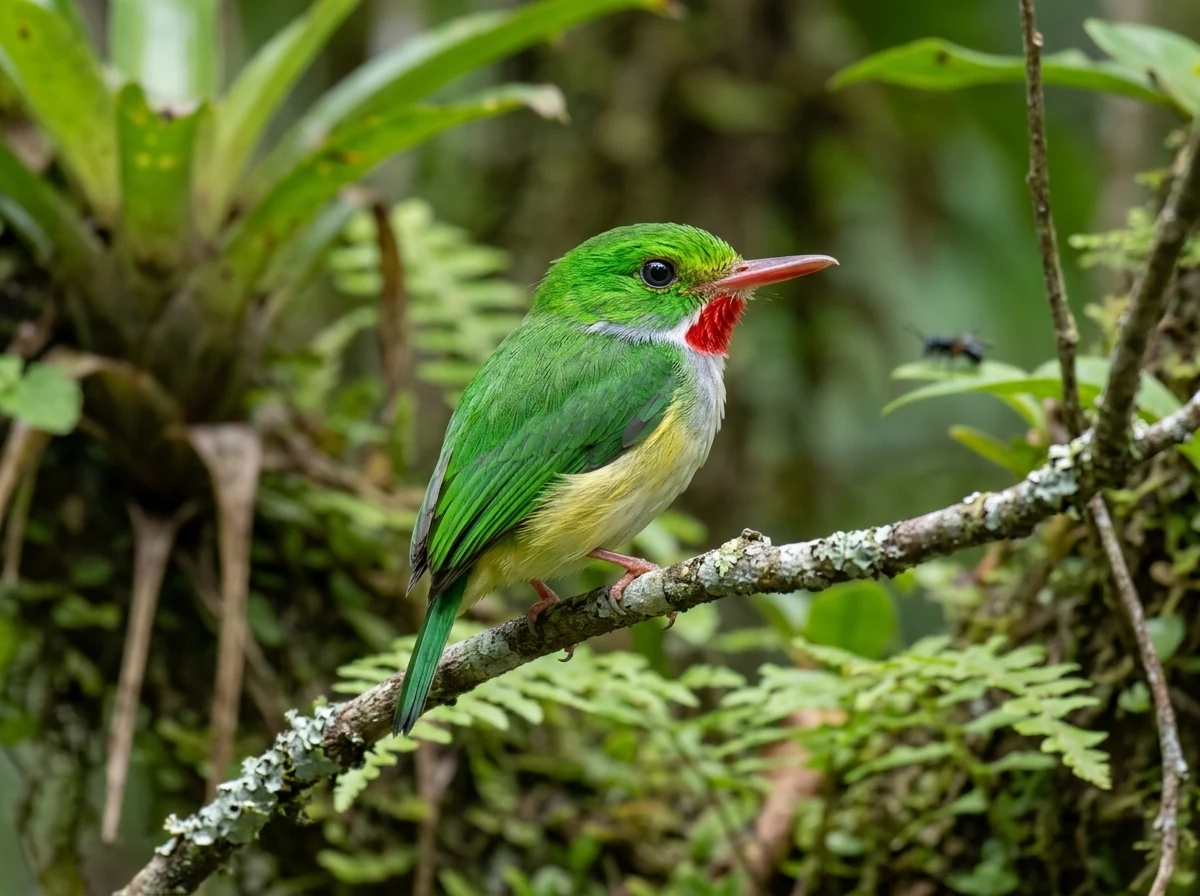
In Puerto Rico, the 2019 study found that twelve species declined in occupancy after the hurricanes, including the Puerto Rican Tody (Todus mexicanus) and the Puerto Rican Vireo (Vireo latimeri). The study did not measure fragmentation directly, but it did measure changes in forest structure, which is the same mechanism: when the forest loses canopy, it looks more like an edge. That connection is key to understanding why fragmentation matters even without a road in the middle.
03
Predators, parasites, and nesting success
The U.S. Forest Service study proposes that fragmentation affects bird productivity through predators and parasitic cowbirds. In highly fragmented landscapes, nests near the edge are easier for raccoons, rats, snakes, and predatory birds to find. The Brown-headed Cowbird (Molothrus ater) can also parasitize nests near the edge. The result is fewer chicks per nest, even if the adults survive.
In Puerto Rico, the Puerto Rican Vireo has suffered parasitism by the Shiny Cowbird (Molothrus bonariensis) in the Guánica Forest. Available information indicates that between 1973 and 1996 there was a population decline associated with parasitism, with up to 83 percent of nests parasitized and an 82 percent reduction in fledglings in some years. That is not a fragmentation effect by itself, but it shows how a nest near altered conditions can fail. Fragmentation can amplify that risk by increasing edge.
04
Practical comparison: small patch vs. large patch
A useful way to understand fragmentation is to compare two forest patches in your area. You do not need special equipment: just a notebook, a map app, and 20 minutes at each site. Choose a small patch (less than 5 hectares) and a large one (more than 50 hectares), both with similar forest. If you do not have a large patch nearby, compare an edge with an interior of the same forest.
At each site, walk 100 meters inward from the edge and record: how many birds do you see or hear in 10 minutes? How many are interior species (like the Puerto Rican Tody or the Puerto Rican Vireo) and how many are edge or open-area species? Are there signs of predators (cats, rats, broken nests)? Repeat the visit at two different times. The comparison does not prove causality, but it helps you see the pattern: small patches often have more edge species and fewer interior species.
05
What you can do with this information
Fragmentation is not an inevitable fate. The U.S. Forest Service study suggests that effects vary by scale and that landscape context matters. That means keeping large forest blocks, connecting patches with vegetation corridors, and reducing hard edges can help. In Puerto Rico, shade coffee plantations and karst forests can function as habitat for birds like the Puerto Rican Tody and the Puerto Rican Vireo, as long as they maintain structure and do not become monocultures.
For an observer, the most concrete action is to document. Note which species you see in small and large patches, and share your lists on eBird. Over time, that data helps understand which birds use which patches. You do not need to be an expert: a complete and honest list is more useful than a forced identification.
Linked profiles
Birds mentioned in this guide
The Puerto Rican Tody and the Puerto Rican Vireo are two endemic species that appear in the cited studies. They are not the only ones affected, but they serve as examples of interior birds that can respond to changes in forest structure.
AI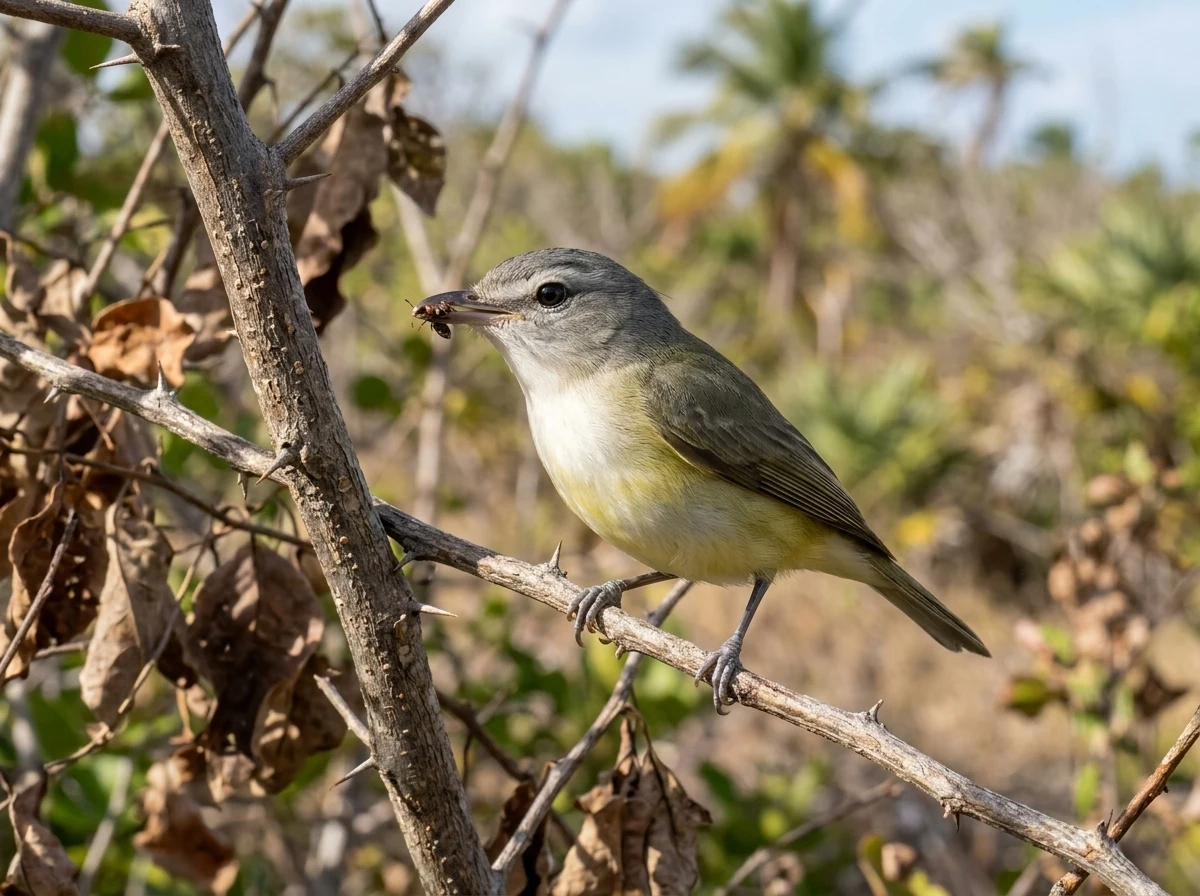 AI
AI01
Does fragmentation affect all birds equally?
No. The U.S. Forest Service study indicates that effects vary by species and scale. Some birds benefit from the edge, while interior species tend to decline. In Puerto Rico, the 2019 study found that obligate frugivores were the most sensitive to changes in forest structure.
02
Does a small patch always have fewer birds?
Not necessarily in total numbers, but it usually has fewer interior species. A small patch has proportionally more edge, which favors edge and generalist birds. The total number of birds may be similar, but the composition changes.
03
Are hurricanes the same as fragmentation?
They are not the same, but they share a mechanism: both change forest structure. A hurricane can defoliate and topple trees, creating temporary edge conditions. Fragmentation, by contrast, is more permanent because it involves dividing the forest through human uses.
04
What can I do to reduce the impact in my area?
Keep native trees, avoid excessive clearing of vegetation, and document which birds use nearby patches. If you have land, leaving a dense vegetation edge can help. The cited evidence suggests that large blocks and connectivity are important, but each area is different.
Keep exploring
Connected routes
Sources and review
The evidence is one link away.
These sources support the editorial scope of this guide. Bird profiles also retain their own taxonomy, occurrence, and conservation references.
Reviewed:
01↗02↗03↗04↗
US Forest Service Research and Development
A Multi-Scale Perspective of the Effects of Forest Fragmentation on Birds in Eastern Forests
Evidence for cited sections; consult the original document.Audubon
Global Study Reveals the Extent of Habitat Fragmentation
Evidence for cited sections; consult the original document.PLOS ONE
Short-term effects of hurricanes Maria and Irma on forest birds of Puerto Rico
Evidence for cited sections; consult the original document.BirdLife International Data Zone
Puerto Rican Vireo Vireo latimeri Species Factsheet
Evidence for cited sections; consult the original document.The atlas continues