 AI
AIBird guides
Presence Is Not Abundance Reading Bird Records
A practical guide to interpreting lists, counts, and records without confusing a sighting with a population.
Reviewed:Prepared with AI assistance and linked sources. Illustrations are not field photographs.
The difference between being there and being common
When you see a bird and write it in a notebook or an app, you have just created a presence record. That record says the bird was there at that moment. It does not say how many exist on the island, whether the species is common, or whether it will return tomorrow. Presence is a point datum; abundance is a quantity estimate that requires more information.
This guide explains how to read bird records without drawing abundance conclusions the data cannot support. We use two Puerto Rico birds with very different statuses — the Peregrine Falcon and the American Flamingo — to show why a single observation does not turn a species into a common resident or an impossible rarity. By the end you will have a checklist and an observation procedure for interpreting what you see and what you read.
Bird guides
Three key ideas
PresenciaA record confirms the bird was thereIt does not confirm how many there are or how often they appear.
ConteoAn estimated number is more useful than an XeBird recommends your best estimate of numbers on every checklist.
EstatusEach species has its own historyThe Peregrine Falcon is migratory; the flamingo is accidental and its Puerto Rico breeding population is considered extirpated.
01
What a record says and what it does not say
A bird record is a documented observation: species, place, date, and, if possible, number of individuals. That is all it asserts. If you write “one Peregrine Falcon” at a coastal point, the record says there was at least one Peregrine Falcon there that day. It does not say the species breeds there, that it is abundant, or that it is resident.
The difference matters because records accumulate and are analyzed. A single isolated datum could be a migrating bird passing through, a vagrant individual, or even a release. Only when there are many repeated records over time and in different places can we begin to talk about presence patterns. Abundance, understood as number of individuals per area or per time, requires repeated counts and estimation methods.
02
Why numbers matter more than an X
In eBird, an “X” indicates presence without a specific count. The platform explains that an X “could be one or it could be a thousand.” That is why it recommends giving your best numeric estimate: counts allow judging relative abundance and can always be simplified to presence/absence for analysis. The biological difference between zero and one is huge; between one and two it is also significant; between three and ten, the biological information is similar: the species was present in low numbers.
This does not mean you must count every bird with absolute precision. eBird promotes conservative counts: if you see a male of a species at the start of a walk and then a female in the same place on the way back, it is better to leave the count at one. The goal is not to have the highest number, but an honest estimate of what was in the sampled area. For birds like the Peregrine Falcon, which is usually seen alone or in a pair, a count of one or two is informative; for large flocks, block estimation techniques are used.
03
Two examples with very different statuses
The Peregrine Falcon is an uncommon to rare migratory bird in the Caribbean, according to BirdsCaribbean. It is found throughout the islands primarily from October to April, in coastal areas, cays, woodlands, and cities. In the Puerto Rico bird catalog it appears as native, non-resident, non-breeding, and migratory or vagrant. A record of a Peregrine Falcon on the Puerto Rico coast in January is consistent with that migratory status. It does not imply the species breeds on the island or that it is abundant.
The American Flamingo has a very different status. The catalog classifies it as native, accidental or vagrant, historical, non-resident, and non-breeding. The review note states that SOPI 2006 classifies the Puerto Rico breeding population as extirpated, and Avibase now lists it as rare/accidental. A flamingo sighting in Puerto Rico is therefore a notable event that should be documented carefully. It does not turn the species into a resident or suggest a stable population. The presence of one individual is not evidence of abundance.
04
How to read records without confusing presence with abundance
When you find a species record, ask yourself: how many individuals were counted? How many times has it been recorded at that place? At what time of year? Did the observer document the observation with photos or recordings? Does the species have a known status in the Puerto Rico catalog? A single record of an accidental species, like the flamingo, carries little weight for inferring abundance; many repeated records of a migratory species in winter, like the Peregrine Falcon, indicate seasonal presence, not necessarily abundance.
It is also useful to distinguish between complete checklists and incidental lists. A complete checklist records all the birds the observer could identify during a defined period; an incidental list only notes a point observation. Complete checklists allow calculating relative abundance indices because they include the absence of species. Incidental ones only confirm presence. When reading a record, ask yourself what type of list generated it.
05
Practical exercise: interpret a record
Take a real or invented record with these data: “Peregrine Falcon, 1 individual, north coast of Puerto Rico, January 15, complete 30-minute checklist.” Questions: What does this record confirm? It confirms that at least one Peregrine Falcon was at that place that day. What does it not confirm? It does not confirm that the species breeds there, that it is resident, or that it is abundant. What context helps? The migratory status of the Peregrine Falcon in the Caribbean, primarily October to April, makes a January observation consistent with migration.
Now change the data: “American Flamingo, 1 individual, southern Puerto Rico, June 10, incidental list.” What does it confirm? Presence of one individual. What does it not confirm? It does not confirm a breeding or resident population. The catalog indicates that the Puerto Rico breeding population is considered extirpated and that the species is accidental. This exercise shows why the same word — presence — can mean very different things depending on the species and context.
Linked profiles
The birds in this guide
Two species with contrasting statuses that illustrate why presence is not abundance.
AI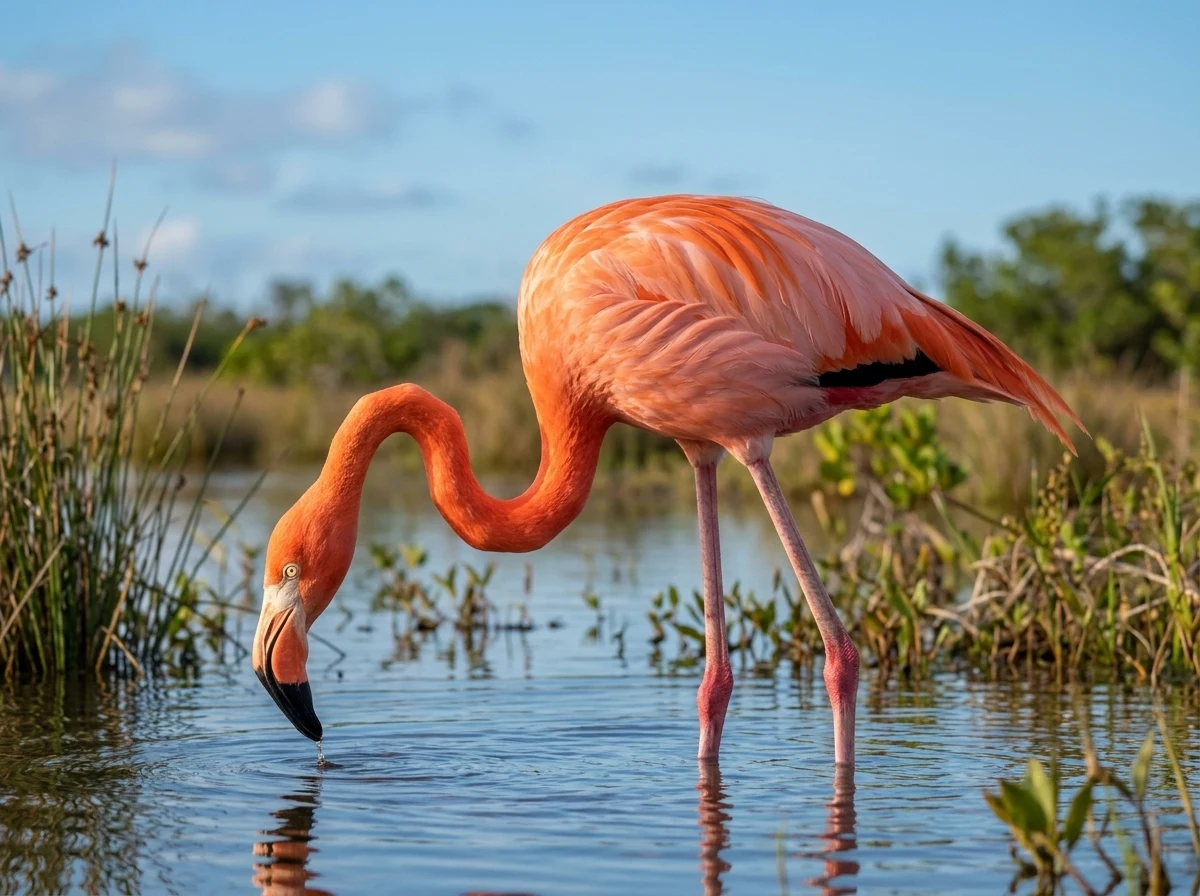 AI
AI01
If I see a flamingo in Puerto Rico, does it mean there is a resident population?
No. The catalog classifies the American Flamingo as accidental or vagrant, historical, non-resident, and non-breeding. The review note states that the Puerto Rico breeding population is considered extirpated. A sighting confirms the presence of an individual, not a stable population.
02
Why does eBird prefer an estimated number instead of an X?
Because an X can mean one or a thousand individuals. Numbers allow judging relative abundance and can always be simplified to presence/absence for analysis. eBird recommends your best numeric estimate on every checklist.
03
Does a Peregrine Falcon record in Puerto Rico indicate the species breeds there?
Not necessarily. The catalog lists it as native, non-resident, non-breeding, and migratory or vagrant. BirdsCaribbean indicates it is uncommon to rare in the Caribbean, primarily October to April. A record confirms presence, not breeding.
04
How can I tell if a record is reliable?
Look for documentation (photos, recordings), number of individuals, type of list (complete or incidental), date, and place. A record with a count and evidence is more informative than a note without details. For accidental or rare species, careful documentation is especially important.
05
What is the difference between seasonal presence and abundance?
Seasonal presence indicates that a species appears at a certain time, like the Peregrine Falcon in the Caribbean from October to April. Abundance estimates how many individuals there are per area or time. A species can be seasonally present without being abundant.
Keep exploring
Connected routes
Sources and review
The evidence is one link away.
These sources support the editorial scope of this guide. Bird profiles also retain their own taxonomy, occurrence, and conservation references.
Reviewed:
01↗02↗03↗
eBird (Cornell Lab of Ornithology)
Bird Counting 101
Evidence for cited sections; consult the original document.BirdsCaribbean
Birds Connect Our World – Day 51 (Peregrine Falcon)
Evidence for cited sections; consult the original document.BirdsCaribbean
Puerto Rico – BirdsCaribbean
Evidence for cited sections; consult the original document.The atlas continues