 AI
AIIdentification answer
Are there flamingos in Puerto Rico?
The flamingo is part of Puerto Rico's history but not its everyday landscape. Current appearances are single wandering birds, and other pink birds can be mistaken for it.
Reviewed:Short answer: only as a rare visitor.
Yes, but only rarely. The American Flamingo (Phoenicopterus ruber) reaches Puerto Rico only as an occasional visitor, and no colony nests on the island. The Puerto Rican Ornithological Society's 2006 catalog classifies its Puerto Rico population as Extirpated, meaning it disappeared locally even though the species survives elsewhere in the Caribbean.
The nearest colonies are in Cuba, the Bahamas, and Hispaniola, and wandering individuals can arrive from there. The best-known case is the flamingo that appeared in Camuy in January 2009 and stayed at local ponds for years. This guide sums up what is known, where it makes most sense to look, and how to separate it from the Roseate Spoonbill and other long-legged birds.
Identification answer
Flamingos by the numbers
ExtirpadaHistorical status in PRSOPI 2006 catalog; today treated as accidental.
0Nesting coloniesAbsent from the breeding atlas's 130 species.
2009Camuy flamingo arrivalArrived January 23 and stayed at local ponds.
1.2–1.45 mFlamingo length3 ft 11 in to 4 ft 9 in, per Audubon.
01
A species Puerto Rico lost
SOPI's 2006 catalog marks the flamingo as Extirpated: flamingos once lived in Puerto Rico, but the local population disappeared. Local birders' accounts attribute that loss to hunting in the early twentieth century, and popular tradition explains the name of Flamenco Beach on Culebra by the flamingos that once used its lagoon.
Today this atlas treats it as a native species of accidental occurrence. The 2004–2009 Breeding Bird Atlas does not include it among its 130 species, so there is no modern evidence of nesting. In other words, the flamingo is part of Puerto Rico's memory and place names, but not part of the set of birds you can expect to see.
02
Where visiting flamingos come from
The American Flamingo nests in Cuba, mainly around Cayo Coco and the Zapata Swamp, on Great Inagua, on the Yucatán Peninsula, along coastal Venezuela, and in the Galápagos, with smaller groups in the Bahamas, Turks and Caicos, Hispaniola, and the ABC Islands. For Puerto Rico and the Lesser Antilles, the species is an infrequent visitor.
That means a flamingo in Puerto Rico is usually a single bird, not a flock. Local accounts note that visits tend to concentrate in the southwest, with its wetlands and salt flats. Audubon also warns that many flamingos outside their range are considered escapees from zoos or collections, something always worth weighing when a record is evaluated.
03
The flamingo of Camuy
On January 23, 2009, a flamingo arrived in Camuy on the north coast and settled at the Los Amadores pond. During dry periods it moved to another nearby pond known as Yeguada. In March 2011 it was still there, two years and two months later, and residents named it the Flamingo of Camuy. Later community accounts followed it for more than a decade.
The case stood out for two reasons: flamingos are highly social and live in groups of hundreds, and the north coast is not where they usually appear. It is a good example of how a single individual can become famous without meaning that the species has returned to Puerto Rico as a population.
04
How to recognize a flamingo and avoid confusion
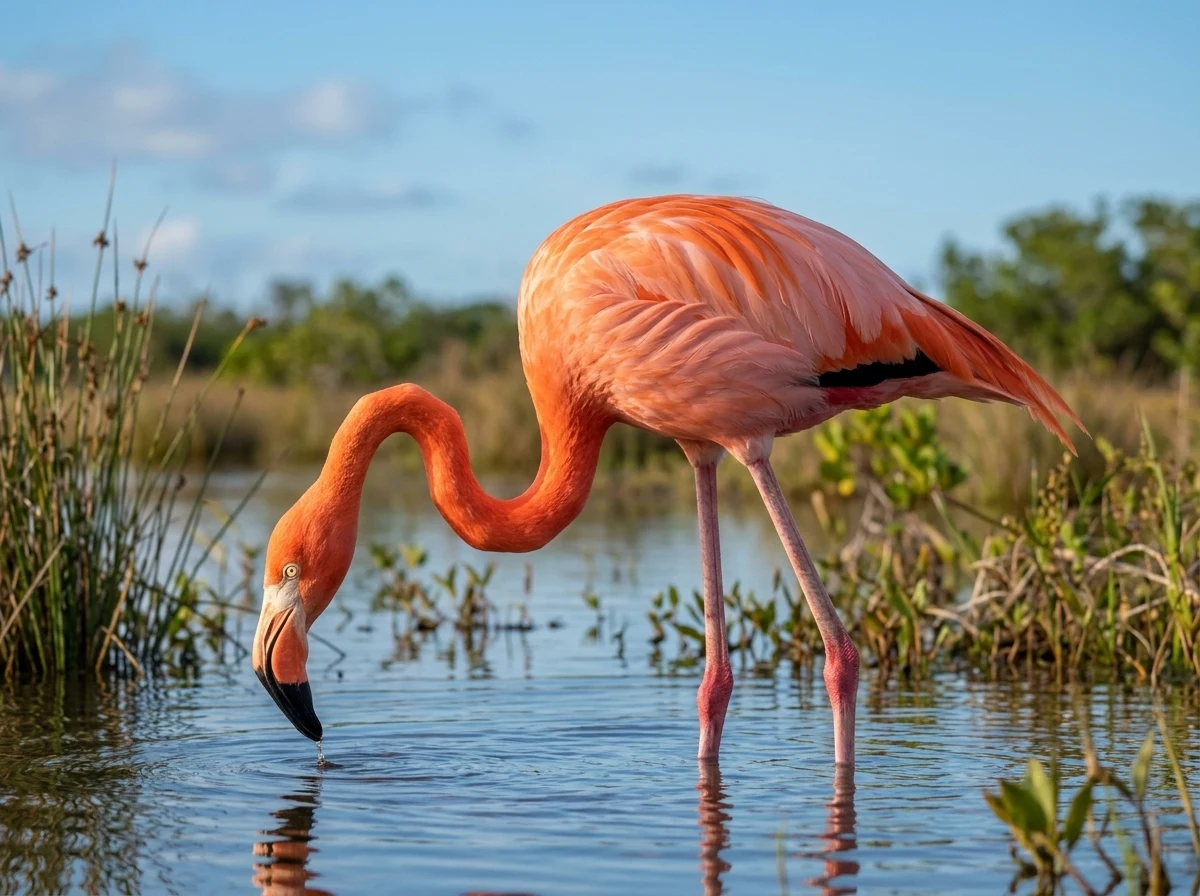
The American Flamingo is 3 feet 11 inches to 4 feet 9 inches long, with an extremely long neck and legs. Adults are pink, in shades from whitish to scarlet; the bill bends downward and is usually tricolored, whitish at the base, pink in the middle, and black at the tip. Juveniles are grayish. It feeds by filtering water with its head upside down.
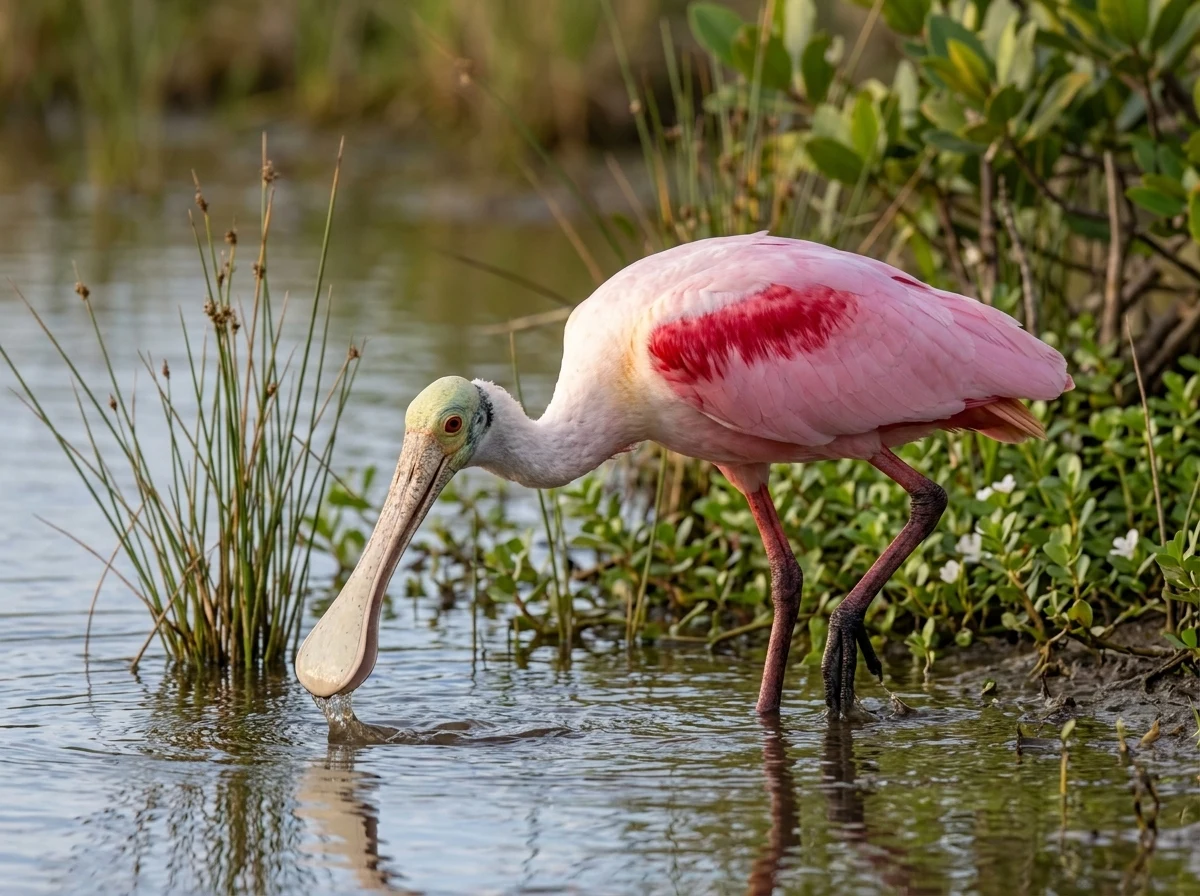
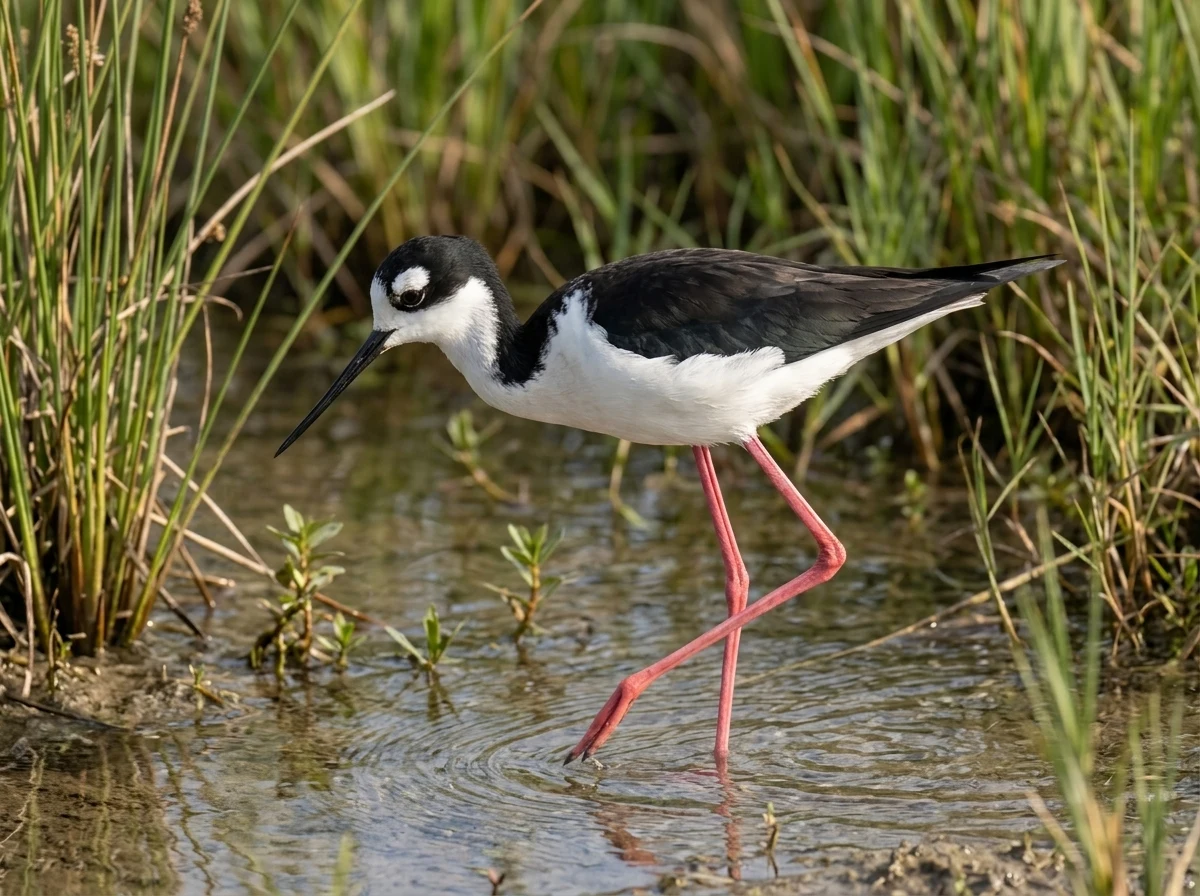
The Roseate Spoonbill, also accidental in Puerto Rico per SOPI, is pink but shorter, 2 feet 4 inches to 2 feet 10 inches, with a flat spatula-shaped bill and a bare greenish head; it sweeps its bill from side to side. The Black-necked Stilt, common on salt flats, catches the eye with coral-pink legs but is small and black and white. Bill, neck, and size settle nearly every doubt.
05
Where to look and how to document a flamingo
If you want any chance, the salt flats and lagoons of the southwest are the habitat most similar to what the species uses. The Cabo Rojo Salt Flats, added to the federal refuge in 1999 with 1,269 acres, were the first site in the Caribbean designated by the Western Hemisphere Shorebird Reserve Network. Even so, the normal outcome is seeing no flamingos there.
If you do see one, photograph the whole bird, including the bill, legs, and any band or marking; note the date, time, and place, and watch whether it lets people get too close, a clue to captivity. Logging it in eBird with photos lets local reviewers evaluate it. Do not chase or flush it: a wandering bird needs to rest and feed.
Linked profiles
The flamingo and salt-flat birds
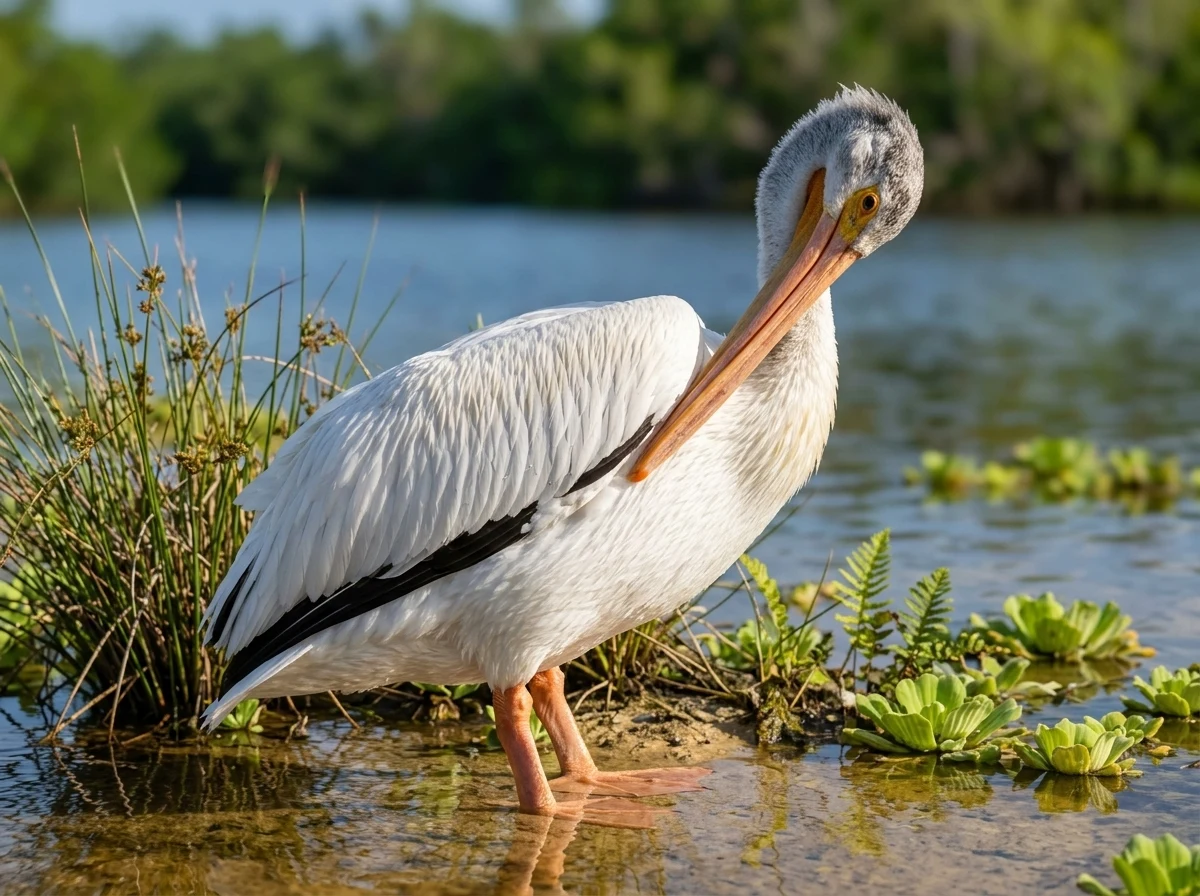
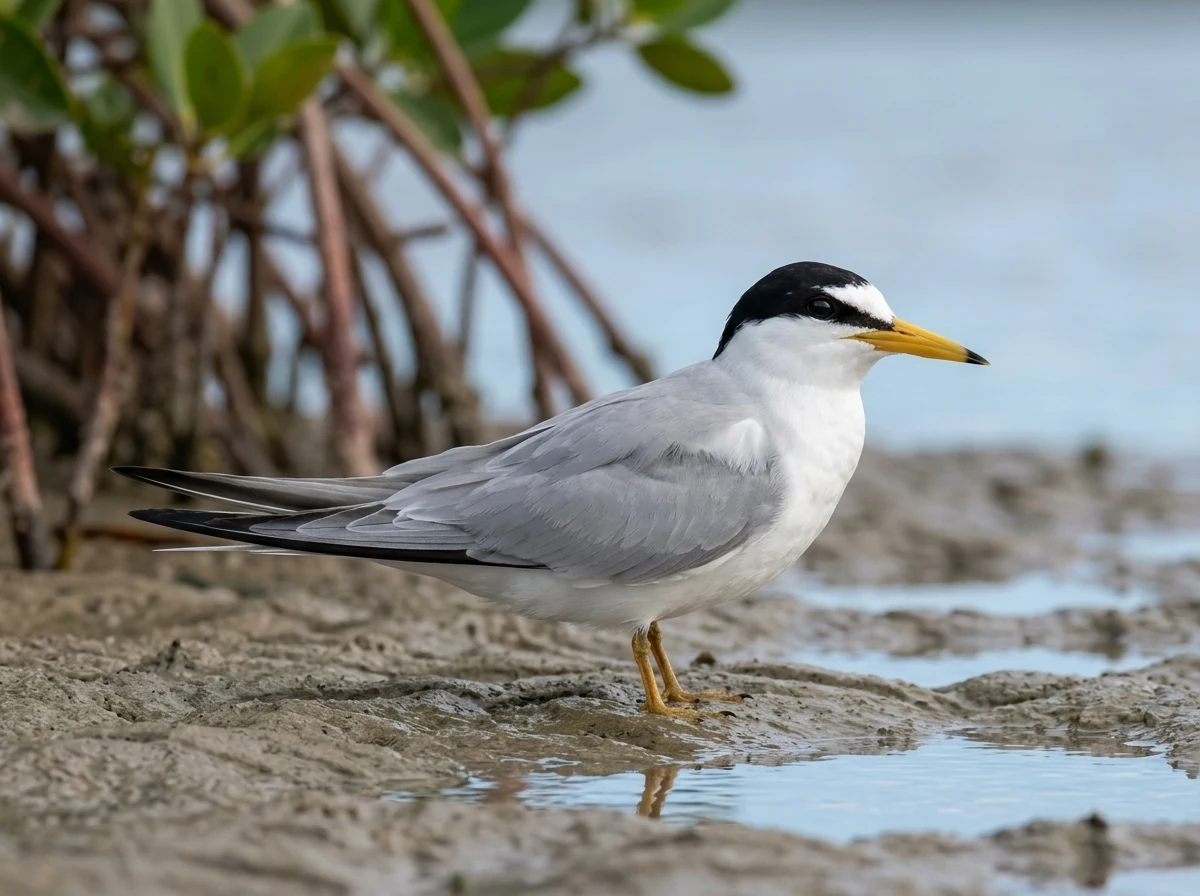
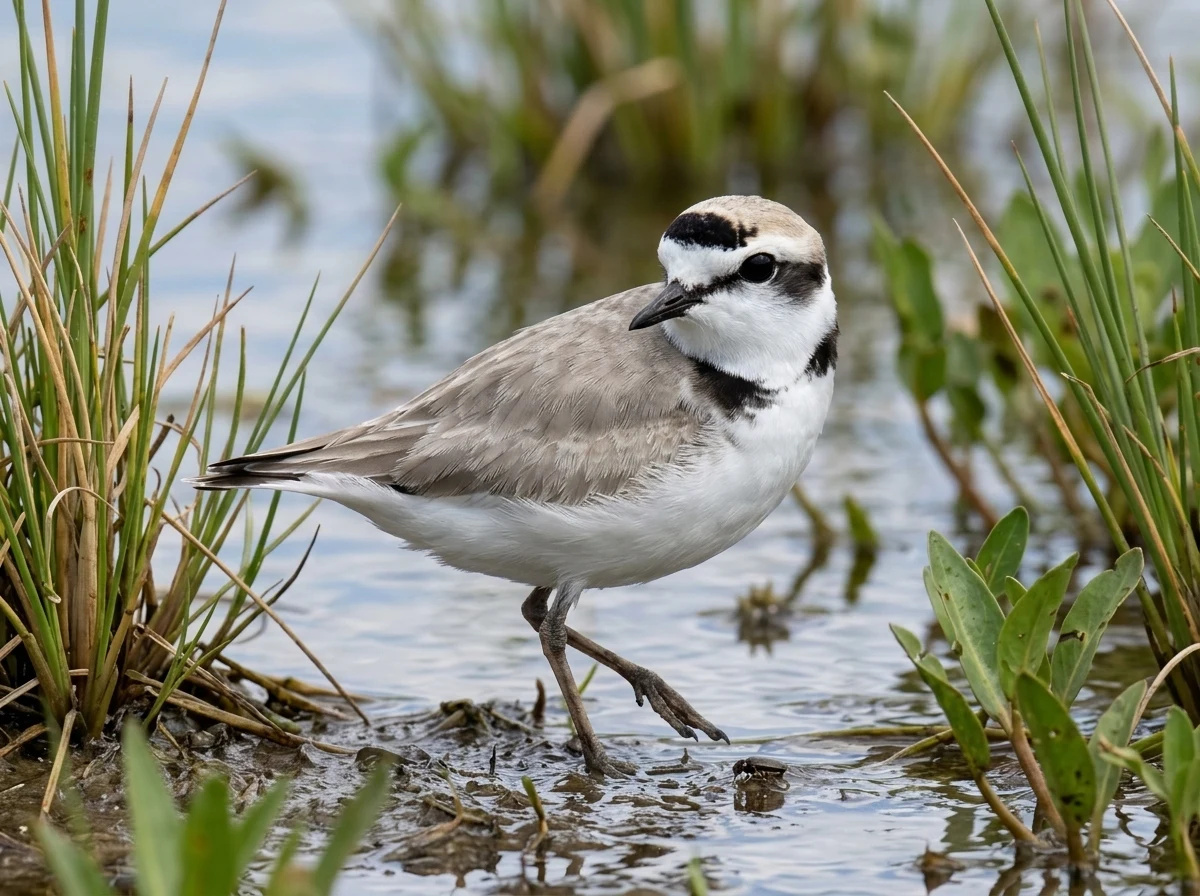
Compare the flamingo with other pink or long-legged birds that do appear on salt flats and lagoons.
Sound archive
Hear its voice
Explore real songs and calls. The spectrogram turns each sound into a visual trace of time and frequency.
XC1139801Recording 1 of 3call

Play: call by Leander Khil
Choose another recording
Sound recorded by Leander Khil · XC1139801 · CC BY-NC-SA 4.0. Visualization by Stichting Xeno-canto voor Natuurgeluiden.
Every recording retains the creator, catalogue number, and license published by Xeno-canto. Metadata via GBIF ↗
01
Are there flamingos in Puerto Rico?
Only as rare visitors. The American Flamingo does not nest in Puerto Rico, and the Puerto Rican Ornithological Society's catalog classifies its former local population as Extirpated. Every so often a wandering individual arrives, mostly at wetlands and salt flats.
02
Were there flamingos in Puerto Rico in the past?
Yes. SOPI's Extirpated label means there was a local population that disappeared. Birders' accounts attribute the loss to hunting in the early twentieth century, and tradition links the name of Flamenco Beach on Culebra to these birds.
03
Where can I see flamingos in Puerto Rico?
There is no reliable spot. Visits have concentrated on southwestern salt flats and wetlands such as the Cabo Rojo area, although the Camuy flamingo turned up on the north coast. To see flamingos reliably you need to visit colonies such as those in Cuba or the Bahamas.
04
What happened to the Camuy flamingo?
It arrived at the Los Amadores pond on January 23, 2009, and was still there in March 2011, moving to the Yeguada pond in dry periods. Community accounts followed it for more than a decade, until it was no longer seen.
05
What pink bird is mistaken for a flamingo?
The Roseate Spoonbill, also accidental in Puerto Rico, is the main confusion. It is shorter, with a flat spatula-shaped bill and a bare greenish head, while the flamingo has a very long neck and a bent, black-tipped bill.
06
Why are flamingos pink?
The pink color of flamingos and spoonbills comes from their diet: it is a carotenoid pigment, canthaxanthin. Juvenile flamingos are ashy gray and gradually progress toward adult pink plumage.
Keep exploring
Connected routes
Sources and review
The evidence is one link away.
These sources support the editorial scope of this guide. Bird profiles also retain their own taxonomy, occurrence, and conservation references.
Reviewed:
01↗02↗03↗04↗05↗06↗07↗08↗09↗10↗
Sociedad Ornitológica Puertorriqueña
Catalog of the Birds of Puerto Rico (2006)
A 375-species list accepted in August 2006, with official Spanish names and status labels such as Accidental, Introduced, or Extirpated.birdfinding.info
American Flamingo: range and finding guide
Caribbean colonies (Cuba, Great Inagua, Yucatán, Hispaniola) and its status as an infrequent visitor to Puerto Rico.National Audubon Society
Field guide: American Flamingo
Size, plumage, bill, filter feeding, and the problem of escaped flamingos.Puerto Rico Birding (blog)
The flamingo of Camuy
Local account of the flamingo that arrived in Camuy on January 23, 2009, and stayed at nearby ponds.U.S. Forest Service Research and Development
Puerto Rico Breeding Bird Atlas
Distribution and breeding timing for 130 species breeding in Puerto Rico and its satellite islands.U.S. Fish and Wildlife Service
Cabo Rojo National Wildlife Refuge
Habitats, focal birds, conservation, trails, and official refuge notices.PRDayTrips
Pinky, the flamingo of Camuy
Community follow-up on the Camuy flamingo and the tradition linking Culebra's Flamenco Beach to these birds.National Audubon Society
Field guide: Roseate Spoonbill
Roseate Spoonbill field marks: spatula-shaped bill, bare head, and size.National Audubon Society
Field guide: Black-necked Stilt
Coral-pink legs and black-and-white pattern of the Black-necked Stilt, the salt-flat bird most often noticed for its legs.Macaulay Library / Cornell Lab of Ornithology
Puerto Rico sound archive
Complementary audio collection for comparing songs, calls, locations, and dates.The atlas continues