 AI
AIVisitor from the north
Peregrine Falcon in Puerto Rico
The fastest bird in a dive does not live on the island year-round: it arrives with the northern non-breeding season and hunts where other birds gather.
Reviewed:Yes, Puerto Rico has Peregrine Falcons, but as visitors.
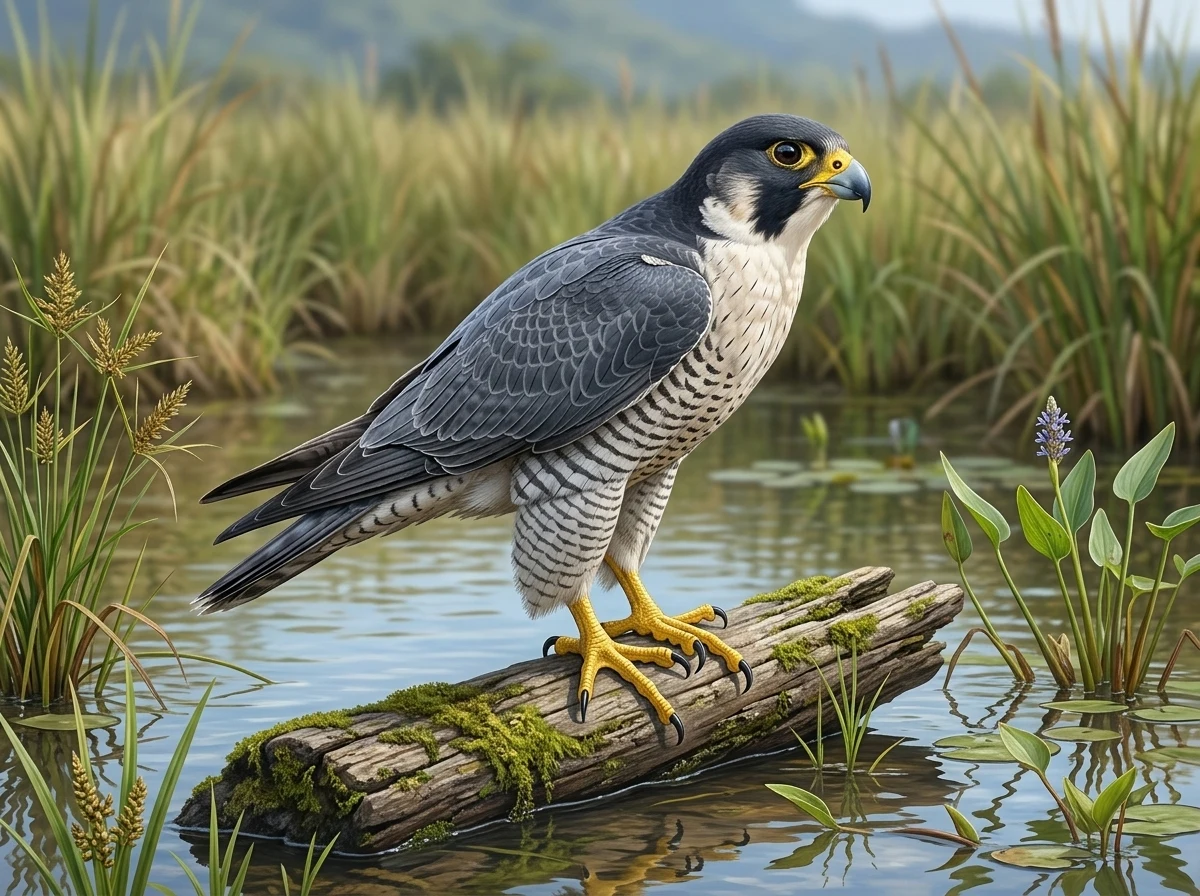
Yes: the Peregrine Falcon (Falco peregrinus) occurs in Puerto Rico, but as a migrant visitor rather than a bird that nests on the island. Look for it mainly outside the northern breeding season along coasts, salt flats, wetlands, cliffs, and urban areas, where it hunts other birds in midair.
Its official name on the Puerto Rican Ornithological Society list is Halcón Peregrino, and it belongs to the falcon family, Falconidae. Northern populations travel enormous distances: the U.S. Fish and Wildlife Service describes the Arctic Peregrine (F. p. tundrius) nesting on the tundra of Alaska, Canada, and Greenland and wintering as far south as South America. Puerto Rico sits inside that winter map, so the Peregrine is a seasonal bird here, worth documenting with a date, place, and photo.
Visitor from the north
The Peregrine in numbers
36–48 cmbody lengthWingspan about 76 to 114 cm (2.5–3.75 ft); females are clearly larger than males.
~320 km/hestimated stoopAudubon notes it may possibly reach about 200 mph in a power dive.
1999federally delistedThe American Peregrine was delisted in 1999; the Arctic Peregrine in 1994.
0nests in our catalogThe profile treats it as a migrant, not a local breeder.
01
How to recognize a Peregrine Falcon
It is a large, powerful falcon, 36 to 48 centimeters long, with the classic silhouette of long, pointed wings. Adults are blue-gray above, pale and barred below, with a dark hood that drops into a thick mustache mark on the cheek. Juveniles are browner above and streaked below, so a first-year Peregrine does not look “blue.”
In flight it gives strong, shallow wingbeats, and the tail is fairly short relative to the wingspan. Females are considerably larger than males, as is typical of bird-hunting raptors. Arctic birds often look paler than temperate ones, a useful detail but not enough to assign subspecies in the field.
02
What it gets confused with in Puerto Rico
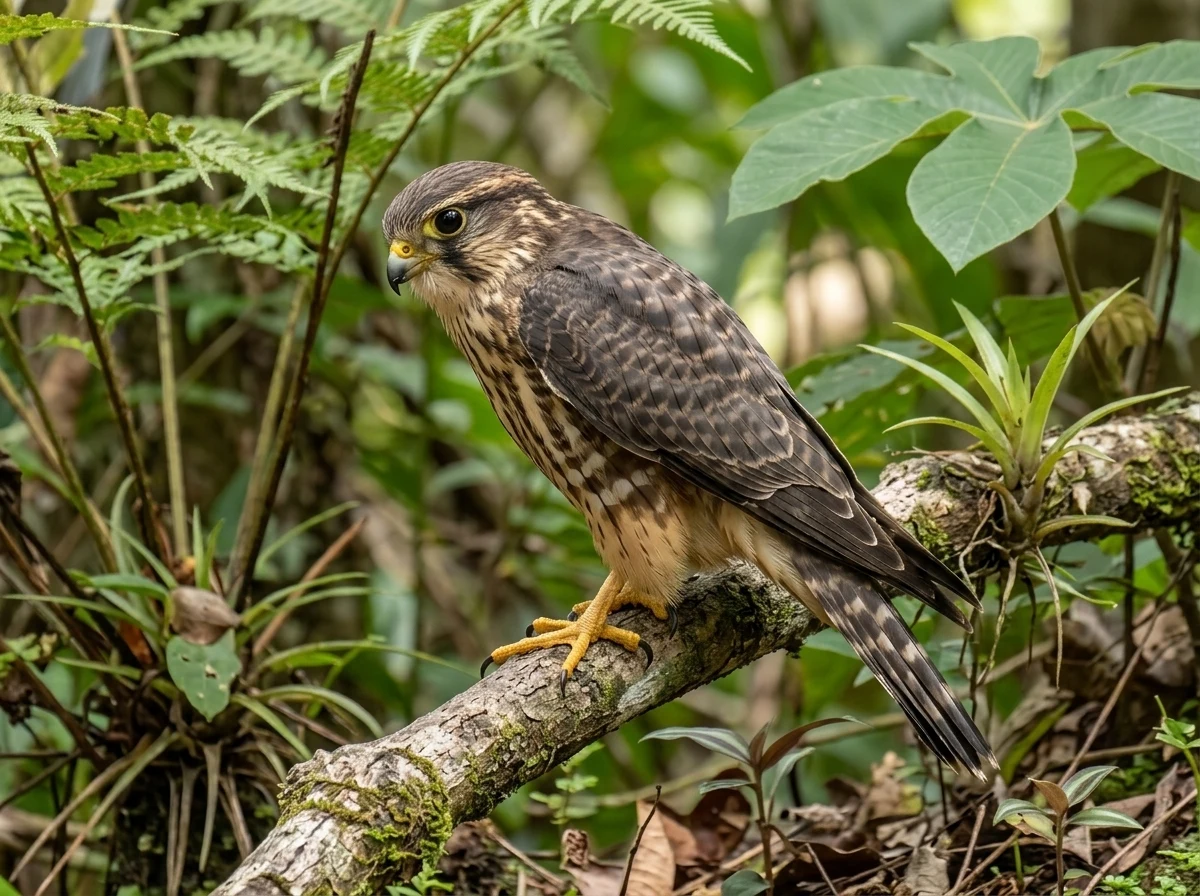
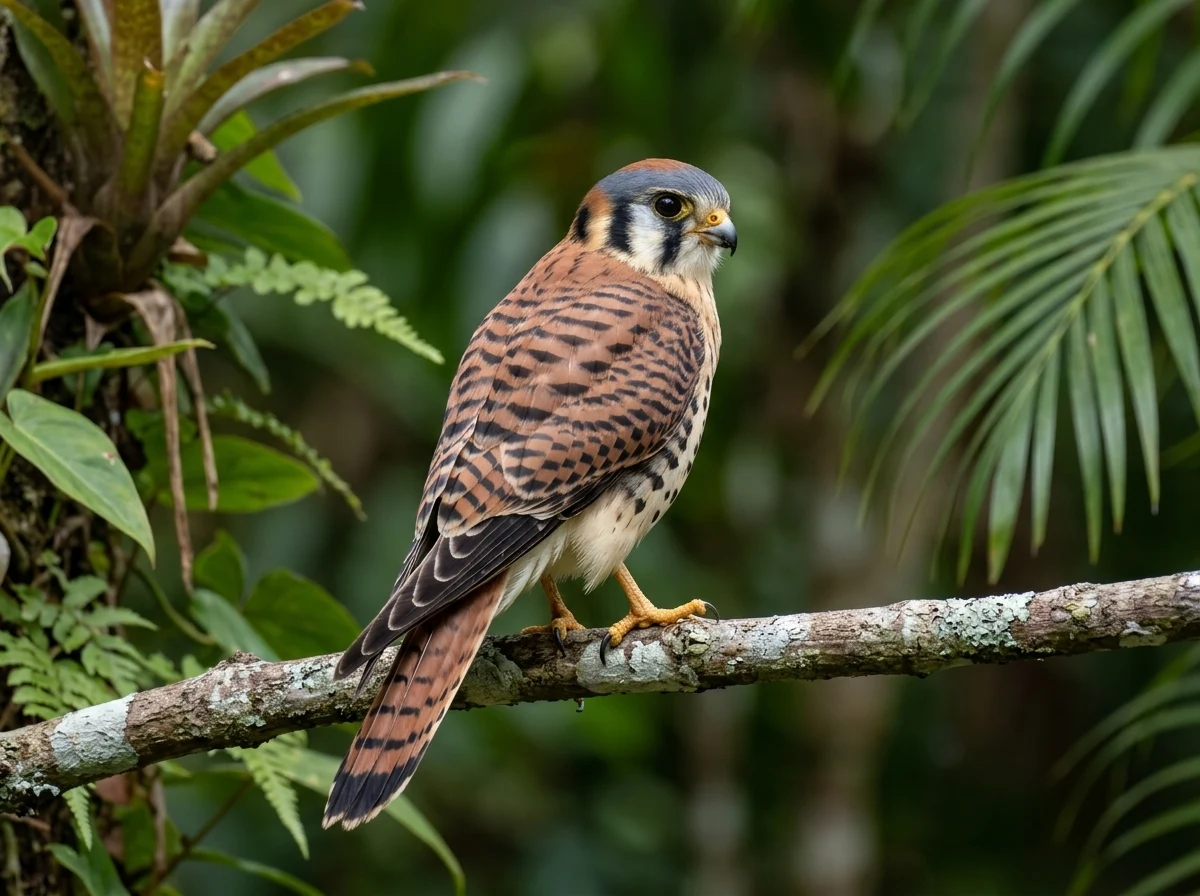
The American Kestrel (Falcón Común) is much smaller, with two thin face stripes, and often hovers over grassland; Peregrines rarely do that. The Merlin (Falcón Migratorio) is 25 to 36 centimeters long, has a dark tail with narrow pale bands, and lacks the Peregrine's bold mustache.
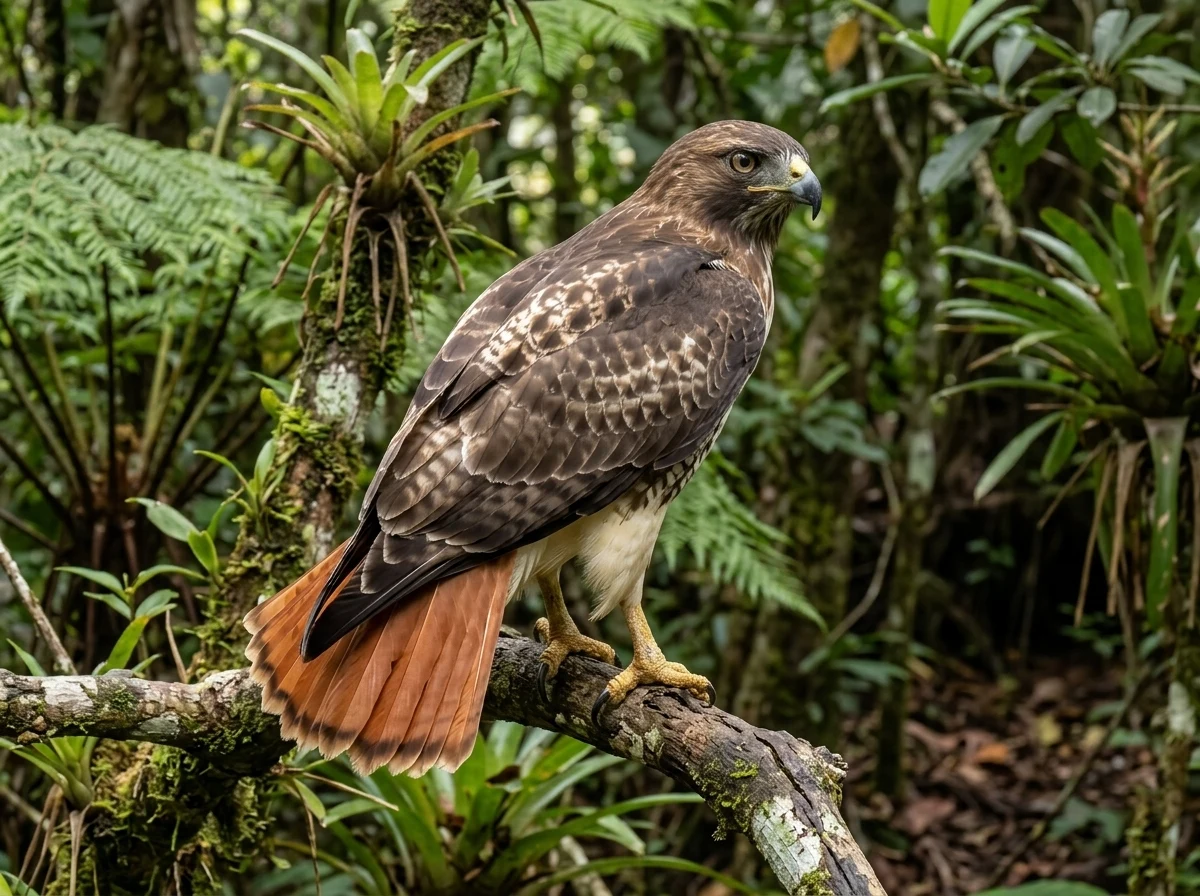
Red-tailed and Broad-winged Hawks have broad, rounded wings, soar in long circles, and lack the sharp wingtip of a falcon. If a raptor circles without flapping for minutes, it is most likely a hawk; if it passes fast and direct with stiff wingbeats, think falcon.
03
Where to look: coasts, salt flats, and cities
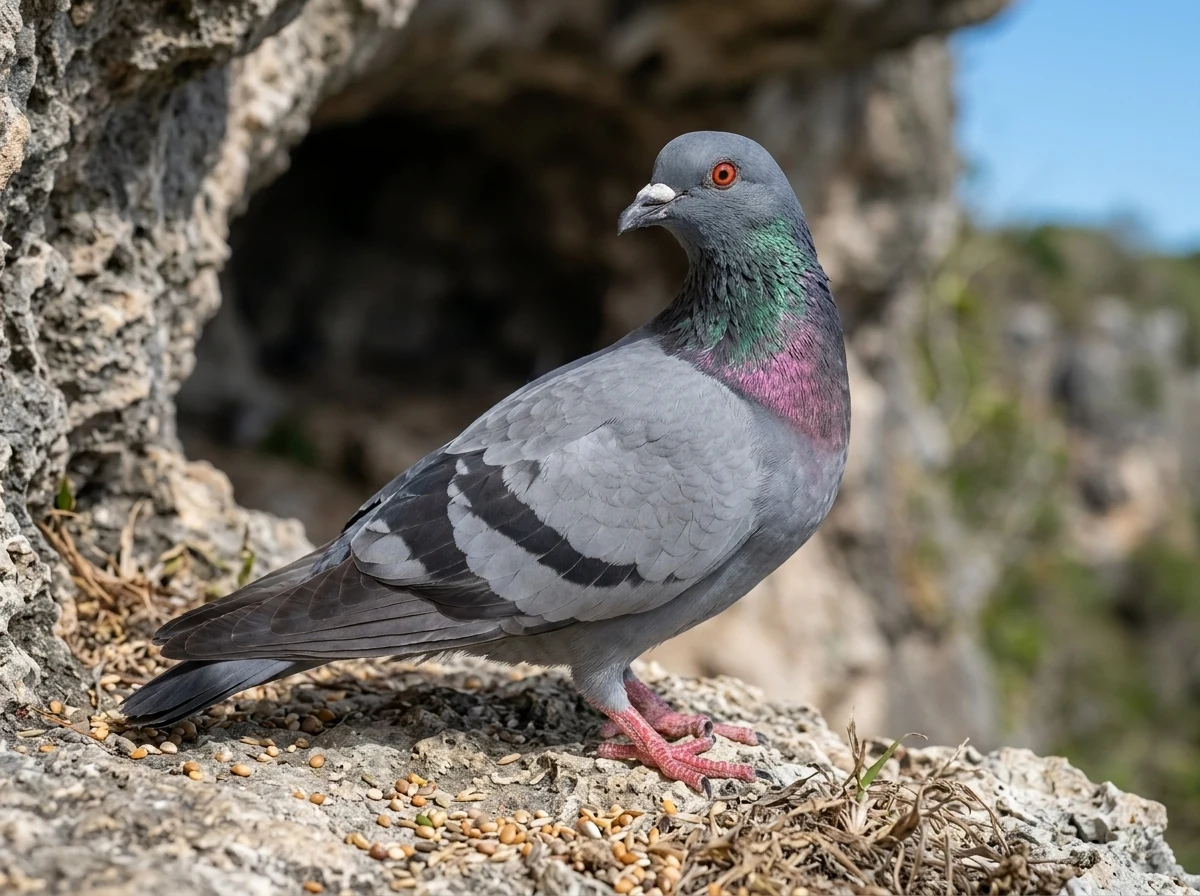
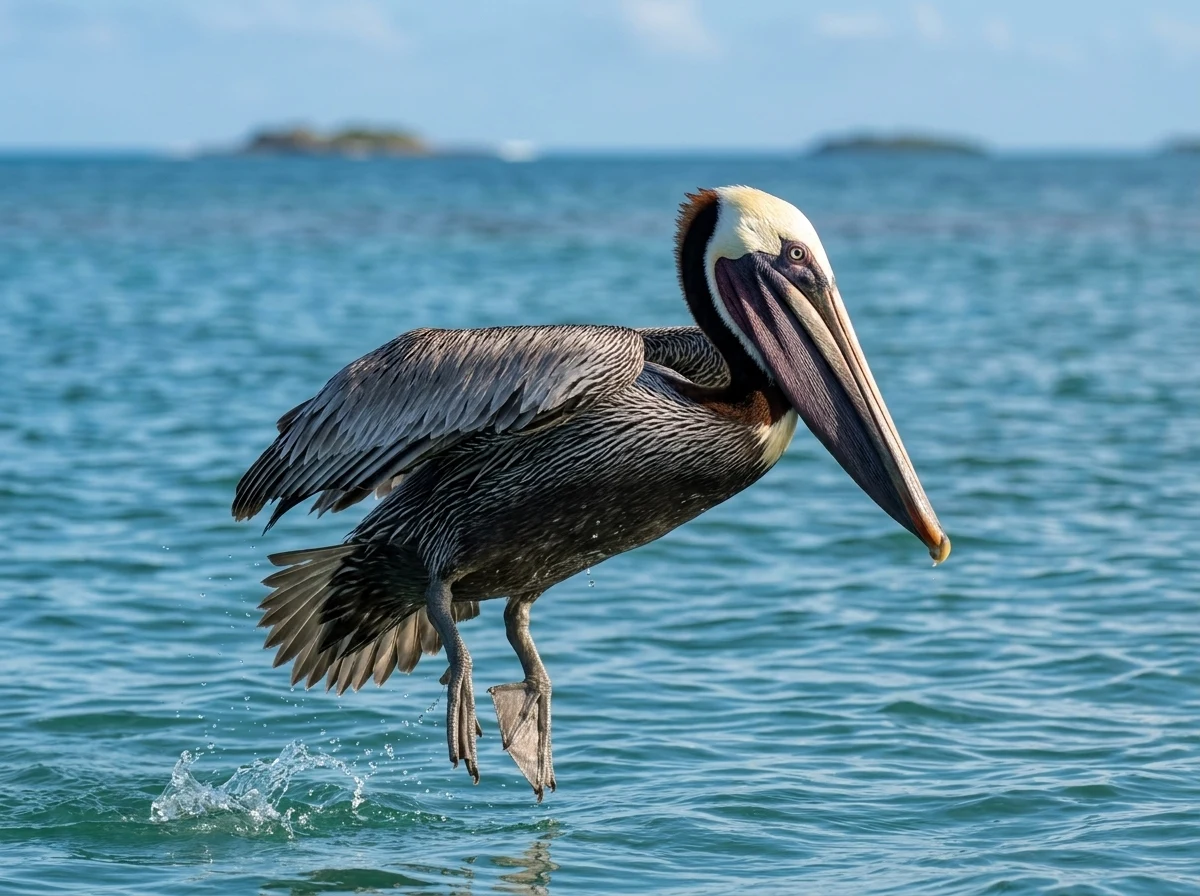
The catalog profile summarizes its habitat as coasts, wetlands, cliffs, and urban and open landscapes. The logic is simple: the Peregrine follows its prey. On the coast it hunts ducks and shorebirds; in cities, pigeons. The southwest is a good starting point: the DRNA management plan for the Boquerón sector lists the Peregrine Falcon among the endangered species identified for the area, alongside Brown Pelican and Yellow-shouldered Blackbird.
The salt flats and lagoons of Cabo Rojo, which the federal refuge describes as an important stop for migratory birds, gather flocks that attract predators. In the San Juan metro area, any tall structure with Rock Pigeons is a logical lookout, but pigeons do not prove a falcon is present: always confirm with a photo or a complete description.
04
When to see it: the northern non-breeding season
Because the Peregrines that reach the Caribbean breed in the north, the logical window is those populations' non-breeding season, roughly autumn through spring. Many northern Peregrines spend only a few months on their breeding range and spend the rest of the year traveling or wintering farther south, some covering thousands of kilometers.
Do not expect exact dates: a single bird may pass through in a day or stay for weeks where prey is plentiful. Before heading out, check recent eBird reports for your area and always note date, time, and behavior. A record in the middle of the northern summer is not impossible, but it deserves more evidence than one in January.
05
How it hunts: speed and prey
The Peregrine feeds almost entirely on other birds, and occasionally on bats, caught in midair. Its best-known technique is the stoop from great height: Audubon notes it may possibly reach about 200 miles per hour (roughly 320 km/h), placing it among the fastest birds in the world. Prey ranges from songbirds to ducks.
For an observer, the clue is often indirect. If a flock of shorebirds or pigeons suddenly flushes and bunches tightly in the air, look up and along the edges of the sky. A perched falcon also gives itself away: on posts, antennas, ledges, or cliffs with an open view over water or a plaza full of pigeons.
06
Protection and conservation status
The Peregrine is a classic recovery story. Organochlorine pesticides such as DDT devastated it in North America from the 1940s to the 1970s; after those chemicals were restricted and birds were reintroduced, the Arctic Peregrine was removed from the federal list on October 5, 1994, and the American Peregrine on August 25, 1999. The IUCN now lists it as Least Concern.
Leaving the federal list does not mean losing protection: the 1999 rule states that the Migratory Bird Treaty Act still applies. In Puerto Rico, DRNA management documents have treated it as an endangered species. In practice: do not chase the bird for a photo, do not fly drones near a perched falcon, and share general locations rather than the exact structure where it rests.
Linked profiles
The Peregrine and its comparisons
Open each profile to compare size, silhouette, and season with the island's other falcons and raptors.
Sound archive
Hear its voice
Explore real songs and calls. The spectrogram turns each sound into a visual trace of time and frequency.
XC1083277Recording 1 of 3call

Play: call by Robin et Julien SOURIOU
Choose another recording
Sound recorded by Robin et Julien SOURIOU · XC1083277 · CC BY-NC-SA 4.0. Visualization by Stichting Xeno-canto voor Natuurgeluiden.
Every recording retains the creator, catalogue number, and license published by Xeno-canto. Metadata via GBIF ↗
01
Are there Peregrine Falcons in Puerto Rico?
Yes. The Peregrine Falcon reaches Puerto Rico as a migrant visitor from populations that breed in the north, and it is not documented as a breeder on the island. It is seen mainly from autumn to spring along coasts, salt flats, wetlands, and cities.
02
Where does the Peregrine Falcon live?
It is one of the most widespread raptors on Earth, breeding from the Arctic tundra to the tropics and absent mainly from extreme polar regions, very high mountains, and most tropical rainforests. In Puerto Rico it uses coasts, wetlands, cliffs, and urban areas during its non-breeding season.
03
How fast does the Peregrine Falcon fly?
In a dive from great height it may possibly reach about 200 miles per hour, roughly 320 km/h, according to Audubon. That is diving speed used to strike prey; in level flight it is much slower.
04
Does the Peregrine Falcon nest in Puerto Rico?
No nesting is documented in this site's catalog; the species is treated as a migrant. A nesting attempt on the island would be an exceptional finding that should be documented with photos and reported without revealing the exact location.
05
How do I tell a Peregrine Falcon from an American Kestrel?
By size and face. The Peregrine is 36 to 48 cm long with a thick black mustache; the kestrel is much smaller, with two thin face stripes, and often hovers over grass. Peregrines hunt birds in flight; kestrels eat many large insects.
06
Is the Peregrine Falcon endangered?
Not globally today: the IUCN lists it as Least Concern after its recovery from DDT, and it left the federal list in 1994 (Arctic) and 1999 (American). It remains protected by the Migratory Bird Treaty Act, and DRNA documents have treated it as endangered in Puerto Rico.
Keep exploring
Connected routes
Sources and review
The evidence is one link away.
These sources support the editorial scope of this guide. Bird profiles also retain their own taxonomy, occurrence, and conservation references.
Reviewed:
01↗02↗03↗04↗05↗06↗07↗08↗
U.S. Fish and Wildlife Service / Federal Register 64 FR 46542
Final rule removing the American Peregrine Falcon from the federal list (1999)
North American subspecies, Arctic Peregrine migration to South America, diet of birds and bats, and the 1994 and 1999 delisting dates.National Audubon Society
Peregrine Falcon field guide
Size, adult and juvenile plumage, stoop speed, prey, and recovery after DDT.Departamento de Recursos Naturales y Ambientales
Management plan for the Southwest Special Planning Area, Boquerón sector
Lists the Peregrine Falcon among endangered species identified for Boquerón, alongside Brown Pelican and Yellow-shouldered Blackbird.Sociedad Ornitológica Puertorriqueña
Catalog of the Birds of Puerto Rico
Official Spanish names (Halcón Peregrino, Falcón Común, Falcón Migratorio, Águila Pescadora, Gavilán de Sierra, Guaraguao de Bosque, Guaraguao Colirrojo) and occurrence codes such as “Accidental.”U.S. Fish and Wildlife Service
Cabo Rojo National Wildlife Refuge
Habitats, focal birds, conservation, trails, and official refuge notices.National Audubon Society
American Kestrel field guide
Face marks, male and female differences, hovering, insect diet, and the “killy-killy” call.National Audubon Society
Merlin field guide
Size, dark tail with narrow pale bands, lack of a strong mustache, and prey.Sociedad Ornitológica Puertorriqueña
Official bird list
Local names, occurrence categories, and the public summary of 17 endemics.The atlas continues