 AI
AIBird guides
Why Birds Have Trouble Seeing Glass
Glass is not invisible to us, but to a bird it can look like open sky or reflected vegetation. Here we explain the mechanism and how to make the barrier visible.
Reviewed:Prepared with AI assistance and linked sources. Illustrations are not field photographs.
The barrier the bird does not perceive
When a bird flies toward a window, it is not being careless. The U.S. Fish and Wildlife Service (USFWS) explains that, to birds, glass is an invisible, deceiving threat: they do not treat it as a barrier to avoid. Instead, they can be attracted closer to the reflections in glass that show what could appear to be elements of their natural habitat, such as plants and open sky.
This guide answers the question of why glass is hard for birds to see. It includes a comparison between what a human perceives and what a bird perceives, a concrete checklist of actions, and an observation procedure. For general context on Puerto Rico's birds, see our guides to yard and city birds and migratory birds.
Bird guides
Three key ideas
Más de mil millonesglass collisions per year in the U.S.Figure cited by USFWS for the United States; it is not a count for Puerto Rico.
Reflejos y transparenciatwo ways glass deceives birdsA bird may see reflected plants or sky, or try to fly through to what is visible on the other side.
¼ de pulgada o másminimum size of patterns on glassUSFWS recommends patterns at least ¼ inch in diameter, spaced no more than 2 inches apart.
01
What a bird sees when it looks at a window
To a person, a clean window is a surface that can be touched. To a bird, according to USFWS, glass can be invisible or deceiving: it is not perceived as a barrier to avoid. The result is that a bird may fly directly toward the glass because its attention is on what the glass shows, not on the glass itself.
USFWS describes two main situations. First, reflections in glass can show what appears to be natural habitat, such as plants and open sky. Second, a bird can be attracted to landscaping outside the window or to lights shining from the interior. In both cases, the bird is not seeing the glass as an obstacle, but as a continuation of the landscape.
02
Practical comparison: the window as mirror and as door
Imagine a window on a bright day. From the outside, the glass can work like a mirror that returns the image of a tree or the sky. A bird flying toward that image is not seeing a real tree behind the glass; it is seeing a reflection. If the glass is transparent and the inside of the house is visible, the bird may try to fly through to what appears to be open space on the other side.
The useful comparison is this: to us, glass is a surface with a frame and an edge; to many birds, glass is a window onto the landscape, either by reflection or by transparency. That is why solutions are not about cleaning the glass less, but about adding visual signals that interrupt the illusion of continuity. USFWS recommends patterns applied to the outside of the window, with marks at least ¼ inch in diameter and spaced no more than 2 inches apart. It also notes that dark patterns can be difficult for birds to see when the window reflects dark colors, so medium to light colors are best.
03
Concrete checklist to make glass visible
This checklist summarizes the options USFWS describes to reduce collisions. Not all require buying new materials; some use what is already available at home.
1. Add patterns to the outside of the glass. They should be at least ¼ inch in diameter and spaced no more than 2 inches apart. A 2-by-2-inch grid is especially important for protecting small birds like hummingbirds.
2. Use medium to light colors. Dark patterns can be lost when the window reflects dark colors.
3. Consider paracord curtains. USFWS describes 1/8-inch paracord pieces, spaced less than 4 inches apart, hanging outside from the top of the window.
4. Use non-toxic tempera paint. It can be applied to exterior glass with the recommended spacing and removed with vinegar and water.
5. Install external screens or netting. They reduce reflections and alert birds that the window is a barrier; net openings should be ½ inch or smaller so birds do not become caught.
6. Use tape, decals, or external films. USFWS mentions products in many colors, tints, and patterns.
7. Reduce lights at night. Most birds migrate at night and can be disoriented by artificial lights; turning off unneeded lights, using timers or motion sensors, and using blinds or shades helps.
8. If building or replacing glass, consider etched, fritted, frosted, or patterned glass. USFWS indicates these products can reduce collisions and also reduce solar heat gain.
04
Observation procedure for your yard or balcony
You can turn this explanation into an observation activity without special equipment. The goal is to notice how birds use the space near the glass and whether there are signs of collision.
Before starting, choose a window or glass door you can see from a comfortable spot. Note the date, time, and light conditions. For 10 to 15 minutes, watch whether birds approach the glass, fly toward reflections, or pass nearby without stopping. You do not need to identify every species to do this observation; the behavior pattern is what matters.
Afterward, check the outside of the glass and the nearby area. Look for marks, feathers, or stunned birds. If you find an injured bird, do not try to treat it yourself; see the guide on what to do if you find an injured bird. Repeat the observation at different times of day and note whether patterns change with the light. This practice does not replace formal monitoring, but it helps you understand why glass can be a problem in your space.
For broader context on birds you might see in Puerto Rico yards and gardens, see the guides to yard and city birds and migratory birds.
05
Puerto Rico birds and glass: local context
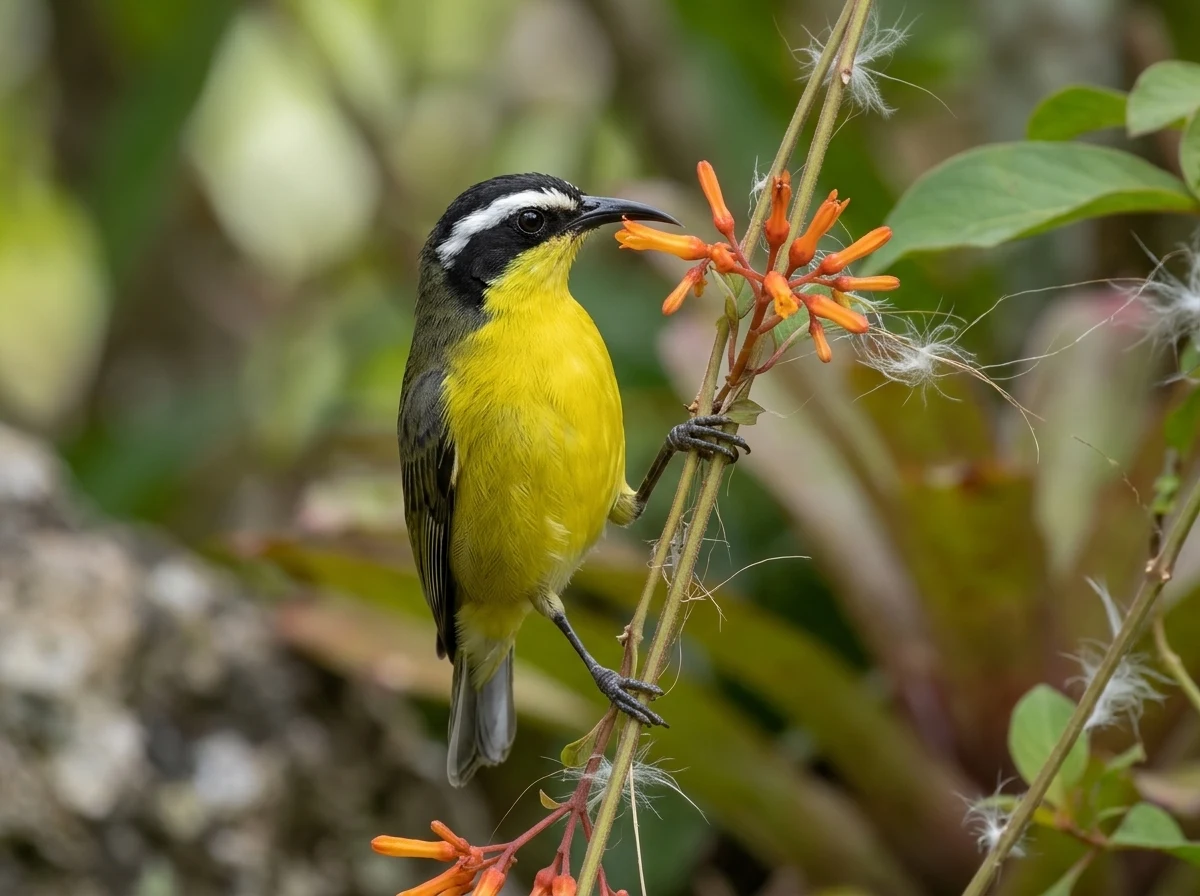
The Puerto Rico bird catalog includes species that use gardens and human-modified areas, such as the Bananaquit (Coereba flaveola), and migratory species such as the Northern Parula (Setophaga americana). The Bananaquit is described as resident and present in nearly all wooded and human-modified habitats, including gardens. The Northern Parula is described as migratory and breeding in eastern North America; its occurrence record for Puerto Rico does not mark it as resident or as a breeder.
These profiles do not indicate abundance or frequency of glass collisions in Puerto Rico. What they do provide is context that there are birds using gardens and urban areas, where windows are common. The USFWS explanation of why glass is hard to see applies to birds in general; it is not a species-specific data point for Puerto Rico. To identify small birds you might see near your home, see the guide to small birds and the guide to warblers.
Linked profiles
Birds mentioned in this guide
Two catalog species that help put the topic in context: one resident of gardens and one migratory.
AI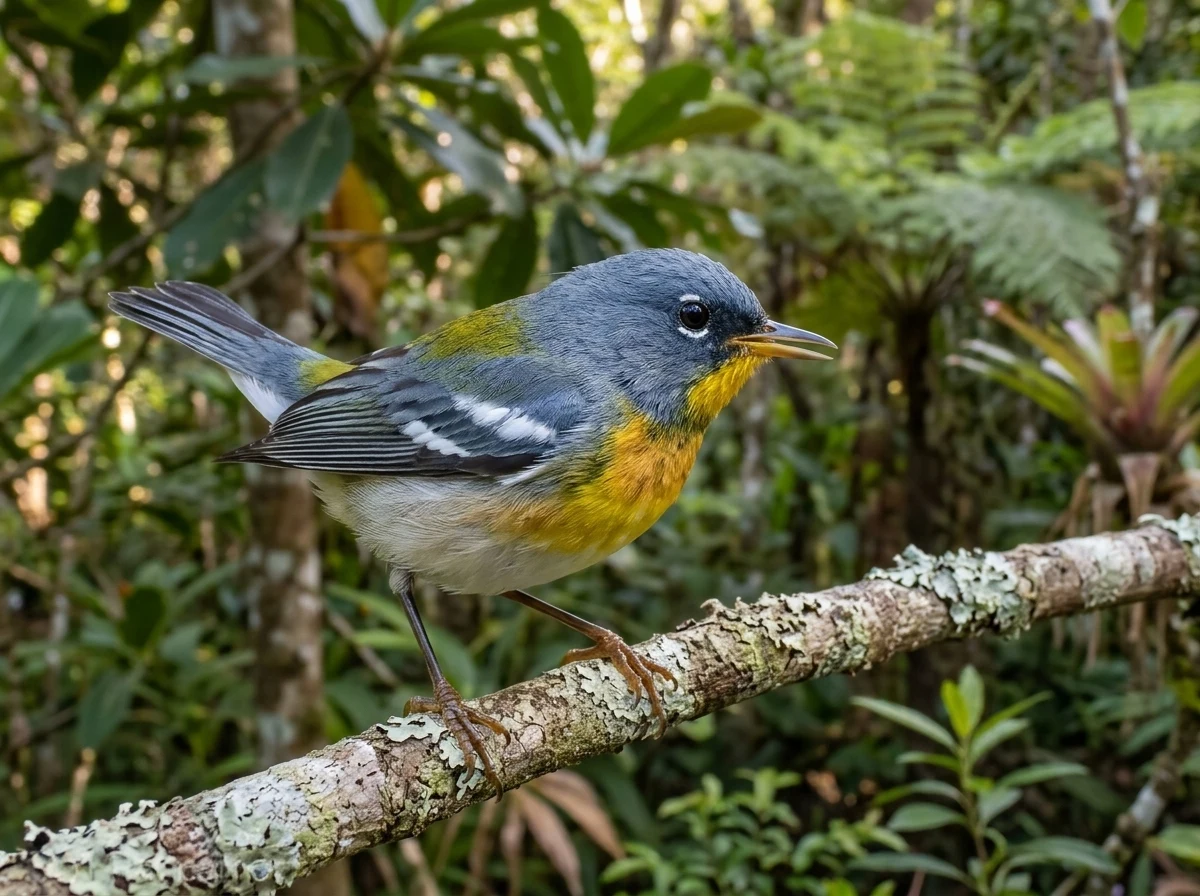 AI
AI01
Why doesn't a bird see glass if we can see it?
According to USFWS, to birds glass is an invisible, deceiving threat: they do not treat it as a barrier to avoid. They may see reflections that look like plants or open sky, or they may try to fly through to what is visible on the other side.
02
What size should patterns be for birds to see the glass?
USFWS recommends patterns at least ¼ inch in diameter, placed no more than 2 inches apart. A 2-by-2-inch grid is especially important for small birds like hummingbirds.
03
Does turning off lights at night help reduce collisions?
USFWS states that most birds migrate at night and can be disoriented by artificial lights. Minimizing unneeded lights, using timers or motion sensors, and using blinds or shades can reduce birds' attraction to glass.
04
Do glass collisions happen only during migration?
USFWS notes that birds collide with glass all throughout the year, but it happens most when they are on the move during spring and fall migration. Most migrate at night, making them more vulnerable to lit buildings and structures.
05
Does this guide provide bird collision data for Puerto Rico?
No. The explanation of the mechanism comes from USFWS and applies to birds in general. The Puerto Rico bird catalog provides context on species that use gardens and human-modified areas, but it does not indicate abundance or frequency of collisions on the island.
Keep exploring
Connected routes
Sources and review
The evidence is one link away.
These sources support the editorial scope of this guide. Bird profiles also retain their own taxonomy, occurrence, and conservation references.
Reviewed:
The atlas continues