 AI
AIBird guides · Habitats and conservation
Why Island Birds Are Vulnerable to Introduced Predators
Island birds evolved without terrestrial predatory mammals or feline diseases. That history explains why introduced predators can cause disproportionate harm.
Reviewed:Prepared with AI assistance and linked sources. Illustrations are not field photographs.
Vulnerability begins in the island's natural history
An island is not just a piece of land surrounded by water: it is a natural experiment in isolation. The birds that colonized Puerto Rico and other islands did so without the pressure of terrestrial predators such as feral domestic cats. Research by Hess and Danner (2012) summarizes the pattern: in most cases, insular wildlife evolved in the absence of terrestrial predatory mammals and feline diseases.
That absence does not mean island birds are defenseless in every context, but it does mean they lack the responses developed by continental birds that have coexisted for millennia with foxes, weasels, or cats. So when an introduced predator arrives on an island, the effect can be far greater than on the mainland. This guide answers one focused question: why this happens, with primary evidence and with two birds from the avespuertorico.com catalog as examples of occurrence in Puerto Rico.
Bird guides · Habitats and conservation
Three key takeaways
Ausenciaof terrestrial predatory mammalsInsular wildlife evolved, in most cases, without them.
Dos generacionesfor cats to penetrate small islandsAccording to genetics, home range, and movement studies cited by Hess and Danner.
Recolonizaciónafter removing feral catsEmerging evidence, especially for seabirds.
01
What it means to evolve without terrestrial predators
Hess and Danner (2012) describe the so-called Club-Med syndrome: domestic cats introduced to islands have been particularly devastating to insular wildlife because, in most cases, it evolved in the absence of terrestrial predatory mammals and feline diseases. That sentence contains the key to vulnerability. It is not that an island bird is 'worse' than a continental one, but that its evolutionary history did not include the pressure that continental birds did.
Vulnerability shows up in several ways. It can be behavioral, if the bird does not recognize the predator as a threat; it can be life-history related, if it nests on the ground or in accessible sites; and it can be sanitary, because the parasite Toxoplasma gondii, hosted by cats, is a persistent pathogen that causes mortality in several insular bird species. The research reviews predation, feline diseases, and life-history traits of cats and their prey as factors that have contributed to extirpations and extinctions of insular vertebrates.
02
Why a small island offers no refuge
A common argument is that cats do not reach every part of an island or that colonies with caretakers do not affect native wildlife. Hess and Danner respond with evidence: population genetics, home range, and movement studies suggest there are no locations on smaller islands where these cats cannot penetrate within two generations. In other words, the isolation that protected birds for millennia also reduces the space available when an introduced predator appears.
This does not make every cat an identical problem, nor does it allow conclusions about a specific Puerto Rico locality without local data. What the source supports is a general insular pattern: feral cats remain widespread on islands worldwide and are frequently subsidized in colonies, whose caretakers often assert they have little negative effect on native wildlife. The cited evidence contradicts that general claim on small islands.
03
Two catalog birds as examples of occurrence
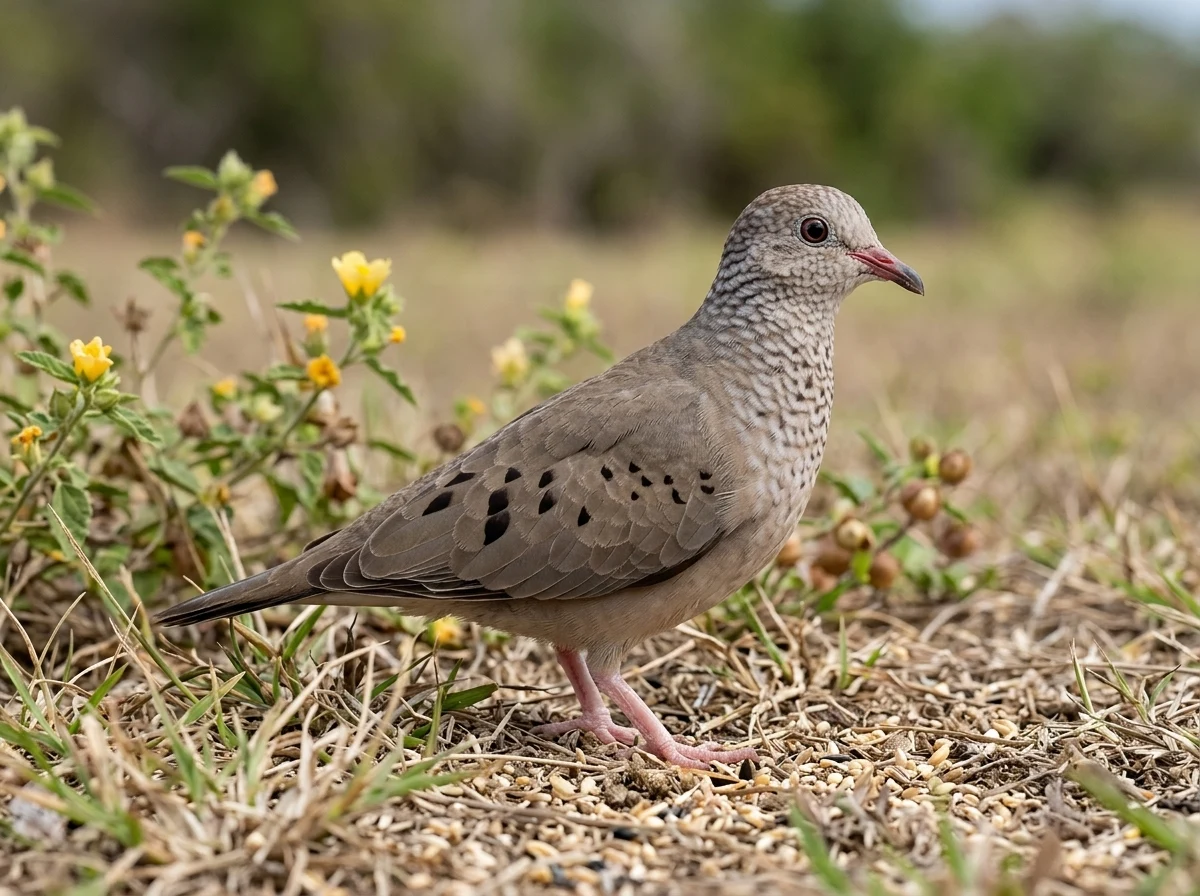
The avespuertorico.com catalog lists the Common Ground Dove (rolita, Columbina passerina) as a native, resident, breeding bird in Puerto Rico, and the Bananaquit (reinita común, Coereba flaveola) also as native, resident, and breeding. It is important to separate two things: occurrence in the Puerto Rico catalog and the global biology of the species. The fact that a species appears as resident in the catalog does not mean the Hess and Danner source studied that species in Puerto Rico.
The connection to the topic is structural, not anecdotal. The Common Ground Dove is a mainly terrestrial bird that spends much of its time walking on the ground and nests on the ground, in shrubs, or in trees, according to the catalog traits. The Bananaquit is a small, active nectarivore that nests in trees and uses nearly all wooded and human-modified habitats, including gardens. Both are resident island birds, and both illustrate why the evolutionary absence of terrestrial predators matters: the traits that make them successful on their island do not prepare them for an introduced predator.
04
What the evidence shows about recovery
The source does not only describe harm; it also documents a sign of hope. Although the details of past vertebrate extinctions were rarely documented in contemporary time, a strong line of evidence is emerging that removing feral cats from islands can rapidly facilitate the recolonization of extirpated species, particularly seabirds. That is an important difference from a message of fatalism.
However, the same source cautions that the response of terrestrial wildlife — passerine birds, small mammals, and herptiles — still needs more thorough long-term monitoring and documentation after cat removal. In other words, the evidence is clearer for seabirds than for land birds such as those in this guide. Islands offer unique, mostly self-contained ecosystems for controlled studies, with implications for continental systems.
05
Observation exercise: separating occurrence from global biology
This exercise does not require capturing or touching birds. Choose a Common Ground Dove or a Bananaquit in an accessible habitat and observe from a distance that does not alter its behavior. Note the time, habitat, whether the bird is on the ground or in vegetation, and what it is doing: feeding, moving, perching, or interacting with another bird. Do not interpret the presence of a predator as the cause of what you observe; just record what you see.
Then compare your note with the catalog. Ask yourself: does my observation describe occurrence in Puerto Rico or the global biology of the species? For example, seeing a Common Ground Dove walking on the ground is a local observation; saying the species is mainly terrestrial is a trait of its global biology. This distinction is exactly what this guide requires and avoids claims the sources do not support. Repeat the exercise in two different habitats and compare your notes.
Linked profiles
The birds in this guide
Two native, resident birds from the avespuertorico.com catalog that help explain the insular pattern.
AI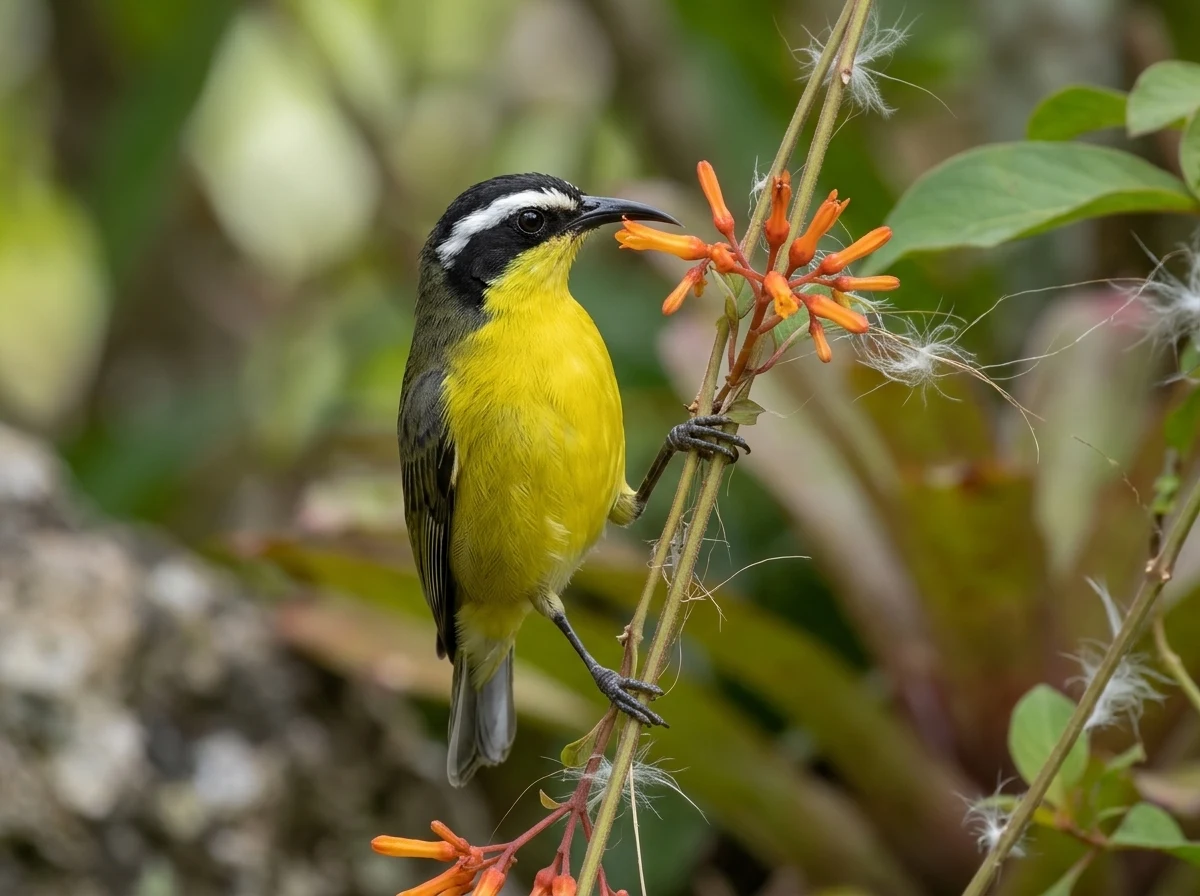 AI
AI01
Why are island birds more vulnerable than continental birds?
According to Hess and Danner (2012), insular wildlife evolved, in most cases, in the absence of terrestrial predatory mammals and feline diseases. Continental birds have coexisted with those predators for much longer, so the selective pressure was different.
02
Can cats reach everywhere on a small island?
The source cites population genetics, home range, and movement studies suggesting there are no locations on smaller islands where these cats cannot penetrate within two generations. It is a general pattern for small islands, not a claim about every locality.
03
What role does Toxoplasma gondii play?
Hess and Danner describe Toxoplasma gondii as a persistent land-based zoonotic pathogen hosted by cats, known to cause mortality in several insular bird species. It also enters marine environments in cat feces, where it can cause mortality of marine mammals.
04
Does removing cats help birds?
The source states that a strong line of evidence is emerging that removing feral cats from islands can rapidly facilitate the recolonization of extirpated species, particularly seabirds. For land birds, the response still needs more thorough long-term monitoring and documentation.
05
Were the Common Ground Dove and Bananaquit studied in Puerto Rico by that source?
That is not claimed. The avespuertorico.com catalog lists both as native, resident, and breeding in Puerto Rico. The Hess and Danner source provides the general insular framework. Separating catalog occurrence from global biology is part of this guide's value.
Keep exploring
Connected routes
Sources and review
The evidence is one link away.
These sources support the editorial scope of this guide. Bird profiles also retain their own taxonomy, occurrence, and conservation references.
Reviewed:
The atlas continues