 AI
AIBehavior guide
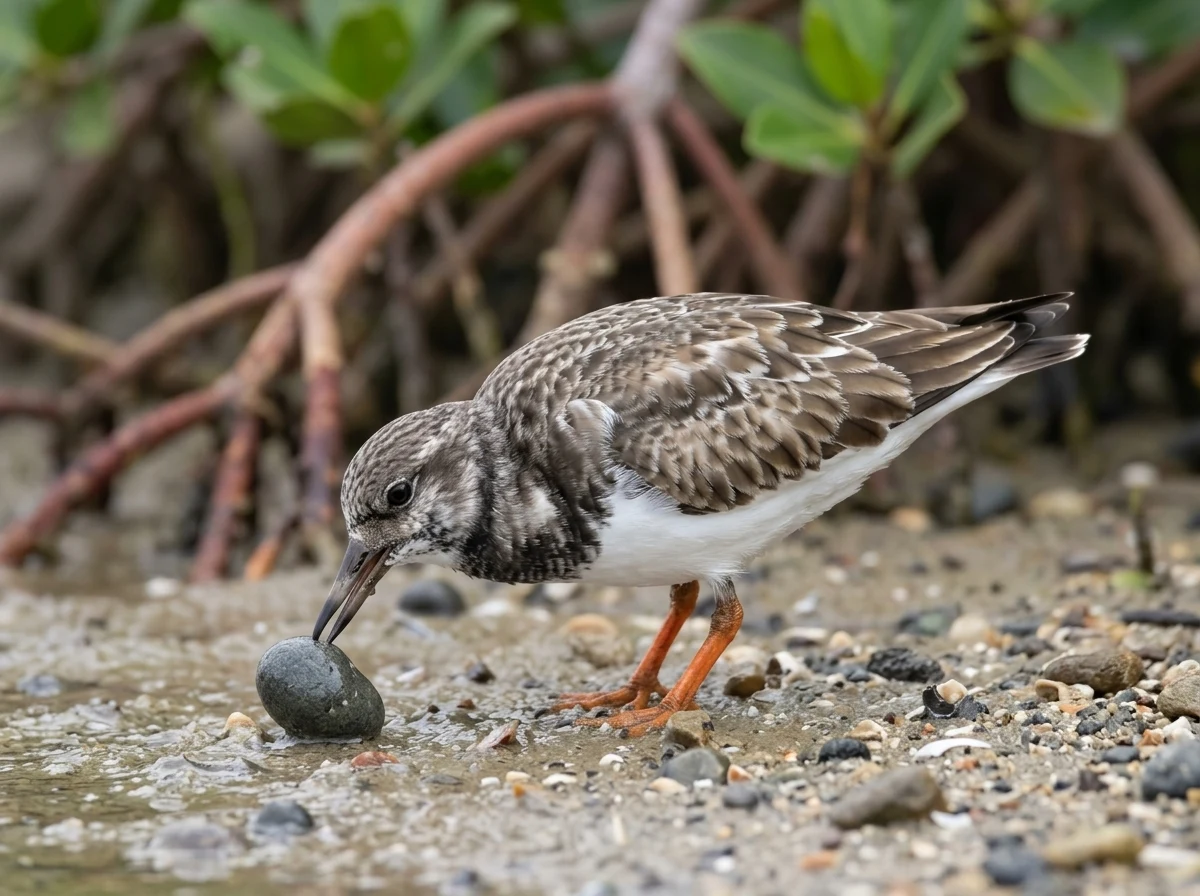
Why Ruddy Turnstones Flip Objects
The Ruddy Turnstone does not flip objects for play or curiosity: it does so to expose hidden invertebrates underneath. This guide explains the mechanism, compares it with other feeding strategies, and suggests how to observe it without interfering.
Reviewed: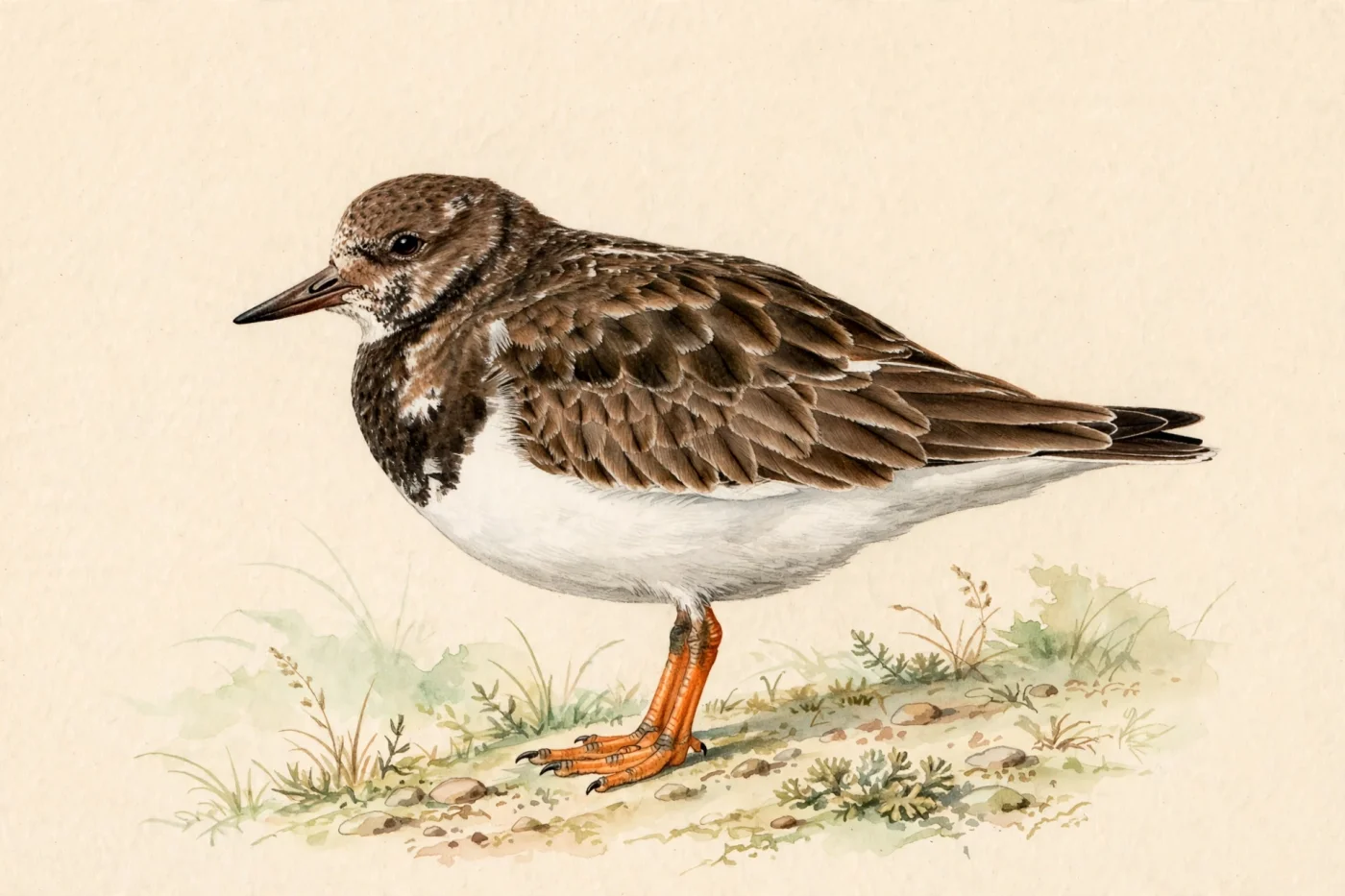
Prepared with AI assistance and linked sources. Illustrations are not field photographs.
The short answer
The Ruddy Turnstone (Arenaria interpres) flips stones, shells, seaweeds, and other objects to uncover and capture the invertebrates sheltering underneath. It is not play or an accident: it is a feeding technique that exploits a resource other shorebirds do not use in the same way.
The species owes its common name to that very method. In the Caribbean it is observed mainly from August to May on beaches, mudflats, pond edges, and sandy and rocky coasts, where it walks along and flips small objects with its stout, slightly upturned bill.
Behavior guide
Three keys to remember
VoltearA feeding technique, not playThe stout, slightly upturned bill works as a lever to lift objects.
DebajoThe food is hiddenInvertebrates shelter under stones, shells, and seaweeds; flipping exposes them.
OportunistaHighly diverse diet outside breedingOutside the breeding season it eats coastal invertebrates, carrion, garbage, and unattended eggs of other birds.
01
The mechanism: a natural lever
The Ruddy Turnstone uses its stout, strong, slightly upturned bill to lift stones, pebbles, shells, seaweeds, and other objects. That bill shape acts as a lever: by inserting it under the edge of an object and applying force, the bird flips it and exposes the surface that had been in contact with the ground.
The value of the technique lies in what remains hidden. Under a stone or shell there are invertebrates that would otherwise be inaccessible. By flipping the object, the Ruddy Turnstone sees them and captures them. The same tool also serves it to probe, jab, and dig for food, both in winter and summer.
02
Comparison: flipping versus other strategies
Not all shorebirds look for food the same way. Many probe sand or mud with their bills; others peck at the surface. The Ruddy Turnstone adds a different strategy: actively manipulating objects in the substrate to reach what lies underneath. That difference explains why it is seen walking among stones and shells, stopping to lift each potential object.
The comparison helps interpret what is observed. A bird that only probes leaves small marks or holes; one that flips leaves turned objects and often inspects them one by one. In the Caribbean, the Ruddy Turnstone also digs holes in the sand, sometimes larger than itself, to pursue burrowing crustaceans. Flipping and digging are two expressions of the same principle: finding food where it is hidden.
03
What it looks for under objects
Outside the breeding season, the Ruddy Turnstone's diet is extremely diverse: it includes coastal invertebrates, small fish, carrion, human garbage, and unattended eggs of other birds. That breadth reinforces the species' opportunistic character: it eats what it finds, and flipping objects gives it access to a part of that repertoire others cannot reach.
During breeding, by contrast, its diet is predominantly dipteran insects (flies). That seasonal difference matters to avoid overgeneralizing: object-flipping behavior is associated mainly with rocky and sandy coasts during wintering and migration, not with the breeding season on the tundra.
04
How to observe it without interfering
Observing this behavior requires distance and patience. Choose a fixed point from which you can see a stretch of coast without approaching the bird. Use binoculars or a telephoto lens. Walk slowly and avoid sudden movements: a Ruddy Turnstone that feels pursued stops feeding and moves away.
Do not flip objects yourself or move stones to provoke the behavior. The goal is to record what the bird does naturally. Nor is it necessary to identify every invertebrate: it is enough to note whether the bird flips, what type of object it lifts, and whether it captures something immediately afterward. That sequence is the observable evidence of the mechanism.
05
Field exercise: the flipping sequence
Choose a Ruddy Turnstone that is feeding and observe it for several minutes without intervening. Record each time the bird: (1) stops at an object, (2) inserts its bill under the edge, (3) flips the object, and (4) captures something or not. Also note the type of object (stone, shell, seaweed) and the substrate (sand, rock, mud).
At the end, compare your notes with this guide's explanation: did flipping precede a capture? Did the bird inspect the same object more than once? Did it alternate between flipping and probing? This exercise requires no specialized equipment and helps distinguish flipping-based feeding from other behaviors. To go deeper into the species' general context, see the shorebirds and plovers guide and the beach birds guide.
Linked profiles
The bird in this guide
The Ruddy Turnstone (Arenaria interpres) is a migratory coastal bird; in the Caribbean it is observed mainly from August to May on beaches, mudflats, and rocky coasts.
AI01
Do Ruddy Turnstones flip objects for play?
No. The available evidence describes flipping as a feeding technique: the bird lifts stones, shells, and seaweeds to expose and capture the invertebrates sheltering underneath.
02
What body part does it use to flip objects?
It uses its bill, which is stout, strong, and slightly upturned. That shape allows it to insert the bill under the object's edge and lever it up.
03
Does it always eat the same thing when flipping objects?
No. Outside the breeding season its diet is very diverse and includes coastal invertebrates, small fish, carrion, human garbage, and unattended eggs of other birds. During breeding it eats mostly dipteran insects.
04
Can I flip stones myself to see the behavior?
It is not advisable. The goal is to observe what the bird does naturally. Flipping objects yourself alters the substrate and can interfere with the bird's feeding or with other organisms living under the stones.
05
Where can I see this behavior in Puerto Rico?
The Ruddy Turnstone is found on beaches, mudflats, pond edges, and sandy and rocky coasts. This guide does not document specific local observations or abundance; for the species' general context, see the shorebirds and plovers guide and the beach birds guide.
Keep exploring
Connected routes
Sources and review
The evidence is one link away.
These sources support the editorial scope of this guide. Bird profiles also retain their own taxonomy, occurrence, and conservation references.
Reviewed:
01↗02↗03↗
Cornell Lab of Ornithology, Birds of the World
Diet and Foraging — Ruddy Turnstone (Arenaria interpres)
Evidence for cited sections; consult the original document.BirdsCaribbean
Featured Bird: Ruddy Turnstone
Evidence for cited sections; consult the original document.BirdsCaribbean
Ruddy Turnstone (Arenaria interpres)
Evidence for cited sections; consult the original document.The atlas continues