 AI
AIBehavior guide
Why Some Birds Lay Eggs in Other Birds Nests
Brood parasitism is not an accident: it is a reproductive strategy with a clear protagonist and a documented host in Puerto Rico.
Reviewed: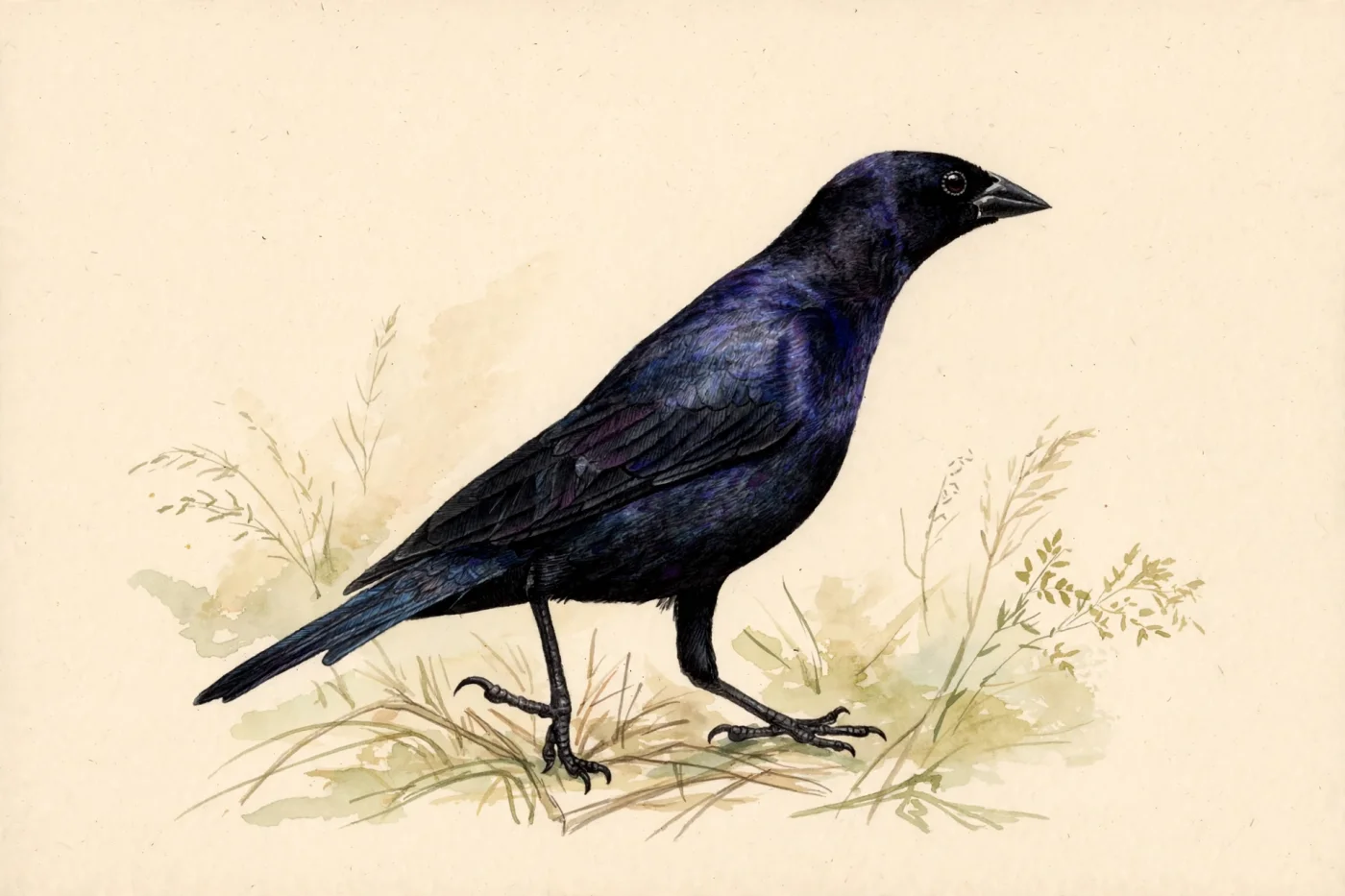
Prepared with AI assistance and linked sources. Illustrations are not field photographs.
The direct question
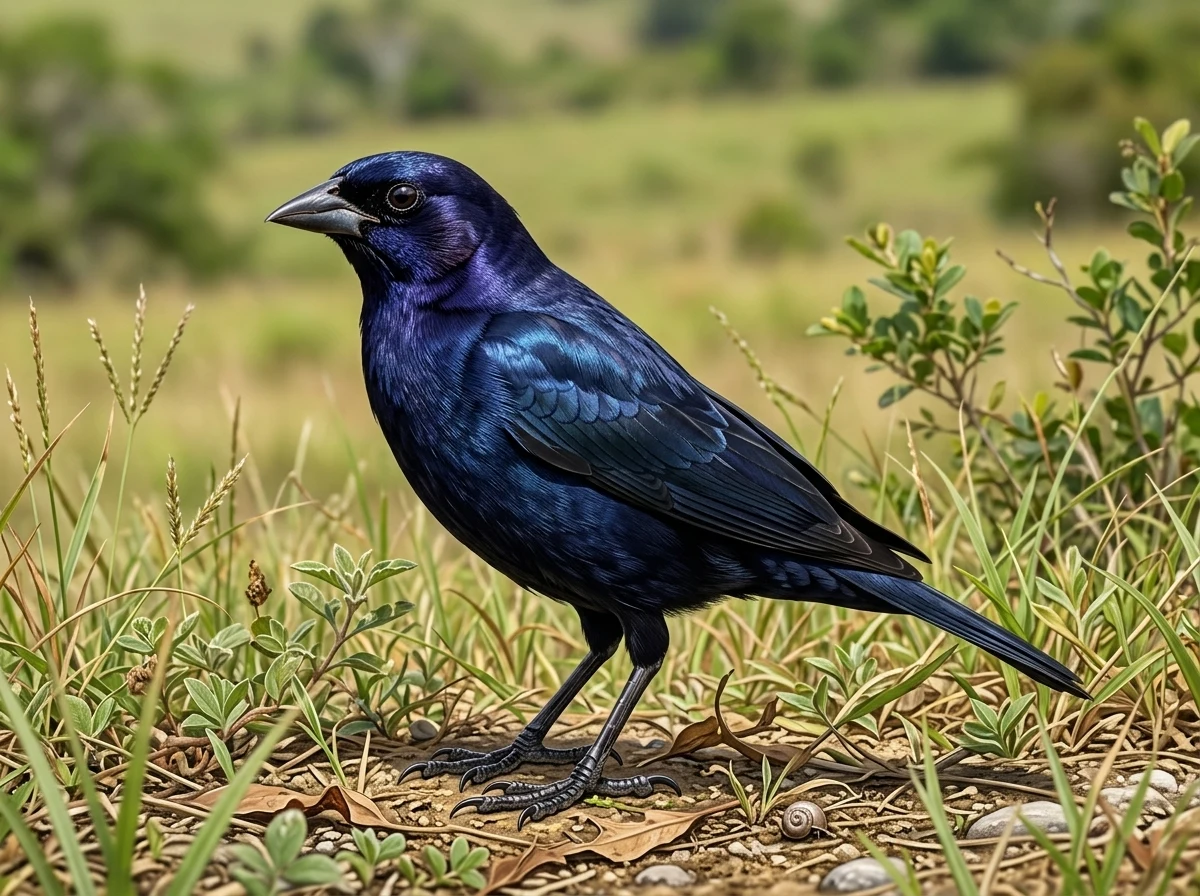
Some birds lay eggs in other birds' nests because that lets them avoid building a nest, incubating, and raising their own young. The strategy is called brood parasitism. In Puerto Rico, the best-documented example is the Shiny Cowbird (Molothrus bonariensis), an icterid that does not build a nest and places its eggs in the nests of other species.
The local case is not anecdotal. The U.S. Fish and Wildlife Service documented in 1976 that the Shiny Cowbird invaded Puerto Rico from other Antillean islands in 1955 and that its parasitism cut the nesting success of the Yellow-shouldered Blackbird (Agelaius xanthomus) in half. A later study in two Puerto Rican bird communities found that 95% of examined Yellow-shouldered Blackbird nests were parasitized. This guide explains the mechanism, the comparison between parasite and host, and how to observe the phenomenon without interfering.
Behavior guide
Three keys to understanding it
1955Documented arrival of the Shiny Cowbird in Puerto RicoThe U.S. Fish and Wildlife Service states it invaded the island from other Antillean islands in 1955.
95 %Yellow-shouldered Blackbird nests parasitized in a 1985 studyWiley (1985) examined nests in two Puerto Rican bird communities and found that proportion in the Yellow-shouldered Blackbird.
41 %Average reduction in nest success due to parasitismWiley (1985) found that parasitized nests had on average 41% lower success than non-parasitized nests.
01
What brood parasitism is and why it exists
Brood parasitism is a reproductive strategy in which a female lays her eggs in the nest of another species, called the host, and lets that host incubate and feed the chicks. The parasite saves time and energy, but the host invests resources in young that are not its own. In the case of the Shiny Cowbird, the species is an obligate parasite: it does not build its own nest and depends on other birds' nests to reproduce.
The strategy works because the parasite can produce more eggs than if it raised each clutch. The cost is paid by the host: fewer of its own eggs hatch and fewer of its own chicks fledge. In Puerto Rico, the Shiny Cowbird arrived in a bird community with no history of social parasitism, meaning many local species had no evolutionary defenses against it.
02
The Puerto Rico case: Shiny Cowbird and Yellow-shouldered Blackbird
The Shiny Cowbird is a bird associated with open habitats, including grasslands and areas disturbed by agriculture and deforestation. Males are black with purple-blue iridescence; females are smaller with dull brown plumage. The species breeds across much of South America and since 1900 has expanded its range northward, reaching the Caribbean and southern Florida. In Puerto Rico, Wiley's 1985 study documented that it parasitizes the nests of multiple species in two bird communities.
The Yellow-shouldered Blackbird is endemic to Puerto Rico and is endangered. The U.S. Fish and Wildlife Service noted in 1976 that Shiny Cowbird parasitism cut its nesting success in half, and that the species already faced habitat loss, introduced predators such as the black rat, Norway rat, and mongoose, and diseases such as fowl pox. Wiley's 1985 study found that 95% of examined Yellow-shouldered Blackbird nests were parasitized, and that parasitized host nests overall fledged 67% fewer of their own chicks than non-parasitized pairs.
03
Comparison: parasite and host
Comparing the Shiny Cowbird with the Yellow-shouldered Blackbird helps show the phenomenon as an interaction, not an isolated event. The Shiny Cowbird is a generalist: it parasitizes nests of many species. The Yellow-shouldered Blackbird is an especially affected host. In Wiley's 1985 study, other species also showed high parasitism rates, such as the yellow warbler (76%), the troupial (100%), and the black-cowled oriole (100%). Other species showed low rates, between 2% and 17%, such as the gray kingbird, red-legged thrush, bronze mannikin, northern mockingbird, and greater Antillean grackle.
This variation matters: not all birds respond the same way. Some species reject the parasite's eggs, others accept them and raise the foreign chick. The Shiny Cowbird is an effective generalist parasite, and in Puerto Rico it found hosts with no prior experience with this type of parasitism. The Yellow-shouldered Blackbird, being endemic and endangered, is the most critical documented case.
04
How to observe without interfering: a practical exercise
Observing brood parasitism requires patience and distance. Do not open nests, do not move branches, and do not approach if the birds show alarm. A useful exercise is to choose an open or mangrove area where Shiny Cowbirds have been reported and observe from a distance with binoculars. Record the date, time, habitat, and behavior: whether you see a cowbird near an active nest, whether the host chases it or ignores it, and whether the nest has eggs of different sizes or colors. You do not need to confirm parasitism for the observation to be valuable; the approach behavior is already data.
A concrete checklist: 1) identify the Shiny Cowbird by the iridescent black male or the brown female with a fine bill; 2) locate active nests without approaching; 3) record time and habitat; 4) note whether the cowbird perches near the nest or enters; 5) describe the host's reaction; 6) do not touch the nest or eggs; 7) share your observations on citizen science platforms if you wish. This exercise does not replace a scientific study, but it helps understand the behavior in context.
Linked profiles
The two birds in this guide
The generalist parasite and the endemic host that best illustrate the phenomenon in Puerto Rico.
AI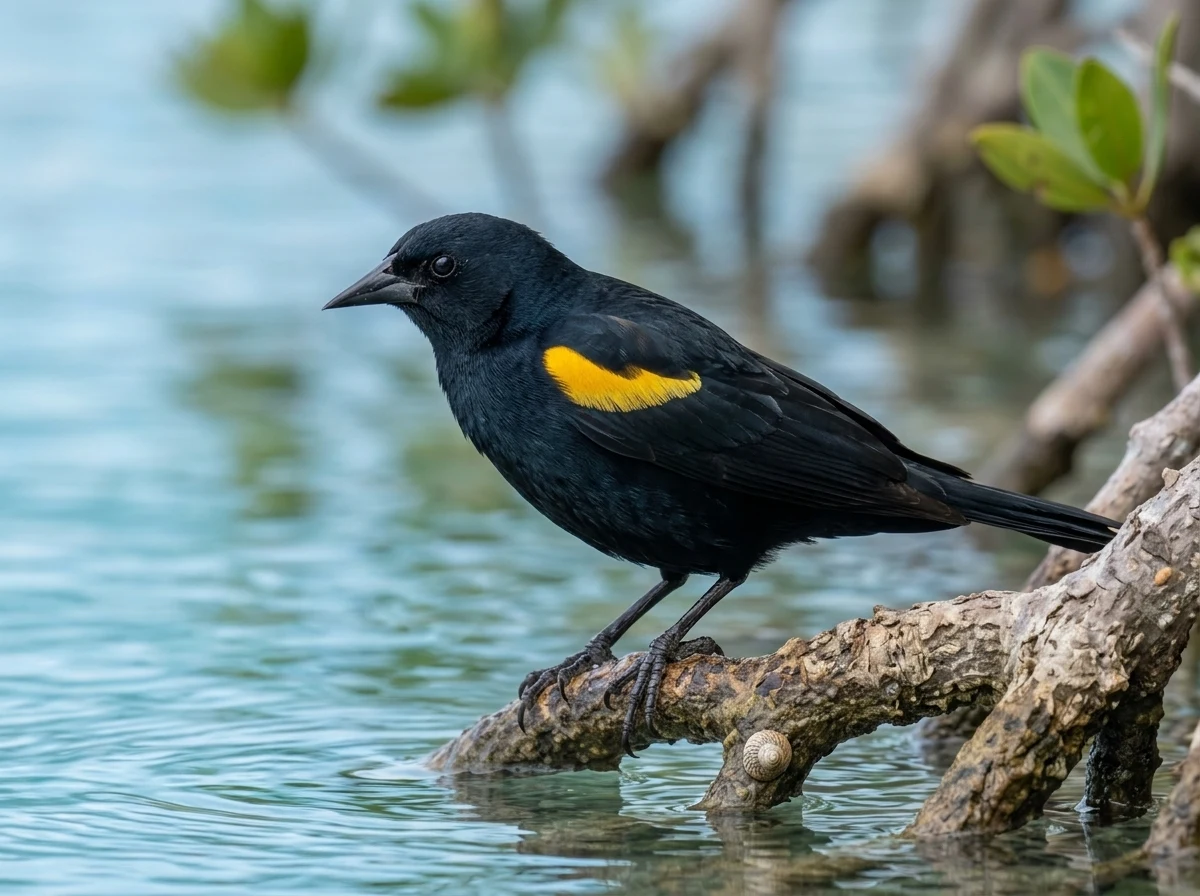 AI
AI01
Are all birds that lay eggs in other nests obligate parasites?
No. The Shiny Cowbird is an obligate parasite: it does not build its own nest and depends on other birds' nests. Other birds may occasionally lay an egg in another nest, but that does not make them obligate parasites. The distinction matters for understanding the Puerto Rico case.
02
When did the Shiny Cowbird arrive in Puerto Rico?
The U.S. Fish and Wildlife Service documented that it invaded Puerto Rico from other Antillean islands in 1955. That date appears in the 1976 news release about the Yellow-shouldered Blackbird's listing as an endangered species.
03
What effect does parasitism have on the Yellow-shouldered Blackbird?
The 1976 release states that parasitism cut the Yellow-shouldered Blackbird's nesting success in half. Wiley's 1985 study found that 95% of examined nests were parasitized and that parasitized host nests overall fledged 67% fewer of their own chicks than non-parasitized pairs.
04
Can I observe this behavior in my yard?
It is possible if there are Shiny Cowbirds and active nests of other birds in the area, but it is not guaranteed. Observation should be done at a distance, without touching nests or eggs. If you see a cowbird near a nest, record the date, time, and the host's reaction. Not all species respond the same way: some reject the eggs and others accept them.
05
Is parasitism the only threat to the Yellow-shouldered Blackbird?
No. The 1976 release also mentions the invasion of its coastal habitat by exotic predators and diseases, mangrove destruction through development, predation by rats and mongooses, and fowl pox. Parasitism is a documented threat, but not the only one.
Keep exploring
Connected routes
Sources and review
The evidence is one link away.
These sources support the editorial scope of this guide. Bird profiles also retain their own taxonomy, occurrence, and conservation references.
Reviewed:
01↗02↗
U.S. Fish and Wildlife Service
Yellow-shouldered Blackbird Listed as an Endangered Species (news release, Nov. 26, 1976)
Evidence for cited sections; consult the original document.U.S. Geological Survey (USGS) Publications
Shiny cowbird parasitism in two avian communities in Puerto Rico
Evidence for cited sections; consult the original document.The atlas continues