 AI
AIHabitat guide
Why Temporary Wetlands Matter to Birds
A wetland that dries is not a lost wetland: it is a pulse. This guide explains why that cycle matters for birds such as the White-cheeked Pintail and Black-necked Stilt, and how to observe it without inventing data.
Reviewed: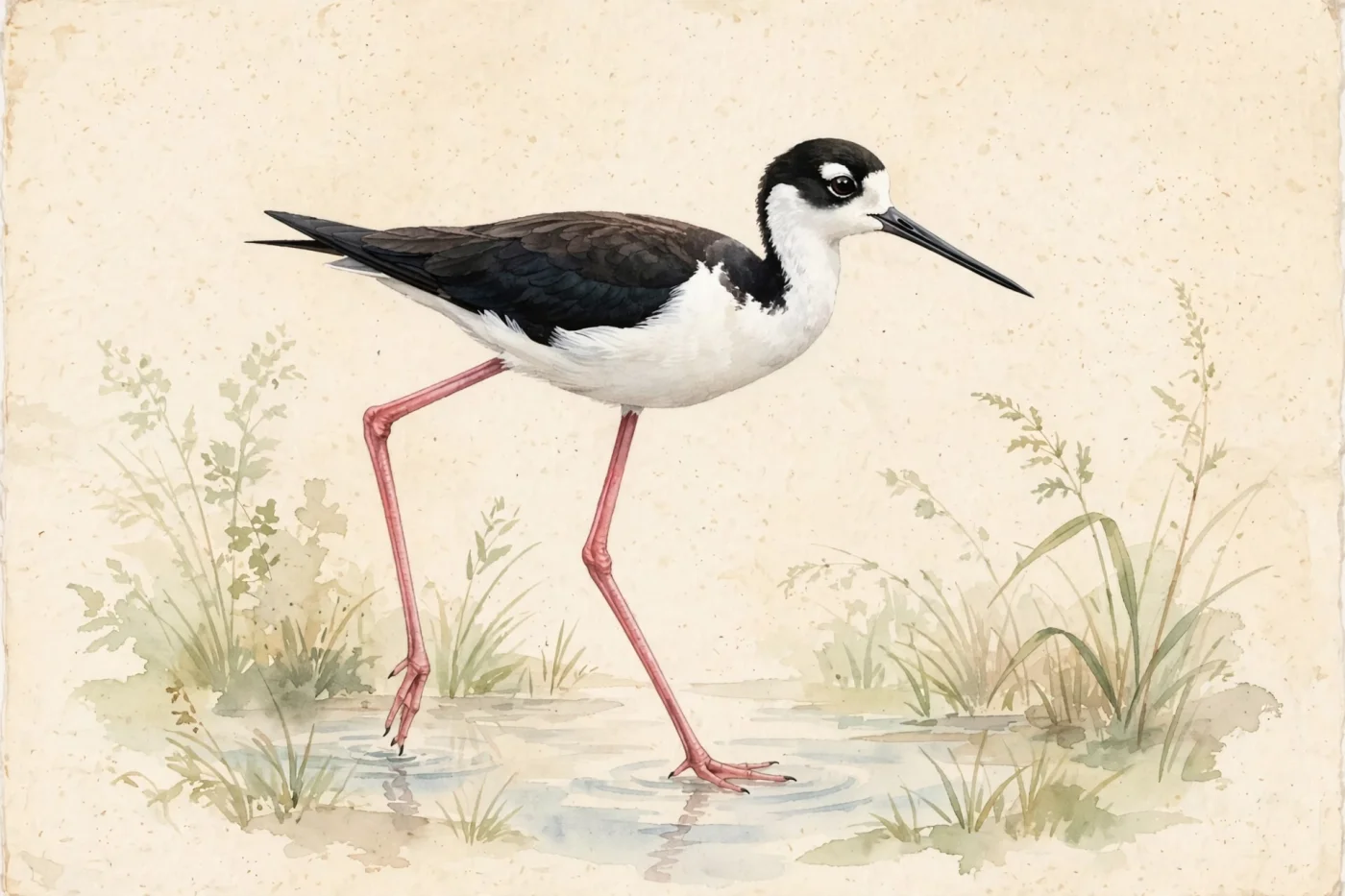
Prepared with AI assistance and linked sources. Illustrations are not field photographs.
The wetland that disappears and returns
A temporary wetland is not just any puddle. It is a basin that fills with rain or runoff, stays flooded for a time, and then dries. In the northeastern and midwestern United States, vernal pools fill as winter ends and dry out by late summer; because they have no fish or other aquatic predators, they serve as nurseries and feeding grounds for reptiles, birds, and mammals (Audubon Magazine, s2).
In Puerto Rico the water cycle is different: the island has dry and wet seasons, and rainfall varies greatly between the drier southwestern coast and the mountains, where parts of the montane rain forest receive more than 200 inches per year (USFWS/USGS, s3). That variation produces wetlands that change in size and character through the year. Understanding that pulse is the difference between seeing dry ground and seeing a habitat that is waiting.
Habitat guide
Three keys to remember
Se secan y vuelvenThe cycle is the functionThe alternation between flooding and drying defines these wetlands; it is not a failure.
Sin peces, con avesFewer aquatic predatorsFishless vernal pools serve as nurseries and feeding grounds (Audubon, s2).
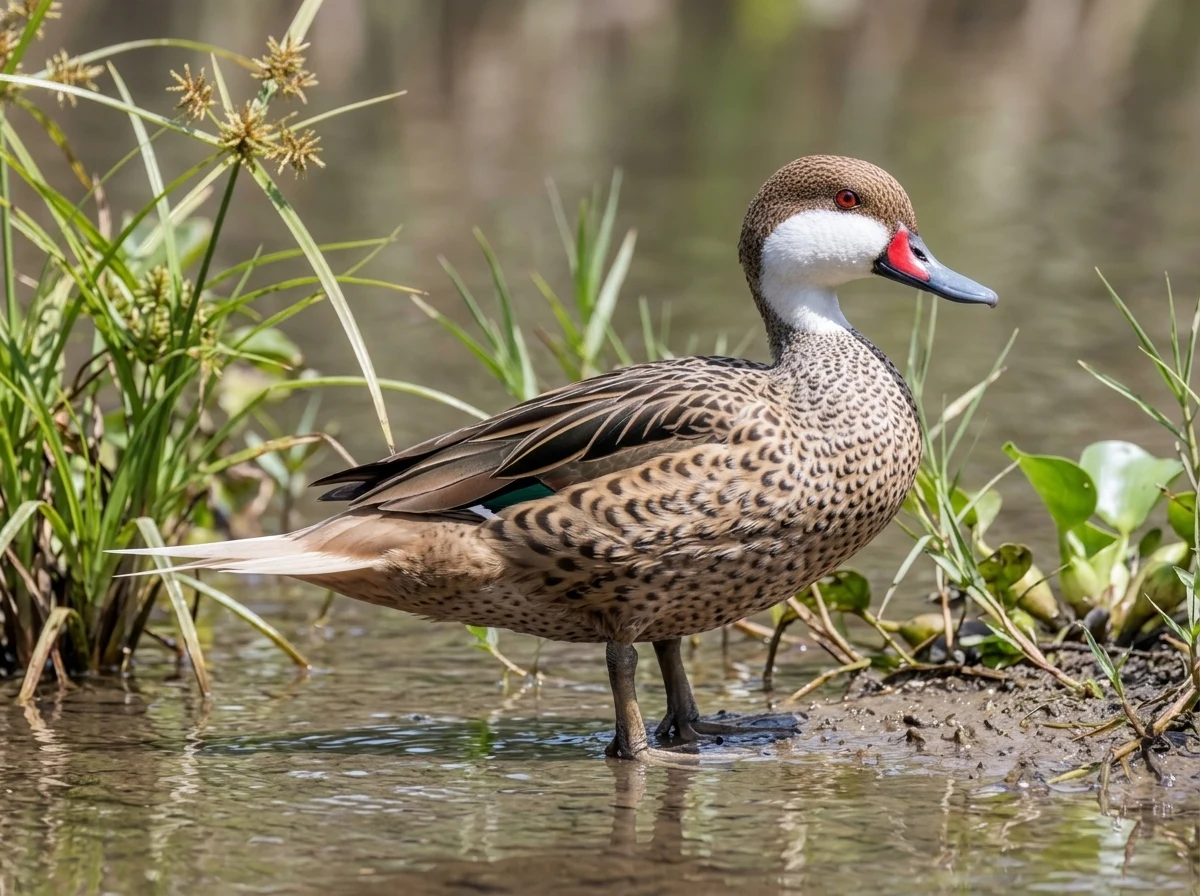
Dos aves para compararPintail and stiltThe White-cheeked Pintail and Black-necked Stilt use wetlands differently; comparing them teaches the pulse.
01
What makes a wetland temporary
A temporary wetland is a depression that floods intermittently and does not hold water permanently. It can fill with rain, with hillside runoff, or with groundwater discharge, and dry when that input stops or evaporation increases. In Puerto Rico, the USFWS and USGS describe palustrine wetlands that include open-water bodies flooded intermittently to permanently, smaller than 20 acres and less than 6.6 feet deep (s3). That broad category ranges from marshes that stay damp to basins that dry seasonally.
The key is not how long the water lasts, but that the cycle repeats. Vernal pools in the northeastern United States reappear in the same places each year, even though they dry by late summer (Audubon, s2). In Puerto Rico, the seasonality of rainfall and the contrast between the drier southwestern coast and the wet mountains mean the same kind of pulse occurs at different scales (USFWS/USGS, s3). An observer who visits once may conclude there is nothing there; someone who returns after the rains may find something else.
02
Why the pulse feeds birds
The main reason is productivity. Wetlands are among the most productive ecosystems in North America and act as biological factories of energy-rich resources for birds; up to half of North American bird species nest or feed in wetlands (USFWS, s1). When a temporary wetland fills, that productivity restarts: invertebrates emerge, aquatic plants germinate, and food concentrates in a small, shallow space.
The second reason is the absence of fish. Vernal pools without fish or other aquatic predators are excellent nurseries and feeding grounds for birds, reptiles, and mammals (Audubon, s2). For birds that feed on aquatic invertebrates, a temporary wetland offers accessible prey in shallow water, without the competition or predation that fish impose. That combination — high productivity and low predation — explains why a habitat that looks marginal can be important.
03
Comparison: White-cheeked Pintail and Black-necked Stilt
The White-cheeked Pintail (Anas bahamensis) is a dabbling duck found more often in brackish waters than other dabbling ducks; it is a resident of mangrove swamps, small lakes, and coastal lagoons, and forages mainly on aquatic plants and seeds from the surface by head dipping and upending (Birds of the World, s4). In the catalog it appears as a resident and breeder in Puerto Rico, with native and natural occurrence, and its local habitat is described as salt ponds, coastal lagoons, and freshwater and brackish wetlands. That combination of shallow water and plant food links it to wetlands that may be temporary or permanent.
The Black-necked Stilt (Himantopus mexicanus) is listed in the catalog as native and natural in Puerto Rico, with primary habitat wetland, an invertebrate diet, and ground nesting in a shallow scrape. The catalog's resident and breeder flags are not set, so this guide does not claim the species does not nest or reside in Puerto Rico; it only notes that those indicators are not established in the available data. The comparison is useful: the pintail uses the shallow water column to feed on plants and seeds; the stilt, according to the catalog, is associated with wetland and with an invertebrate diet and ground nesting. A temporary wetland that fills and dries offers, in different phases, conditions for both lifestyles.
04
How to observe them without inventing data
Observing temporary wetlands requires method because the habitat changes. A simple routine: choose a legal and safe access point; record date and time; note whether the water is fresh, brackish, or salt if you can determine it without special equipment; describe apparent depth (dry, muddy, shallow, deep); and count or estimate the birds present without attributing abundance you cannot support. Repeat the visit after rains and in the dry season to capture the pulse. Do not publish population figures or trends from a single visit.
For the birds, use a concrete checklist: are ducks swimming or upending? Are wading birds walking the edge? Are birds resting on water or mud? Is there evidence of nests or chicks? If you cannot identify a species, describe size, bill shape, leg color, and behavior, and consult the general guides linked here. The goal is not to prove a wetland is important, but to document what uses the wetland in each phase. That repeated documentation is what can contribute to citizen science.
05
Why they are lost and what can be done
Temporary wetlands are vulnerable precisely because of their size and intermittent nature. In the United States, vernal pools often fall through regulatory cracks such as the Clean Water Act because they are small — often a quarter-acre or less — and isolated from other waterways; that is why developers could build on them (Audubon, s2). In Puerto Rico, the USFWS and USGS document that the island's wetlands have been reduced in number and size by agricultural development and population growth, and that virtually every wetland, except those in the highlands, has been damaged to some extent by drainage attempts (s3).
Conserving temporary wetlands does not depend only on laws. In the United States, citizen-science projects have verified hundreds of vernal pools in Maine and more than 1,000 in Michigan, and that data has spurred stronger protections in some states (Audubon, s2). In Puerto Rico, the USFWS and USGS describe that several agencies and organizations participate in wetland conservation, and that highland and coastal wetlands serve different functions (s3). For the observer, the most realistic contribution is to document methodically and share those records with citizen-science platforms, without exaggerating what was observed.
Linked profiles
The two birds in this guide
The White-cheeked Pintail and Black-necked Stilt represent two different ways of using a temporary wetland. The links lead to their full profiles.
AI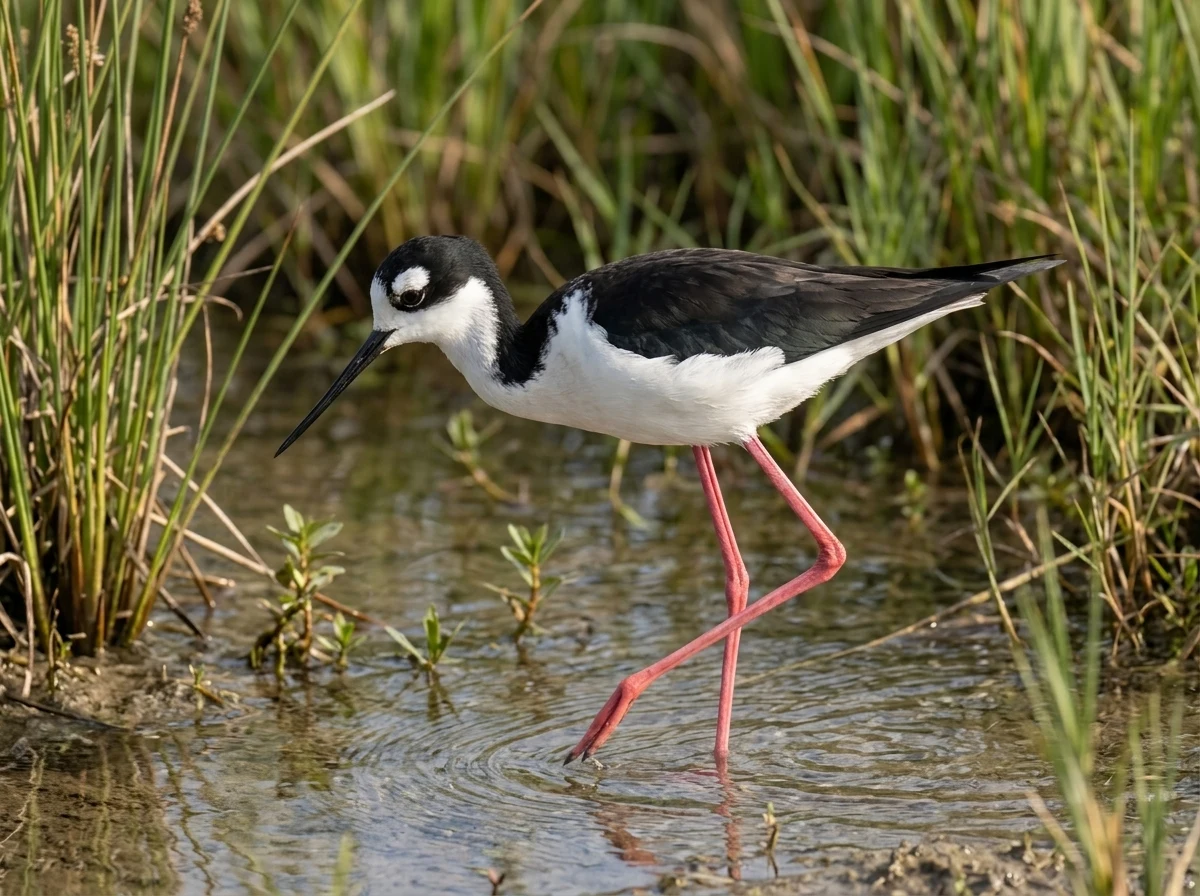 AI
AI01
Is a temporary wetland the same as a vernal pool?
Not exactly. Vernal pools are a type of temporary wetland that fills at the end of winter and dries by late summer, and that is characterized by having no fish (Audubon, s2). The term temporary wetland is broader and includes basins that flood intermittently from rain, runoff, or groundwater, such as those described by USFWS/USGS in Puerto Rico (s3).
02
Why do they matter for birds if they dry out?
Because the flood-and-dry cycle is what produces their function. When they fill, wetlands are productive ecosystems that generate food; up to half of North American birds nest or feed in wetlands (USFWS, s1). When they have no fish, they serve as nurseries and feeding grounds with fewer aquatic predators (Audubon, s2).
03
Are the White-cheeked Pintail and Black-necked Stilt found in temporary wetlands in Puerto Rico?
Both species are listed in the catalog as native and natural in Puerto Rico, and their habitats include wetlands. The White-cheeked Pintail is associated with salt ponds, coastal lagoons, and freshwater and brackish wetlands; the Black-necked Stilt is associated with wetland. No abundance or specific use of temporary wetlands is inferred from these data; local observations are needed to document it.
04
What can I do to help conserve temporary wetlands?
Documenting methodically is a realistic contribution. Record date, time, water condition, and birds present, and repeat visits in different phases of the cycle. In the United States, citizen science has verified hundreds of vernal pools in Maine and more than 1,000 in Michigan, and that data has spurred protections (Audubon, s2). Share your records with citizen-science platforms and avoid publishing figures you cannot support.
Keep exploring
Connected routes
Sources and review
The evidence is one link away.
These sources support the editorial scope of this guide. Bird profiles also retain their own taxonomy, occurrence, and conservation references.
Reviewed:
01↗02↗03↗04↗
U.S. Fish & Wildlife Service
Essential Habitats (American Wetlands Month)
Evidence for cited sections; consult the original document.Audubon Magazine
Vernal Pools Are the Place to Be for Woodland Critters—as Long as They Last
Evidence for cited sections; consult the original document.U.S. Fish & Wildlife Service / USGS
National Water Summary — Wetland Resources: Puerto Rico
Evidence for cited sections; consult the original document.Cornell Lab of Ornithology
White-cheeked Pintail (Anas bahamensis) — Birds of the World
Evidence for cited sections; consult the original document.The atlas continues