 AI
AIVisual identification
Black birds
“It was black” only begins the identification. Tail, bill, sheen, posture, and a yellow patch separate four very different possibilities.
Reviewed:Start with structure, not the exact shade in a photograph.
Camera exposure can turn brown, violet iridescence, and matte black into the same dark patch. Before chasing color, estimate size, inspect tail length and shape, compare bill thickness, and note whether the bird walked on the ground, gathered in a flock, or moved inside a tree.
This guide focuses on four documented birds: Greater Antillean Grackle, Shiny Cowbird, Puerto Rican Oriole, and Yellow-shouldered Blackbird. It does not assume every black bird familiar from North America occurs regularly in Puerto Rico; begin with local range, then confirm with field marks.
Visual identification
A quick comparison
4focal speciesEach has a full linked profile and local names.
2endemicsPuerto Rican Oriole and Yellow-shouldered Blackbird are archipelago endemics.
5useful cluesSize, bill, tail, color patch, and behavior.
01
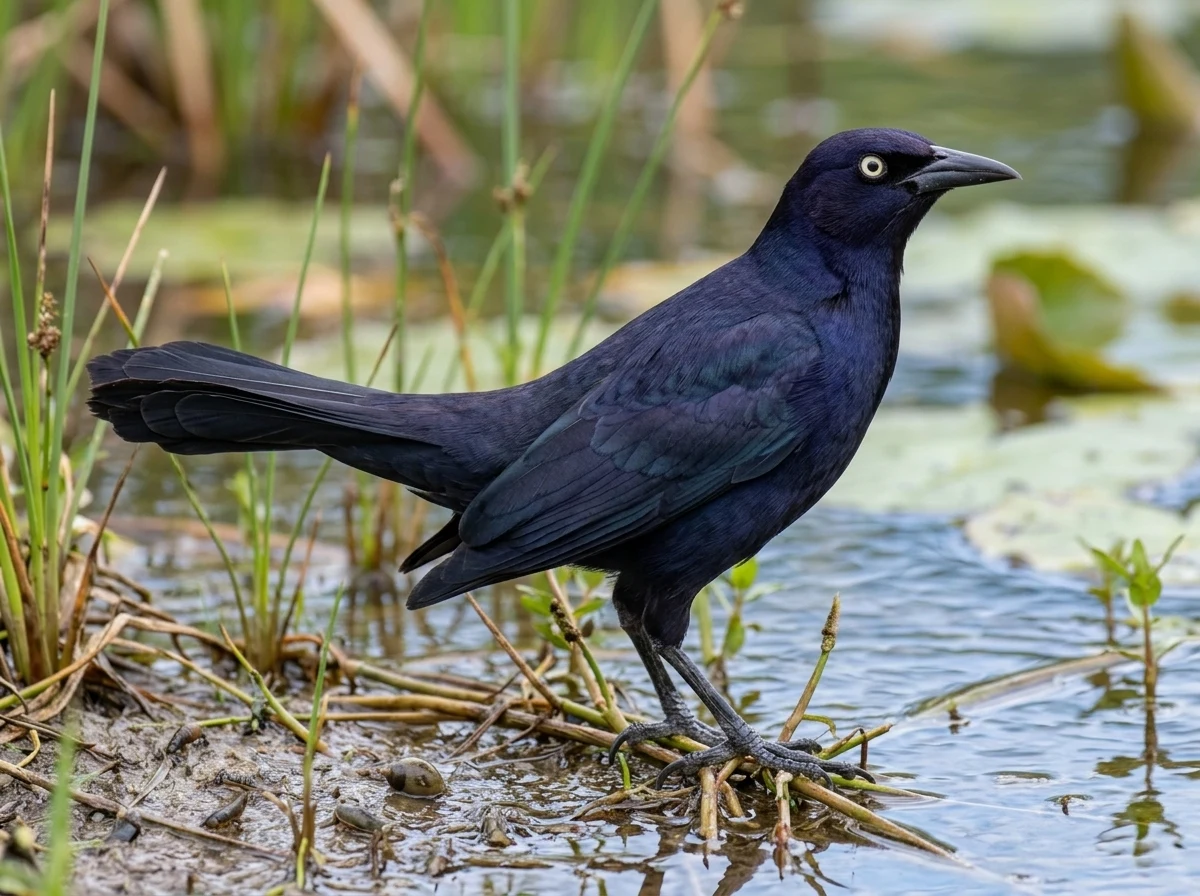
Grackle: long tail, open settings, and plenty of attitude
Greater Antillean Grackle is often the first option around parking lots, plazas, lawns, and coasts. It looks longer and more elongated than Shiny Cowbird, with a conspicuous tail and sturdy bill. Males may show blue or violet gloss; females are browner, a difference that dark photographs can erase.
Look for groups walking, investigating scraps, or perching in exposed places. The species ranges across the Greater Antilles; its everyday Puerto Rico presence does not make it a full endemic species.
02
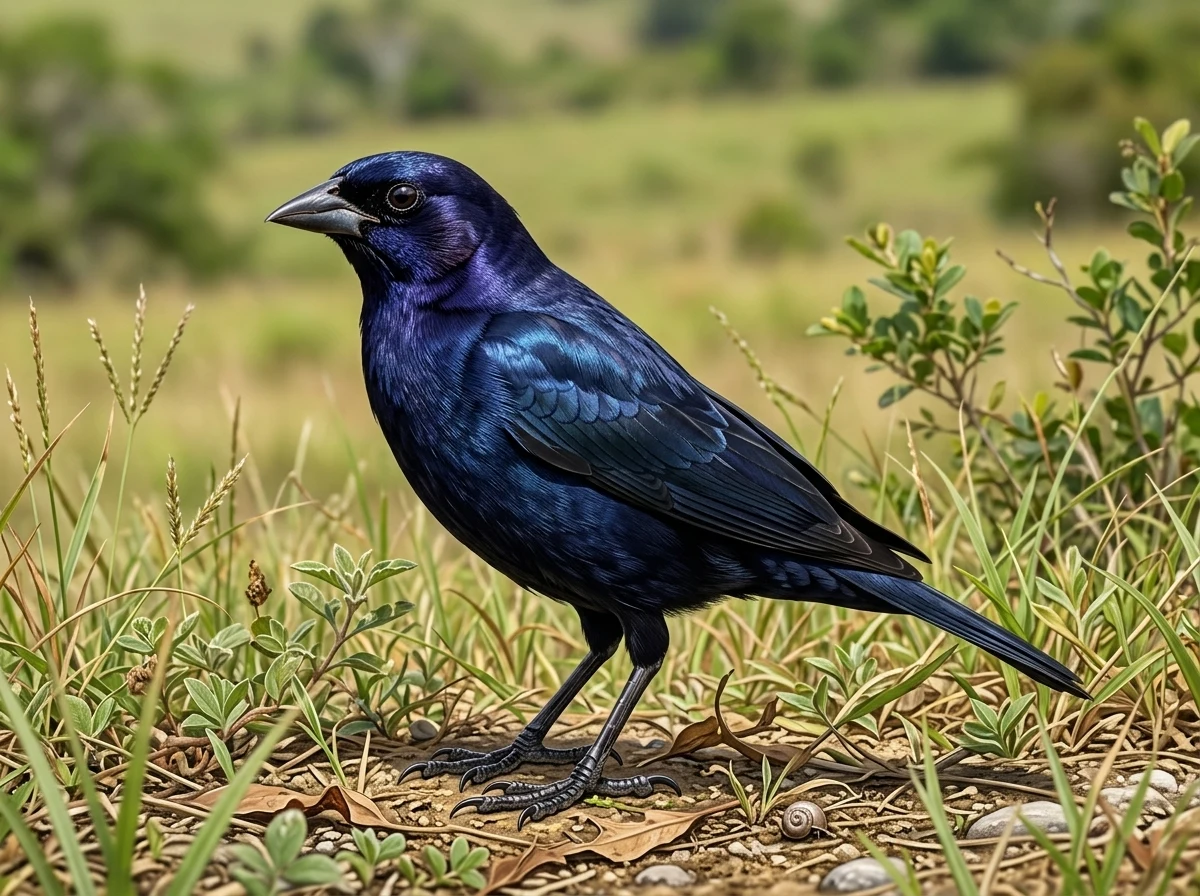
Shiny Cowbird: compact, with a finer bill
The adult male is dark and glossy, but the body is more compact and the tail shorter than a grackle's. Its bill looks relatively slender and pointed. Females and young birds can be gray or brown, so “black bird” does not describe the entire species.
Behavior helps as well: it may feed on the ground and mix with other icterids. Shiny Cowbird is a brood parasite that lays eggs in other birds' nests—an ecological fact important to Yellow-shouldered Blackbird conservation, but not enough by itself to identify a distant individual.
03
Blackbird and oriole: two yellow patches, two designs
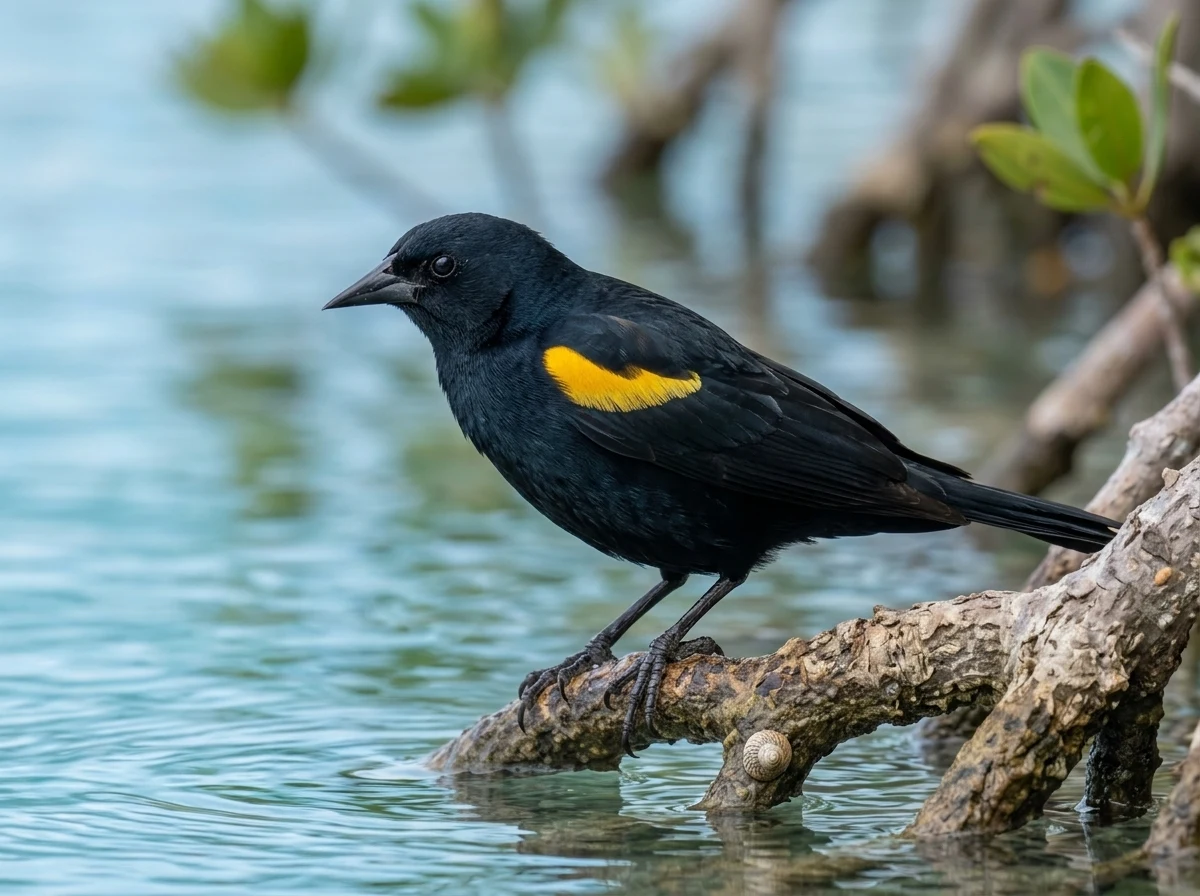
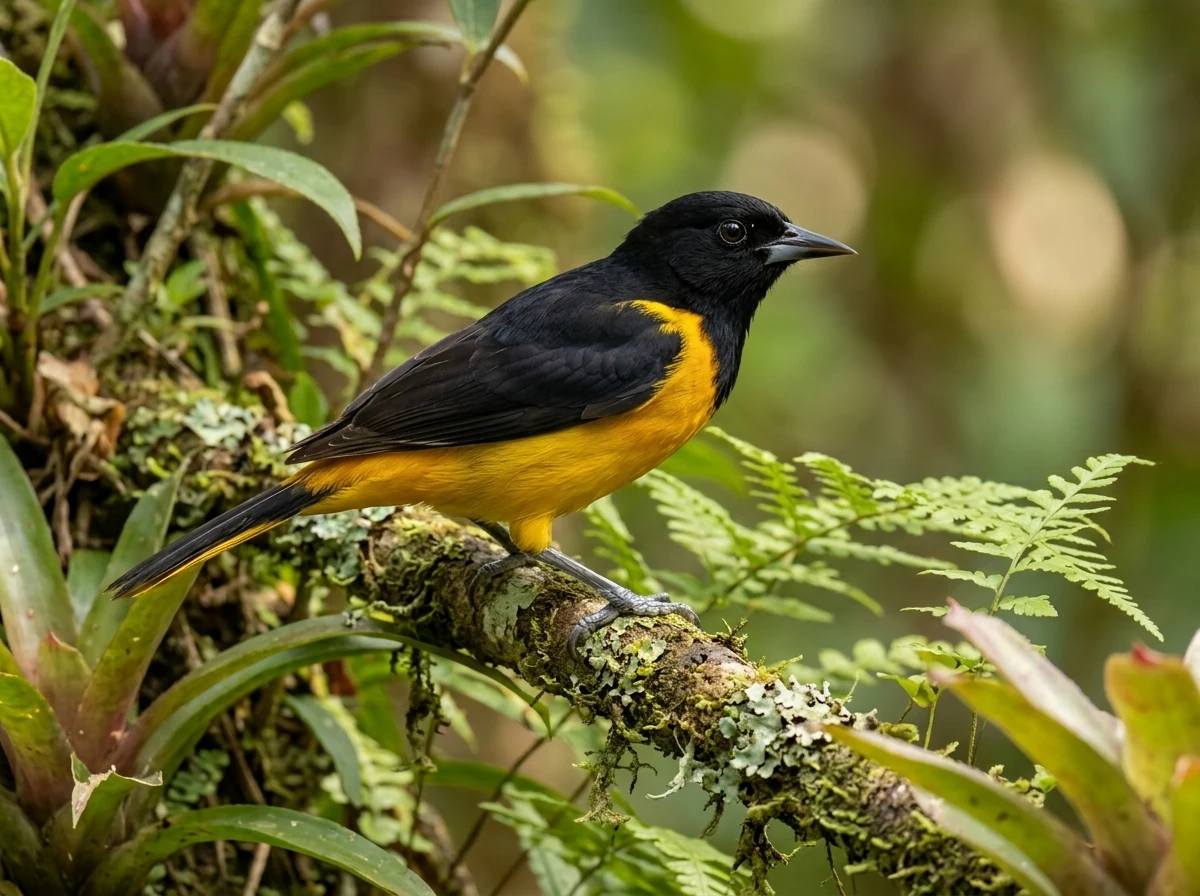
Yellow-shouldered Blackbird is predominantly black with a clean yellow shoulder patch. Its range is localized, so context in the southwest, south, east, or Mona matters. Puerto Rican Oriole also combines black and yellow, but yellow extends differently across the shoulder and underparts; its bill and oriole posture look more elongated.
Do not decide from “yellow on the wing” alone. Ask whether the color continues onto the belly, inspect bill shape, record habitat, and compare more than one view. The Fish and Wildlife Service publishes a direct Yellow-shouldered Blackbird comparison and documents its distribution and threats.
04
An identification workflow that survives bad photos
First eliminate by size and tail: long-bodied and long-tailed favors grackle; compact and short-tailed favors cowbird. Then inspect structural color. Without a patch, compare sheen, bill, and sex; with yellow, compare the amount and placement between blackbird and oriole.
Finish with place, date, and expected abundance. An extraordinary record needs more evidence than an everyday species. Keep the original photograph, a behavior note, and—when available—a short ambient recording; together they are worth more than a crop that has lost all context.
Linked profiles
Open the comparison
Profiles bring together images, Puerto Rico names, taxonomy, audio, distribution, and sources.
Sound archive
Hear its voice
Explore real songs and calls. The spectrogram turns each sound into a visual trace of time and frequency.
XC796182Recording 1 of 3song, call

Play: song, call by Bobby Wilcox
Choose another recording
Sound recorded by Bobby Wilcox · XC796182 · CC BY-NC-SA 4.0. Visualization by Stichting Xeno-canto voor Natuurgeluiden.
Every recording retains the creator, catalogue number, and license published by Xeno-canto. Metadata via GBIF ↗
01
What is the common black bird in Puerto Rico?
It is often a Greater Antillean Grackle, especially in open and urban areas, but location and field marks should confirm it; cowbirds, orioles, and Yellow-shouldered Blackbirds also occur.
02
Are Yellow-shouldered Blackbird and Puerto Rican Oriole the same bird?
No. They are two different endemic species. Both combine black and yellow but differ in pattern, shape, voice, behavior, and distribution.
03
Is Shiny Cowbird native to Puerto Rico?
Its expansion into Puerto Rico is relatively recent, and the federal source records its twentieth-century arrival. The profile preserves the occurrence category used by atlas checklists.
Keep exploring
Connected routes
Sources and review
The evidence is one link away.
These sources support the editorial scope of this guide. Bird profiles also retain their own taxonomy, occurrence, and conservation references.
Reviewed:
01↗02↗03↗
Sociedad Ornitológica Puertorriqueña
Official bird list
Local names, occurrence categories, and the public summary of 17 endemics.Cornell Lab of Ornithology
Urban birds of Puerto Rico
Bilingual educational material for recognizing common birds near homes, schools, and plazas.U.S. Fish and Wildlife Service
Yellow-shouldered Blackbird: bird of the month
Visual comparison, current distribution, and threats affecting the endemic Yellow-shouldered Blackbird.The atlas continues