 AI
AIField comparison
Barn Owl vs. Puerto Rican Owl: how to tell them apart
In Puerto Rico “lechuza” and “múcaro” are often used almost interchangeably, but they belong to different families. This comparison helps you name what you see and hear correctly.
Reviewed:What is the difference between a Barn Owl and a Puerto Rican Owl?
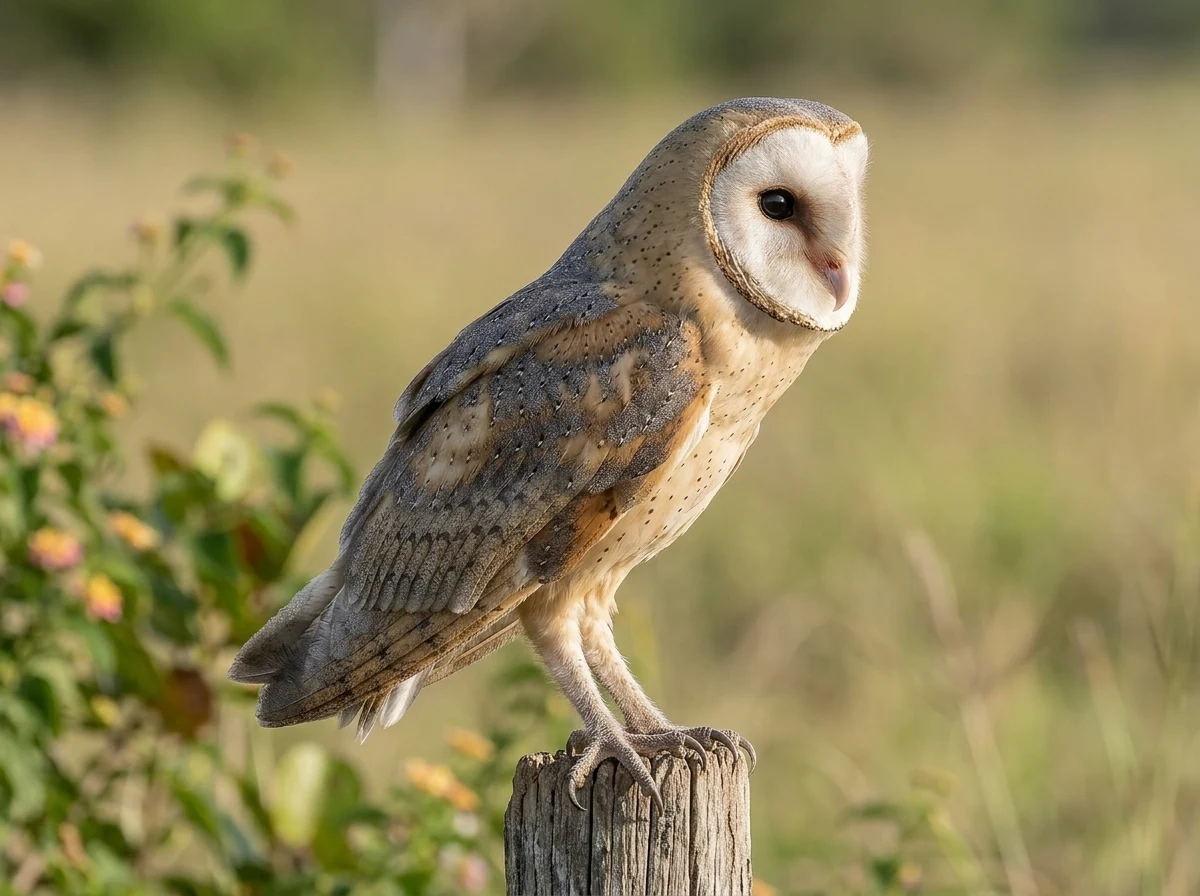
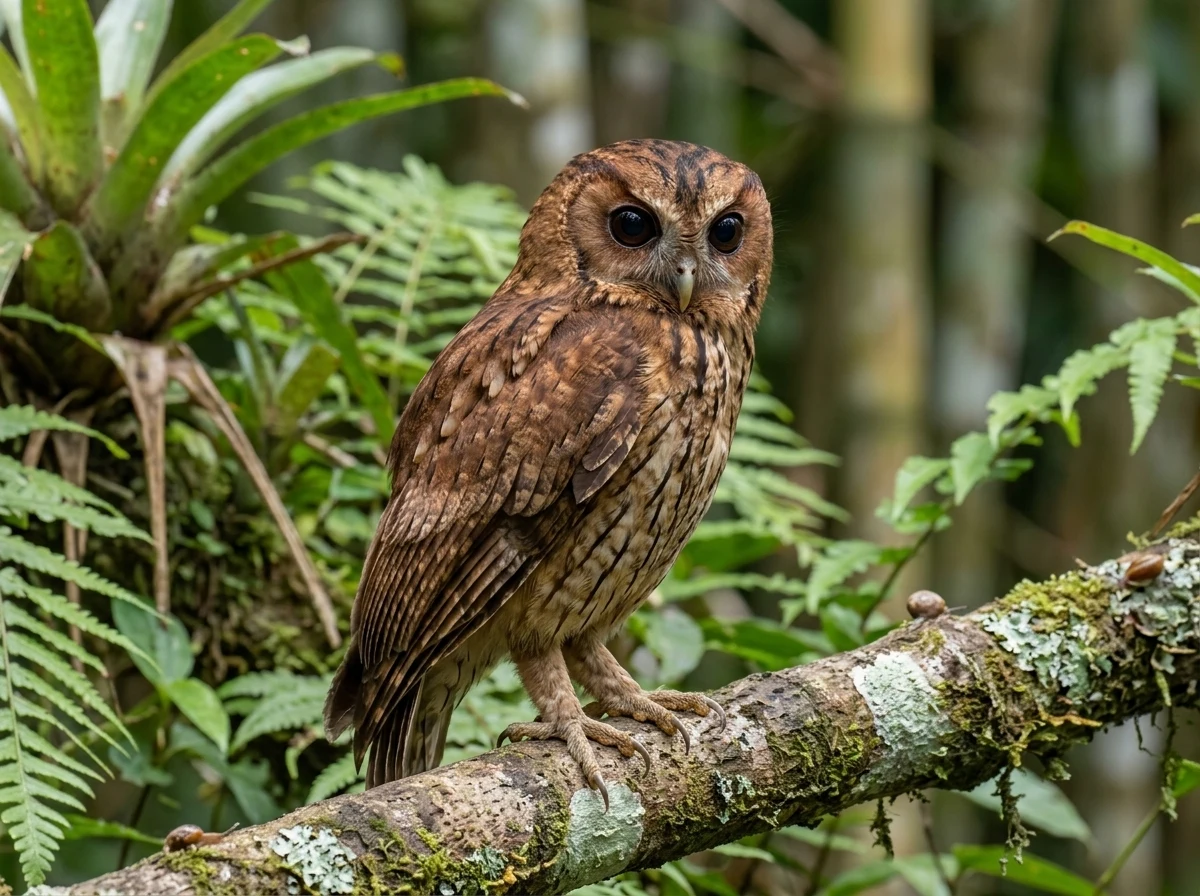
The Barn Owl (Tyto) is a large owl, 33–41 cm, pale, with a white heart-shaped face, that screams and hisses; the Puerto Rican Owl (Gymnasio nudipes) is a small owl, 20–25 cm, brown or rufous, round-headed with no ear tufts, that sings a deep trill. They also belong to different families: barn owls are Tytonidae and the Puerto Rican Owl is a typical owl, Strigidae.
In practice, almost any owl a person hears or finds in a Puerto Rican yard is a Puerto Rican Owl, because the Barn Owl is rare on the island and its first nest was confirmed only in 2015. The search “lechuza de Puerto Rico” may also refer to the Puerto Rican Barn Owl (Tyto cavatica), an extinct endemic species. Here we compare all three, and add the Short-eared Owl to complete the picture.
Field comparison
Barn Owl and Puerto Rican Owl, side by side
33–41 cmBarn Owl lengthPale, white heart-shaped face, dark eyes.
20–25 cmPuerto Rican Owl lengthBrown or rufous, round head, bare legs.
2015first Barn Owl nestDocumented by the DRNA after an injured chick was rescued.
1916Tyto cavatica foundBones from a cave near Utuado, described by Wetmore.
01
Size and shape: the first clue
The Puerto Rican Owl is 20–25 cm long and weighs 103–169 g: roughly the size of an open hand. The Barn Owl is 33–41 cm, with broad, pointed wings, a short rounded tail, and several times the weight. If the bird you saw filled a branch like a large pigeon or bigger, it was not a Puerto Rican Owl.
The shape differs too. The Puerto Rican Owl is compact and big-headed, with a round head and no ear tufts. In the Barn Owl, the white heart-shaped face dominates the head. In flight the Barn Owl looks like a large, whitish bird passing low over a field; the Puerto Rican Owl flies fast and silently among trees.
02
Face and color
The face is the clearest mark. The Barn Owl has a white, heart-shaped facial disc, generally pale plumage in brown, gray, tan, and white, and dark eyes. The Puerto Rican Owl has a brown or rufous face with white patches at the base of the facial disc that form pale brows in an X above the bill, and white underparts with brown streaks.
The Puerto Rican Owl comes in two morphs, brown and rufous, so two owls from the same area can look different in color without being different species. The Barn Owl is pale overall, and its white face stands out even at night. If all you see is a pair of eyes and a dark body in the leaves, it is most likely a Puerto Rican Owl.
03
Voice: trill versus scream
The Puerto Rican Owl sings a short, deep, quavering trill of three to five seconds, higher in the female, and pairs often duet in the evening and early morning. When alarmed it gives a loud “boo boo.” It is the owl sound heard most in Puerto Rico.
The Barn Owl neither trills nor hoots. Its sounds are screams, hisses, grunts, and bill snaps; the young make rapid clicking notes. A scream over an open field or near an abandoned building is the Barn Owl's audio clue. Compare both voices on the profiles before you go out.
04
Habitat, prey, and nest sites
The Puerto Rican Owl lives in forests and woodlands of all types, from the coast to about 900 m, including yards and neighborhoods with trees. It nests in tree cavities from April to June and eats mostly large insects, plus anoles, coquí frogs, mice, and small birds.
The Barn Owl prefers open or semi-open lowland country such as farms, fields, and towns, and hunts by flying low over the ground, mostly for rodents. It nests in tree cavities, cliffs, caves, and buildings. Puerto Rico's 2015 nest was found after an injured chick was rescued; the DRNA did not disclose the site to protect the birds.
05
The “Puerto Rican barn owl” that went extinct
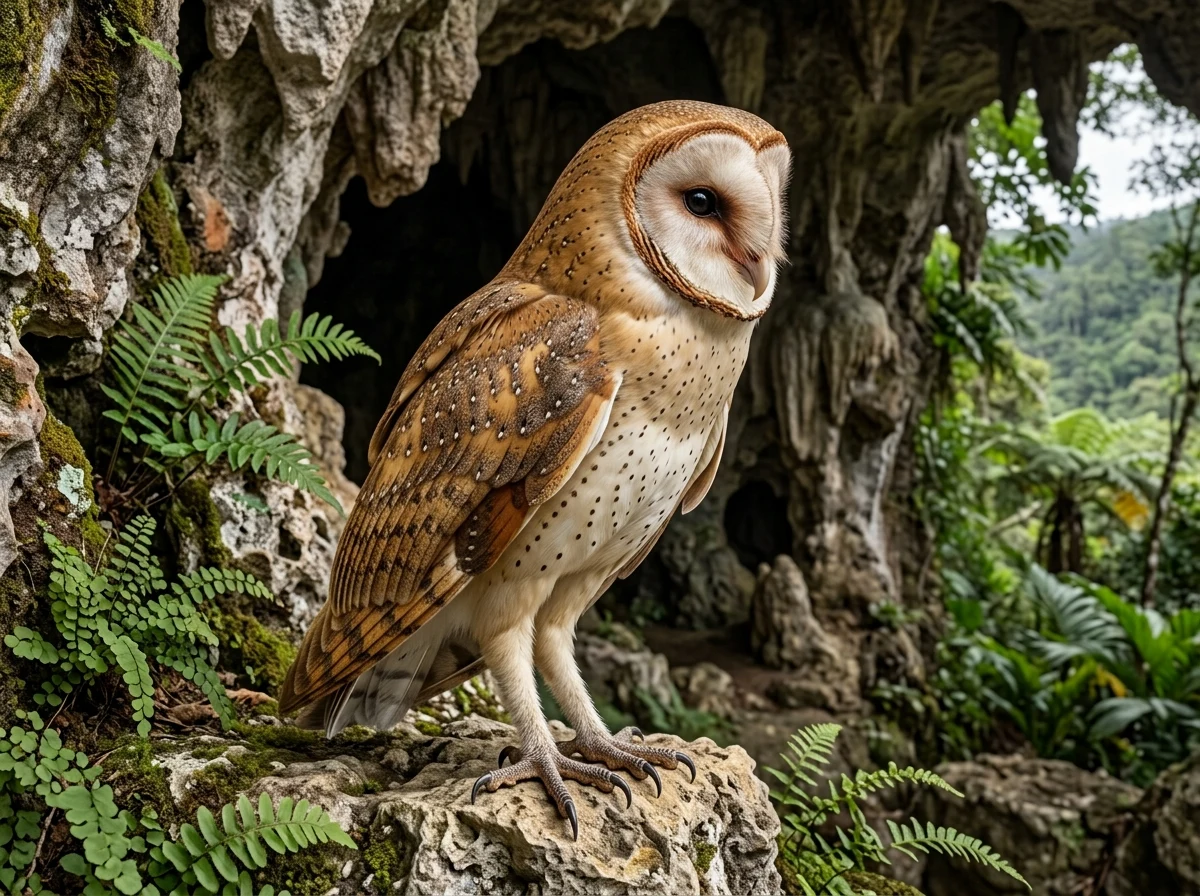
The Puerto Rican Barn Owl (Tyto cavatica) was an endemic barn owl now known only from bones. Alexander Wetmore described it from leg remains of at least two individuals found in a cave on the property of Gervacio Toraño, near Utuado, collected on July 2, 1916, by H. E. Anthony. It was a small barn owl, one of the West Indian group, related to the Ashy-faced Owl of Hispaniola (Tyto glaucops).
Wetmore also solved a naming puzzle. In 1912 people near Utuado told him the “múcaro real” lived in small caves on steep hillsides and came out only at night. Since the true Short-eared Owl lives in savannas, Wetmore concluded the cave bird must have been this barn owl. So in old accounts, “múcaro” and “lechuza” do not always mean what they mean today.
06
And the Short-eared Owl? The third owl in the comparison
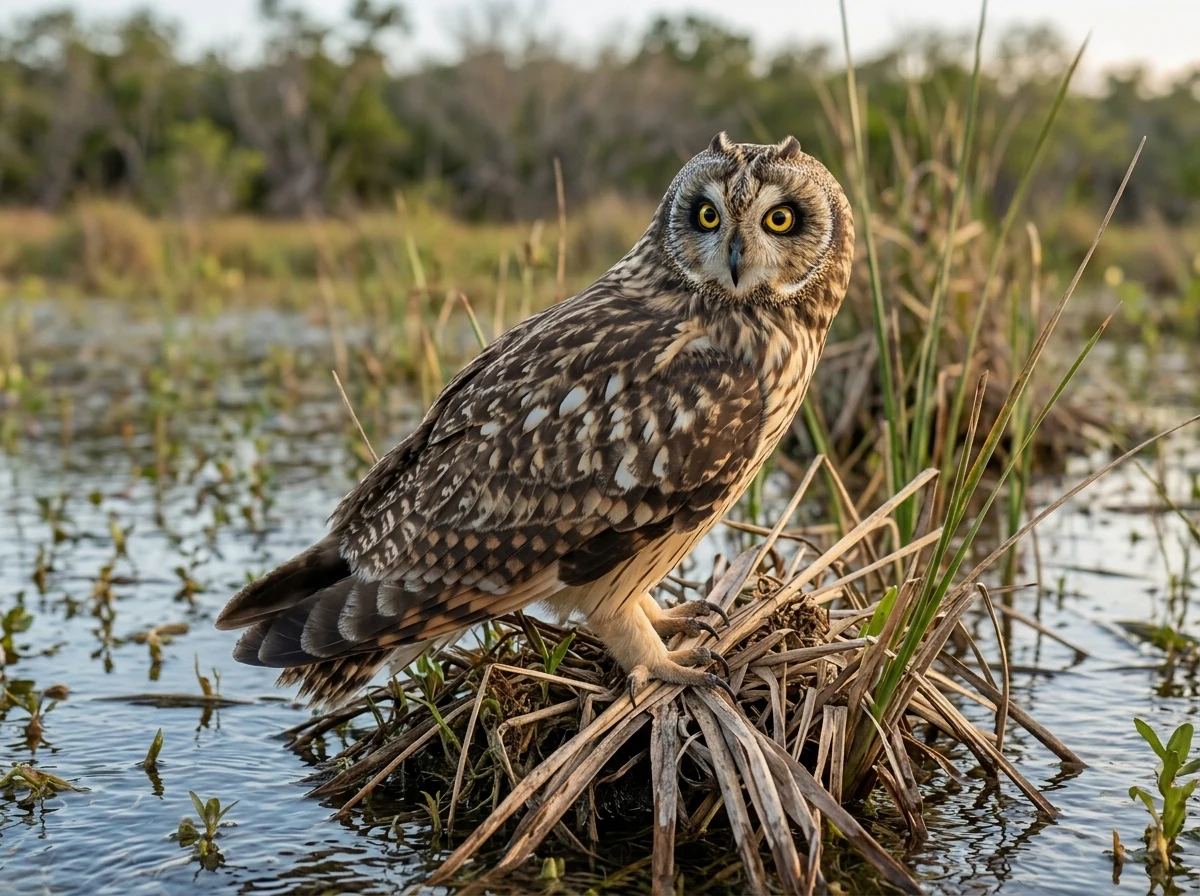
The Short-eared Owl (Asio flammeus) is another large owl, about 41 cm, that gets confused with the Barn Owl because it also hunts over open ground. It shows a buffy look, streaked chest, black around the eyes, a black wrist mark on the wing, and low, loose flight at dawn and dusk. Unlike the Barn Owl, it lacks the white heart-shaped face.
Wetmore recorded the names Múcaro Real, Múcaro de Sabana, Múcaro de Melón, Coruja, and Llorona for it, and by 1912 it was already very scarce. History has a twist: in 1916 the same Wetmore recommended introducing the Barn Owl to control rats in the cane fields, because it did not live on the island then. Decades later the Barn Owl turned up on the island and bred here in 2015.
Linked profiles
Profiles to compare
Open the Barn Owl and Puerto Rican Owl side by side; then review the extinct cave barn owl and the Short-eared Owl.
Sound archive
Hear its voice
Explore real songs and calls. The spectrogram turns each sound into a visual trace of time and frequency.
XC994584Recording 1 of 3call

Play: call by FREDERIC Lionel
Choose another recording
Sound recorded by FREDERIC Lionel · XC994584 · CC BY-NC-SA 4.0. Visualization by Stichting Xeno-canto voor Natuurgeluiden.
Every recording retains the creator, catalogue number, and license published by Xeno-canto. Metadata via GBIF ↗
01
What is the difference between a barn owl and other owls?
Barn owls (family Tytonidae) have heart-shaped faces and no ear tufts; other owls, including the Puerto Rican Owl, belong to the family Strigidae and usually have rounder faces. In Puerto Rico the Barn Owl is large and pale, while the Puerto Rican Owl is small and brown.
02
Is there a Puerto Rican barn owl?
It did. The Puerto Rican Barn Owl (Tyto cavatica) was an endemic species that is now extinct and known only from bones from a cave near Utuado. The barn owl seen on the island today is the American Barn Owl, whose first nest was documented in 2015.
03
Is the owl in my yard a barn owl or a Puerto Rican Owl?
Almost certainly a Puerto Rican Owl. A deep, quavering trill from trees is the Puerto Rican Owl; the Barn Owl screams and hisses and is rare in Puerto Rico. Record the sound and compare it with the profiles to confirm.
04
Is the Barn Owl native to Puerto Rico?
It is native to the Americas, and our catalog classifies it as a natural occurrence, not an introduction. In Puerto Rico there were scattered sightings from 1947 on, and the first nest was confirmed in 2015. At that time the DRNA said scientists were still working out whether it is resident or migratory on the island.
05
Which is bigger, the Barn Owl or the Short-eared Owl?
They are similar in length: the Barn Owl is 33–41 cm and the Short-eared Owl about 41 cm. The face separates them: white and heart-shaped in the Barn Owl, buffy with black around the eyes in the Short-eared Owl.
Keep exploring
Connected routes
Sources and review
The evidence is one link away.
These sources support the editorial scope of this guide. Bird profiles also retain their own taxonomy, occurrence, and conservation references.
Reviewed:
01↗02↗03↗04↗05↗06↗07↗08↗
National Audubon Society
Field guide: American Barn Owl
Heart-shaped face, dark eyes, pale plumage, 13–16 in, screams and hisses, nocturnal hunting over open ground.Birds of the World / Cornell Lab of Ornithology
Puerto Rican Owl (Gymnasio nudipes): introduction
Brown and rufous morphs, round head without ear tufts, 3–5 second deep trill, habitat up to about 900 m, and an April–June breeding season.The Peregrine Fund
Puerto Rican Screech-owl species profile
Size (20–25 cm), weight (103–169 g), pair duets, diet, cavity nests, and egg predation by the Pearly-eyed Thrasher.Departamento de Recursos Naturales y Ambientales
DRNA documents a third owl species in Puerto Rico
August 20, 2015 release on the Barn Owl (Tyto alba) nest found after an injured chick was rescued; names the Puerto Rican Owl and Short-eared Owl.Primera Hora
Barn Owl nest reported in Puerto Rico (news, 2015)
Reports at least six Barn Owl sightings since 1947 and that breeding had not been confirmed before 2015.Alexander Wetmore / Bulletin of the American Museum of Natural History (Internet Archive)
Bird remains from the caves of Porto Rico (1922)
Remains of the extinct Tyto cavatica from Toraño cave near Utuado and Puerto Rican Owl bones from several caves.Alexander Wetmore / U.S. Department of Agriculture (Internet Archive)
Birds of Porto Rico (USDA Bulletin 326, 1916)
Historical description of the Puerto Rican Owl's call, diet, and habits, and local names for the Short-eared Owl in 1911–1912.National Audubon Society
Field guide: Short-eared Owl
16 in, pale buffy look, streaked chest, black around the eyes, black wrist mark, and low flight at dawn and dusk.The atlas continues