 AI
AIIdentification by sound
Birds of the night
In darkness, identification begins with rhythm and direction. Not every night sound is a bird, and not every night bird is an owl.
Reviewed:Describe the sound before naming it.
Write down how many notes make one phrase, how long the pause lasts, whether the sound repeats from a fixed point or moves, and whether it comes from forest, open sky, or wetland. Those observations survive better than “it sounded like an owl.”
Profiles along this route let readers alternate audio and spectrogram for Puerto Rican Owl, Puerto Rican Nightjar, nighthawks, and night-herons. Frogs, insects, dogs, and machinery also occupy the soundscape; leaving an identification open is better than forcing it.
Identification by sound
Organize the listening
2nocturnal endemicsPuerto Rican Owl and Puerto Rican Nightjar.
3settingsForest, open sky, and wetland edge separate candidates.
4minimum notesRhythm, direction, time, and habitat before deciding.
01
Puerto Rican Owl: a forest voice, not a generic hoot
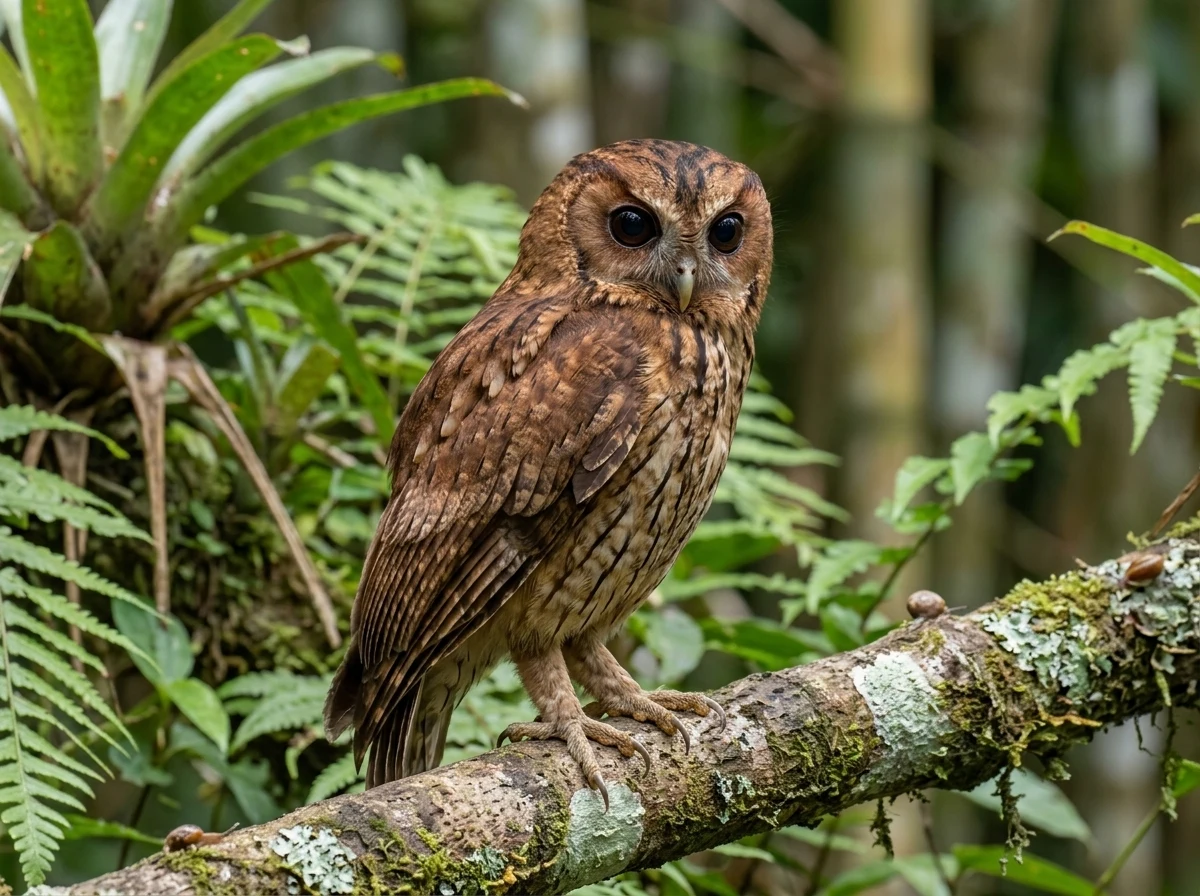
Puerto Rican Owl is an endemic that may vocalize from dense vegetation. Instead of comparing it with a movie owl, hear the number of notes, rhythm, and whether the phrase holds pitch or changes. When visible, the silhouette is compact and large-headed.
It may answer from a point that remains hard to see. Do not enter vegetation or play audio repeatedly to pull it closer. An ambient recording and approximate direction allow comparison without turning observation into pursuit.
02
Puerto Rican Nightjar: leaf-litter camouflage and twilight activity
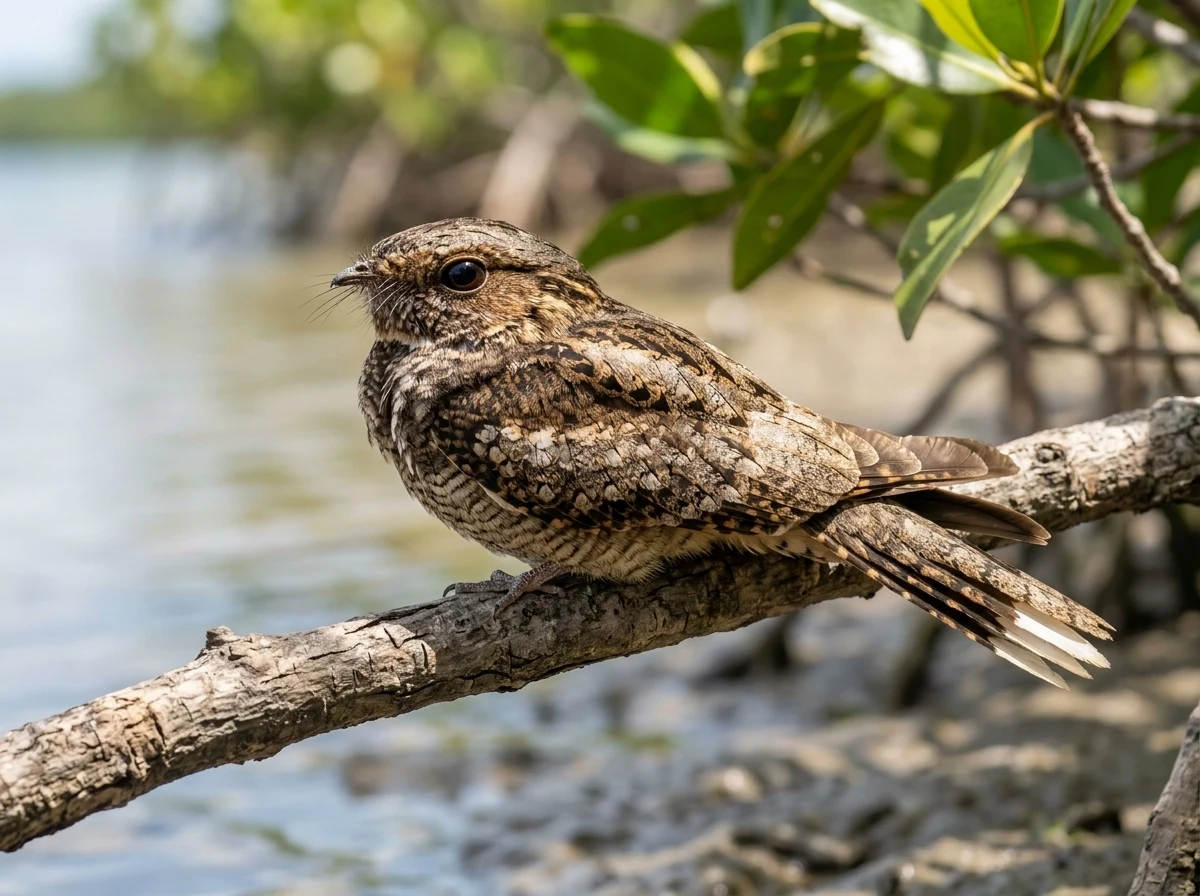
Puerto Rican Nightjar is another endemic, associated mainly with dry forest and vegetation in the south and southwest. Its elongated body, wide mouth, and cryptic plumage belong to nightjars, not owls. Voice is often more accessible evidence than a view.
The Fish and Wildlife Service treats it as a listed conservation species, with historical work including Guánica. Listen from authorized routes, avoid repeatedly spotlighting a bird, and never share the precise location of a nest.
03
Nighthawks: aerial birds over open spaces
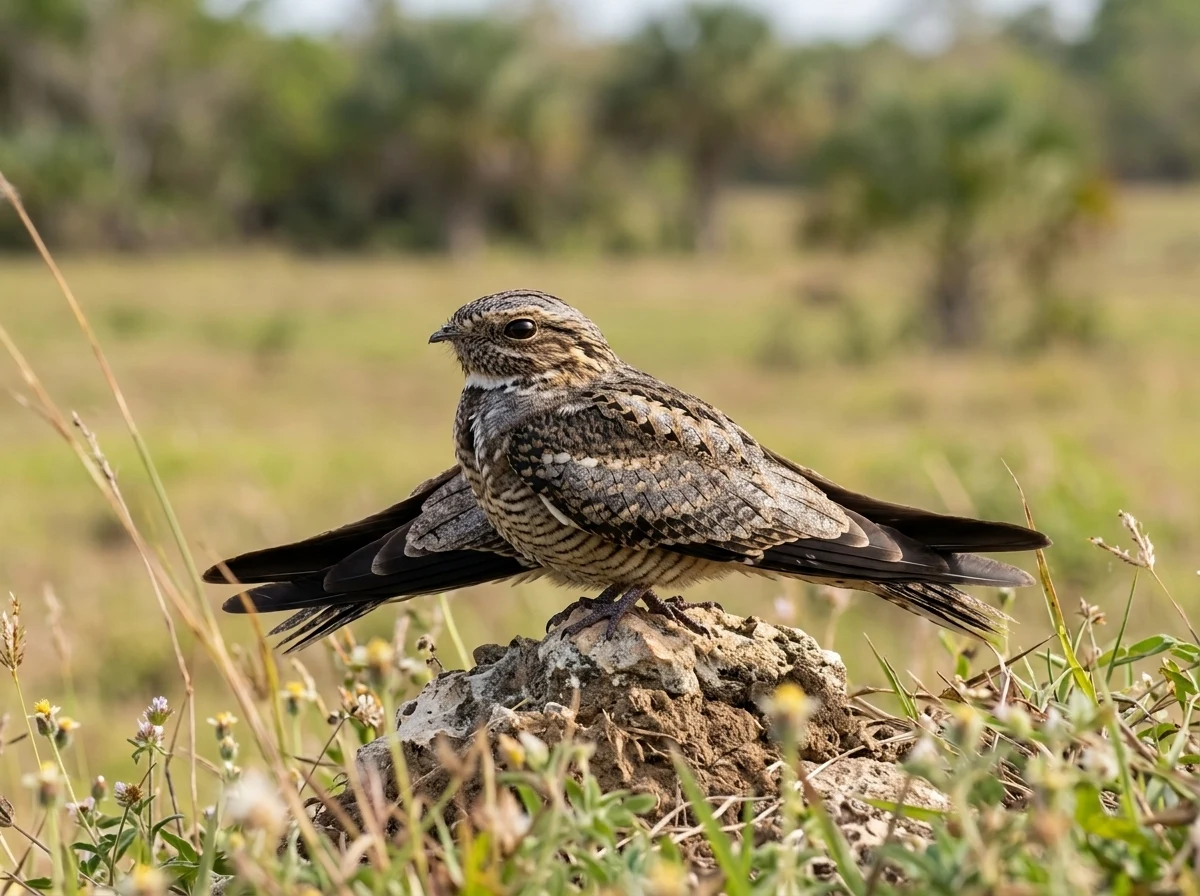
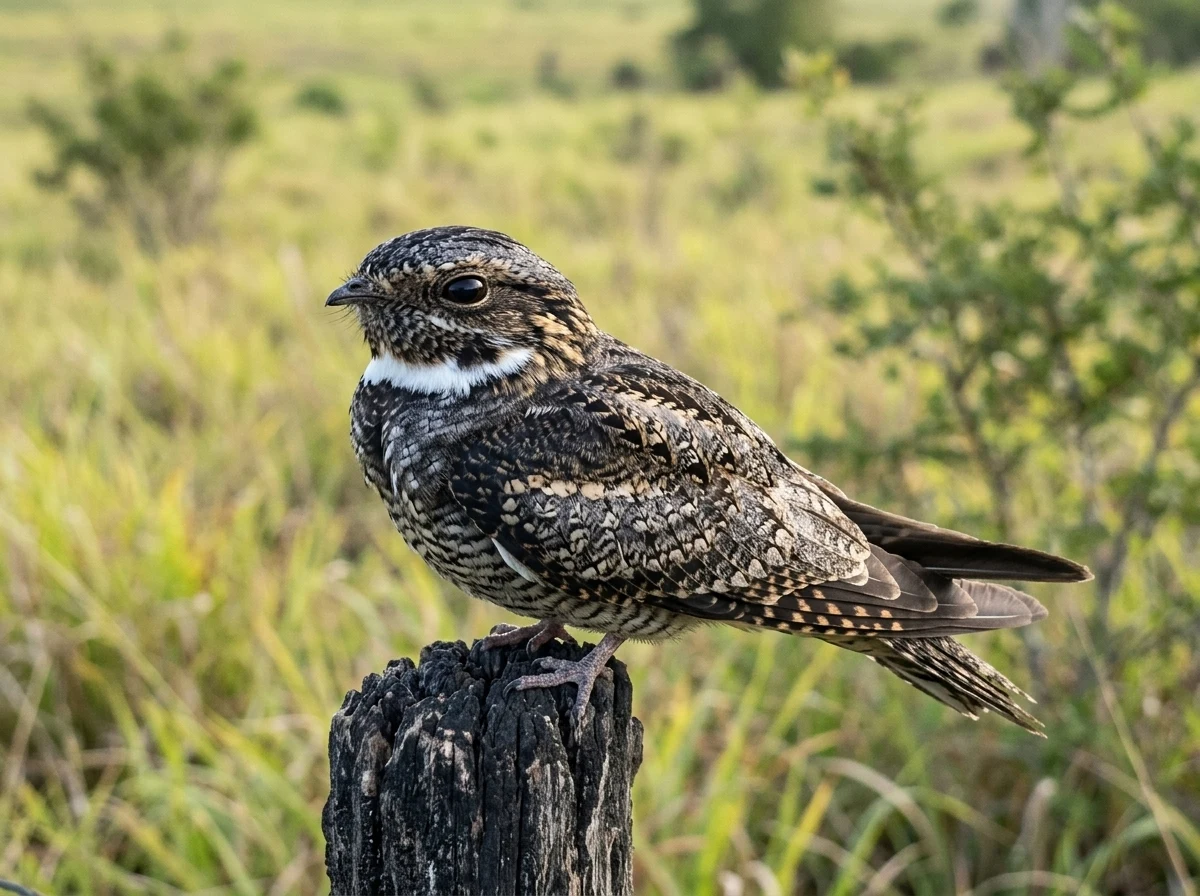
Nighthawks appear in flight above clearings and edges, especially around twilight. Long pointed wings, aerial turns, and calls given while moving separate them from a nightjar perched inside forest. Season helps distinguish resident, breeding, or migratory candidates.
Antillean and Common Nighthawks should not be separated from a distant silhouette alone. Record voice, wing pattern, date, and observation length; an underexposed photograph without scale rarely resolves the species.
04
At wetlands, herons call after dark too
Night-herons and other herons may travel and call after dark. A harsh sound crossing a lagoon has a different context from a phrase repeated inside dry forest. Look for heavy wingbeats, a retracted neck, and flight between roost and feeding area.
Location is a strong clue: coastal wetland or lagoon favors waterbirds; forested slope favors Puerto Rican Owl; southwestern dry forest favors Puerto Rican Nightjar. Sound travels and reflects, however, so confirm with more than one observation.
Linked profiles
Compare the night
Hear several recordings, then return to habitat, date, and behavior before deciding.


Sound archive
Hear its voice
Explore real songs and calls. The spectrogram turns each sound into a visual trace of time and frequency.
XC793992Recording 1 of 3call

Play: call by Barry Edmonston
Choose another recording
Sound recorded by Barry Edmonston · XC793992 · CC BY-NC-SA 4.0. Visualization by Stichting Xeno-canto voor Natuurgeluiden.
Every recording retains the creator, catalogue number, and license published by Xeno-canto. Metadata via GBIF ↗
01
What bird sings at night in Puerto Rico?
Puerto Rican Owl, Nightjar, nighthawks, and night-herons are candidates, but frogs and insects also dominate the soundscape. Rhythm, habitat, direction, and a recording are needed to approach an identification.
02
Is the Puerto Rican Nightjar an owl?
No. It is a nightjar, with cryptic plumage, a wide mouth, and twilight or nocturnal habits.
03
Is nighttime playback a good idea?
Playback can provoke defense or searching and is especially problematic near nests or sensitive species. Prioritize passive listening and follow every site rule.
Keep exploring
Connected routes
Sources and review
The evidence is one link away.
These sources support the editorial scope of this guide. Bird profiles also retain their own taxonomy, occurrence, and conservation references.
Reviewed:
01↗02↗03↗04↗05↗06↗07↗08↗
U.S. Fish and Wildlife Service
Puerto Rican Nightjar
Federal identity and status reference for the endemic nightjar.Xeno-canto Foundation / GBIF
Xeno-canto recordings published through GBIF
Metadata, authorship, licenses, and catalogue records for field recordings used by the atlas.Macaulay Library / Cornell Lab of Ornithology
Puerto Rico sound archive
Complementary audio collection for comparing songs, calls, locations, and dates.Sociedad Ornitológica Puertorriqueña
Official bird list
Local names, occurrence categories, and the public summary of 17 endemics.Discover Puerto Rico
Visit Guánica Dry Forest
Visitor orientation, trail network, and dry-forest birding overview.U.S. Forest Service Research and Development
Checklist of birds of Guánica Forest
Scientific reference checklist for the dry-forest bird community.Departamento de Recursos Naturales y Ambientales
Humacao reserve designation document
Historical bird inventory and ecological description of lagoons, channels, and Pterocarpus forest.U.S. Fish and Wildlife Service
Laguna Cartagena National Wildlife Refuge
Importance of the freshwater wetland for resident and migratory waterbirds.The atlas continues