 AI
AINight sounds
The Puerto Rican Owl's call: how to recognize its sound
It does not sound like the movie owl's “hoo-hoo.” The Puerto Rican Owl trills low, sometimes in duet, and changes its voice when alarmed. Here is what we know about its sound.
Reviewed:What does the Puerto Rican Owl sound like?
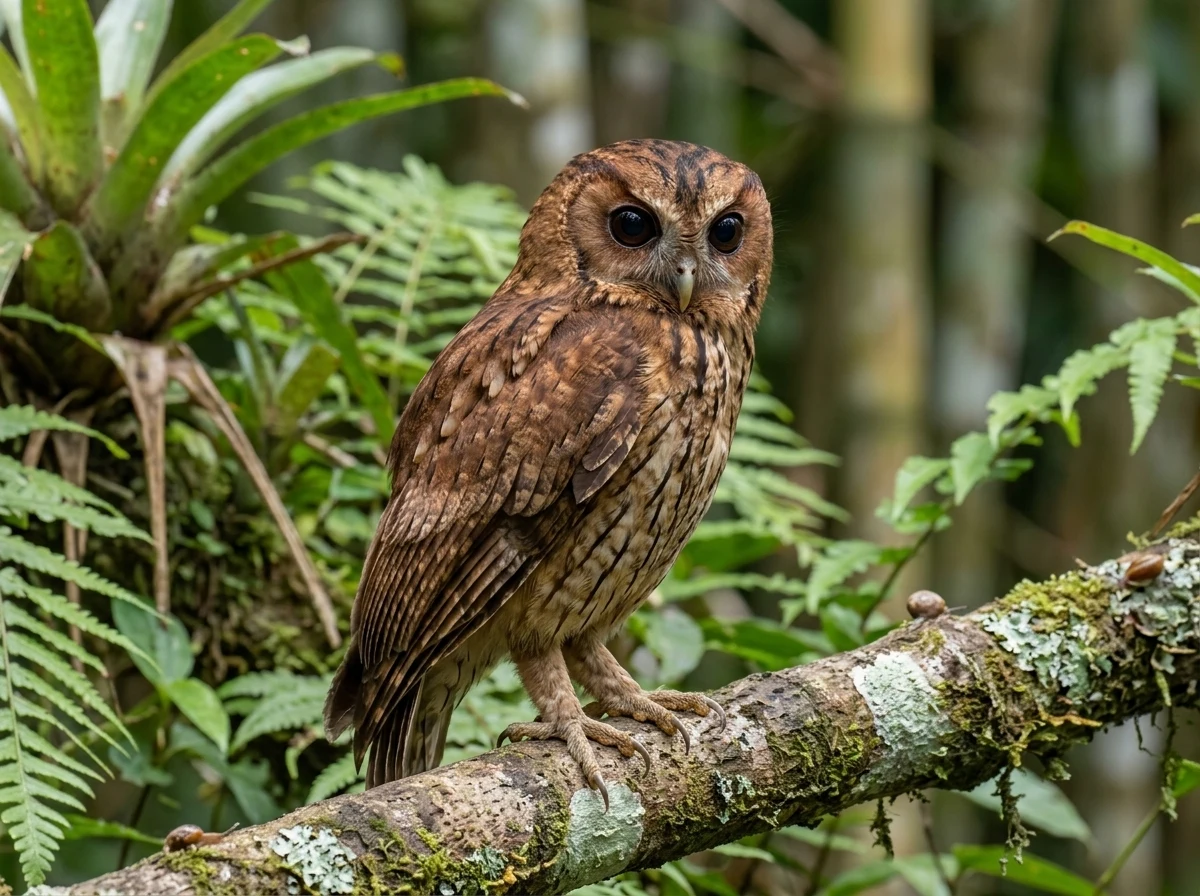
The Puerto Rican Owl's song is a short, deep, quavering trill that lasts three to five seconds; the female's is higher pitched than the male's. You hear it mostly after dusk and in the early morning, from trees in forests, coffee farms, yards, and neighborhoods across the island.
It is the most common owl sound in Puerto Rico, yet many people miss it because they expect a hoot. This guide describes the territorial song, pair duets, alarm notes, and how to separate it from the Barn Owl, nightjars, and coquí frogs. At the end you will find the three Xeno-canto recordings we use on the owl's profile, with place, date, and call type.
Night sounds
The Puerto Rican Owl's song, measured
3–5 strill lengthShort, deep song; higher pitched in the female.
Nov–maypeak calling monthsWetmore's historical observation from 1911–1912.
3recordings on the profileMaricao (2023), Guánica (2016), and Arecibo Observatory (2012).
01
The territorial song: a deep trill, not a hoot
Birds of the World describes the song as a short, deep trill lasting three to five seconds, higher pitched in the female. The Peregrine Fund calls it a low-pitched trill. In his 1916 report, based on 1911–1912 fieldwork, Alexander Wetmore described it as “low and tremulous like that of a screech owl” and noted it was heard early in the evening. In plain terms, it is a rapid run of notes that sounds like one continuous tremble, not separate syllables.
To recognize it, check three things: the sound is low, it trembles instead of singing distinct notes, and it lasts only a few seconds before a pause. If you hear two trills at different pitches answering each other, it is probably a pair.
02
Duets, alarms, and the owl's other voices
According to The Peregrine Fund, males and females often sing in duet, especially in the evening and early morning. Because the female's voice is higher, a duet sounds like two trills at different pitches alternating or overlapping. Hearing that contrast is a good sign of a territorial pair in the area.
The owl has other voices too. Wetmore wrote that when frightened or excited it gives a loud “boo boo,” and that a captive bird answered an intruder with sharp, barking notes. These calls are less familiar than the trill and heard less often, but they explain why the same bird can sound quite different from one night to the next.
03
When and where to hear it
The Puerto Rican Owl lives in forests and woodlands of all types, including urban ones, from the coast to about 900 meters, so it may call in El Yunque, a coffee farm in Lares, or a yard with big trees. Wetmore found the call was heard most from November to May; the breeding season, according to Birds of the World, appears to be April to June. To hear it, go out after dusk on a calm night without heavy rain or wind.
Places with old trees and cavities, a developed understory, and dense vegetation for roosting are the most promising. The recordings on our profile come from Maricao, Guánica State Forest, and the Arecibo Observatory, which shows the range of habitats: montane forest, dry forest, and karst forest.
04
What it gets confused with: Barn Owl, nightjar, and coquí
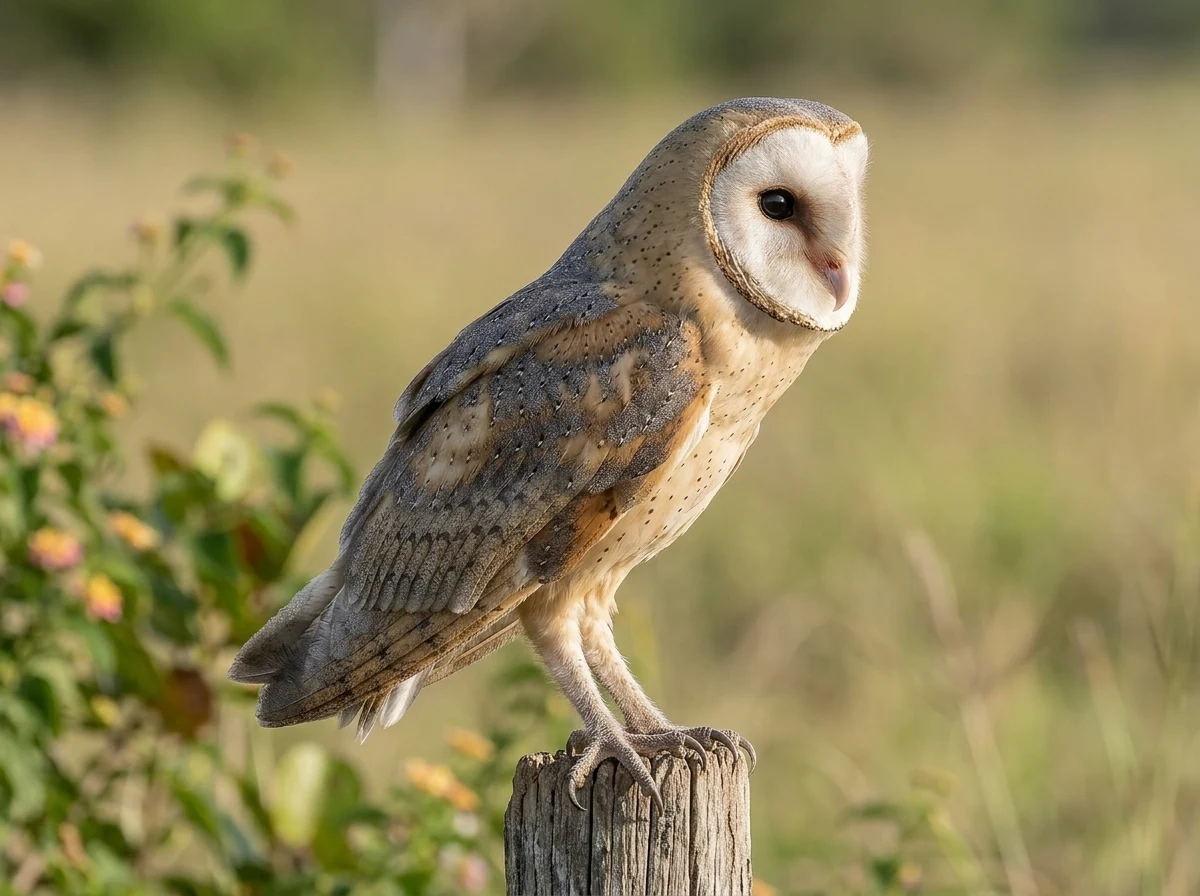
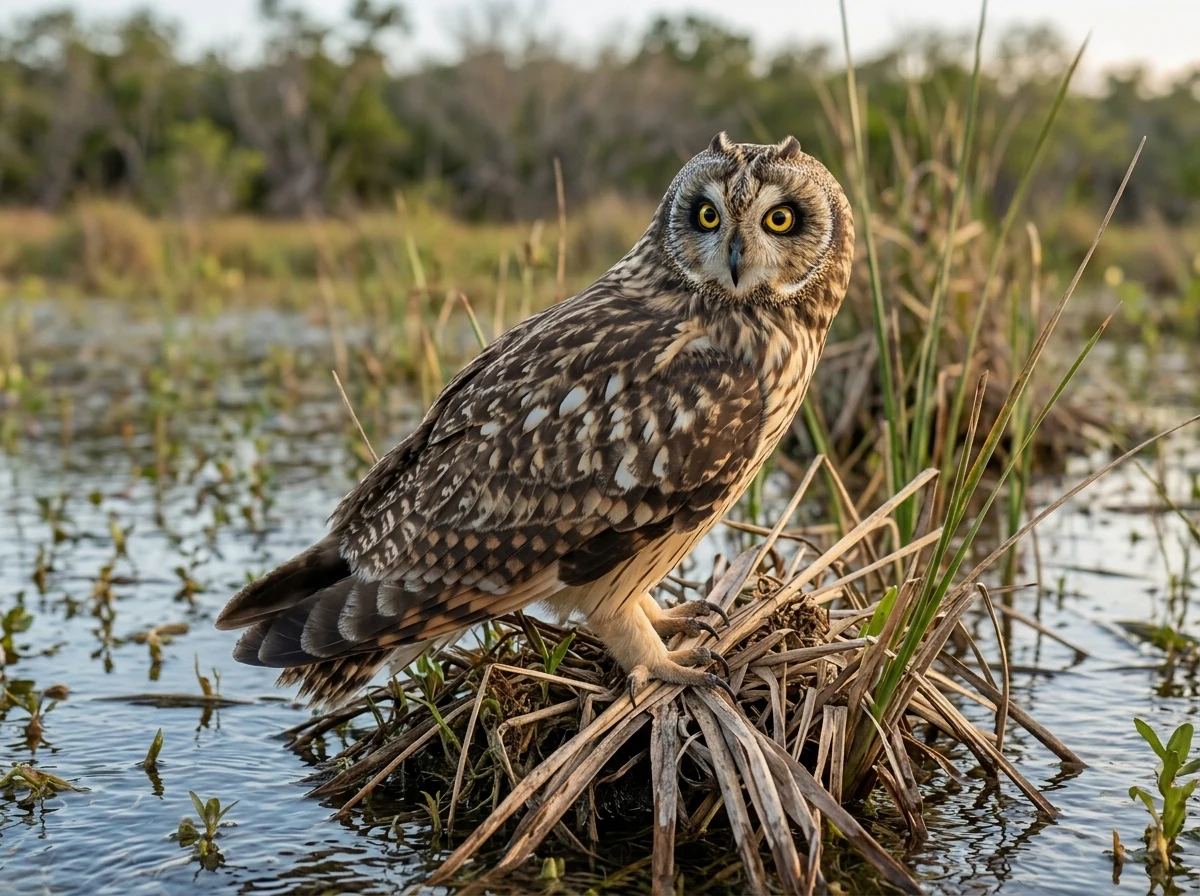
The Barn Owl does not trill: its sounds are screams, hisses, grunts, and bill snaps, and it is much rarer on the island. The Short-eared Owl is usually silent; on its nesting grounds it gives barks, hisses, and squeals. If you hear a harsh, raspy scream over open ground, think Barn Owl; if you hear a low trill from trees, think Puerto Rican Owl.
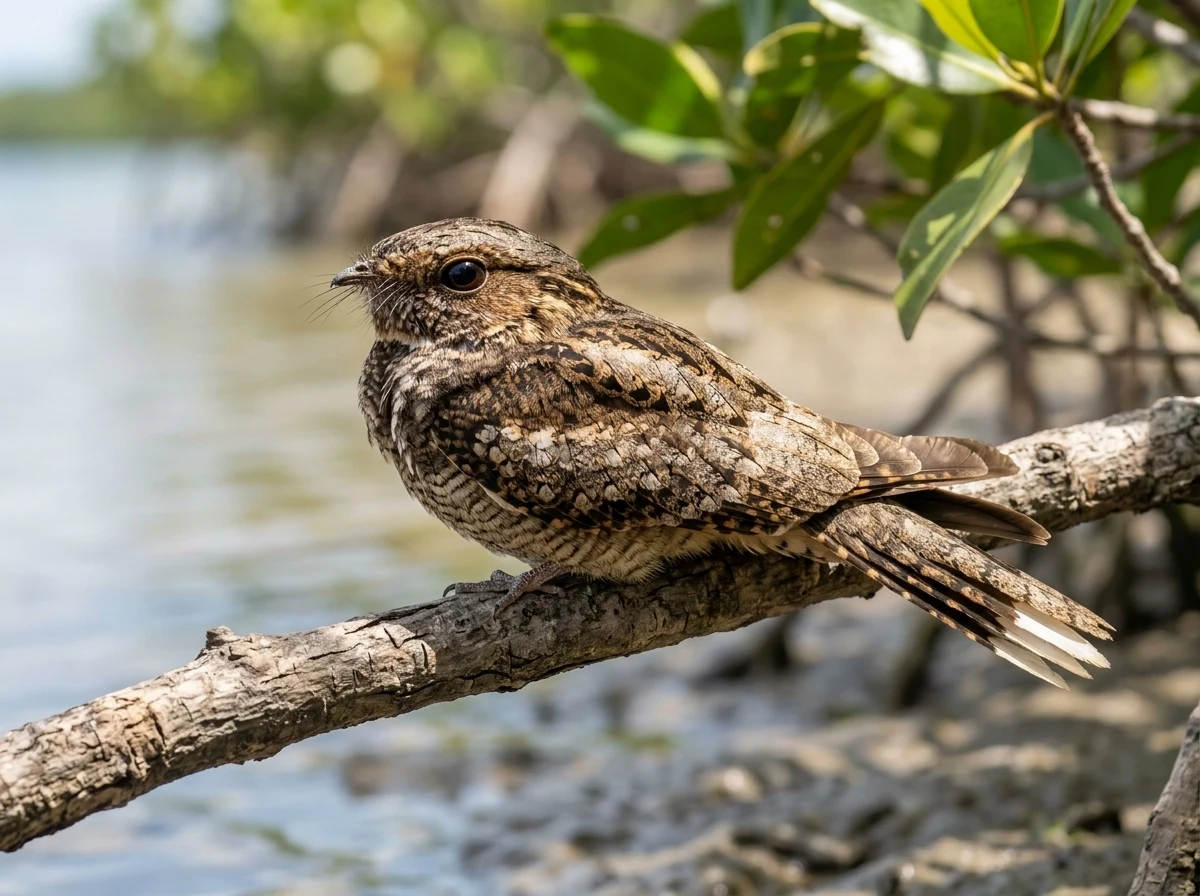
The Puerto Rican Nightjar and the nighthawks are nightjars, not owls, and their songs have different rhythms; compare them on their profiles. The coquí gives a two-note “co-kee” repeated endlessly, and insects make continuous buzzes. The owl's trill, by contrast, is a short, quavering phrase with pauses. When in doubt, record it and compare with the spectrogram on the profile.
05
The recordings on this site
The Puerto Rican Owl profile brings together three Xeno-canto recordings published through GBIF: a 39-second song recorded by Ross Gallardy in Guánica State Forest on March 13, 2016; a 20-second call recorded by Barry Edmonston in Maricao on February 20, 2023; and a 53-second call recorded by Lance A. M. Benner at the Arecibo Observatory on March 9, 2012.
Listen with headphones and watch the spectrogram: the trill appears as a band of tightly packed pulses at low frequencies. Compare the “song” recording with the “call” recordings to hear the variation. Each recording keeps its Creative Commons license and its recordist's credit.
06
How to record an owl without disturbing it
A phone is enough for a useful recording. Point the microphone toward the sound, stay still, don't talk, and record at least 30 seconds, including a few seconds of silence before and after. Note date, time, place, weather, and whether you heard one bird or two. That information is worth as much as the audio.
Avoid shining a flashlight straight at the bird or playing recordings over and over to lure it, especially from April to June when it is nesting. If a Barn Owl or Short-eared Owl turns up, your recording could be a valuable record: save it and share it with eBird or the Sociedad Ornitológica Puertorriqueña.
Linked profiles
Voices to compare with the Puerto Rican Owl
Start with the Puerto Rican Owl, then listen to the Barn Owl, Short-eared Owl, and the nocturnal nightjars to train your ear.
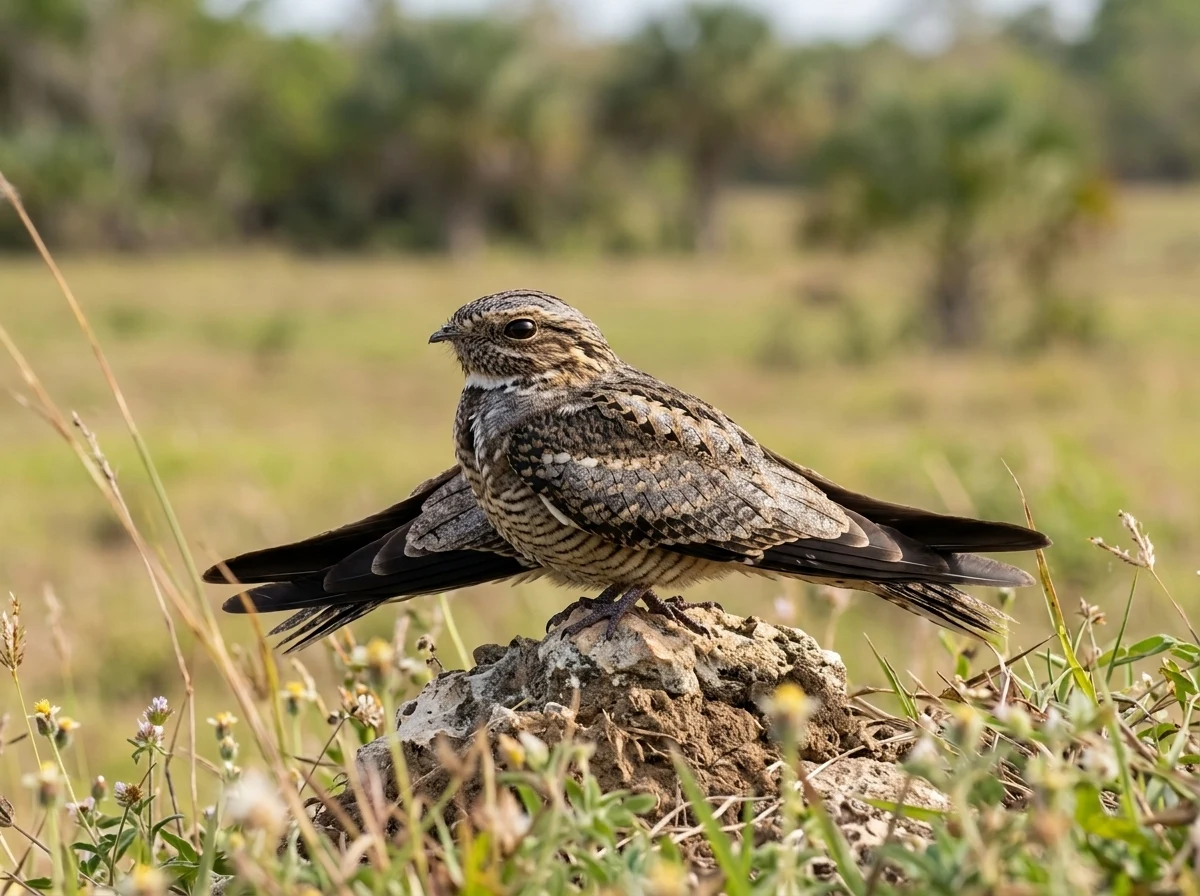
Sound archive
Hear its voice
Explore real songs and calls. The spectrogram turns each sound into a visual trace of time and frequency.
XC793992Recording 1 of 3call

Play: call by Barry Edmonston
Choose another recording
Sound recorded by Barry Edmonston · XC793992 · CC BY-NC-SA 4.0. Visualization by Stichting Xeno-canto voor Natuurgeluiden.
Every recording retains the creator, catalogue number, and license published by Xeno-canto. Metadata via GBIF ↗
01
What does the Puerto Rican Owl sound like?
Its song is a short, deep, quavering trill of three to five seconds, higher pitched in the female. It is not a hoot like movie owls. When alarmed it may give a loud “boo boo.”
02
What time does the Puerto Rican Owl call?
Mostly after dusk and in the early morning, when pairs often duet. Historically it has been heard most from November to May, before and during the April–June breeding season.
03
What bird trills at night in Puerto Rico?
A deep, quavering trill from trees is almost always the Puerto Rican Owl. Rule out coquí frogs and insects, which repeat sounds without pauses, and compare with nightjars such as the Puerto Rican Nightjar, which have different rhythms.
04
What does a Barn Owl sound like in Puerto Rico?
The Barn Owl (Tyto) neither trills nor hoots: it gives harsh screams, hisses, grunts, and bill snaps. It is rare in Puerto Rico, so a recording of its scream is a valuable record for eBird or SOPI.
05
Do male and female Puerto Rican Owls sound the same?
No. The female's trill is higher pitched. When a pair duets you hear two trills at different pitches alternating or overlapping.
Keep exploring
Connected routes
Sources and review
The evidence is one link away.
These sources support the editorial scope of this guide. Bird profiles also retain their own taxonomy, occurrence, and conservation references.
Reviewed:
01↗02↗03↗04↗05↗06↗07↗
Birds of the World / Cornell Lab of Ornithology
Puerto Rican Owl (Gymnasio nudipes): introduction
Brown and rufous morphs, round head without ear tufts, 3–5 second deep trill, habitat up to about 900 m, and an April–June breeding season.The Peregrine Fund
Puerto Rican Screech-owl species profile
Size (20–25 cm), weight (103–169 g), pair duets, diet, cavity nests, and egg predation by the Pearly-eyed Thrasher.Alexander Wetmore / U.S. Department of Agriculture (Internet Archive)
Birds of Porto Rico (USDA Bulletin 326, 1916)
Historical description of the Puerto Rican Owl's call, diet, and habits, and local names for the Short-eared Owl in 1911–1912.Xeno-canto Foundation / GBIF
Xeno-canto recordings published through GBIF
Metadata, authorship, licenses, and catalogue records for field recordings used by the atlas.National Audubon Society
Field guide: American Barn Owl
Heart-shaped face, dark eyes, pale plumage, 13–16 in, screams and hisses, nocturnal hunting over open ground.National Audubon Society
Field guide: Short-eared Owl
16 in, pale buffy look, streaked chest, black around the eyes, black wrist mark, and low flight at dawn and dusk.Sociedad Ornitológica Puertorriqueña
Official bird list
Local names, occurrence categories, and the public summary of 17 endemics.The atlas continues