 AI
AIIdentification
Greater Antillean Grackle vs Shiny Cowbird
Two black birds often confused at a distance. Here are the bill, tail, size, and behavior differences you can actually see in the field.
Reviewed: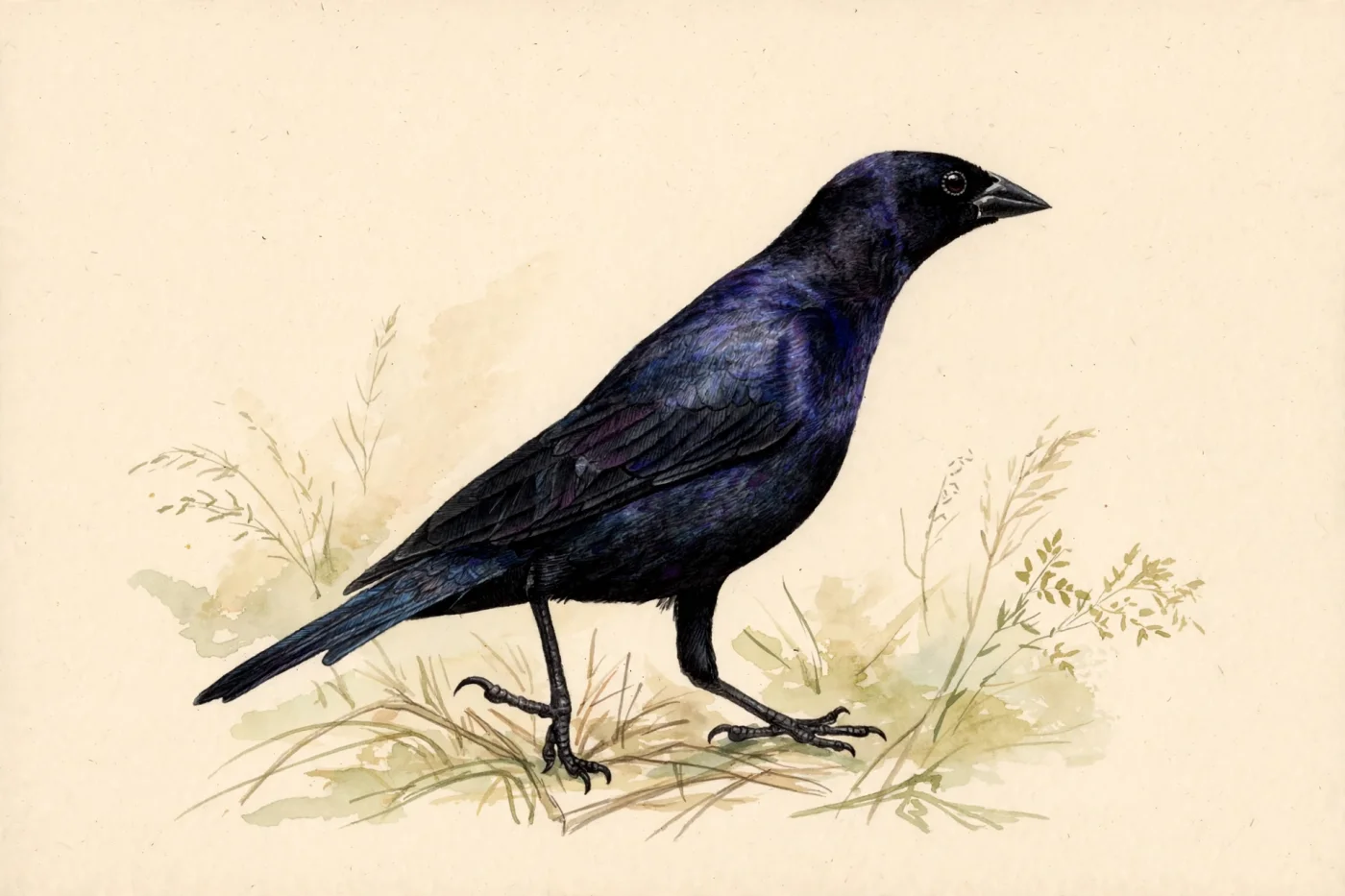
Prepared with AI assistance and linked sources. Illustrations are not field photographs.
Why they get confused
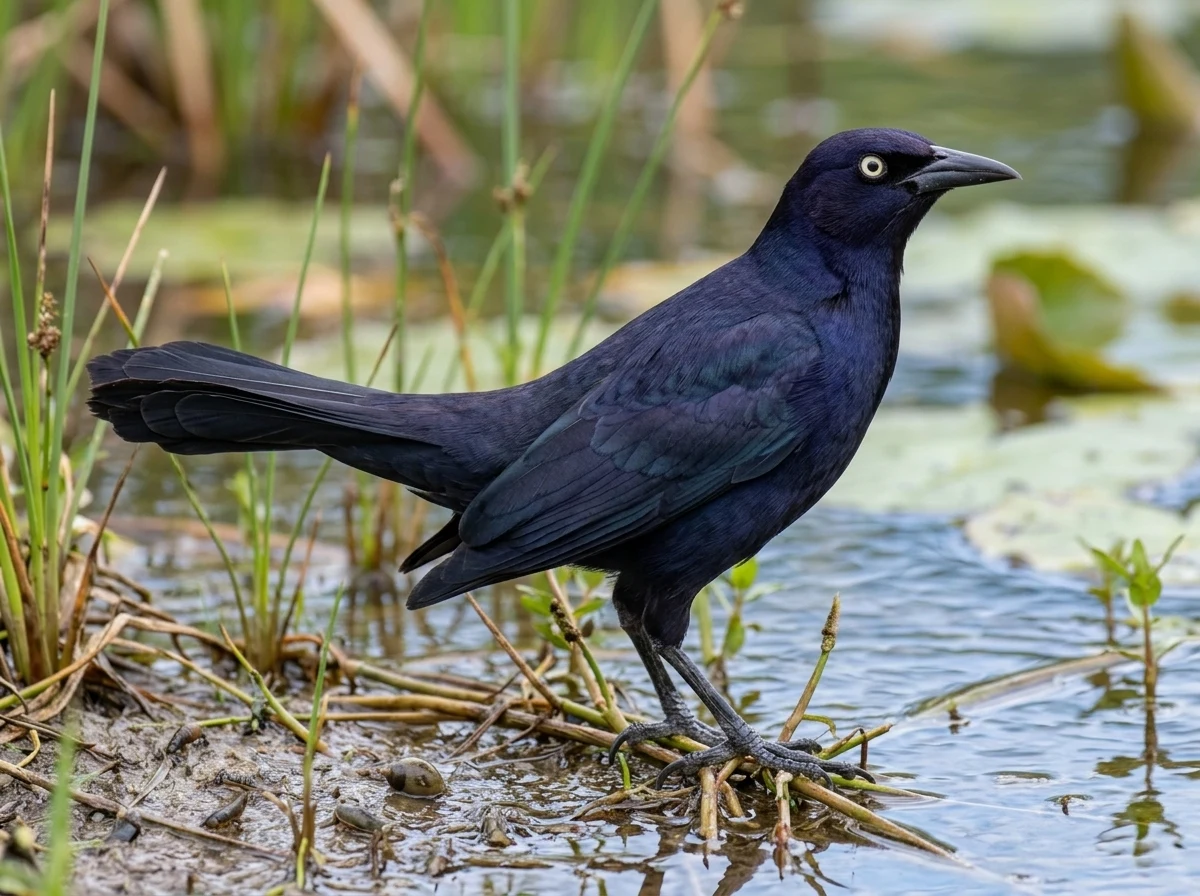
The Greater Antillean Grackle (Quiscalus niger) and the Shiny Cowbird (Molothrus bonariensis) are two icterids that overlap in gardens, farms, and open areas of Puerto Rico. At first glance both look black, but their proportions and behavior differ. The grackle is a large, gregarious, noisy bird with a keel-shaped tail and yellow eyes; the cowbird is smaller, with a fine bill and short tail, and the male shows a purple-blue iridescence.
This guide answers the specific question of how to tell them apart using visible characters: bill, tail, size, eyes, and movement. It does not rely on abundance or unverified local observations. Puerto Rico occurrence references come from the bird catalog and reference sources about the species.
Identification
Three quick keys
Cola en quillaGrackleLong, keel-shaped tail, more developed in the male.
Pico finoShiny CowbirdFiner bill and flatter head than the grackle.
Ojos amarillosGrackleStriking yellow eyes; juveniles have brown eyes.
01
Size and proportions
The Greater Antillean Grackle is a relatively large, robust bird. References describe it as a sizable grackle. The catalog lists a mass of 79.7 grams for this species. Its body is elongated and its tail long, giving it an unmistakable silhouette when walking on lawns or perched on wires.
The Shiny Cowbird is clearly smaller. The catalog lists a mass of 43.5 grams, nearly half that of the grackle. This size difference is the first clue when both species are together in the same yard or open field. At a distance, the Shiny Cowbird looks more compact and shorter-tailed.
02
Bill and head
The Greater Antillean Grackle has a straight, pointed bill. Its head is proportional to its large body. Yellow eyes are a diagnostic character in adults, although juveniles have brown eyes and shorter tails.
The Shiny Cowbird has a finer bill and a flatter head. The female Shiny Cowbird is distinguished from the female Brown-headed Cowbird by its longer, finer bill and flatter head. The female Shiny Cowbird is smaller and dull brown, sometimes paler on the underparts.
03
Tail and flight
The grackle's tail is long and keel-shaped, a trait references describe as unusual and slightly less developed in the female. In flight, that tail acts almost like a rudder. When the bird walks, the tail is often held raised or at an angle, reinforcing the elongated silhouette.
The Shiny Cowbird has a shorter tail than the grackle. In flight, its silhouette is more compact and its wingbeats appear faster and more direct. Males show a purple-blue iridescence over black, while females are brown and lack that sheen. This sexual color difference is key to avoiding confusion between a female Shiny Cowbird and a juvenile grackle.
04
Behavior and habitat
The grackle is noisy, bold, and confident around people. References describe it as very much at home in heavily disturbed habitats, where it forms flocks and sometimes large roosts. It forages mainly on the ground, seeking seeds and insects, and also takes small lizards and human scraps. It nests colonially in trees and frequently in electrical substations.
The Shiny Cowbird is also gregarious, but its feeding behavior is more opportunistic and often associated with open, disturbed areas such as agricultural regions. References indicate it often rides on the backs of cattle, horses, and sheep while feeding, and appears to differ from the Brown-headed Cowbird in being more insectivorous and in feeding higher off the ground. It is an obligate brood parasite, meaning it lays its eggs in the nests of other birds.
05
Field exercise: the three-question rule
When you see a black bird and hesitate, ask yourself three questions in order. First: how big is it compared to a thrush or a pigeon? If it is large and robust, think grackle; if it is small and compact, think Shiny Cowbird. Second: what is the tail like? Long and keel-shaped suggests grackle; shorter suggests Shiny Cowbird. Third: what color are the eyes? Yellow in adult grackles; the Shiny Cowbird lacks striking yellow eyes.
You can practice in an urban park or your yard. Observe the overall silhouette first, then the tail, and finally the bill. Note the time, habitat, and behavior. If the bird walks on the ground between grass and forages, it is more likely a grackle. If it perches on a wire or on an animal's back, consider Shiny Cowbird. Remember that female Shiny Cowbirds are brown and can be confused with other species; in that case, the fine bill and flat head are your best allies.
Linked profiles
The two species
See the full profiles for habitat, diet, and occurrence in Puerto Rico.
AI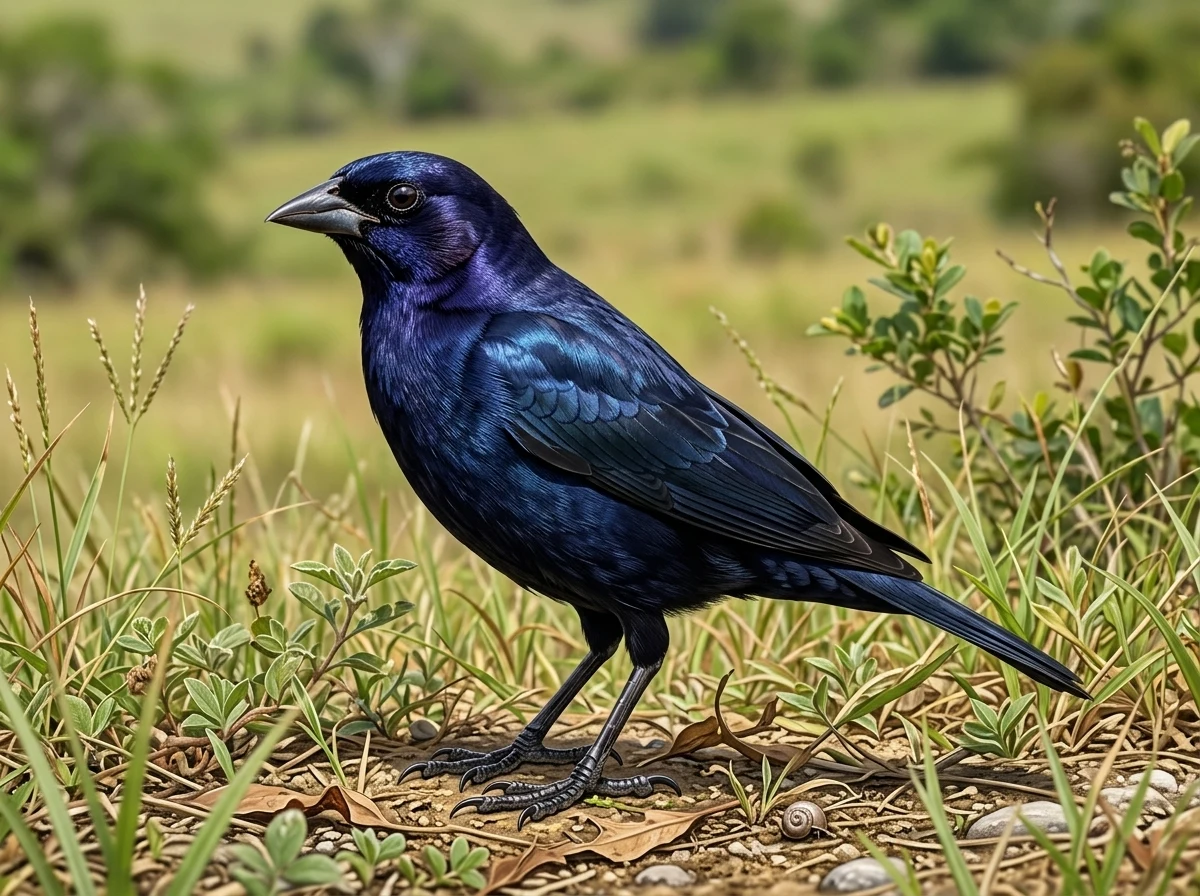 AI
AI01
Are the Greater Antillean Grackle and Shiny Cowbird the same species?
No. They belong to different genera within the family Icteridae. The grackle is Quiscalus niger and the Shiny Cowbird is Molothrus bonariensis. Their sizes, bills, and tails differ.
02
How do I tell a female Shiny Cowbird from a juvenile grackle?
The female Shiny Cowbird is brown, smaller, with a fine bill and flat head. The juvenile grackle is larger, with a shorter tail and brown eyes, but keeps robust proportions and a thicker bill.
03
Is the Shiny Cowbird a resident in Puerto Rico?
The catalog records it as a native occurrence in Puerto Rico, but does not mark it as resident or breeder on the island. Its presence is documented as part of its expansion through the Caribbean. Check the species profile for current status.
04
What does each one eat?
The grackle is omnivorous: insects, seeds, small lizards, and human scraps. The Shiny Cowbird feeds mainly on insects, other arthropods, and seeds, and has been recorded foraging for grains in cattle troughs.
05
Where is it easiest to see them together?
In open, disturbed areas such as gardens, farms, and urban lawns. The grackle is bolder and noisier; the Shiny Cowbird is gregarious and often appears near cattle. No specific locations are given because local observations have not been verified in the sources.
Keep exploring
Connected routes
Sources and review
The evidence is one link away.
These sources support the editorial scope of this guide. Bird profiles also retain their own taxonomy, occurrence, and conservation references.
Reviewed:
The atlas continues