 AI
AIGround-walking migrants
What bird is a pizpita?
They look like small thrushes, walk like shorebirds, and bob constantly. They are warblers that come south to spend the winter.
Reviewed:Pizpita is not one bird but three.
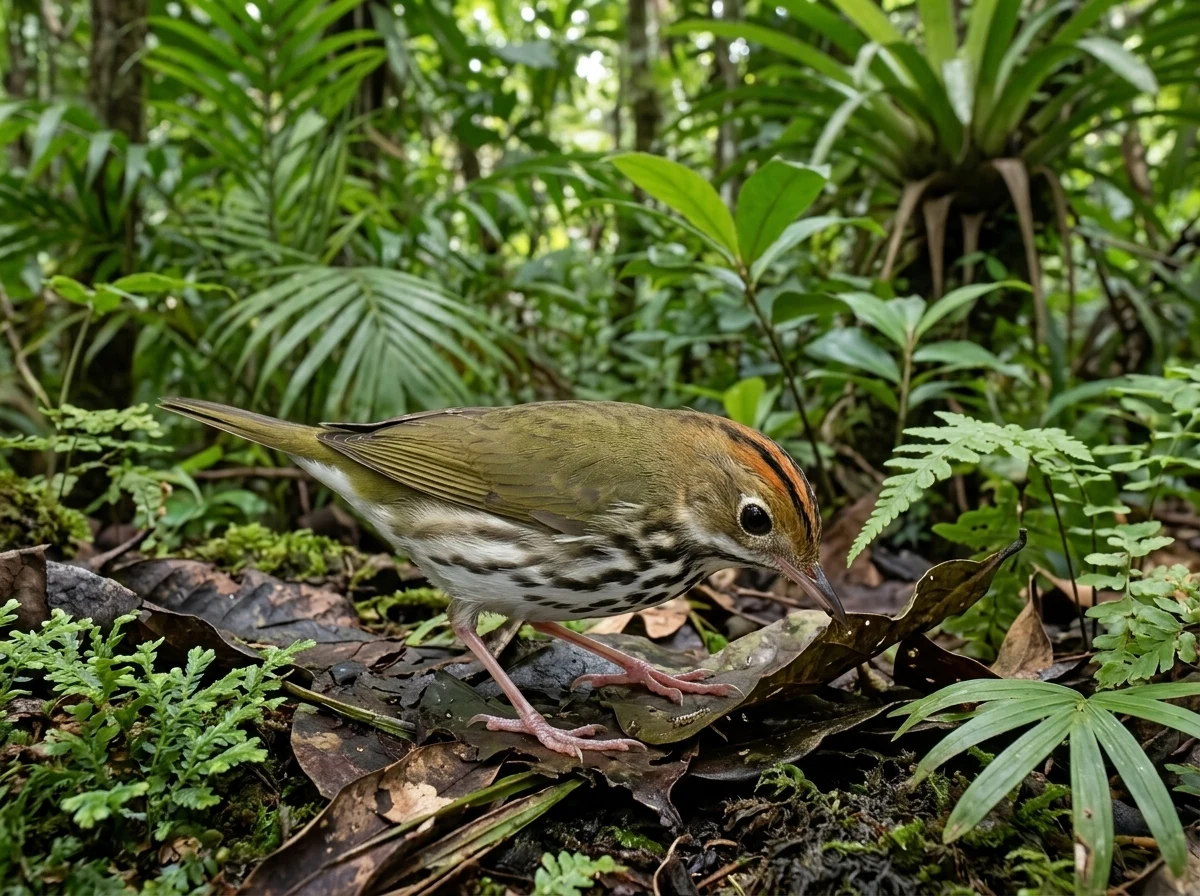
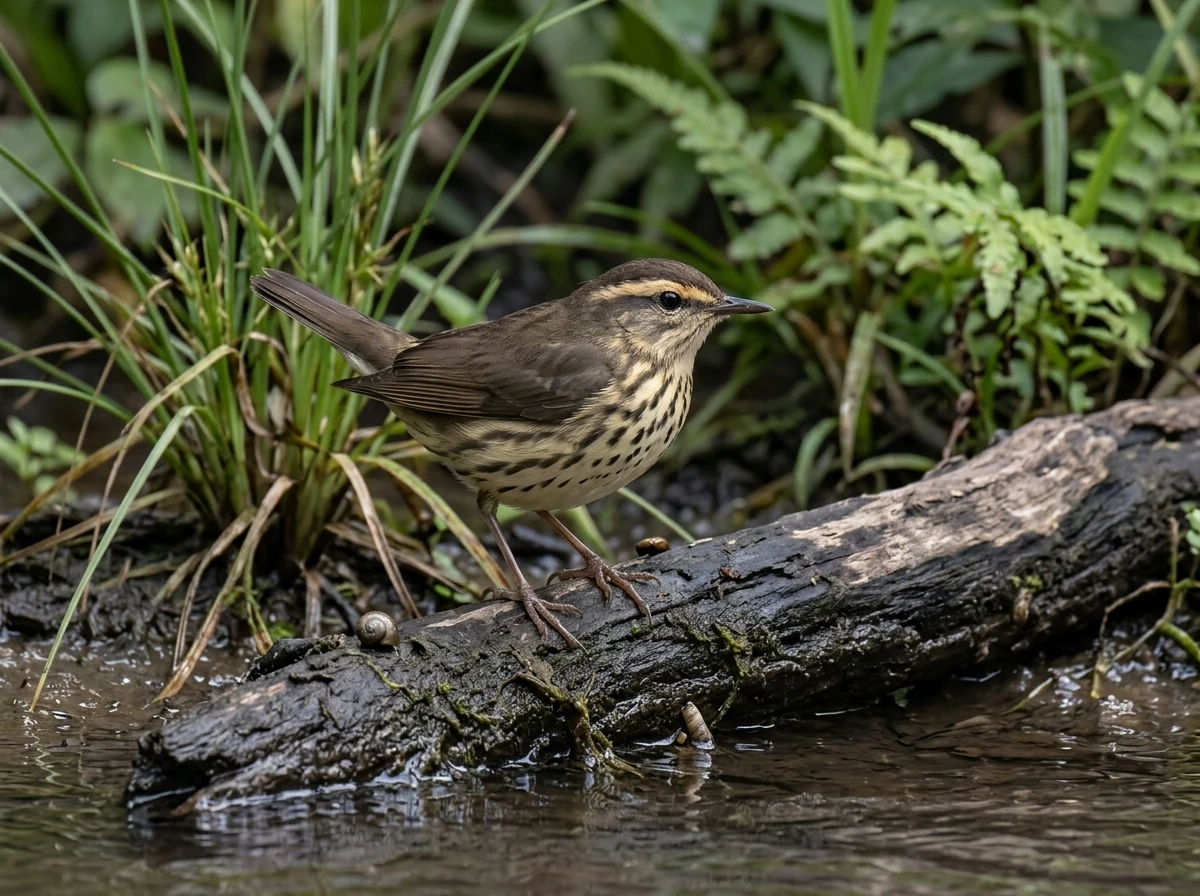
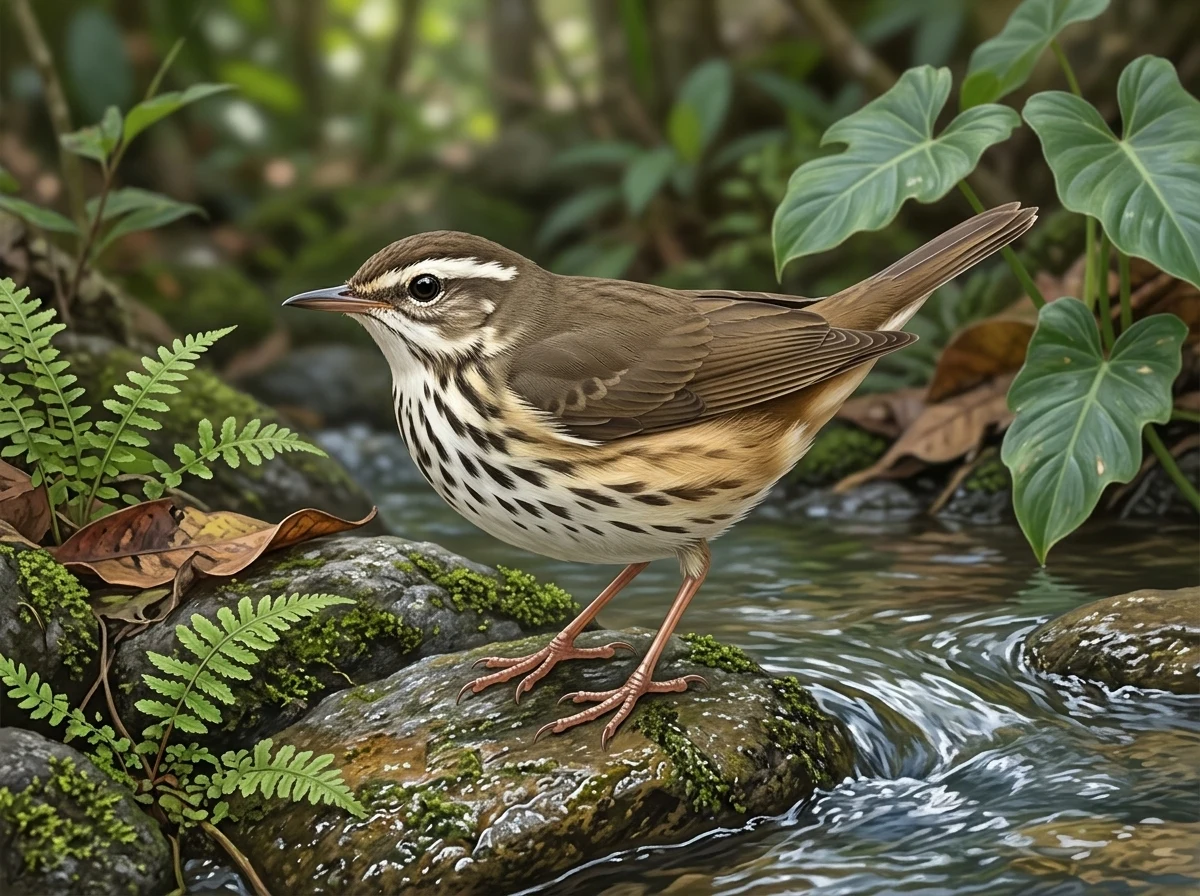
In Puerto Rico, “pizpita” is the name for three migratory warblers that walk on the ground: the Pizpita Dorada (Ovenbird, Seiurus aurocapilla), the Pizpita de Mangle (Northern Waterthrush, Parkesia noveboracensis), and the Pizpita de Río (Louisiana Waterthrush, Parkesia motacilla). All three are brown above, streaked below, and spend the non-breeding season here.
All three names come from SOPI's Catalog of the Birds of Puerto Rico. Despite looking like thrushes, they belong to the wood-warbler family (Parulidae). This guide explains how to tell them apart, which habitats to search, when they are on the island, and why you will rarely hear them sing here.
Ground-walking migrants
The pizpitas at a glance
3species called pizpitaDorada, de Mangle, and de Río, per the SOPI catalog.
2 kmflight to the roostDistance Northern Waterthrushes fly to winter roosts in Puerto Rico.
14–17 cmLouisiana WaterthrushThe largest wood-warbler species.
01
Three pizpitas, three official names
The SOPI catalog assigns Pizpita Dorada to Seiurus aurocapilla, Pizpita de Mangle to Parkesia noveboracensis, and Pizpita de Río to Parkesia motacilla. The Spanish Ornithological Society calls them Reinita Hornera, Reinita Charquera, and Reinita Arroyera. Elsewhere they go by names such as señorita de río, cigüita de agua, or chipe arroyero.
Each local surname is already a habitat clue: dorada (golden) for the orange crown stripe, de mangle for its favorite winter habitat, and de río for the streams where it feeds. If someone just says “pizpita,” ask where they saw it before assuming a species.
02
Ovenbird: white eye-ring and orange crown
The Ovenbird measures 14–16 cm (5.5–6.3 in). It has an olive-brown back, a streaked chest, a bold white eye-ring, and a dull orange crown stripe bordered in black. It walks deliberately over leaf litter with its tail raised, sometimes tilting the tail and bobbing its head as it goes.
Its English name comes from the domed, oven-shaped nest the female builds on the forest floor in its North American breeding range. Its song, a “teacher, teacher” that grows louder, is famous there. In winter it favors woodland with undergrowth, eating arthropods, snails, and some fruit.
03
Northern or Louisiana Waterthrush
The two waterthrushes look very alike, and both walk while bobbing the rear of the body. The Northern Waterthrush is 12–15 cm with a finely streaked throat. The Louisiana Waterthrush is larger, 14–17 cm, with a bright white eyebrow, a whiter, cleaner throat, buff flanks and undertail, bright pink legs, and a bigger bill.
Voice helps too: the Louisiana gives a hard “chink.” Habitat tips the balance but does not decide alone: the Northern favors mangroves and coastal pools, while the Louisiana uses streams, flooded roads, parks, and gardens. A photo of the flanks and legs usually settles it.
04
What Puerto Rico taught about the Northern Waterthrush
Much of what is known about this species' wintering ecology comes from southwestern Puerto Rico. There, Northern Waterthrushes leave daytime feeding areas in the evening and fly up to 2 km to roosts, often in red mangrove. Through the winter they use four habitats: white mangrove, red mangrove, black mangrove, and scrub.
Males, which are larger and migrate earlier in spring, prefer white mangrove and maintain or gain weight. Females end up more often in drier, food-poor habitats, and birds in scrub lose weight. Outside the breeding season they are solitary and site-faithful, so the same waterthrush may return to the same mangrove.
05
When to look for them and why they are quiet
Pizpitas are non-breeding visitors. The Ovenbird leaves its breeding range in late August, reaches wintering areas from September in waves through late October, and heads north again between late March and early May. The Louisiana Waterthrush is one of the earliest warblers: some leave their breeding grounds as early as July and return there in March and April.
In winter you will mostly hear short call notes. The Louisiana Waterthrush, for example, does not sing on its wintering grounds before leaving; it starts singing when it reaches its breeding territory. That is why in Puerto Rico they are found more through patient watching at the water's edge or in leaf litter than by song.
06
They look like thrushes, but they are not
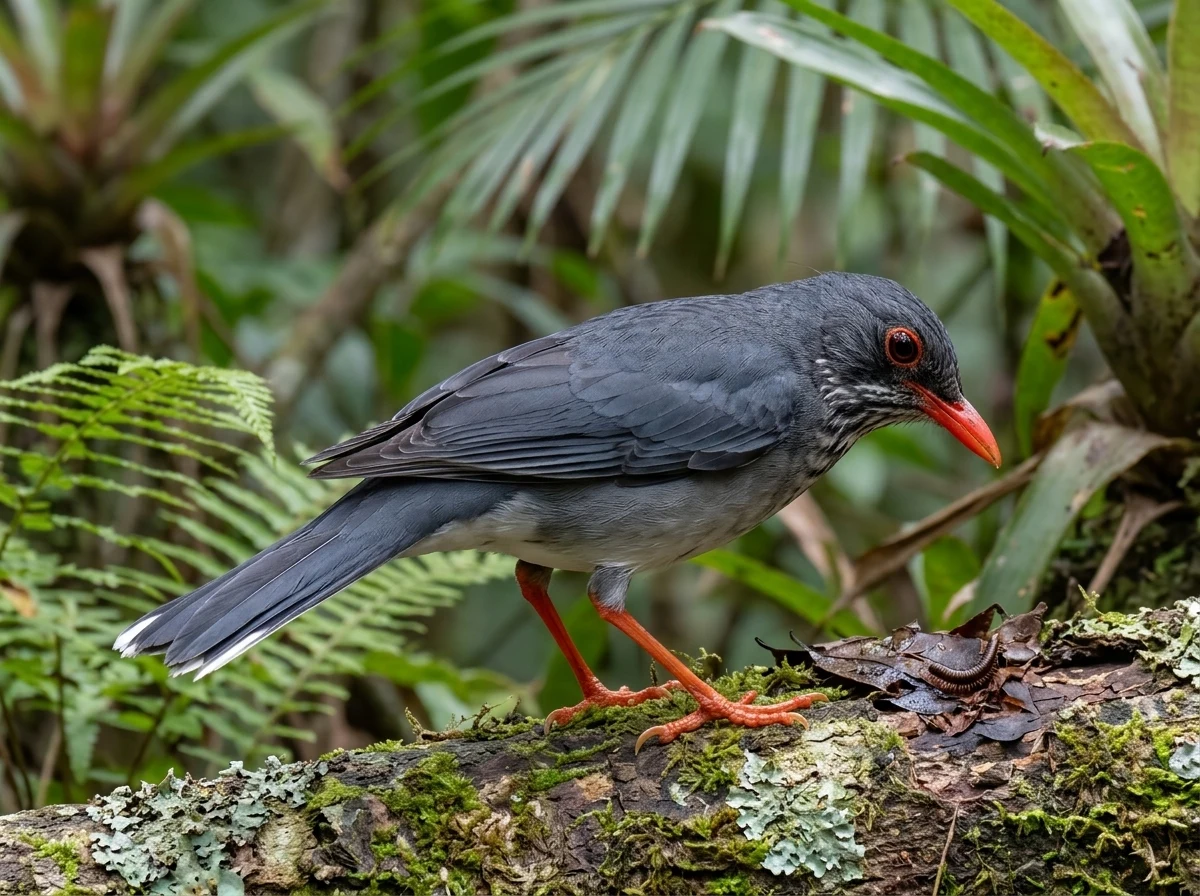
In English two of them carry “thrush” in their name and the third is sometimes mistaken for one. They are warblers, smaller and finer-billed than a true thrush such as the Eastern Red-legged Thrush, a resident member of the thrush family on the island. Behavior is another clue: pizpitas walk and bob; thrushes hop and pause.
If you photograph a pizpita, try to capture the head in profile, the flanks, and the legs. Those three views separate almost every sighting, and the record, with date and place, helps clarify when these birds arrive in and leave Puerto Rico.
Linked profiles
The three pizpitas and a thrush for comparison
Open each profile for photos, habitat notes, and call recordings.
Sound archive
Hear its voice
Explore real songs and calls. The spectrogram turns each sound into a visual trace of time and frequency.
XC1002741Recording 1 of 3song

Play: song by Sue Riffe
Choose another recording
Sound recorded by Sue Riffe · XC1002741 · CC BY-NC-SA 4.0. Visualization by Stichting Xeno-canto voor Natuurgeluiden.
Every recording retains the creator, catalogue number, and license published by Xeno-canto. Metadata via GBIF ↗
01
What bird is a pizpita?
In Puerto Rico, pizpita names three migratory warblers that walk on the ground and bob their tails: the Ovenbird (Pizpita Dorada), the Northern Waterthrush (Pizpita de Mangle), and the Louisiana Waterthrush (Pizpita de Río). All three spend the non-breeding season here.
02
Is the pizpita endemic to Puerto Rico?
No. All three breed in North America and come to Puerto Rico and the rest of the Caribbean for the winter. They occur naturally but are not endemic.
03
How do I tell a Northern Waterthrush from a Louisiana Waterthrush?
The Louisiana Waterthrush is larger, with a bright white eyebrow, a clean throat, buff flanks, and bright pink legs. The Northern Waterthrush has a finely streaked throat and usually uses mangroves.
04
When are pizpitas in Puerto Rico?
During the non-breeding season, roughly late summer to spring. The Ovenbird reaches wintering areas from September and leaves between late March and May; the Louisiana Waterthrush migrates earlier than most warblers in both directions.
05
Why does the pizpita bob its tail?
Waterthrushes bob the rear of the body as they walk, and the Ovenbird raises and lowers its tail. Sources describe the behavior but offer no single proven explanation for it; what matters in the field is that it helps identify them.
06
Where can I see a Northern Waterthrush in Puerto Rico?
Look in mangroves and at the edges of coastal ponds, especially at dawn or dusk. In southwestern Puerto Rico it has been studied in white, red, and black mangrove and nearby scrub.
Keep exploring
Connected routes
Sources and review
The evidence is one link away.
These sources support the editorial scope of this guide. Bird profiles also retain their own taxonomy, occurrence, and conservation references.
Reviewed:
01↗02↗03↗04↗05↗06↗07↗08↗
Sociedad Ornitológica Puertorriqueña
Catalog of the Birds of Puerto Rico (2007)
Official local names (Mozambique, Tordo Lustroso, Pizpitas, Querequequé, Clérigo, Aura Tiñosa), Spanish SEO names, and introduced status.National Audubon Society
Field guide: Ovenbird
White eye-ring, orange crown stripe, ground walking, oven-shaped nest, and teacher song.Wikipedia
Ovenbird
Arrival and departure dates on the wintering grounds and leaf-litter foraging.Wikipedia en español
Parkesia noveboracensis, Spanish Wikipedia
The name pizpita de mangle in Puerto Rico and wintering and roost studies in southwestern mangroves.Wikipedia
Northern waterthrush
Size, differences from Louisiana Waterthrush, and use of four winter habitats in Puerto Rico.Wikipedia
Louisiana waterthrush
Size, early migration calendar, chink call, and lack of song on the wintering grounds.National Audubon Society
Field guide: Louisiana Waterthrush
Bright white eyebrow, larger bill, and rear-body bobbing.Sociedad Ornitológica Puertorriqueña
Official bird list
Local names, occurrence categories, and the public summary of 17 endemics.The atlas continues