 AI
AILook-alike birds
Swallows vs. Swifts in Puerto Rico
They look alike because they catch insects in the air, not because they are related. Silhouette, flight, and where they perch settle almost every question.
Reviewed:Alike by trade, not by family.
The difference between swallows and swifts lies in the silhouette and where they perch: swifts have very long, narrow wings curved like a crescent, tiny feet, and spend the day in the air, while swallows have broader, more flexible wings, perch on wires and branches, and build mud or cavity nests. Their resemblance comes from convergent evolution, not kinship.
Swifts belong to the order Apodiformes along with hummingbirds, while swallows are songbirds (Passeriformes). Puerto Rico has two breeding swallows, the Cave Swallow and the Caribbean Martin, and one breeding swift, the Black Swift. The other species in the catalog are migrants or vagrants, so the date is part of the identification.
Look-alike birds
Aerial birds in Puerto Rico
2 + 1breedersCave Swallow and Caribbean Martin breed here; among swifts, only the Black Swift.
53 %hexagons with Cave SwallowThe most widespread swallow in the atlas, with 449 records.
VulnerableBlack Swift (DNER)Listed as vulnerable in Puerto Rico; it appeared in only 20 atlas hexagons.
01
Why they look alike without being related
Swallows and swifts catch insects on the wing, and that lifestyle shaped similar bodies: long wings, a short bill with a wide gape, and agile flight. Scientists call this convergent evolution. Swifts are not close to any songbird; their nearest relatives are hummingbirds.
The swift family name, Apodidae, comes from Greek for footless, a reference to their small, weak legs. They do have feet, but they barely use them to walk or perch the way a swallow does. That difference in the feet becomes the most useful field clue: where the bird rests.
02
Silhouette and flight
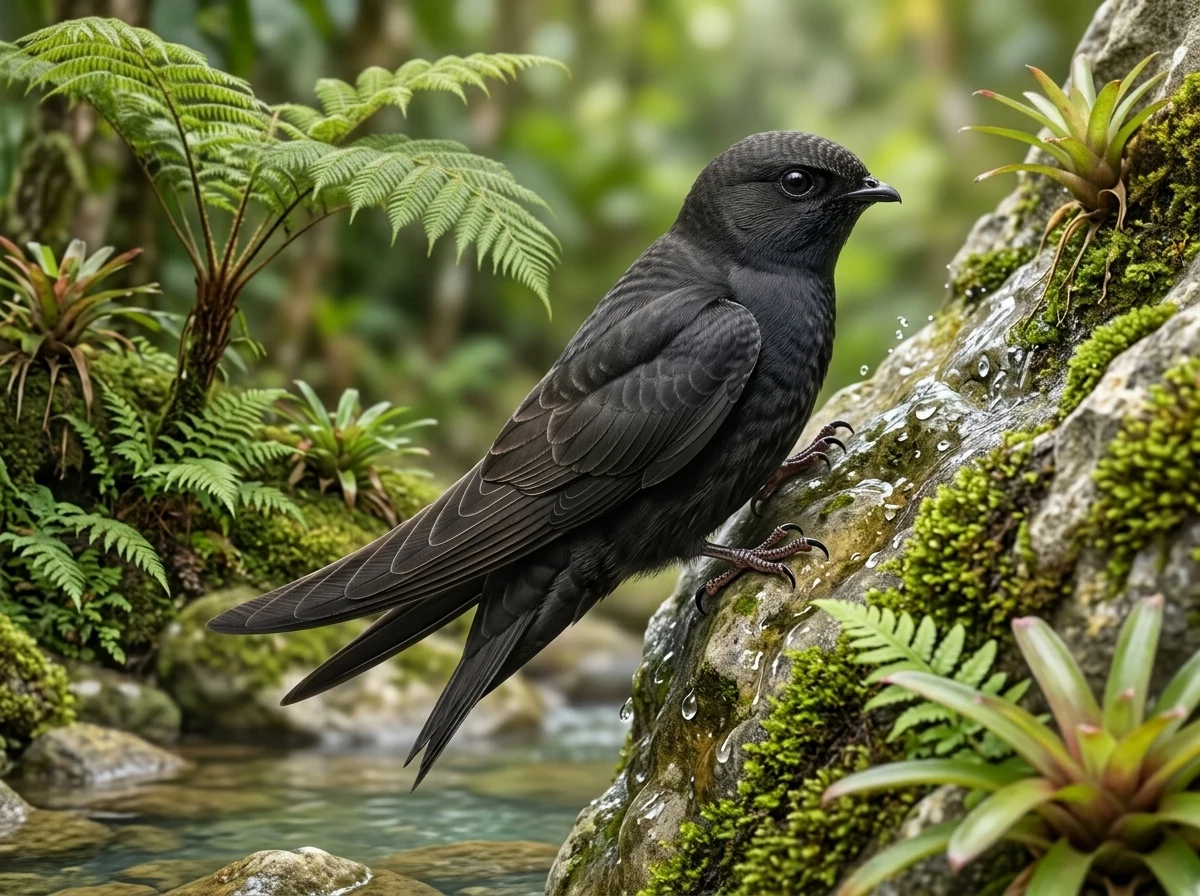
A swift looks like a boomerang or crescent: very long, narrow, pointed wings and a compact body. It alternates rapid wingbeats with glides and wheeling turns, often very high. The Black Swift is almost uniformly blackish and shows only a little white on the forehead at close range.
A swallow has wings somewhat broader at the base and a looser wingbeat, with twists and turns near the ground or water. Barn Swallows skim low over fields; Cave Swallows and Caribbean Martins fly over towns, roads, and coasts. When in doubt, watch whether the bird perches: swifts do not line up on wires.
03
Black Swift, the mountain swift
The Black Swift is a summer resident in Puerto Rico and very rare in winter. It is more common over mountainous areas such as El Yunque and Maricao than over the coast, though it has been seen over the Guánica dry forest. It forages only in flight, sometimes alone and sometimes in small groups.
It nests in cliff crevices, often near or behind waterfalls. Published reports place breeding from March to September; the atlas found the peak in June. The DNER lists it as vulnerable, and it appeared in only 20 of 479 atlas hexagons, which makes every dated mountain record valuable.
04
The two swallows that nest here
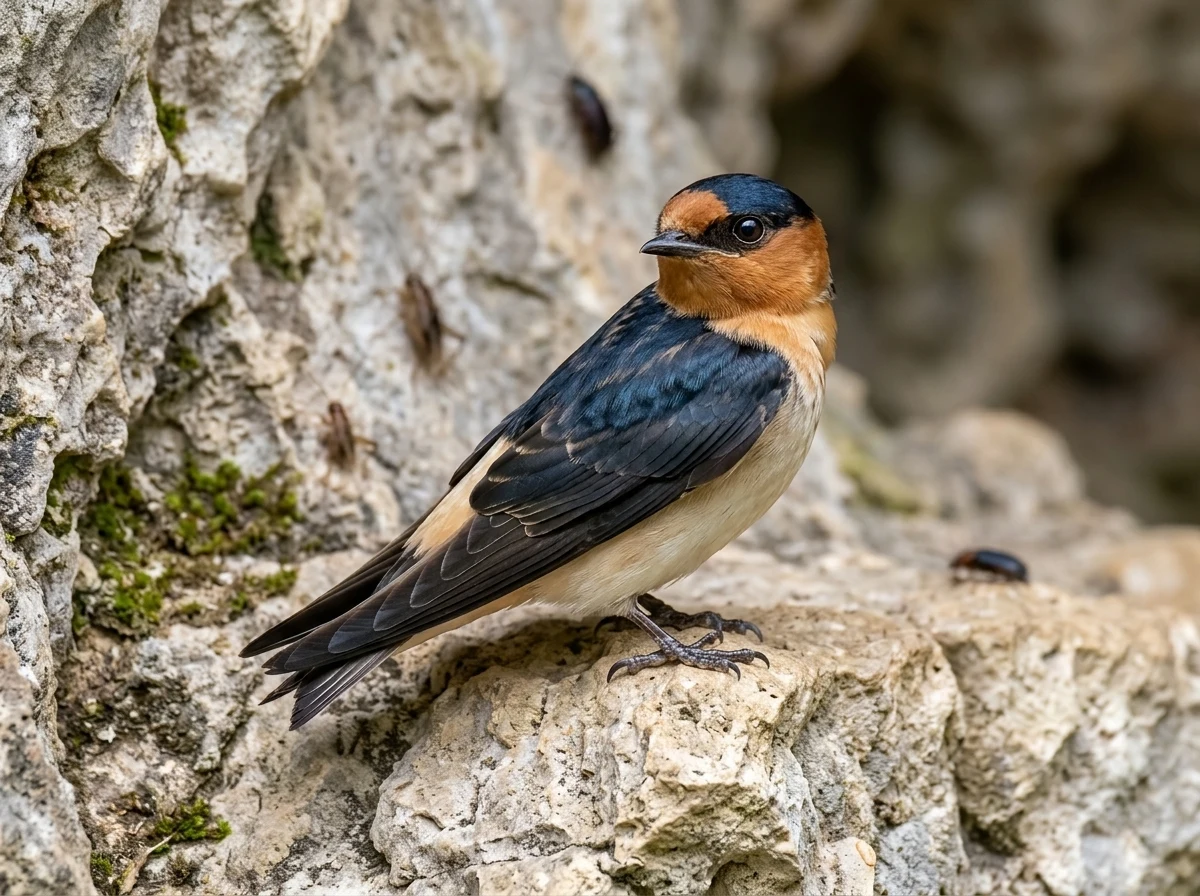
The Cave Swallow is a permanent resident: 12–14 cm, with a pale buff throat, buffy rump, and square tail. It nests in colonies with mud nests in cave mouths, on buildings, and under bridges; that is why its confirmed breeding map follows the highways, such as the one from San Juan to Caguas, Cayey, and Ponce.
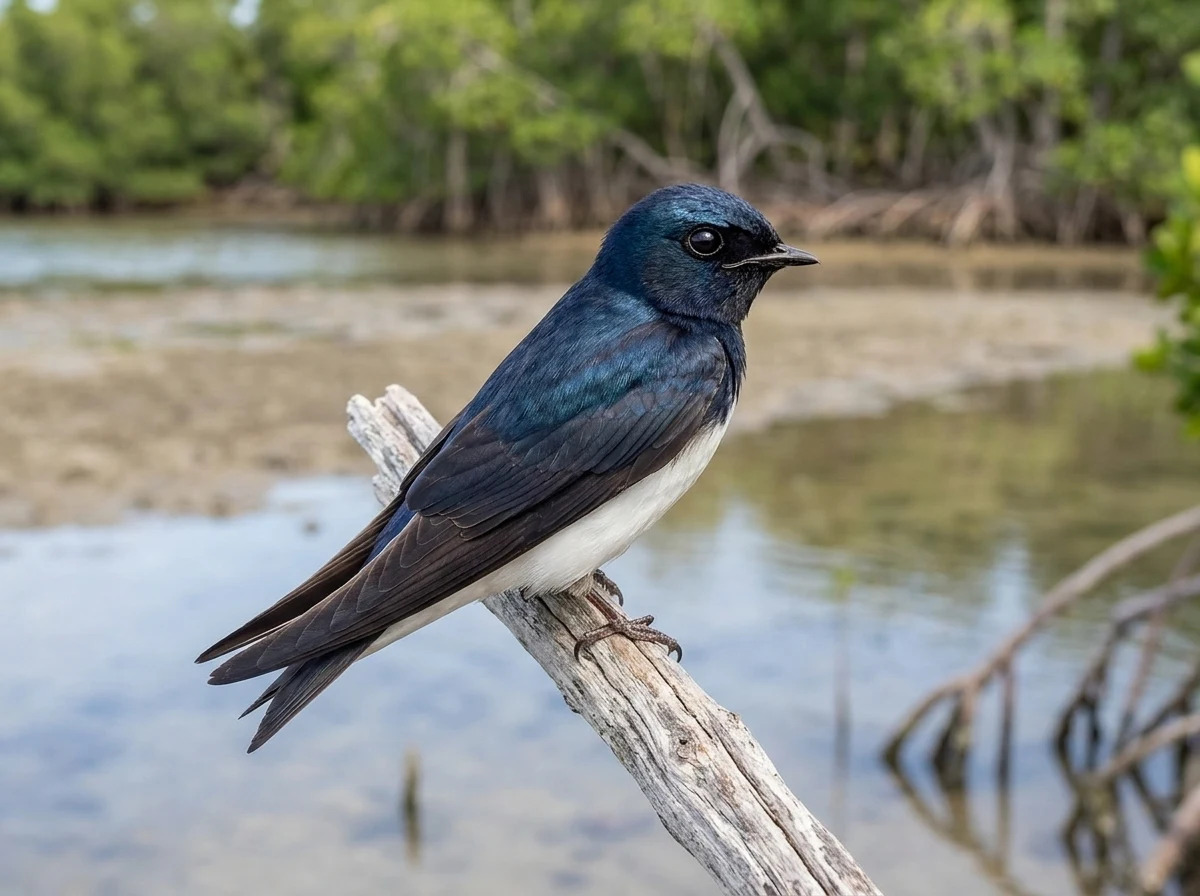
The Caribbean Martin is larger, about 18.5 cm, with a forked tail and relatively broad wings. The male is glossy blue-black with a white lower belly; the female is duller, with gray-brown breast and flanks. It nests in cavities in palms, trees, cliffs, and structures from February to August, and most then migrate to South America.
05
Visitors and vagrants
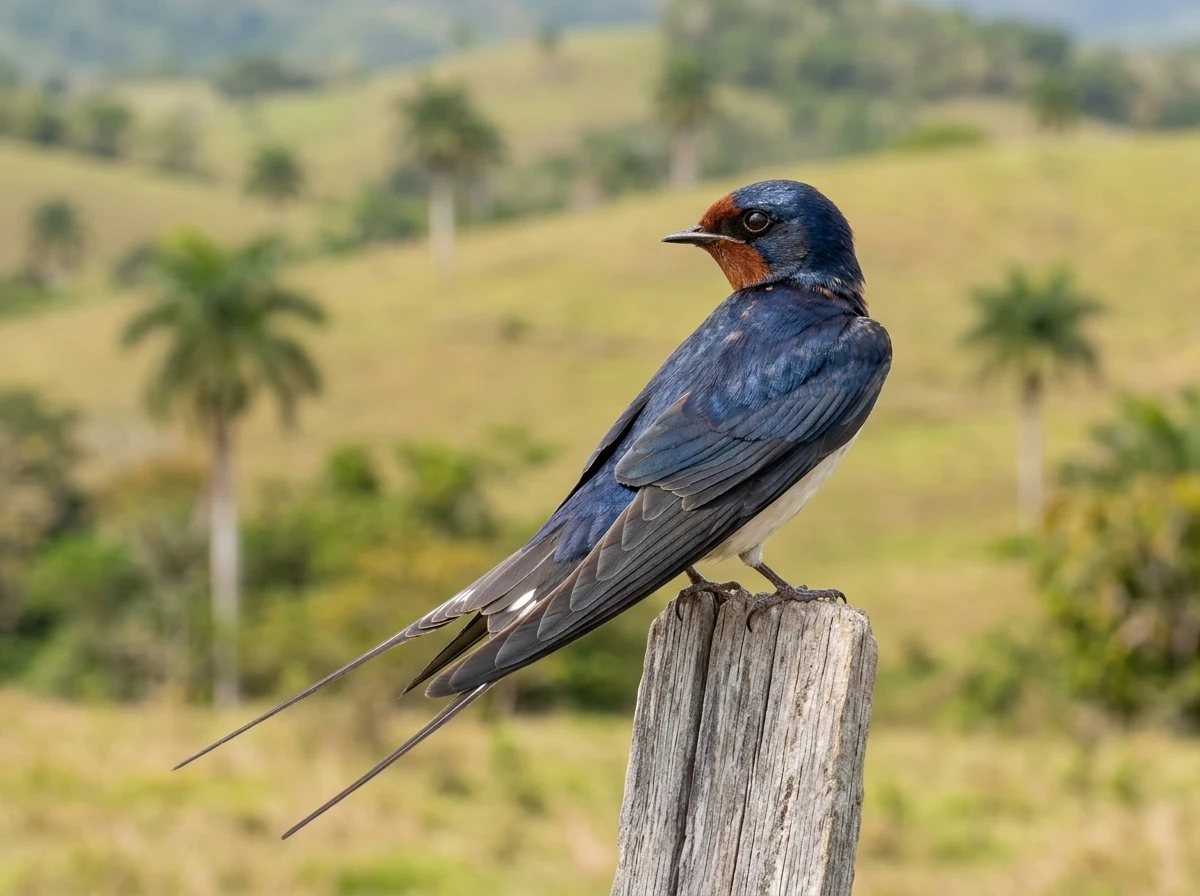
The Barn Swallow arrives from North America: steel-blue back, chestnut throat, and a long, deeply forked tail. It appears in the official catalog without the accidental label. Other swallows, such as Northern Rough-winged and Cliff Swallows, are listed as accidental or possibly accidental.
Among swifts, White-collared, Alpine, Short-tailed, and Antillean Palm Swifts are listed as accidental in the Puerto Rican Ornithological Society catalog, and Chimney Swift appears as a vagrant in this site's catalog. A small swift seen in Puerto Rico deserves photos plus the exact date, time, and place, because there is no small resident swift to confuse it with.
06
How to document what you see in the air
Aerial birds move fast and against the light, so the perfect photo rarely comes. Prioritize the silhouette: wing shape, tail shape, and their proportion. A burst of photos against the sky usually shows whether the tail is square, notched, or deeply forked.
Also note the context: height, whether the bird perched and where, whether there were mud nests under a bridge, and the date. In Puerto Rico, a black anchor-shaped bird over the mountains in June suggests Black Swift; a flock streaming in and out of a highway bridge suggests Cave Swallow. Record audio if you can: the Caribbean Martin gives a gurgly chew-chew.
Linked profiles
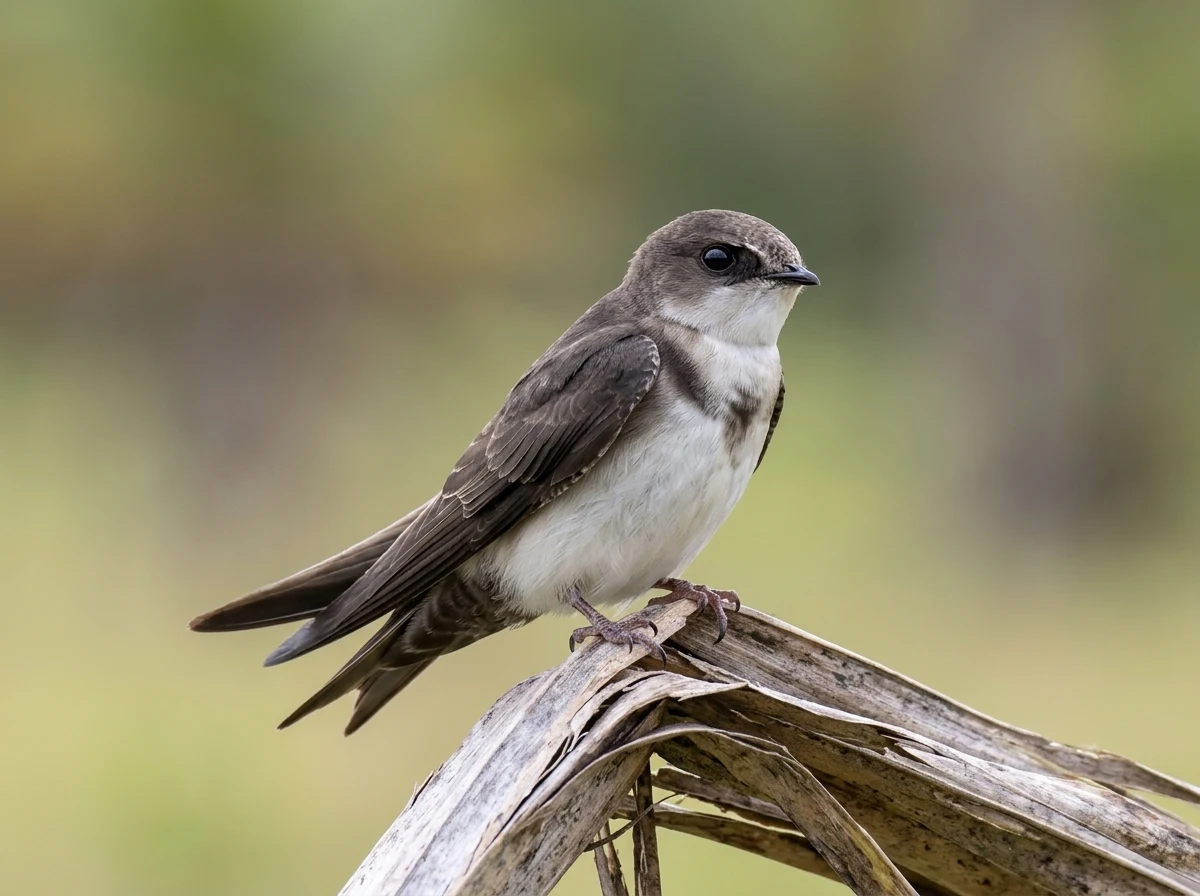
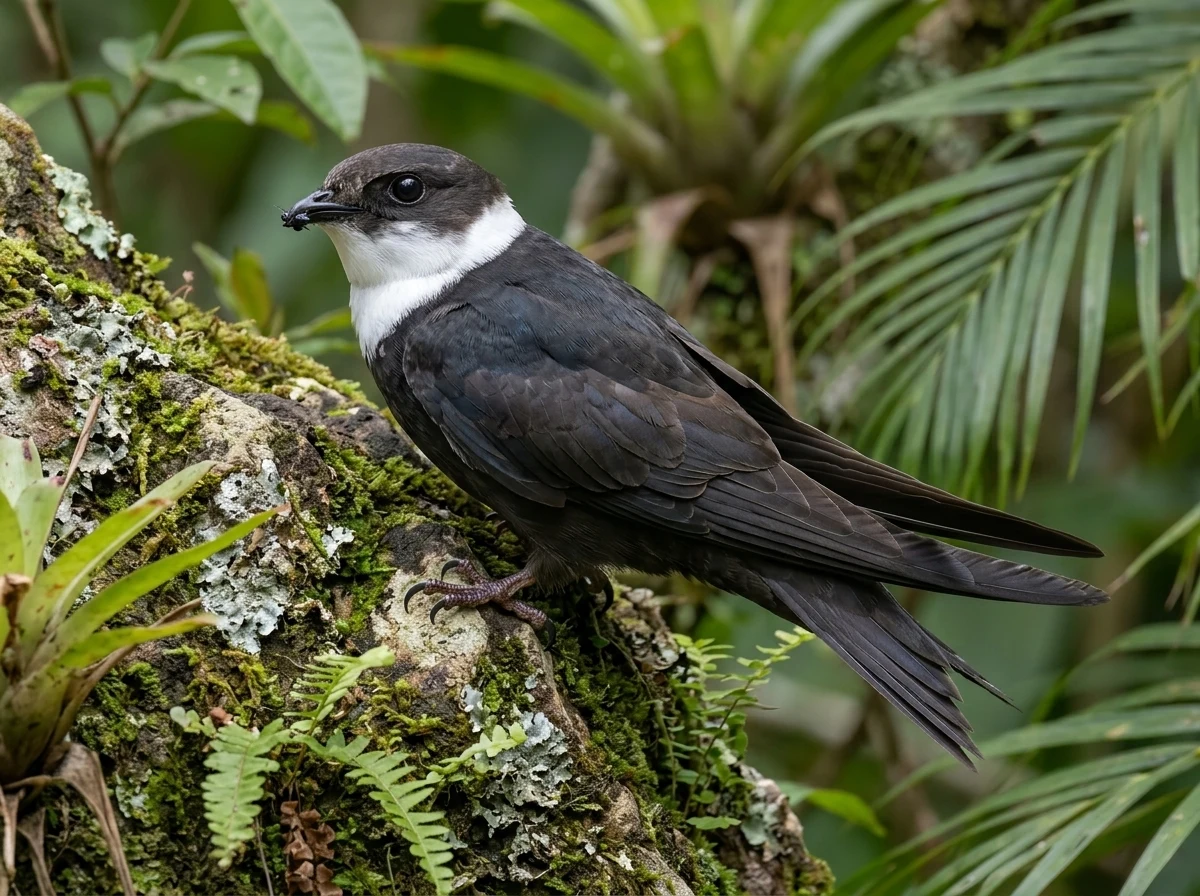
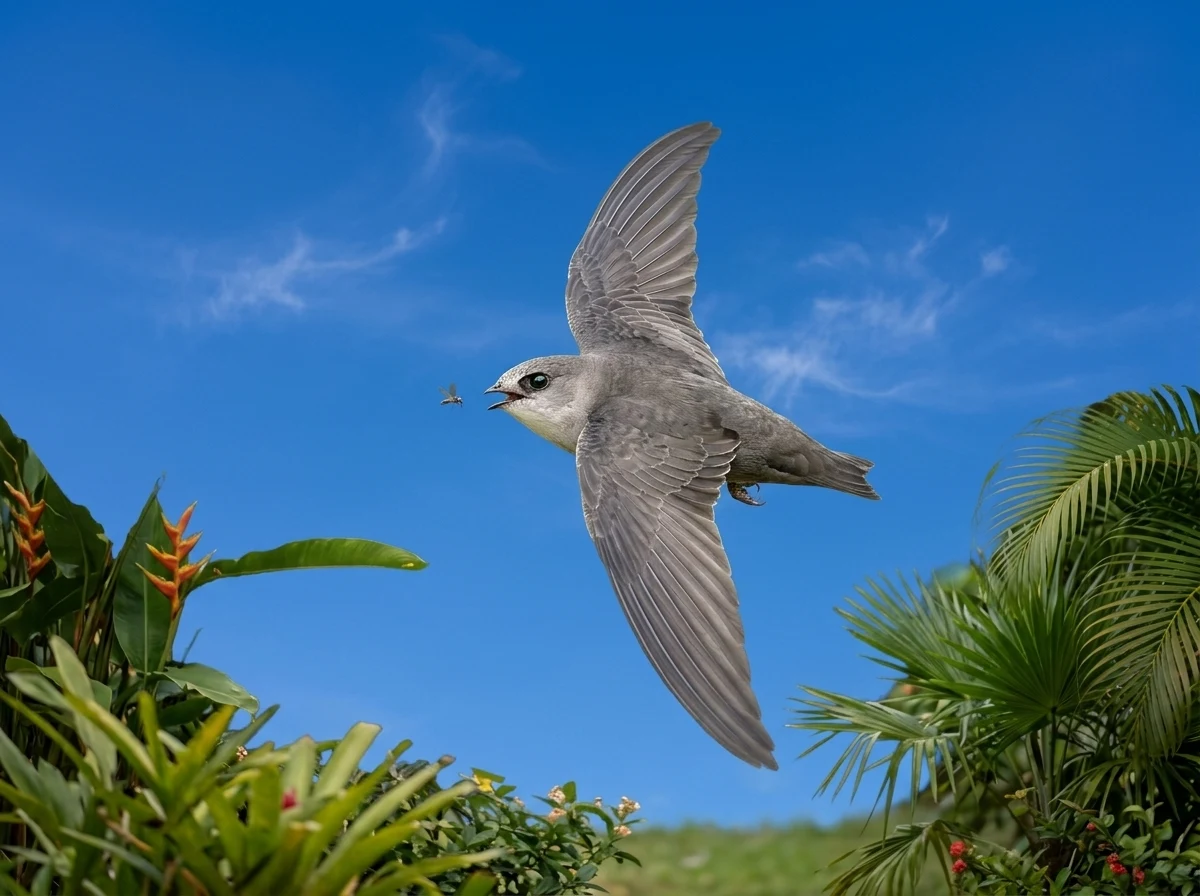
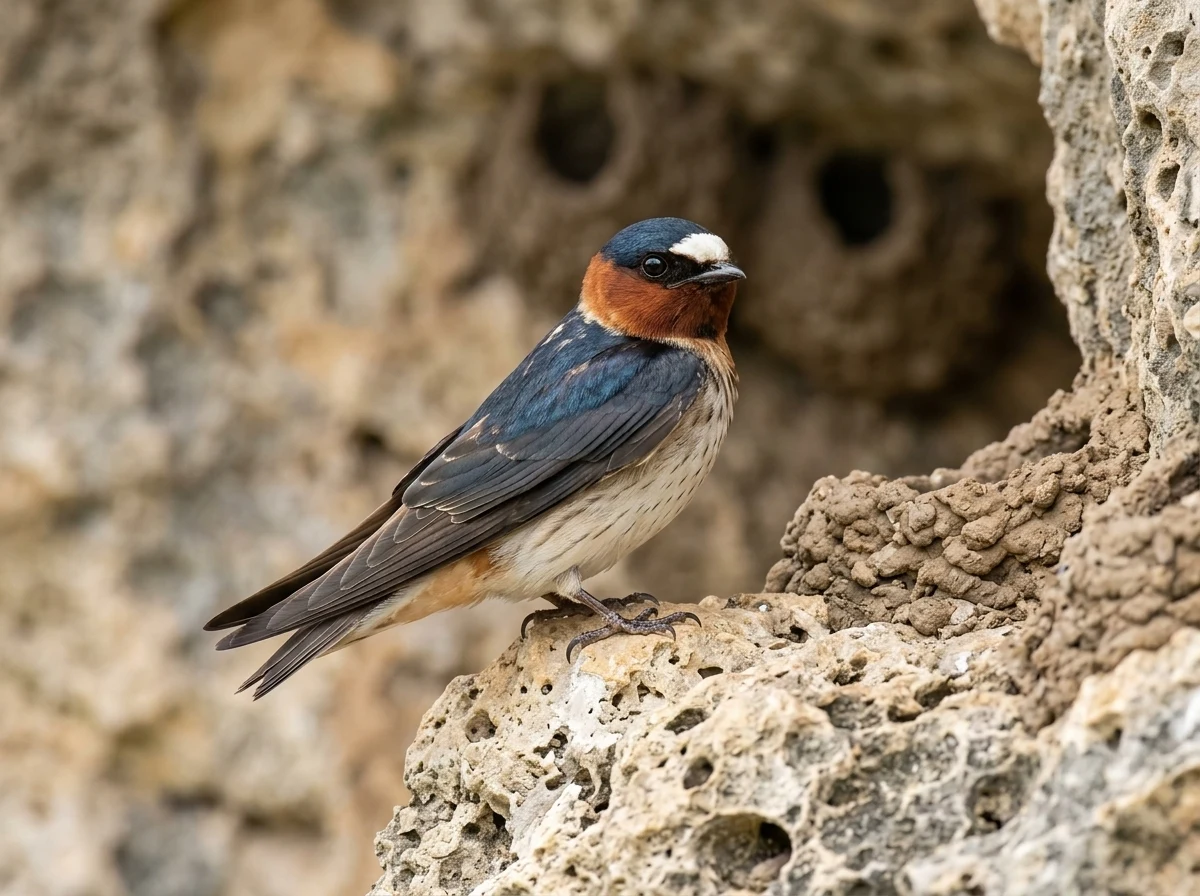
Swallows and swifts in the catalog
Residents, migrants, and vagrants, with recordings where available.
Sound archive
Hear its voice
Explore real songs and calls. The spectrogram turns each sound into a visual trace of time and frequency.
XC33710Recording 1 of 3song?

Play: song? by Daniel Lane
Choose another recording
Sound recorded by Daniel Lane · XC33710 · CC BY-NC-SA 3.0. Visualization by Stichting Xeno-canto voor Natuurgeluiden.
Every recording retains the creator, catalogue number, and license published by Xeno-canto. Metadata via GBIF ↗
01
What is the difference between a swallow and a swift?
Swifts have extremely long, crescent-shaped wings and tiny feet and rarely perch away from the nest; they are related to hummingbirds. Swallows are songbirds with broader wings that perch on wires and branches. They look alike only because both catch insects in flight.
02
What swifts are found in Puerto Rico?
The only swift that breeds in Puerto Rico is the Black Swift, a summer resident of mountain areas listed as vulnerable by the DNER. Others, such as White-collared, Alpine, and Antillean Palm Swifts, are vagrants.
03
Which swallows nest in Puerto Rico?
Two: the Cave Swallow, a year-round resident that builds mud nests under bridges and in caves, and the Caribbean Martin, which nests in cavities from February to August and then mostly migrates to South America.
04
Can swifts perch on wires?
Not the way swallows do. Their feet are small and weak, and they spend the day flying; swifts rest at nest sites, such as the cliff crevices where Black Swifts breed. If you see a row of birds on a wire, they are swallows or other birds, not swifts.
05
Does the Caribbean Martin stay in Puerto Rico all year?
No. The Caribbean Martin nests in Puerto Rico from February to August, in cavities in palms, trees, cliffs, and structures, and most then migrate out of the region, presumably to South America. The Cave Swallow, by contrast, is a year-round resident.
06
Are swifts related to hummingbirds?
Yes. Swifts and hummingbirds share the order Apodiformes. Swallows, by contrast, are songbirds in the order Passeriformes, so a swift is closer to a hummingbird than to a swallow.
Keep exploring
Connected routes
Sources and review
The evidence is one link away.
These sources support the editorial scope of this guide. Bird profiles also retain their own taxonomy, occurrence, and conservation references.
Reviewed:
01↗02↗03↗04↗05↗06↗07↗08↗09↗10↗11↗12↗
Wikipedia
Swift (bird)
Convergent evolution with swallows, order Apodiformes with hummingbirds, weak legs, and crescent-shaped wings.Birds of Puerto Rico (datos del Puerto Rico Breeding Bird Atlas)
Black Swift (Vencejo Negro)
Summer resident, commoner in mountains, nesting in crevices by waterfalls, and DNER vulnerable status.National Audubon Society
Field guide: Black Swift
Long pointed wings, uniform blackish plumage, foraging only in flight, and nests behind waterfalls.Birds of Puerto Rico (datos del Puerto Rico Breeding Bird Atlas)
Cave Swallow (Golondrina de Cuevas)
Permanent resident, mud nests under bridges, and 53% of atlas hexagons.Birds of Puerto Rico (datos del Puerto Rico Breeding Bird Atlas)
Caribbean Martin (Golondrina de Iglesias)
Breeder from February to August that mostly migrates to South America; nests in cavities.Wikipedia
Caribbean martin
Size (18.5 cm), glossy blue-black male with white belly, duller female, and chew-chew call.Sociedad Ornitológica Puertorriqueña
Catalog of the Birds of Puerto Rico (official list)
Official Spanish names (Pitirre, Clérigo, Reinita Común, Reinita Mariposera, Gorrión Negro, Golondrina de Iglesias) and categories such as accidental or introduced.U.S. Forest Service Research and Development
Puerto Rico Breeding Bird Atlas
Distribution and breeding timing for 130 species breeding in Puerto Rico and its satellite islands.National Audubon Society
Field guide: Barn Swallow
Long forked tail, chestnut throat, low skimming flight, and migration to South America.National Audubon Society
Field guide: Cave Swallow
Pale buff throat, buffy rump, square tail, and mud nests on structures.Sociedad Ornitológica Puertorriqueña
Official bird list
Local names, occurrence categories, and the public summary of 17 endemics.Macaulay Library / Cornell Lab of Ornithology
Puerto Rico sound archive
Complementary audio collection for comparing songs, calls, locations, and dates.The atlas continues