 AI
AICoastal Habitats
Birds and Seagrass Food Webs
A guide to understanding how two coastal birds depend on food chains that begin in seagrass meadows.
Reviewed:Prepared with AI assistance and linked sources. Illustrations are not field photographs.
Introduction
Seagrasses are flowering plants that grow submerged in shallow coastal waters. They form meadows that shelter and feed many marine organisms. Although birds do not eat seagrasses directly, they do depend on the fish and crustaceans that live among them. This guide explains that indirect connection using two coastal birds of Puerto Rico: the Brown Pelican (Pelecanus occidentalis) and the Osprey (Pandion haliaetus).
The reader's question is concrete: what relationship exists between birds and seagrasses along the coast? The answer lies in the food chain. Seagrasses produce organic matter and physical structure; small invertebrates and fish use them; and fish-eating birds capture those fish. Without healthy seagrass meadows, the fish populations that sustain these birds can decline. This guide does not invent local observations or abundances; it relies on documented sources about the diet and habitat of both species.
Coastal Habitats
Key Facts
PecesMain diet of both birdsThe Brown Pelican and Osprey feed mainly on fish.
Zambullida vs. captura superficialDifferent hunting methodThe Brown Pelican plunge-dives head-first; the Osprey captures fish near the surface.
Pastos marinosBase of the food webSeagrass meadows support the fish these birds consume.
01
What Are Seagrasses and Why Do They Matter to Birds?
Seagrasses are submerged plants that form meadows in shallow coastal waters. They are not algae; they have roots, stems, and leaves. These meadows create a three-dimensional habitat that shelters juvenile fish, crabs, shrimp, and other invertebrates. Many of these organisms are food for fish-eating birds.
Birds do not consume seagrasses directly, but they do depend on the food web these plants generate. When seagrasses are healthy, there is more shelter and food for small fish. Those fish, in turn, are prey for birds such as the Brown Pelican and the Osprey. Therefore, conserving seagrasses also means conserving coastal birds.
02
The Brown Pelican: Plunge-Diving in Coastal Waters
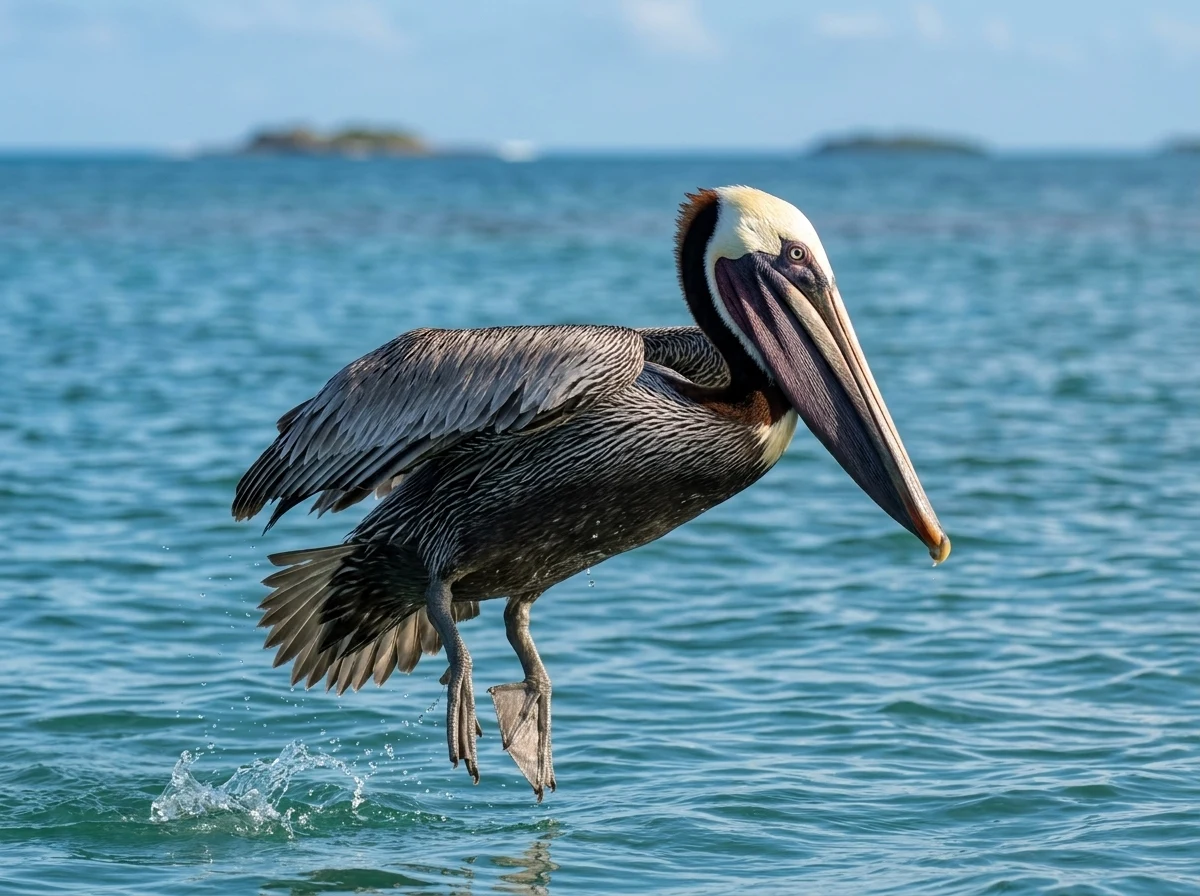
The Brown Pelican is a marine bird that feeds mainly on fish. According to the Cornell Lab of Ornithology source, it is one of two pelican species that capture prey by plunge-diving head-first from the air. Its expandable gular pouch traps fish and water; it then drains the water and swallows the prey. This technique requires waters with accessible fish, often in bays, coasts, and near cays.
In Puerto Rico, the Brown Pelican is listed as a resident and breeder. Its presence on the island is documented in bird lists and local references. Although it does not feed on seagrasses, it depends on fish that live in coastal waters, where seagrasses can be part of the ecosystem. The connection is indirect but real: healthy seagrasses contribute to fish populations that the pelican can capture.
03
The Osprey: Surface Fish Capture
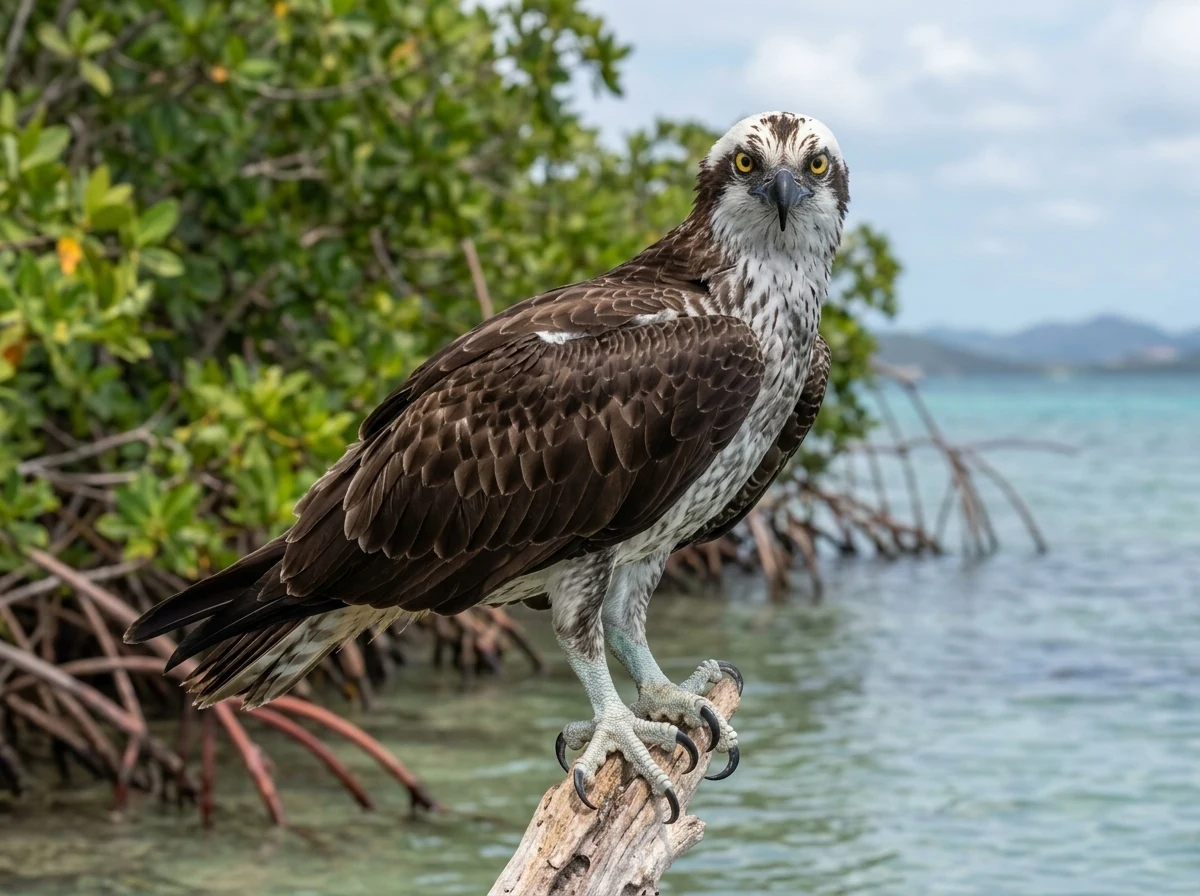
The Osprey is a diurnal bird of prey that feeds almost exclusively on fish. Unlike the Brown Pelican, it does not plunge-dive head-first from great heights; instead, it flies over the water and descends with talons extended to capture fish near the surface. This strategy allows it to exploit fish that swim in shallow waters, where seagrasses can provide shelter and food.
In Puerto Rico, the Osprey is listed as native, but not as a resident or breeder according to the catalog. This means it can be observed as a migrant or visitor, but it does not reproduce on the island according to that source. Its presence in coastal waters links it to the same fish that depend on seagrasses. The comparison with the pelican shows two different methods of capturing prey from the same system.
04
Comparison: Two Birds, One Food Web
The Brown Pelican and the Osprey share a fish-based diet, but differ in how they capture fish. The pelican plunge-dives head-first and uses its gular pouch to trap fish and water. The Osprey captures fish with its talons near the surface. Both depend on productive coastal waters, where seagrasses can be part of their prey's habitat.
The difference in hunting method does not change the connection to seagrasses. Both need fish, and those fish need habitat. Seagrasses provide shelter and food for invertebrates and small fish, which in turn are prey for larger birds. This comparison helps explain that conserving an underwater habitat can benefit birds that never touch it directly.
05
Observation Activity: Follow the Food Chain
This activity is a suggestion for observing coastal birds and thinking about their connection to seagrasses. It does not require specialized equipment, just binoculars if you have them, a notebook, and patience. Choose an accessible and safe coastal spot, such as a beach or a boardwalk. Observe for at least 30 minutes and write down what you see.
Procedure: 1) Look for fish-eating birds over the water or perched near the coast. 2) If you see a Brown Pelican, watch for plunge-diving. 3) If you see an Osprey, watch for flying over water and descending with talons extended. 4) Note the time, weather, and behavior. 5) Do not try to identify fish without equipment; just record the presence of birds fishing. 6) Repeat the observation on another day and compare.
Checklist: binoculars (optional), notebook, pencil, watch or phone, sunscreen, water. Do not approach nests or restricted areas. Do not feed the birds. This activity does not replace scientific monitoring; it is a way to learn about the connection between birds and seagrasses.
Linked profiles
Birds in This Guide
Two fish-eating birds that illustrate the connection between seagrasses and coastal birds.
01
Do birds eat seagrasses directly?
No. The birds in this guide feed on fish. Seagrasses are the base of the food web that supports those fish, but they are not consumed by the birds.
02
Does the Brown Pelican live year-round in Puerto Rico?
According to the catalog, the Brown Pelican is listed as a resident and breeder in Puerto Rico. This means it can be found year-round, although abundance is not inferred from this classification.
03
Does the Osprey nest in Puerto Rico?
According to the catalog, the Osprey is listed as native, but not as a resident or breeder in Puerto Rico. It can be observed as a migrant or visitor, but it does not reproduce on the island according to that source.
04
How can I help conserve seagrasses?
You can avoid anchoring in seagrass meadows, not litter on the coast, and participate in beach cleanups. You can also learn more about coastal ecosystems and share that information. This guide does not provide legal or veterinary instructions.
05
What is the difference between the hunting method of the Brown Pelican and the Osprey?
The Brown Pelican plunge-dives head-first from the air and uses its gular pouch to trap fish. The Osprey flies over the water and descends with talons extended to capture fish near the surface.
Keep exploring
Connected routes
Sources and review
The evidence is one link away.
These sources support the editorial scope of this guide. Bird profiles also retain their own taxonomy, occurrence, and conservation references.
Reviewed:
The atlas continues