 AI
AIBehavior guide
How Birds Signal and Defend Territories
Song is not just music: it is a signal of ownership. Here you will see how birds recognize boundaries, assess intruders, and defend their space.
Reviewed: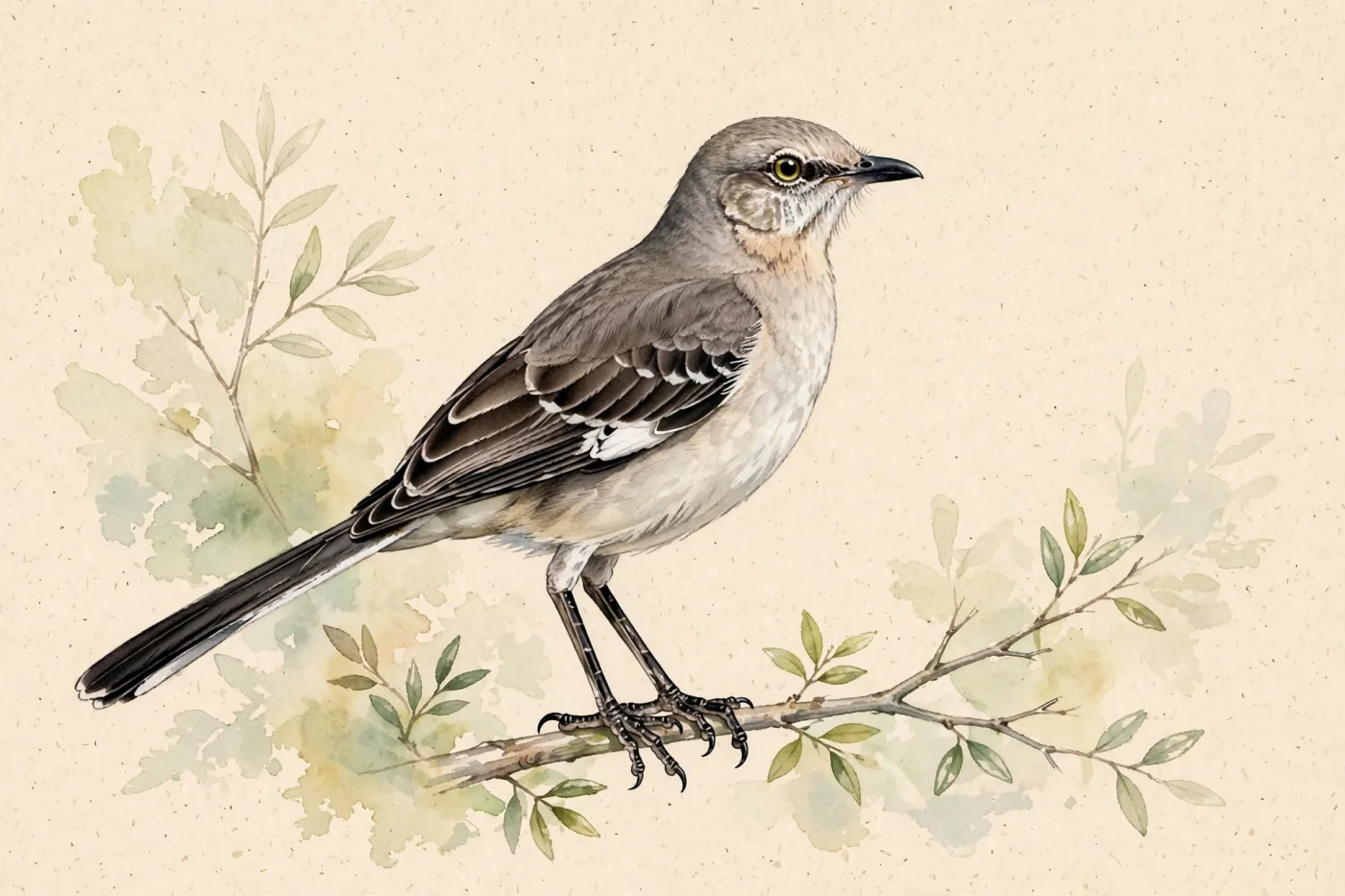
Prepared with AI assistance and linked sources. Illustrations are not field photographs.
A territory is not seen, it is heard
For a bird, a territory is a space with resources: food, a mate, a nest, or safe perches. That space has no visible line, but it does have an owner. Song and calls work as signals of ownership that other individuals can hear and assess.
This guide answers a concrete question: how birds recognize their territories. The answer combines two mechanisms: recognition through acoustic signals and defense through graded responses. We use examples documented in the scientific literature and in species present in Puerto Rico, without inferring abundance or unverified local observations.
Behavior guide
Three key ideas
Canto y llamadaTwo distinct functionsSong usually defends territory and attracts a mate; calls accompany other behaviors.
EvaluaciónThe intruder is classifiedBirds adjust their response to perceived threat, not always with more aggression.
Dos especiesExamples in Puerto RicoThe Northern Mockingbird and Puerto Rican Vireo illustrate different signaling strategies.
01
Song and call: two tools, two jobs
Kenn Kaufman explains that in the bird world song has two main purposes: defending a breeding territory and attracting a mate. Calls, by contrast, usually accompany other behaviors and are shorter or simpler. This functional distinction is key to understanding how a bird recognizes its territory: song is the signal that declares ownership, while calls coordinate immediate actions such as alarms or contact.
The same source notes that song is most typical during the breeding season, although species that defend territory year-round may sing at any time of year. It also clarifies that in most species males take the lead in territory defense, but that female birdsong is more widespread and important than previously thought. For the observer, this means that hearing song is not just detecting presence: it is witnessing a declaration of boundaries.
02
Recognizing is not just hearing: it is assessing
An experimental study with the banded wren in Costa Rica, published in Behavioral Ecology and available on PMC, shows that birds do not respond equally to all songs. Researchers manipulated the frequency bandwidth of notes to simulate low-, median-, and high-performance singers. Territory owners approached the high-performance stimulus less and more slowly than the low- and median-performance stimuli. Call rate was higher to the high-performance stimulus than to the low-performance one, but there was no difference between high and median or between low and median. The median-performance stimulus elicited a higher song rate than both the low-performance and high-performance stimuli; among males that approached, song rate did not differ between median and high.
The study discusses a theoretical peaked-curve model, proposed in prior theoretical work, in which an intruder of similar quality may provoke the most aggressive response, while a much superior one may intimidate and reduce physical approach. The authors note that this relationship is likely to remain theoretical. The experiment's results are in accordance with theoretical models of aggressive encounters. For the observer in Puerto Rico, this suggests that when a bird sings intensely but does not approach, it may be assessing a rival, not ignoring it. Territorial defense is a calculation, not an automatic reflex.
03
Two Puerto Rico examples: Northern Mockingbird and Puerto Rican Vireo
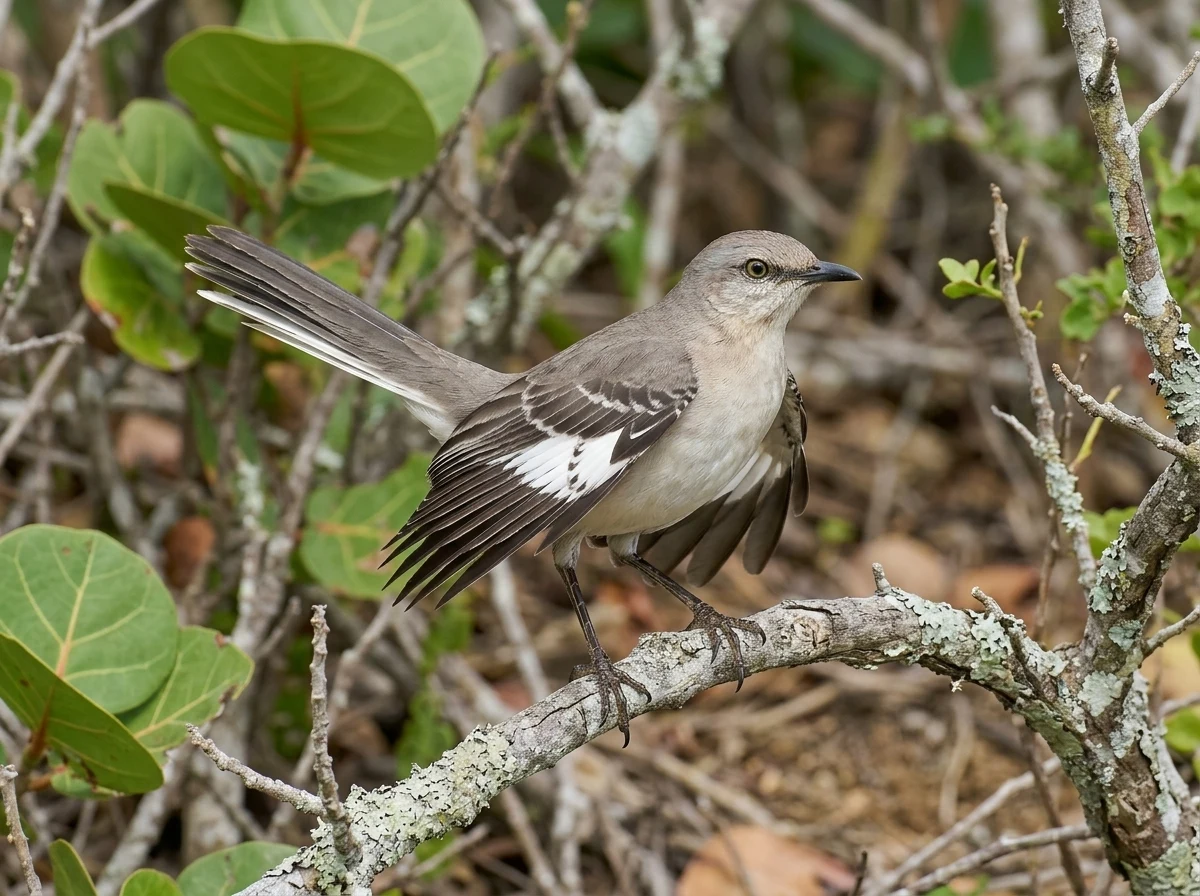
The Northern Mockingbird (Mimus polyglottos) is known for its repertoire of imitations and for aggressively defending its nest. The catalog description indicates that in Puerto Rico it is called ruiseñor and that it builds nests in shrubs or trees that it defends from attacks by other birds or animals, including humans. When a predator is persistent, mockingbirds from nearby territories gather via a distinctive call and attack together. While foraging, it extends its wings in a two-stage movement to show its white patches, which also serves as a territorial display. This combination of song, call, and visual display shows that territorial recognition can involve several channels at once.
The Puerto Rican Vireo (Vireo latimeri) is a species endemic to Puerto Rico. Birds of the World describes it as most commonly found in western and central areas of the island, in various forest types, from dry coastal scrub to wet montane areas, and sometimes in mangroves. The bird catalog notes that it occurs in forested areas at all elevations. Its distinctive three- to four-syllable song is often the first clue to its presence. The same source notes that it is not considered globally threatened, but is vulnerable to predation by introduced mammals such as rats and feral cats, and its nests are frequently parasitized by Shiny Cowbirds. The catalog also documents a population decline in Guánica State Forest linked to Shiny Cowbird parasitism. For this guide, what matters is that its song functions as a territorial signal across a wide range of habitats, and that the observer can use that song to recognize its presence without needing to see it.
04
How to practice observing territories
A useful activity is to choose a fixed point and listen for 10 to 15 minutes. Note whether the song repeats from the same perch or from nearby perches, whether calls are interspersed, and whether another individual responds. You do not need to identify the species to notice patterns: repetition from the same sector suggests an active territory. If you can record with your phone, even better; then compare with reference recordings.
Another practical comparison is to contrast the behavior of the Northern Mockingbird and the Puerto Rican Vireo. The mockingbird is often more visible and may include wing displays; the vireo is more frequently detected by its three- to four-syllable song. This difference is not an absolute rule, but it helps train ear and eye. Remember that you should not get too close to a nest or try to provoke aggressive responses: observing is enough.
Linked profiles
Birds in this guide
Two species that illustrate how song and displays mark territory in Puerto Rico.
AI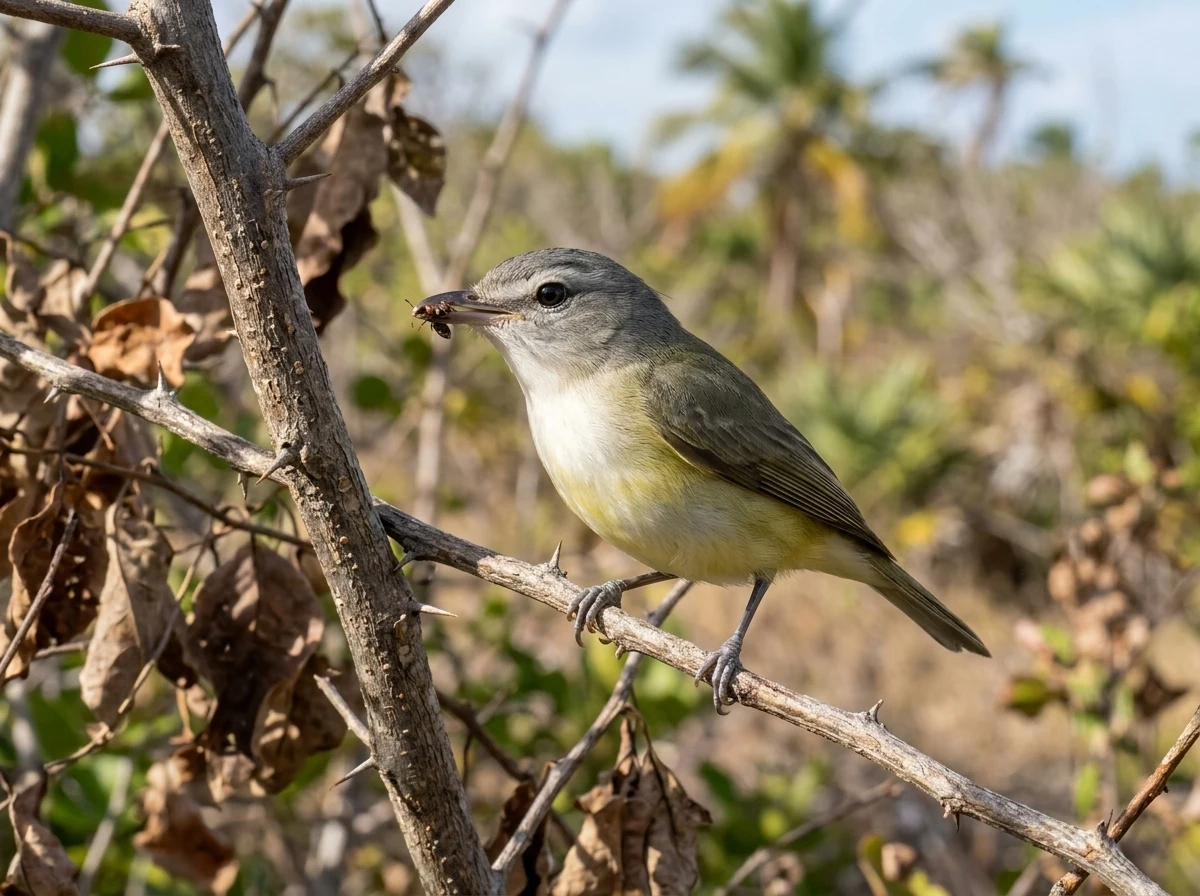 AI
AI01
How do I know if a song is defending a territory?
If the song repeats from the same sector for several minutes and there are responses from other individuals, you are likely witnessing an active territory. Territorial defense song is usually more persistent during the breeding season.
02
Do birds recognize their neighbors?
The cited literature does not directly address individual neighbor recognition, but it does show that birds assess intruder quality and adjust their response. That implies some degree of discrimination between signals.
03
Do the Northern Mockingbird and Puerto Rican Vireo defend territory the same way?
Not necessarily. The Northern Mockingbird combines song, calls, and visual displays, and may attack in groups. The Puerto Rican Vireo is better known for its distinctive song. Both species signal territory, but with different emphases.
04
Can I use recordings to attract birds and observe their defense?
It is not recommended. Playing songs can stress birds and alter their natural behavior. This guide suggests observing and listening without intervening.
Keep exploring
Connected routes
Sources and review
The evidence is one link away.
These sources support the editorial scope of this guide. Bird profiles also retain their own taxonomy, occurrence, and conservation references.
Reviewed:
01↗02↗03↗
Audubon
Ask Kenn: Is There a Difference Between Bird Songs and Calls?
Evidence for cited sections; consult the original document.Behavioral Ecology (Oxford University Press) / NIH PMC — Cornell Lab of Ornithology authors
The deterrent effect of bird song in territory defense
Evidence for cited sections; consult the original document.Birds of the World, Cornell Lab of Ornithology
Puerto Rican Vireo (Vireo latimeri)
Evidence for cited sections; consult the original document.The atlas continues