 AI
AIBehavior guide
How Ducks Maintain Water-resistant Plumage
The secret is not a wax coating but a behavior: ducks maintain water-resistant plumage by preening with secretions from the uropygial gland and by bathing.
Reviewed:Prepared with AI assistance and linked sources. Illustrations are not field photographs.
The short answer
Ducks maintain water-resistant plumage because they actively care for it. Preening includes oiling and nibbling: when oiling, a duck mechanically squeezes its uropygial (preen) gland, located near the base of the tail, and spreads a hydrophobic secretion through the feathers with its bill. That secretion is thought to help maintain feather flexibility and water repellence.
Bathing is the other half of the process. A duck immerses its head and wings, tosses and shakes water over its body, then performs a series of head-shaking, wing-rubbing and preening movements. Without access to water, wet preening cannot be completed. This guide explains the mechanism, compares it with other birds, and suggests a simple, ethical observation in Puerto Rico.
Behavior guide
Three key ideas
Glándula uropigialThe oiling organBilobed holocrine gland near the base of the tail that secretes glycolipids.
Acicalamiento húmedoDepends on waterThe duck immerses head and wings, shakes water over itself, then preens.
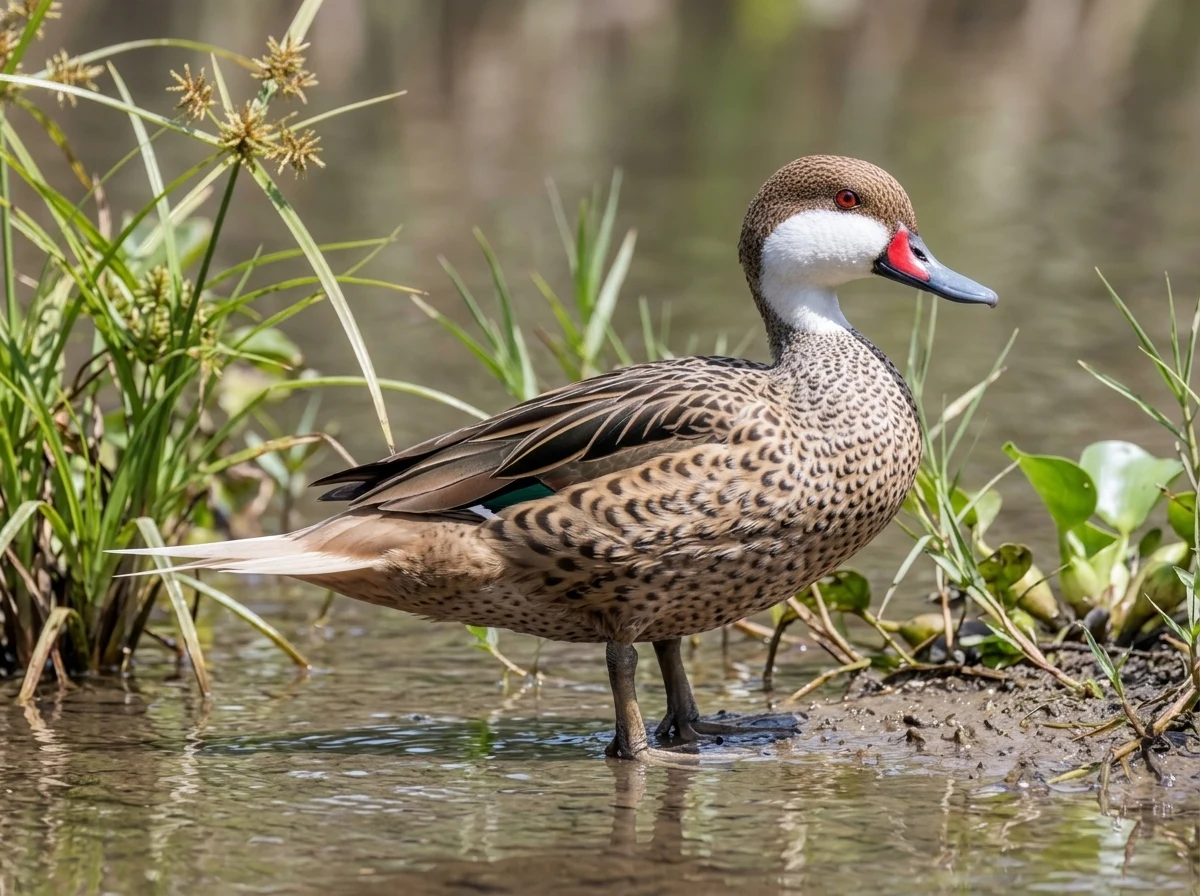
Dos especiesExamples in Puerto RicoWhite-cheeked Pintail and Ruddy Duck are listed as resident and breeding in the catalog.
01
Preening: oiling and nibbling
Duck preening has two main movements. When oiling, the bird squeezes its uropygial gland with its bill and distributes the secretion through the feathers. When nibbling, it moves its bill in a rapid, chewing-like motion over the body. The gland is a bilobed holocrine structure near the base of the tail that secretes glycolipids; its hydrophobic secretions are thought to contribute to feather flexibility and water repellence, and possibly also to protection against bacterial and fungal infections.
Preening is not a cosmetic detail. In semi-aquatic birds such as ducks, feather condition is critical for maintaining the water repellence that ensures protection and buoyancy. That is why preening is described as a maintenance behavior important for the condition of the eyes, nostrils and feathers.
02
Bathing: the other half of the mechanism
The bathing sequence begins when a duck immerses its head and wings in water and then tosses and shakes the water over its body. A series of head-shaking, wing-rubbing and preening movements follows. Wet preening is a maintenance behavior that relies on water access.
This explains why open water matters so much. When given the opportunity, domestic ducks use water for swimming, ducking and diving, head dipping and tossing, dabbling, wing rubbing, resting in or near water, and wet preening. In a study of 120 Pekin ducks, those without access to a pool showed significantly inhibited uropygial gland development, measured by gland weight, size and quality of oil secretion, and spent less time preening than those with access.
03
Comparison: ducks, other birds and the wax myth
A common idea is that ducks are covered by a wax layer. The available source describes the mechanism differently: it is a secretion from the uropygial gland distributed through preening, not a permanent external coating. The difference matters because maintenance depends on the bird's behavior: if it cannot preen, protection deteriorates.
Another useful comparison is with birds that do not depend on water in the same way. Avian skin has no sweat or sebaceous glands, so birds cannot dissipate heat by sweating. Ducks rely on evaporative cooling through panting and unfeathered surfaces, and open water also helps them regulate temperature. In an experiment with 48 Muscovy ducks at 10 weeks of age, those with access to a pool had lower average body temperatures and lower blood stress indicators than the heat-stressed control group without open water.
04
Two Puerto Rico ducks to observe
The catalog includes two suitable species for thinking about this mechanism in Puerto Rico. The White-cheeked Pintail (Anas bahamensis) is listed as resident and breeding, with native and natural occurrence, and uses salt ponds, coastal lagoons and freshwater and brackish wetlands. The Ruddy Duck (Oxyura jamaicensis) is also listed as resident and breeding, with native and natural occurrence, and uses freshwater marshes, reservoirs and ponds. Both entries have high confidence and a review flag.
Presence in the catalog does not imply abundance. It should not be inferred that they are common or that they will be seen at a particular place. What the catalog does support is using them as examples of ducks whose plumage depends on preening and bathing, and as a starting point for calm, respectful observation.
05
Observation exercise: the preening checklist
This exercise is an educational suggestion, not a research protocol. From a fixed point, at a distance, without approaching or surrounding the water, watch one duck for ten minutes and note in a notebook which movements you see. Use this concrete checklist: (1) oiling: the bill touches the base of the tail and then moves through the feathers; (2) nibbling: rapid bill movements over the body; (3) bathing: head and wings immersed, followed by shaking water over the body; (4) wet preening after bathing; (5) resting near the water. Also note whether the bird is alone or with others, because ducks tend to use water in groups.
Afterward, compare your notes with the sequence described in this guide and ask yourself which part of the mechanism you could see and which you could not. If you did not observe oiling, it does not mean it did not happen: it may have occurred before you started or out of your view. The goal is not to prove anything, but to learn to recognize the behavior and record what you actually saw. For context on other waterbirds of the island, link this guide with the general guides to ducks, herons and mangrove birds.
Linked profiles
The birds in this guide
Two ducks from the avespuertorico.com catalog that illustrate why preening and bathing keep plumage water-resistant.
AI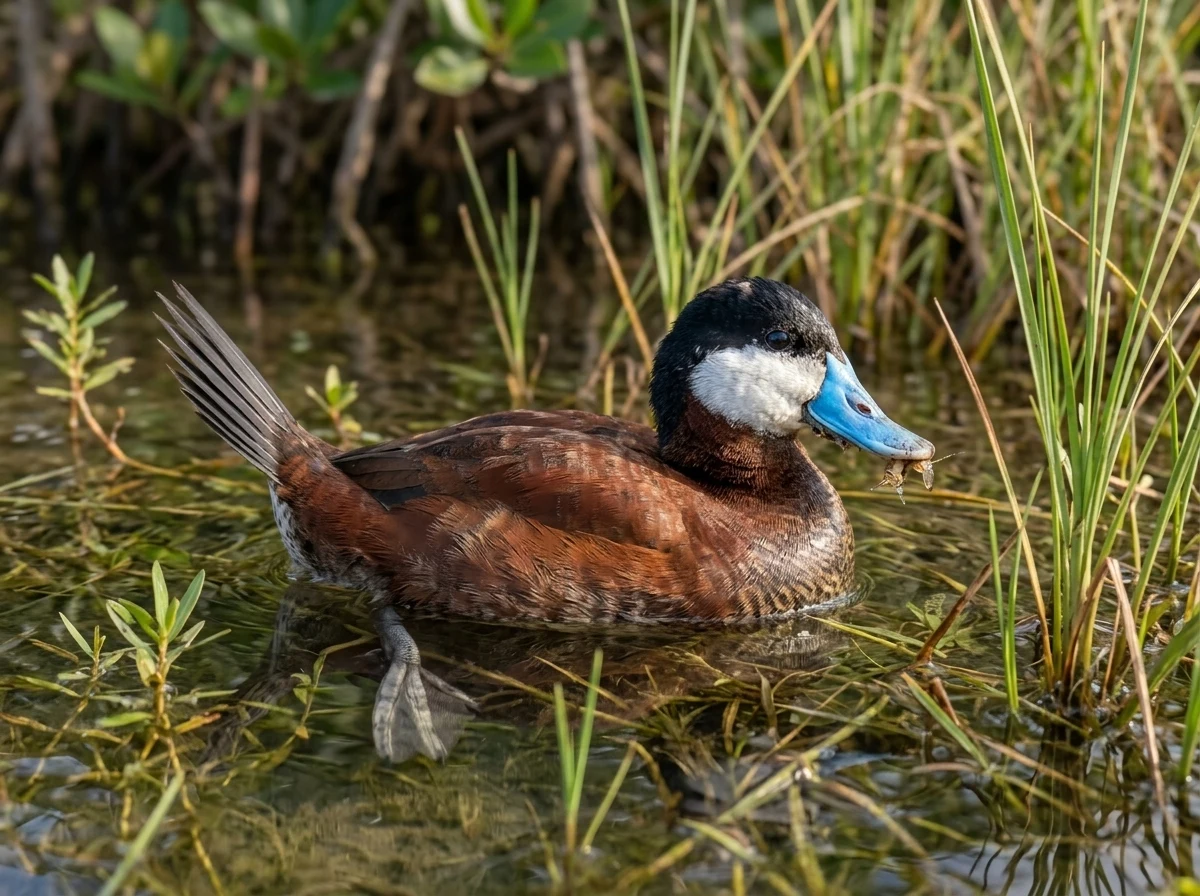 AI
AI01
Do ducks have a wax layer that keeps them dry?
The available source describes a secretion from the uropygial gland, not a permanent wax layer. The duck squeezes the gland with its bill and spreads the secretion through the feathers during preening. That hydrophobic secretion contributes to feather flexibility and water repellence.
02
What happens if a duck has no access to water?
In a study of 120 Pekin ducks, those without access to a pool showed significantly inhibited uropygial gland development and spent less time preening. Wet preening relies on water access, so without water a duck cannot complete that part of plumage maintenance.
03
Is bathing only for cleaning feathers?
No. The bathing sequence, with head and wing immersion, shaking water over the body and subsequent preening, is part of plumage maintenance. In addition, open water helps ducks regulate temperature, because birds do not sweat and rely on evaporative cooling through panting and unfeathered surfaces.
04
Can I see this behavior in Puerto Rico?
The catalog lists the White-cheeked Pintail and the Ruddy Duck as resident and breeding in Puerto Rico, with native and natural occurrence. That does not imply abundance or guarantee observations at a particular place. If you watch waterbirds, keep your distance, do not surround the water and do not disturb the birds.
05
How can I record what I see?
Use a field notebook and note the time, place, number of ducks and which movements you observed: oiling, nibbling, bathing, wet preening or resting. You do not need to identify the species to describe the behavior. If you use eBird, a complete checklist with behavior notes is more useful than an incomplete one.
Keep exploring
Connected routes
Sources and review
The evidence is one link away.
These sources support the editorial scope of this guide. Bird profiles also retain their own taxonomy, occurrence, and conservation references.
Reviewed:
The atlas continues