 AI
AIBehavior guide
How Perching Birds Sleep Without Falling
A tendon mechanism and one-eye-open sleep explain why a bird can doze on a branch without falling.
Reviewed: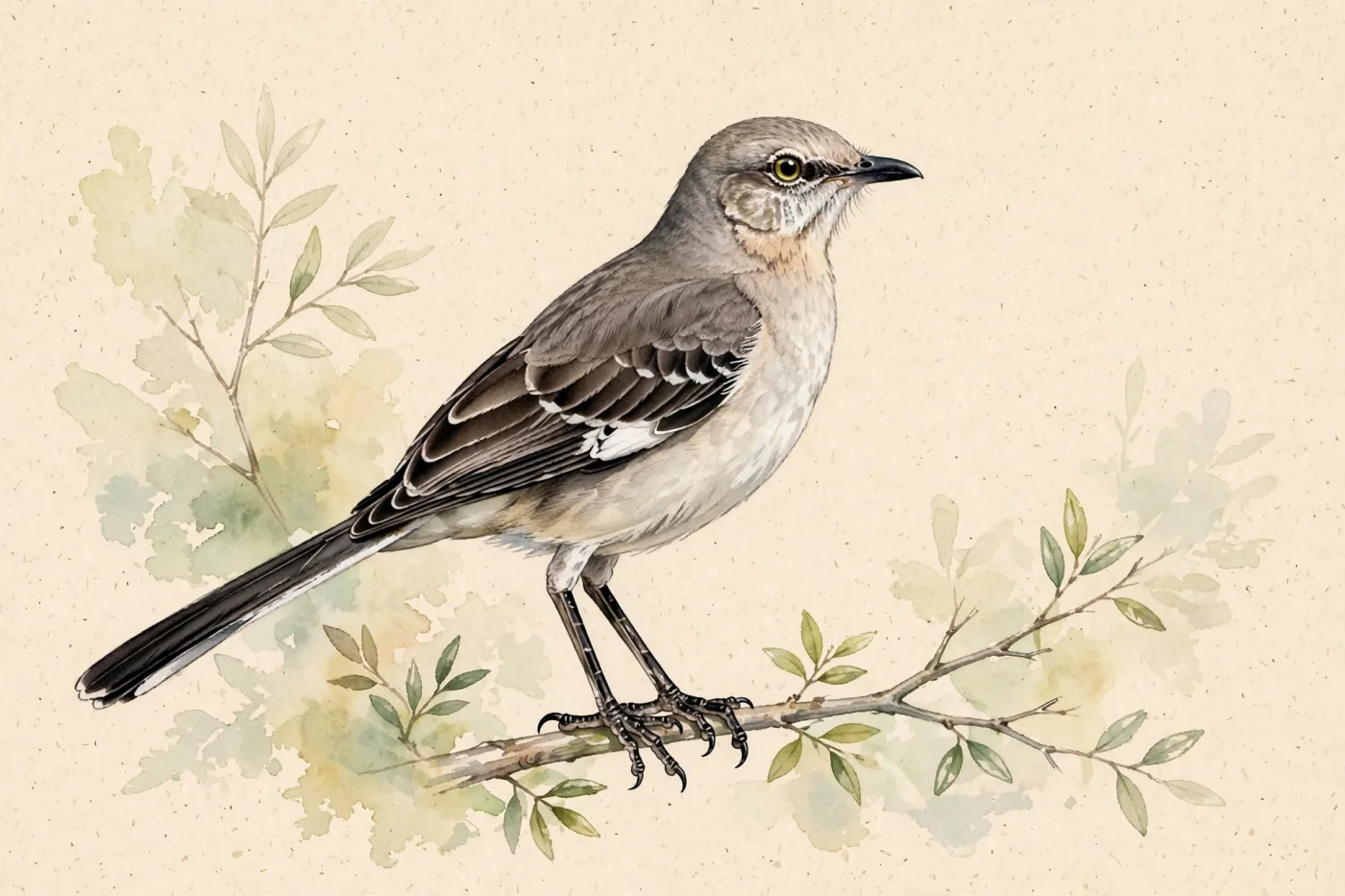
Prepared with AI assistance and linked sources. Illustrations are not field photographs.
The core question
A bird perched on a branch appears to do the impossible: it falls asleep and does not fall. The answer combines two different things. One is mechanical: the foot of a perching bird closes around the branch, and the bird's body weight helps maintain the grip. The other is neurological: bird sleep can be asymmetric, with one hemisphere sleeping more deeply than the other and one eye open.
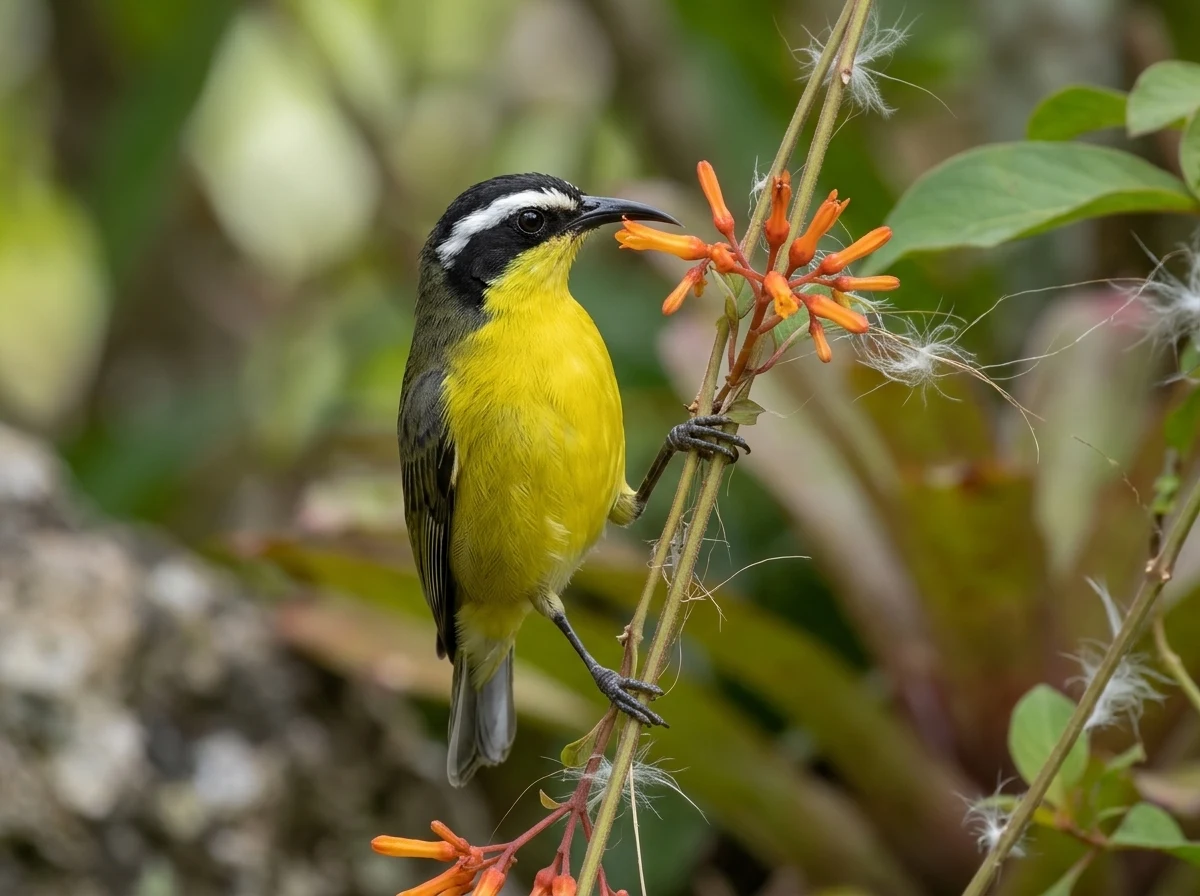
This guide separates both mechanisms, explains what has been studied in birds, and clarifies what is known and not known for two species documented in Puerto Rico: the Bananaquit (Reinita Común) and the Northern Mockingbird (Ruiseñor).
Behavior guide
Three key ideas
Tendón y pesoThe grip does not require conscious effortThe foot closes around the branch and body weight helps keep it closed.
Un ojo abiertoAsymmetric sleep allows monitoringOne hemisphere sleeps more deeply while the opposite eye stays open.
Dos especies boricuasBananaquit and Northern MockingbirdBoth are documented in Puerto Rico and serve as local examples.
01
The foot that closes by itself
When a perching bird settles on a branch, the flexor tendons of its toes tighten as the leg bends. This mechanism closes the toes around the branch without the bird having to consciously squeeze. At the same time, the body weight on the leg helps keep the grip closed. That is why the bird can relax and still hold on.
This system belongs to perching birds, not to all birds. Birds that walk, swim, or spend much time in water do not rely on the same kind of grip. On a branch, however, the foot works like a hook that secures itself.
02
Sleeping with one eye open
Bird sleep is not always symmetric. In several species, asymmetric or unihemispheric NREM sleep has been described: one brain hemisphere shows deeper slow waves while the other remains more awake. In cases where eye state has been examined, the eye opposite the more deeply sleeping hemisphere is usually closed, and the other eye stays open.
That open eye is not a meaningless detail. In captive ducks, individuals sleeping at the edge of a group spent more time with one eye open than ducks sleeping surrounded by other ducks, and they directed their gaze away from the group. They also responded quickly to a threatening visual stimulus presented to the open eye. This suggests the open eye serves to monitor the surroundings while part of the brain sleeps.
03
The extreme case: sleeping in flight
The study of asymmetric sleep is not limited to perched birds. In great frigatebirds, sleep was recorded during flight, mainly while soaring on rising air currents. NREM sleep was more often asymmetric in flight than on land, and nearly half of those episodes exceeded the threshold for unihemispheric sleep. Episodes could last several minutes.
However, frigatebirds slept less than one hour per night. This suggests that sleeping with one hemisphere awake is not enough for all ecological demands. Asymmetric sleep is a useful adaptation, but it does not remove the need to be fully awake at certain times.
04
Two Puerto Rico examples
The Bananaquit (Coereba flaveola) is documented in Puerto Rico, where the subspecies portoricensis is recognized. It is a small, active bird that frequents a wide variety of habitats, from forests to gardens. Its size and behavior make it an everyday example of a perching bird.
The Northern Mockingbird (Mimus polyglottos) is also documented in Puerto Rico. It is a larger bird, known for mimicking sounds and defending its territory. Both species perch on branches and shrubs, and both belong to the group of perching birds. However, the same kind of asymmetric sleep study done with ducks and frigatebirds has not been documented for these species. What we know about the mechanism comes from other birds.
05
How to observe without disturbing
To observe resting behavior, choose a quiet spot where birds perch frequently. Sit at a distance that does not make them fly. Watch whether the bird keeps one eye open while the other is closed, whether it changes posture, or whether it responds to sounds or movement. Note the time, the type of branch, and whether other birds were nearby.
Do not try to get closer for a better look. Respectful observation is more valuable than a close photo. If the bird wakes up and leaves, you have already learned something: the open eye was working.
Linked profiles
Birds in this guide
Two perching birds documented in Puerto Rico that illustrate the topic.
AI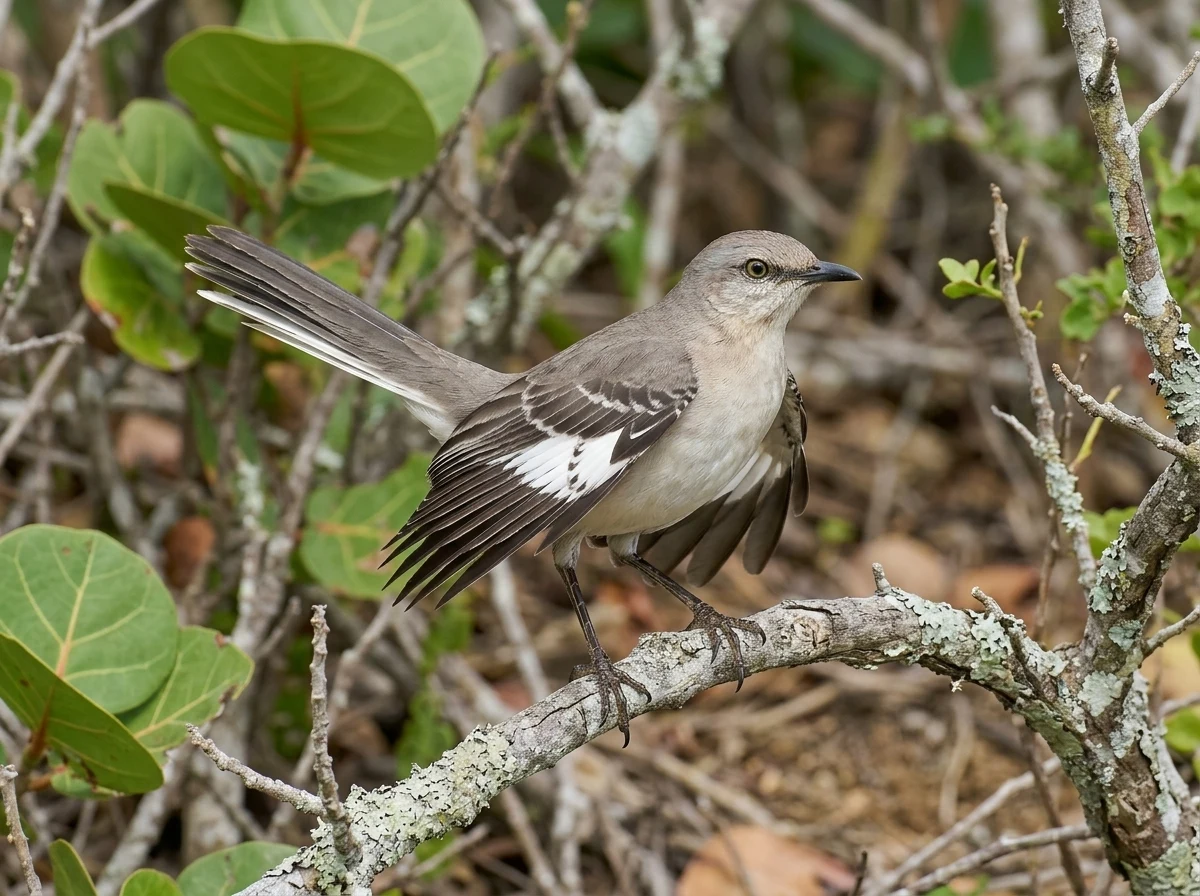 AI
AI01
Do birds fall off the branch when they fall asleep?
They usually do not fall because the foot closes around the branch via tendons and body weight helps maintain the grip. In addition, sleep can be asymmetric, with one open eye monitoring.
02
Do all birds sleep with one eye open?
Not all. Asymmetric or unihemispheric sleep has been described in several bird species, but it is not universal. It has been observed in some species and not studied in others.
03
Do the Bananaquit and Northern Mockingbird sleep this way in Puerto Rico?
Both species are documented in Puerto Rico and are perching birds. However, the same kind of asymmetric sleep study done with ducks and frigatebirds has not been documented for them. The general mechanism is known from other birds.
04
Can I see this behavior in my yard?
Yes, if you have shrubs or trees where birds perch. Observe from a distance and with patience. The Bananaquit and Northern Mockingbird are birds that may visit gardens and open areas.
Keep exploring
Connected routes
Sources and review
The evidence is one link away.
These sources support the editorial scope of this guide. Bird profiles also retain their own taxonomy, occurrence, and conservation references.
Reviewed:
01↗02↗03↗
PMC / Frontiers in Neuroscience (peer-reviewed review)
Local Aspects of Avian Non-REM and REM Sleep
Evidence for cited sections; consult the original document.Cornell Lab of Ornithology
Bananaquit (Coereba flaveola) — Birds of the World species account
Evidence for cited sections; consult the original document.eBird / Cornell Lab of Ornithology
Northern Mockingbird (Mimus polyglottos) — Puerto Rico region species page
Evidence for cited sections; consult the original document.The atlas continues