 AI
AIBehavior guide
How Pigeons Drink Water
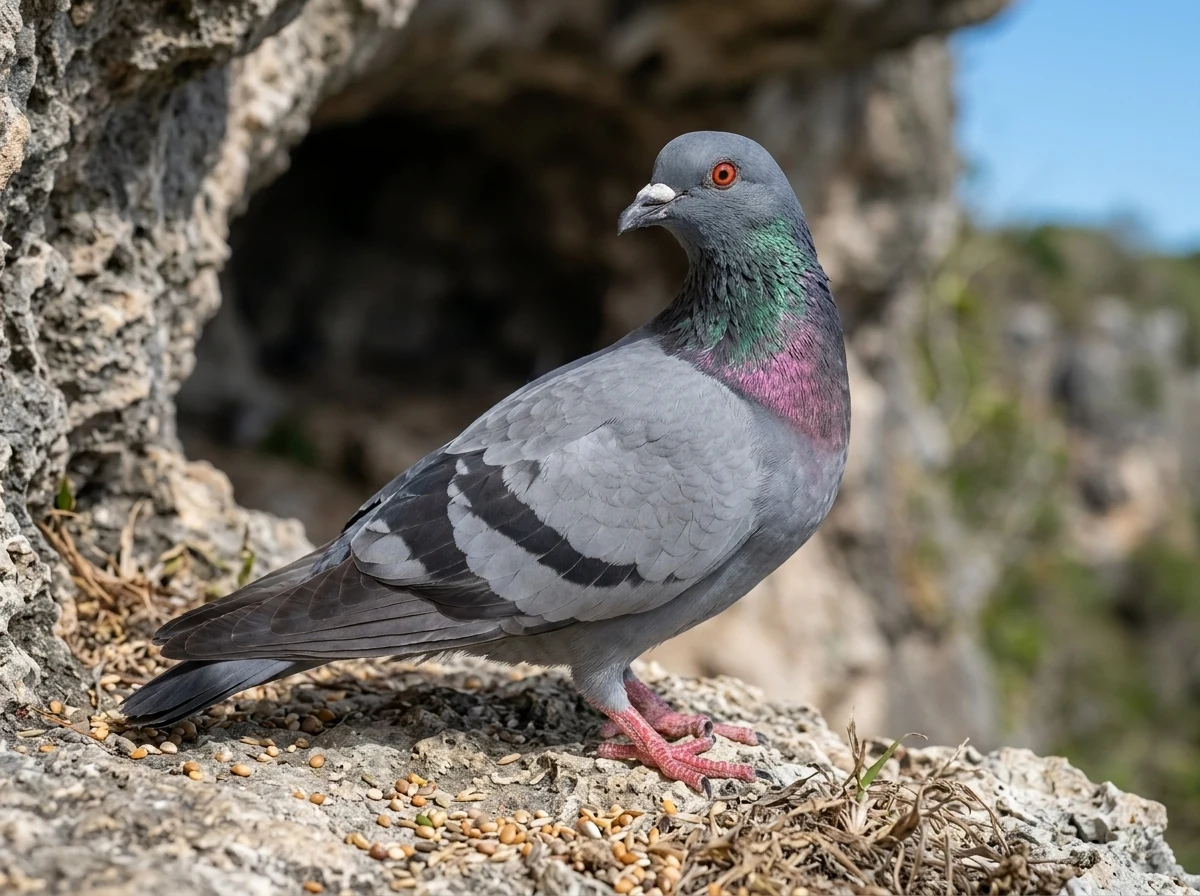
An easy-to-observe behavioral difference: a pigeon sucks water with its bill submerged, while most birds let water run down the throat with the head tipped back.
Reviewed: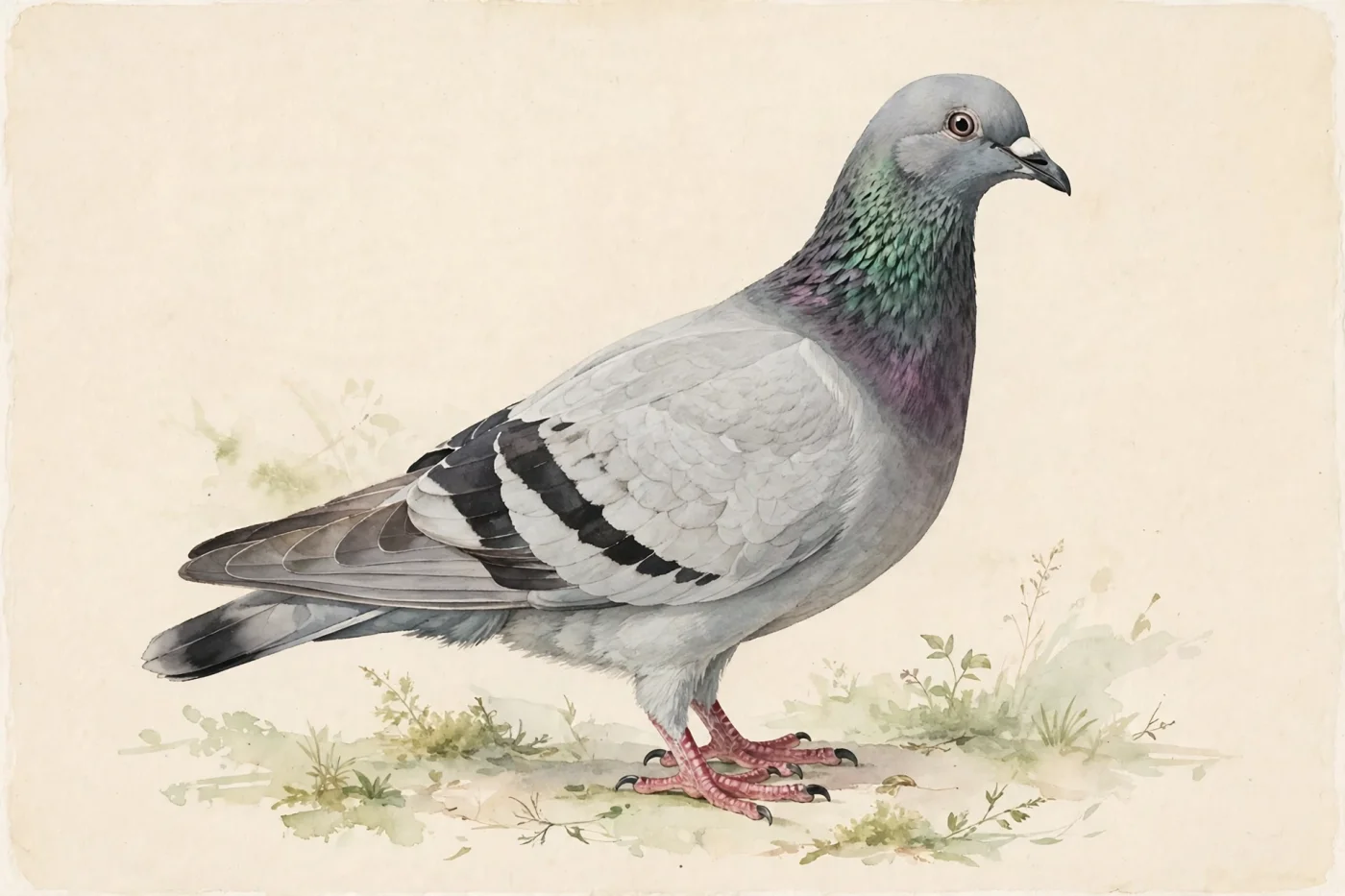
Prepared with AI assistance and linked sources. Illustrations are not field photographs.
The short answer
A pigeon drinks by suction. It puts its entire bill into the water, and muscles in its throat squeeze the liquid up into its mouth, with no need to raise its head. BirdNote puts it plainly: pigeons are among the few birds that can suck in water with their heads down. Veterinarian Marcie Logsdon, quoted by Washington State University's Ask Dr. Universe, compares it to slurping through a straw—as if the straw were your whole mouth.
That contrasts with the more common method. A robin, for example, takes a mouthful of water and then tips its head way back so the water runs down its gullet. At a birdbath, most of the birds you see—finches, warblers, sparrows—make that head-back motion. Pigeons and doves do not.
Behavior guide
Three ideas to remember
SucciónDrinking methodBill submerged and throat muscles, without tipping the head.
Cabeza atrásMethod of most birdsThey scoop water and then tip the head so it goes down.
Dos especiesExamples in this guideRock Pigeon and White-winged Dove, both columbids.
01
The mechanism: bill in and throat that pushes
The key is in the anatomy of the mouth and throat. Ask Dr. Universe explains that pigeons and doves adapted to drink by suction: they poke their entire bills into the water, and muscles in their throats squeeze the water up into their mouths. There is no head tipping or pause to swallow by gravity. Water rises by muscular action.
BirdNote adds the comparative context: most birds cannot do this. A robin takes a mouthful and tips its head back to send the water down its gullet. Swallows and swifts, by contrast, skim the water's surface in flight and scoop up a beakful. Pigeons and doves have their own solution: suction with the head down.
02
Why it matters: identification and observation
Ask Dr. Universe notes that this drinking style is so unique that bird books highlight it as a way to identify pigeons and doves. In Puerto Rico, that clue can help you separate columbids from other birds visiting the same water source. The Rock Pigeon (Columba livia) is introduced on the island, according to the catalog; the White-winged Dove (Zenaida asiatica) is native. Both belong to the family Columbidae and share the suction method.
Observation requires no special equipment. A clean birdbath, a sidewalk puddle, or a quiet water edge is enough. The important thing is to watch the head: if the bird raises it after each sip, it is probably not a pigeon. If it keeps its bill in and drinks steadily, you are seeing suction.
03
Practical comparison: pigeon, robin, and swallow
Picture three birds at the same puddle. The pigeon puts its whole bill in, keeps it there, and sucks; its head stays low. The robin scoops water in the lower bill, lifts its head, and tips it back so the water goes down. The swallow does not even land: it swoops low, skims the surface, and moves on. Three different solutions to the same problem.
This comparison is useful because it does not depend on colors or sizes. You can do it anywhere there is water. If you see a bird drinking, ask yourself: did it raise its head? Did it keep its bill in? Did it drink in motion or while perched? Those three questions tell you more about behavior than any plumage detail.
04
Activity: watch and note without disturbing
Choose a spot with visible water and sit at a distance that does not scare the birds. For ten minutes, watch each bird that drinks and note three things: whether it raised its head after swallowing, whether it kept its bill in the water, and whether it drank while perched or in flight. You do not need to identify the species to record the behavior; the behavior is the data.
When you finish, compare your notes with what the sources describe. If you saw a bird with its bill in and its head low, it was probably a pigeon or dove. If you saw the head tipped back, it was the common method. This activity requires no capturing, touching, or feeding. Just watching and noting.
Linked profiles
The birds in this guide
Two columbids that share the suction method: one introduced and one native.
AI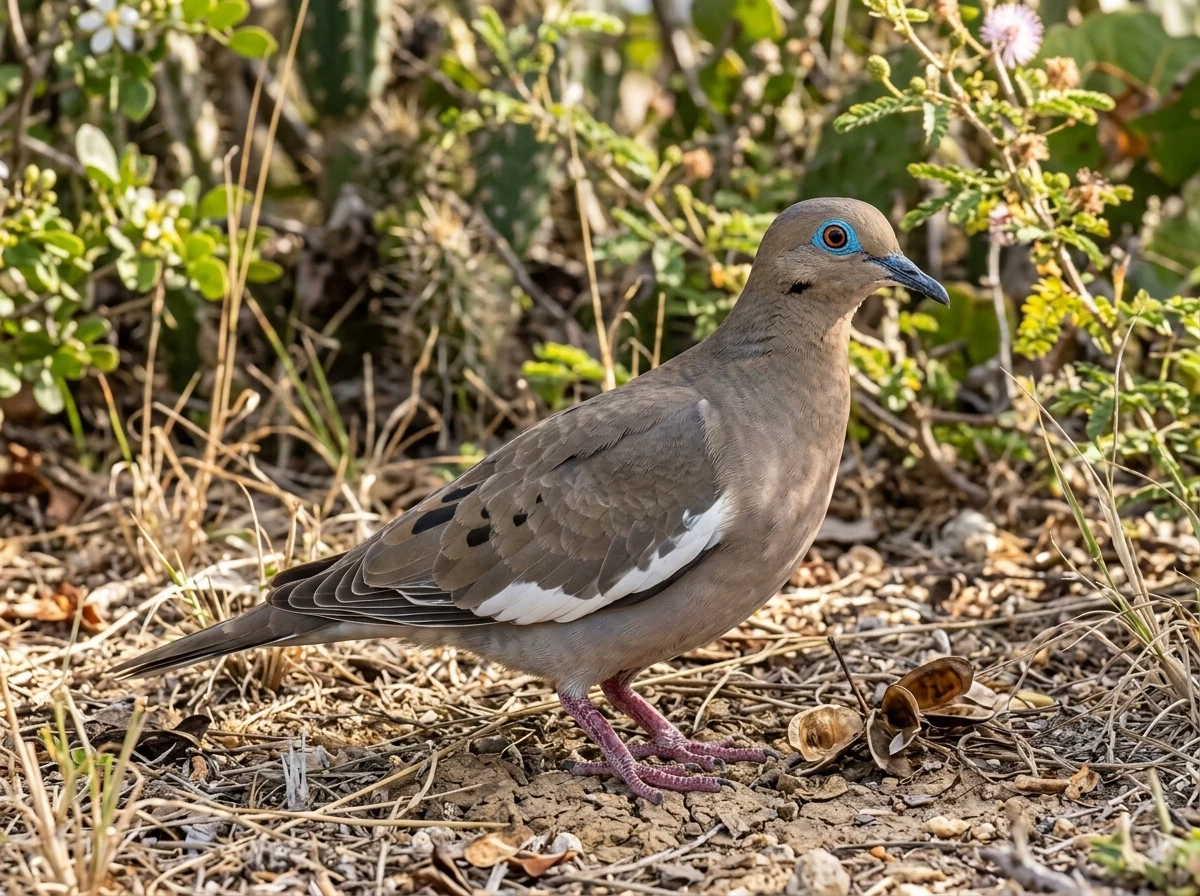 AI
AI01
Do pigeons tip their heads back to swallow water?
No. BirdNote states that pigeons are among the few birds that can suck in water with their heads down. Ask Dr. Universe explains that they poke their entire bills in and throat muscles squeeze the water up into their mouths, without tipping the head.
02
Do all birds drink the same way?
No. BirdNote describes several methods: the robin takes a mouthful and tips its head back; swallows and swifts scoop water in flight; pigeons suck with their heads down. Ask Dr. Universe adds that birds of prey get much of their water from their prey.
03
Does the White-winged Dove drink like the Rock Pigeon?
Both belong to the family Columbidae and share the suction method described for pigeons and doves. In the catalog, the Rock Pigeon appears as introduced in Puerto Rico and the White-winged Dove as native. No abundance is inferred from this.
04
Can I observe this behavior in my yard?
If you have a clean birdbath or a quiet puddle, yes. The activity in this guide only requires watching from a distance and noting whether the bird raises its head or keeps its bill in. You do not need to identify the species to record the behavior.
Keep exploring
Connected routes
Sources and review
The evidence is one link away.
These sources support the editorial scope of this guide. Bird profiles also retain their own taxonomy, occurrence, and conservation references.
Reviewed:
The atlas continues