 AI
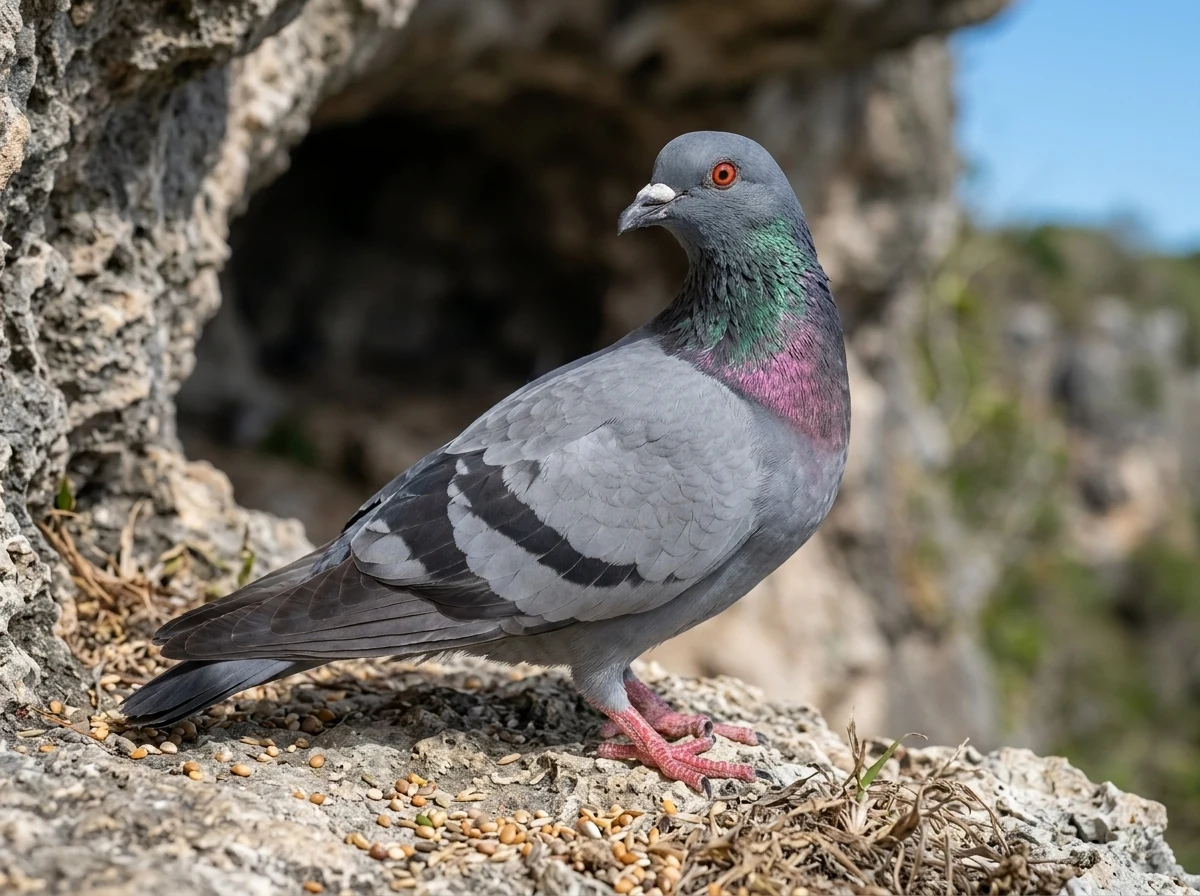
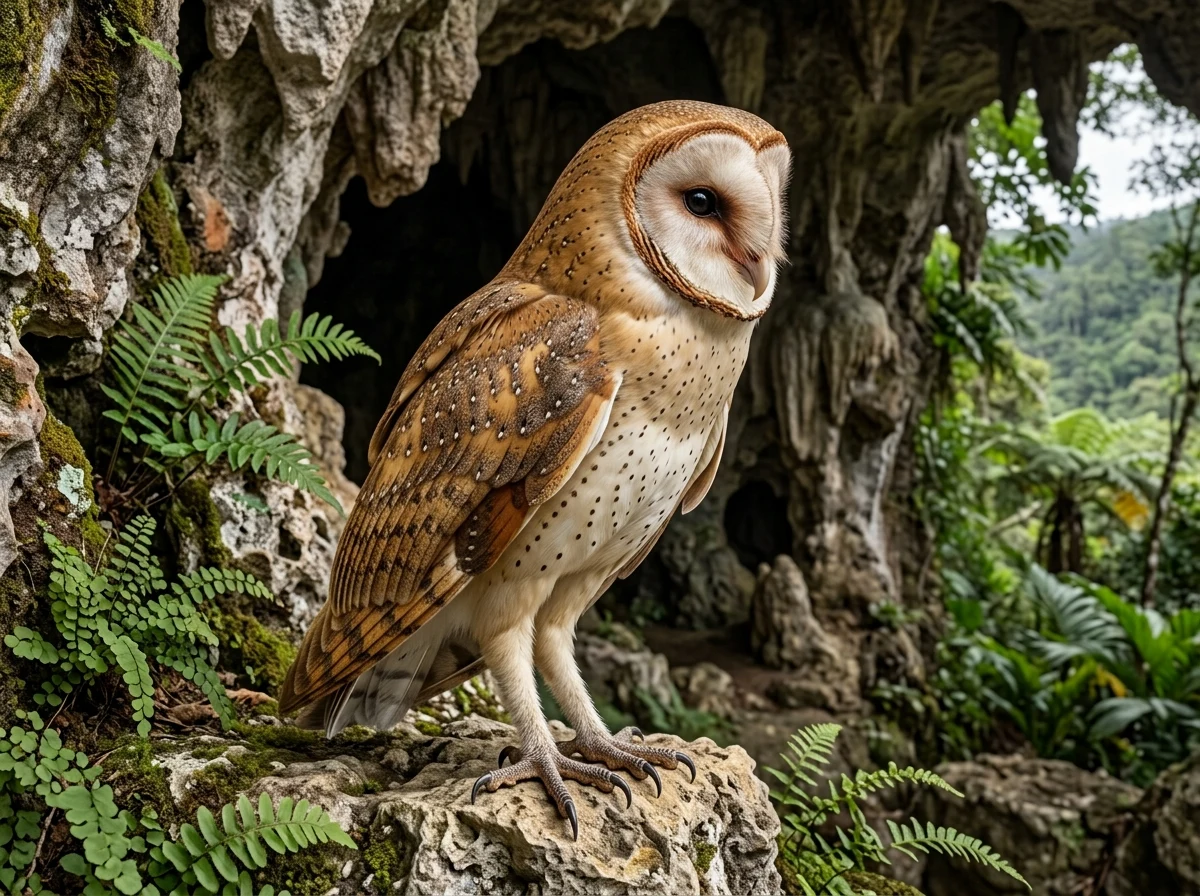
AIAI reconstruction created with Nano Banana 2 · 1K, grounded in the profile’s documented taxonomy, habitat, natural-history sources, and an open-license visual reference when available. It is an interpretive image, not documentary evidence. Image policy →
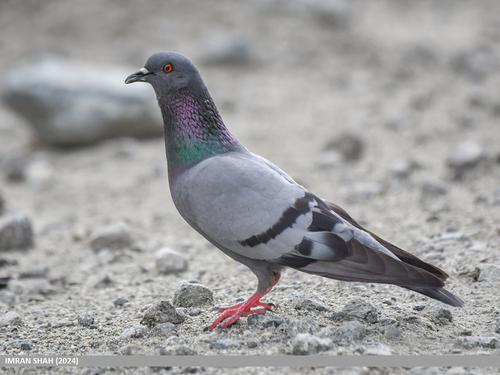
Rock Pigeon
Paloma Común
Columba livia
The rock dove (Columba livia), also known as the common pigeon or "rock pigeon", is a member of the bird family Columbidae (doves and pigeons). In common usage, it is often simply referred to as the "pigeon", although the rock dove is the wild form of the bird; the pigeons familiar to most people are the domesticated forms of the wild rock dove. Wild rock doves are uniformly pale grey with two black bars on each wing, with few differences being seen between males and females; i.e. they are not strongly sexually dimorphic. The domestic pigeon, often, but invalidly, called "Columba livia domestica", which includes about 1,000 different breeds, is descended from this species. Escaped domestic pigeons are the origin of feral pigeons around the world. Both forms can vary widely in the colour and pattern of their plumage unlike their wild ancestor, being red, brown, checkered, uniformly coloured, or pied. Habitats include various open and semi-open environments where they are able to forage on the ground. Cliffs and rock ledges are used for roosting and breeding in the wild. Originating in Southern Europe, North Africa, and Western Asia, when including their domestic and feral descendants, they are an example of a least-concern species per IUCN among birds, being abundant with an estimated population of 17 to 28 million wild and feral birds in Europe alone and up to 120 million worldwide.
Sound archive
Hear its voice
Explore real songs and calls. The spectrogram turns each sound into a visual trace of time and frequency.

Play: song by Sonothèque ADVL
Choose another recording
Sound recorded by Sonothèque ADVL · XC1136258 · CC0 1.0. Visualization by Stichting Xeno-canto voor Natuurgeluiden.
Every recording retains the creator, catalogue number, and license published by Xeno-canto. Metadata via GBIF ↗
Island profile
About the Rock Pigeon
This atlas includes Rock Pigeon (Columba livia) with atlas status “Introduced” within scope “Avibase inferred core 380.” Global trait data associate it primarily with rocky; consult the linked records to resolve its Puerto Rico habitat use.
Conservation
Least Concern
IUCN LC
- Global IUCN
- LC
- Puerto Rico DNER
- No current listing in source crosswalk
- Federal ESA
- No current listing in source crosswalk
- Critical habitat
- Not identified in source crosswalk
Natural history
How it lives
- Habitat
- cliffs-and-caves
- Elevation
- 0–3000 m
- Nest
- Cup / bowl · Building; Rock
- Clutch
- 2–2 eggs
- Social behavior
- Colonial
Keep exploring
This bird belongs to 6 paths through the atlas.
Guides featuring this bird
Follow this record beyond the profile.
Identification, sound, place, and explanatory guides connecting this species to larger questions.
Related in the atlas
Where to fly next
Connected by taxonomy, habitat, occurrence, and conservation.
 AI
AI AI
AI AI
AI AI
AI AI
AI AI
AI
Evidence trail