 AI
AIOne family, many names
Dove vs. pigeon: what the difference really is in Puerto Rico
Paloma, tórtola, rolita, and paloma perdiz are words of usage, not biological categories. Understanding how Puerto Rico uses them helps you identify the 13 species in SOPI's catalog.
Reviewed:Short answer: they are the same family.
There is no scientific difference between a dove and a pigeon: both belong to the family Columbidae, and the name is a matter of custom. Smaller, more delicate species tend to be called doves and larger, stouter ones pigeons, but there are exceptions both ways.
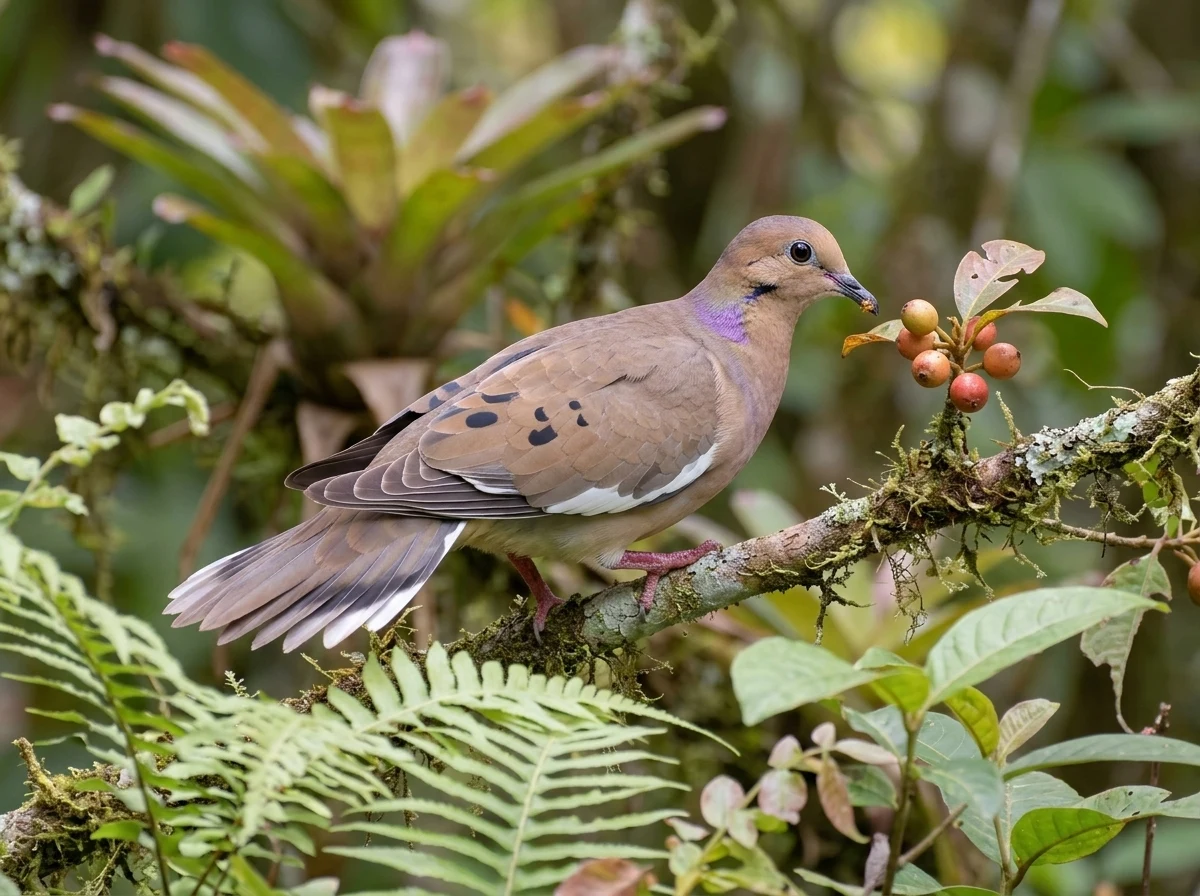
Puerto Rico's Spanish follows that custom fairly consistently. The palomas in the catalog are large forest or city birds (Scaly-naped, White-crowned, Plain, and the feral Rock Pigeon); the tórtolas are medium-sized seed eaters of open ground (White-winged, Zenaida, Mourning, and the collared-doves); the rolita (Common Ground Dove) is the smallest; and the palomas perdiz (quail-doves) walk the forest floor. This guide explains that logic, its exceptions, and the marks that separate each group.
One family, many names
The family in Puerto Rico
1family: ColumbidaePigeons and doves have no scientific distinction between them.
13species in SOPI's catalog7 named paloma, 5 named tórtola, and the rolita (2007 catalog).
≈10×from ground dove to Rock PigeonAbout 33 grams against about 350 in our catalog profiles.
86 %of hexagons with White-winged DoveThe most widespread member of the family in the 2004–2009 atlas.
01
Why there is no scientific difference
The UK's Royal Society for the Protection of Birds puts it plainly: pigeons and doves belong to the same family, Columbidae, and there is no scientific distinction between the two. People tend to call smaller, more delicate birds doves and stouter, more urban ones pigeons. Spanish does the same with tórtola and paloma, and English uses both words for one species: Rock Pigeon and Rock Dove are the same bird.
Genera do group related species, and in Puerto Rico they help more than the common word. Patagioenas holds the three large native pigeons; Columba, the feral Rock Pigeon; Zenaida, three native doves; Streptopelia, the two introduced collared-doves; Columbina, the Common Ground Dove; and Geotrygon, the quail-doves. When in doubt, think about genus and lifestyle, not just the name.
02
How Puerto Rico uses paloma and tórtola
SOPI's Catalog of the Birds of Puerto Rico (completed in 2007) lists 13 species in the family. Seven carry the name paloma: the feral domestic pigeon, Scaly-naped, White-crowned, Plain, and three quail-doves. Five are tórtolas: the turca (Eurasian Collared-Dove), the collarina (African Collared-Dove), White-winged, Zenaida, and the rabilarga or rabiche (Mourning Dove). The thirteenth is the rolita, Common Ground Dove.
The size rule works fairly well. In our catalog profiles, the large palomas average roughly 240 to 350 grams; the tórtolas, roughly 125 to 180; and the rolita, about 33. The big exception is the quail-doves: they are called palomas but weigh about what a dove does (roughly 125 to 200 grams) and behave like small forest fowl, walking under cover.
Names also shift with time and source. Wetmore recorded in 1916 that the Zenaida Dove was called tórtola or sanjuanera. The breeding bird atlas calls the Eurasian species Tórtola Collarina and the African one Paloma Collarina Africana, while SOPI's catalog calls the first Tórtola Turca and the second Tórtola Collarina. That is why it pays to note the scientific name.
03
Puerto Rico's doves and how to separate them
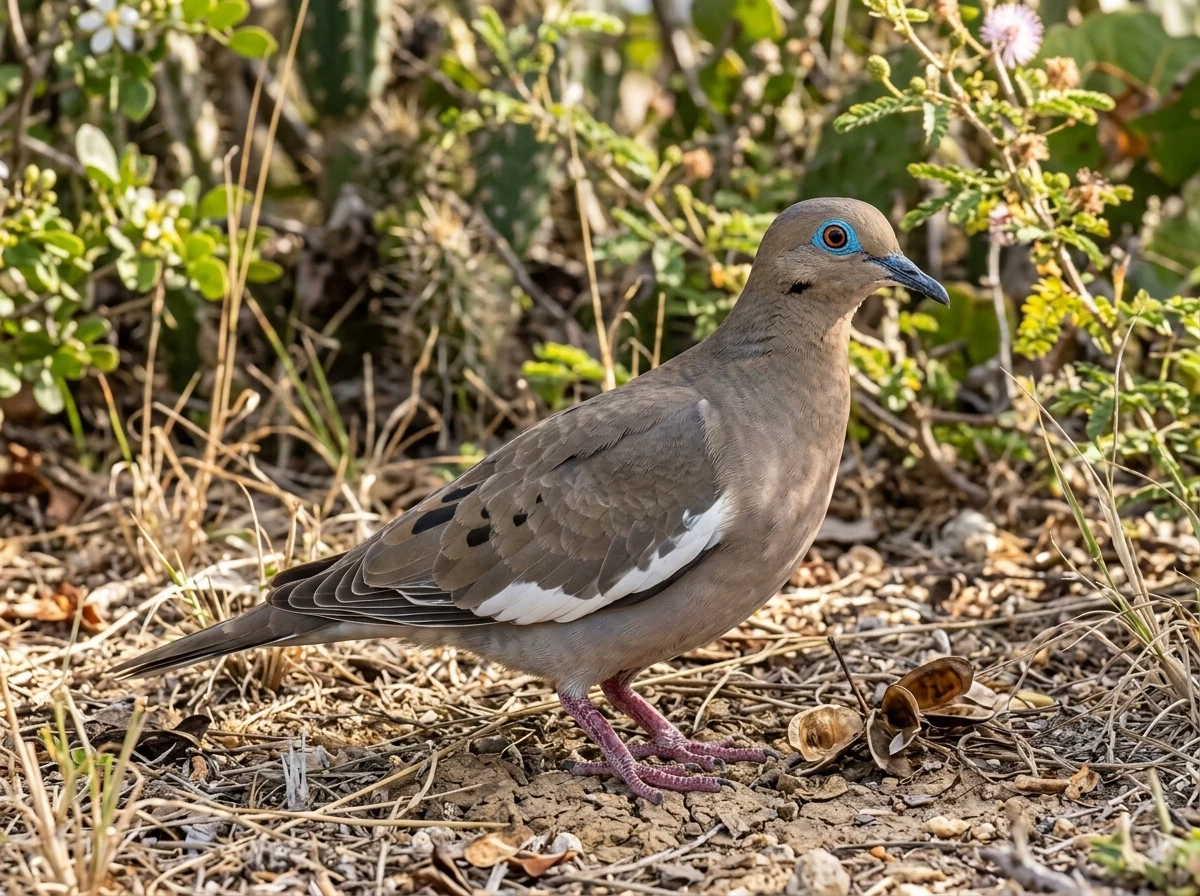
Zenaida Dove (tórtola cardosantera, 23–28 cm) is the typical native dove of yards, coasts, and farms; it appeared in 85 % of atlas hexagons. It has a relatively short, squared tail and a white trailing edge on the inner wing that shows as a white spot on a perched bird. White-winged Dove (tórtola aliblanca, 28–32 cm) is a bit larger and shows a broad white wing stripe; its song is rendered who-cooks-for-you. It was first recorded in Puerto Rico in 1943 and is now the most widespread member of the family (86 % of hexagons).
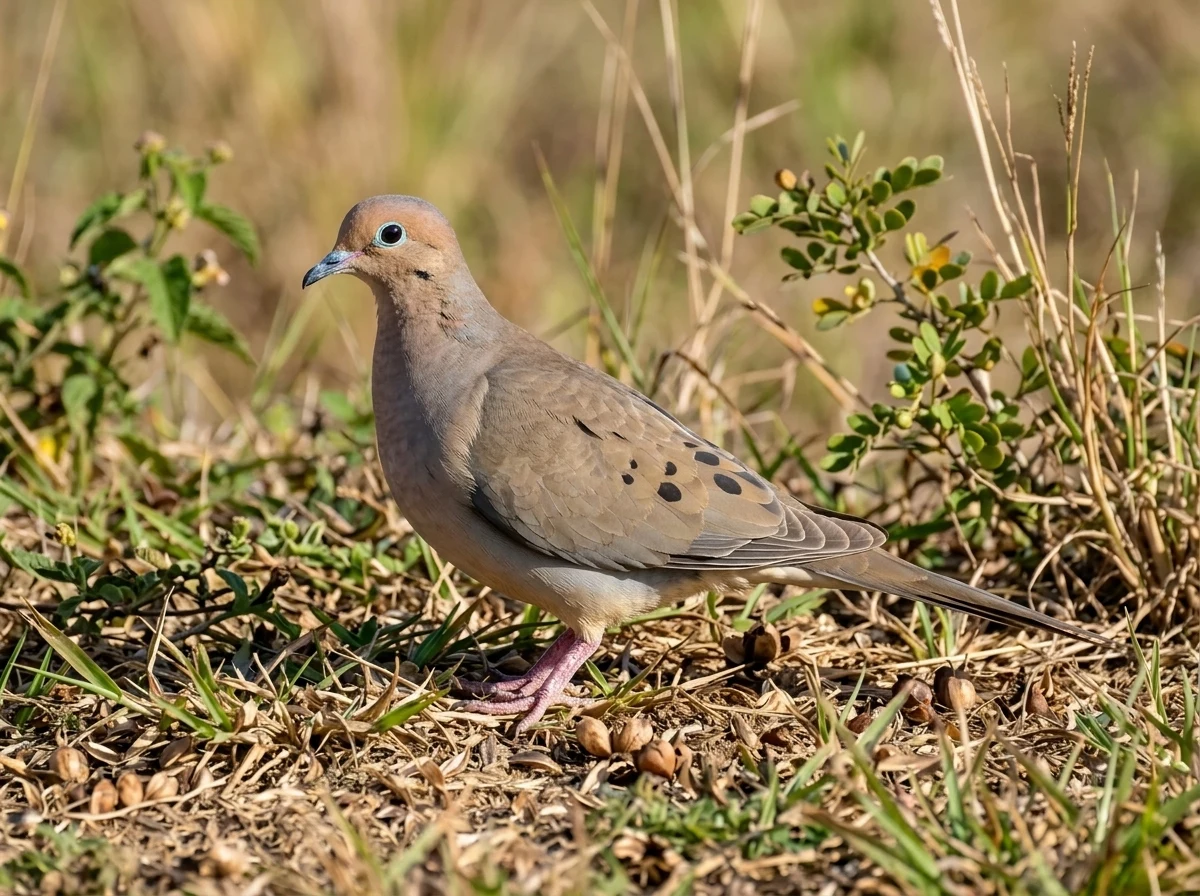
Mourning Dove (tórtola rabiche or rabilarga) is known by its long, pointed, white-edged tail and black spots on the wing. It was first reported on the island in 1935 and is far more local: the atlas found it in 16 % of hexagons, mostly on the south and southwest coast, in dry open country.
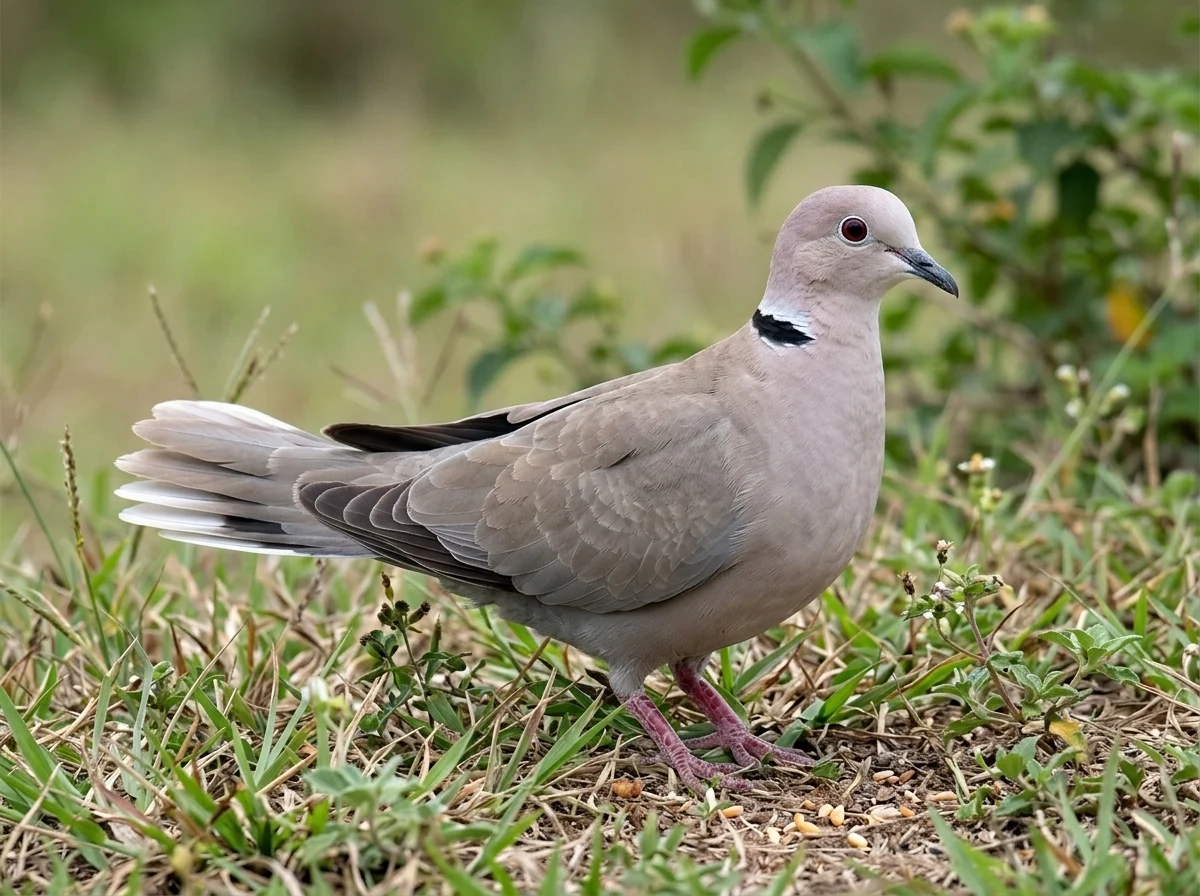
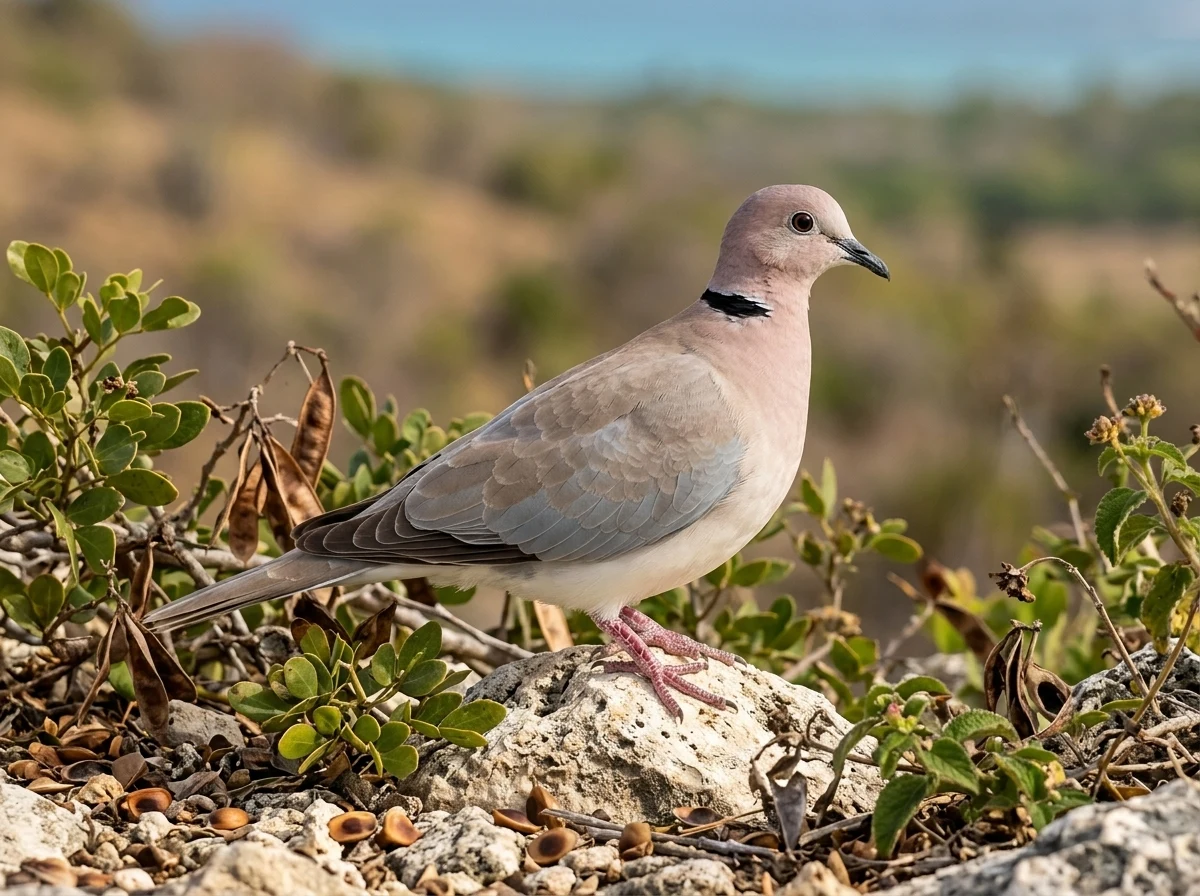
Both collared-doves are introduced and wear a black half-collar on the nape. The Eurasian is larger and darker; the African, smaller and paler, has been confirmed mainly along the south and southwest coast, with records from Cabo Rojo. Separating them requires good light, side-by-side size, and ideally voice. No native Puerto Rican dove has a black collar.
04
The large pigeons: forest, coast, and plaza
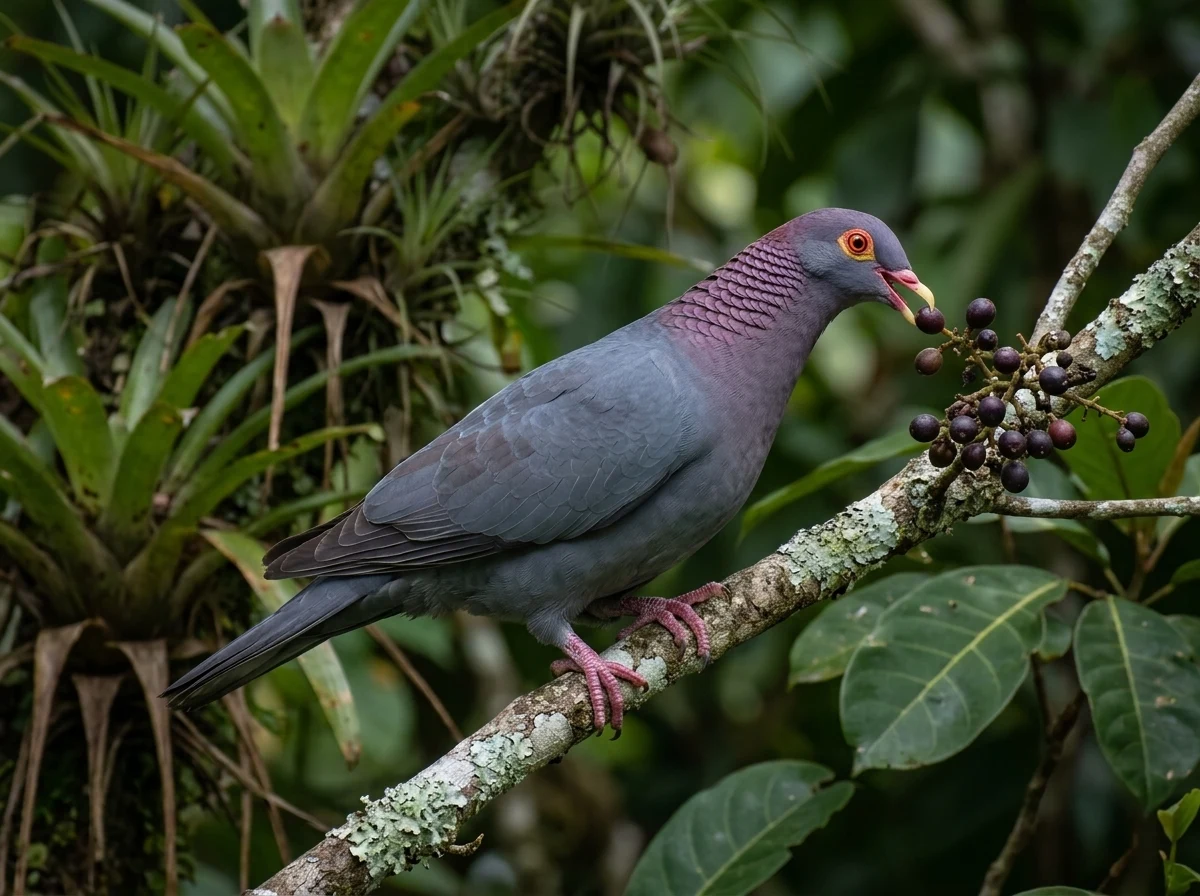
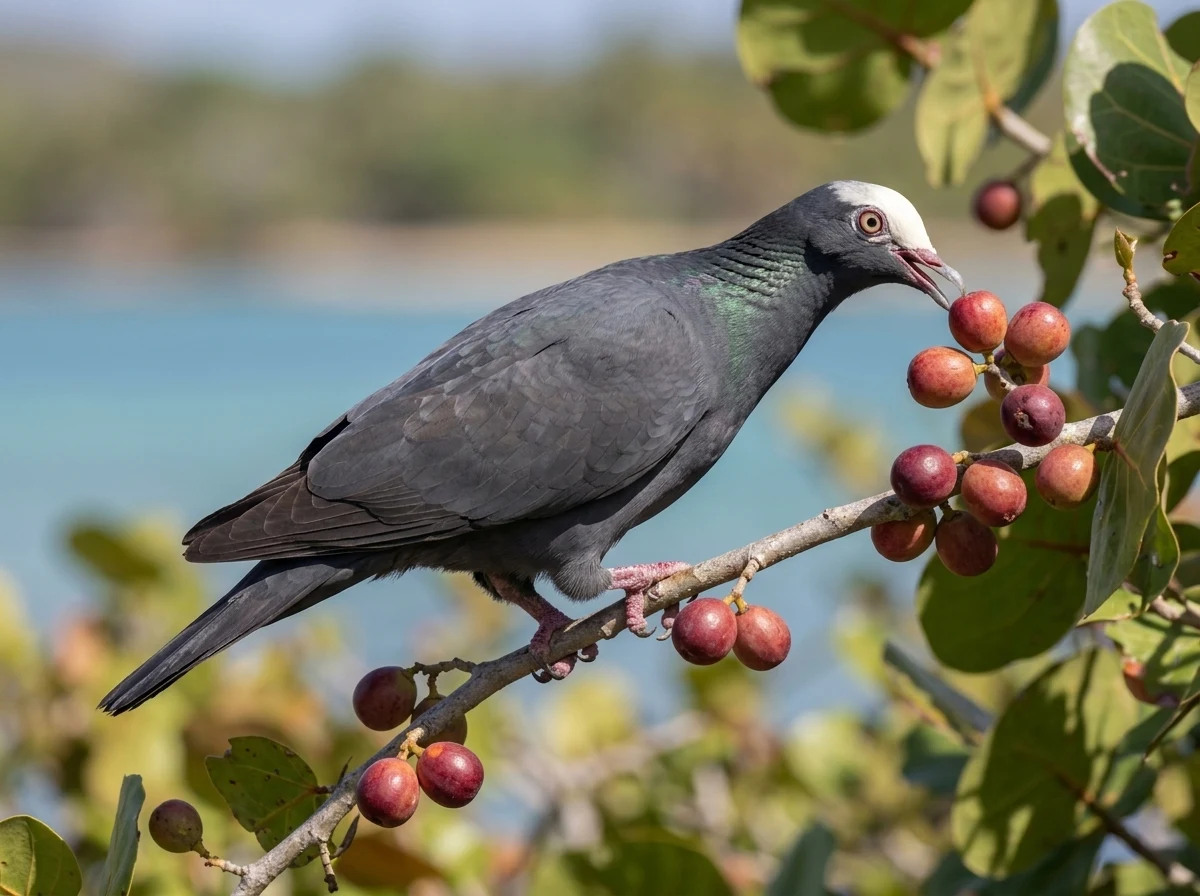
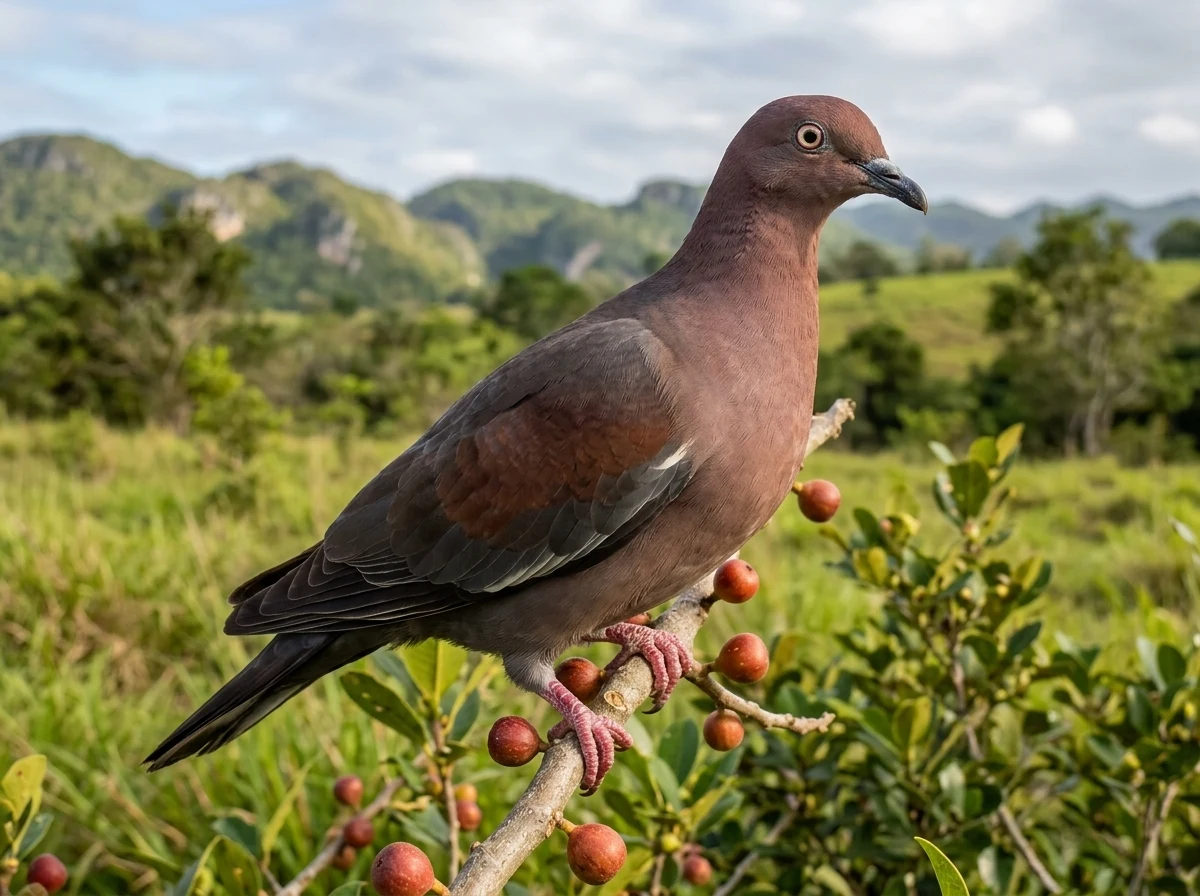
The three native Patagioenas pigeons eat mostly fruit and spend much of their time in trees. Scaly-naped Pigeon is slate gray with a wine-red neck and lives in humid forest; White-crowned Pigeon, dark with a white crown as an adult, is tied to mangroves and coastal forest and is rated Near Threatened by the IUCN; Plain Pigeon is endangered under DRNA rules and the federal Endangered Species Act, and the atlas found it in only 19 hexagons in east-central Puerto Rico.
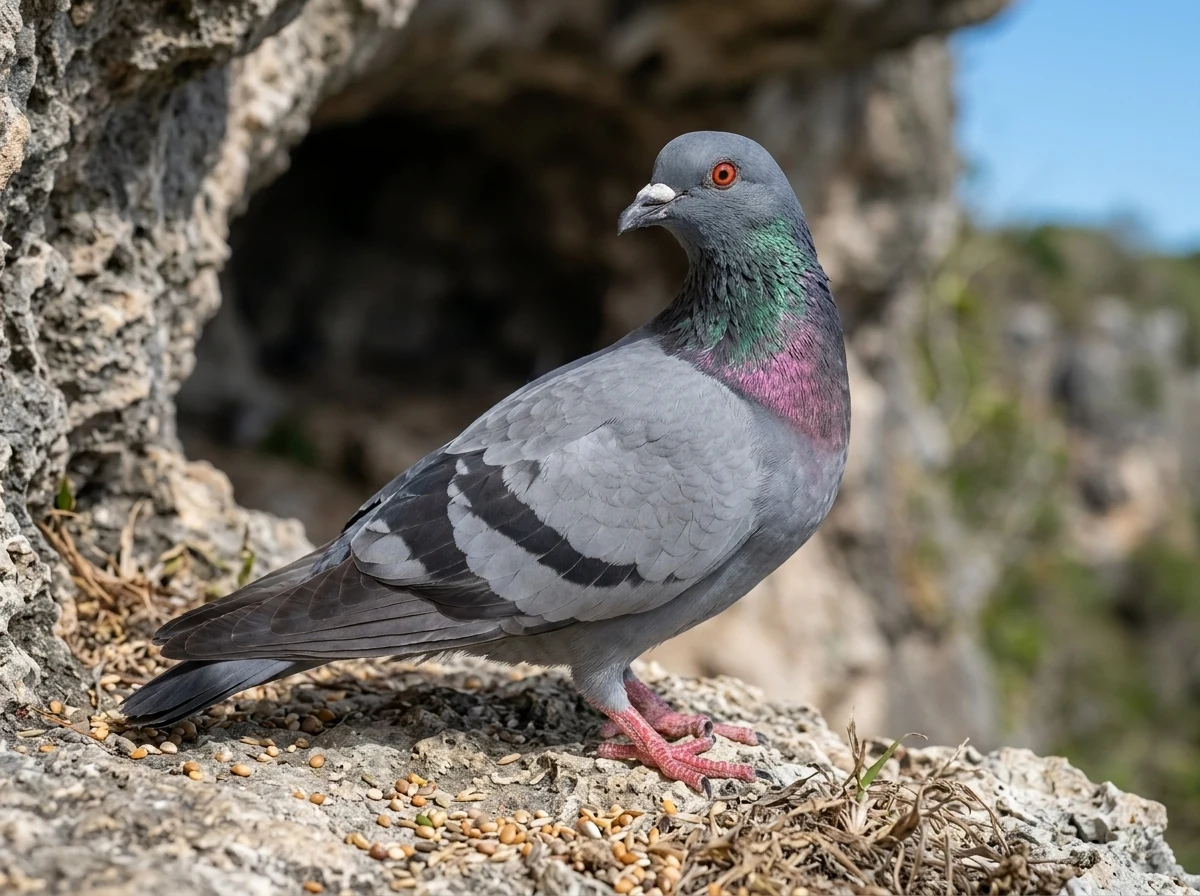
The Rock Pigeon (Columba livia) is the pigeon of plazas and buildings. It is introduced, eats seeds and food scraps on the ground, and in its wild-type plumage shows a white rump and two black wing bars, something no native pigeon has.
The diet split runs deep in the local literature. Wetmore found only fruit in the stomachs of Scaly-naped and White-crowned Pigeons, while Zenaida Doves and ground doves ate almost nothing but seeds. Fruit in trees or seeds on the ground: that clue often separates a pigeon from a dove before you see a single field mark.
05
What they all share
Pigeons and doves feed their young crop milk, a secretion from the crop produced by both parents; Audubon describes it for Rock Pigeon, and Wetmore observed it in Puerto Rico's ground doves, where the milk formed as a thick curd about half an hour after the birds drank. Most lay one or two eggs per clutch, usually in simple, flimsy stick nests.
They also share a body plan: small head, short slender bill, compact body, and short legs. That makes the family easy to recognize, and real identification starts afterward, with size, tail, wing marks, and habitat.
06
Why the difference matters under hunting rules
DRNA's season is literally called the pigeon and dove season, and species are not treated alike. In the 2022 notice the only native game species were Scaly-naped Pigeon (up to 5 a day) and three Zenaida doves (up to 30 combined, with no more than 10 Zenaida Doves and 3 Mourning Doves). Rock Pigeon and the introduced collared-doves could be taken without a bag limit during the season, as a control measure for exotic species.
White-crowned Pigeon, Plain Pigeon, the quail-doves, and Common Ground Dove are not among the permitted species in that notice, and pigeon and dove hunting was banned in a zone of Cidra, Caguas, Aguas Buenas, and Cayey to protect Plain Pigeon. Mixing up a pigeon and a dove, or a Plain and a Scaly-naped Pigeon, can be a violation: identify before shooting and confirm each year's current notice.
Linked profiles
Pigeons and doves to compare
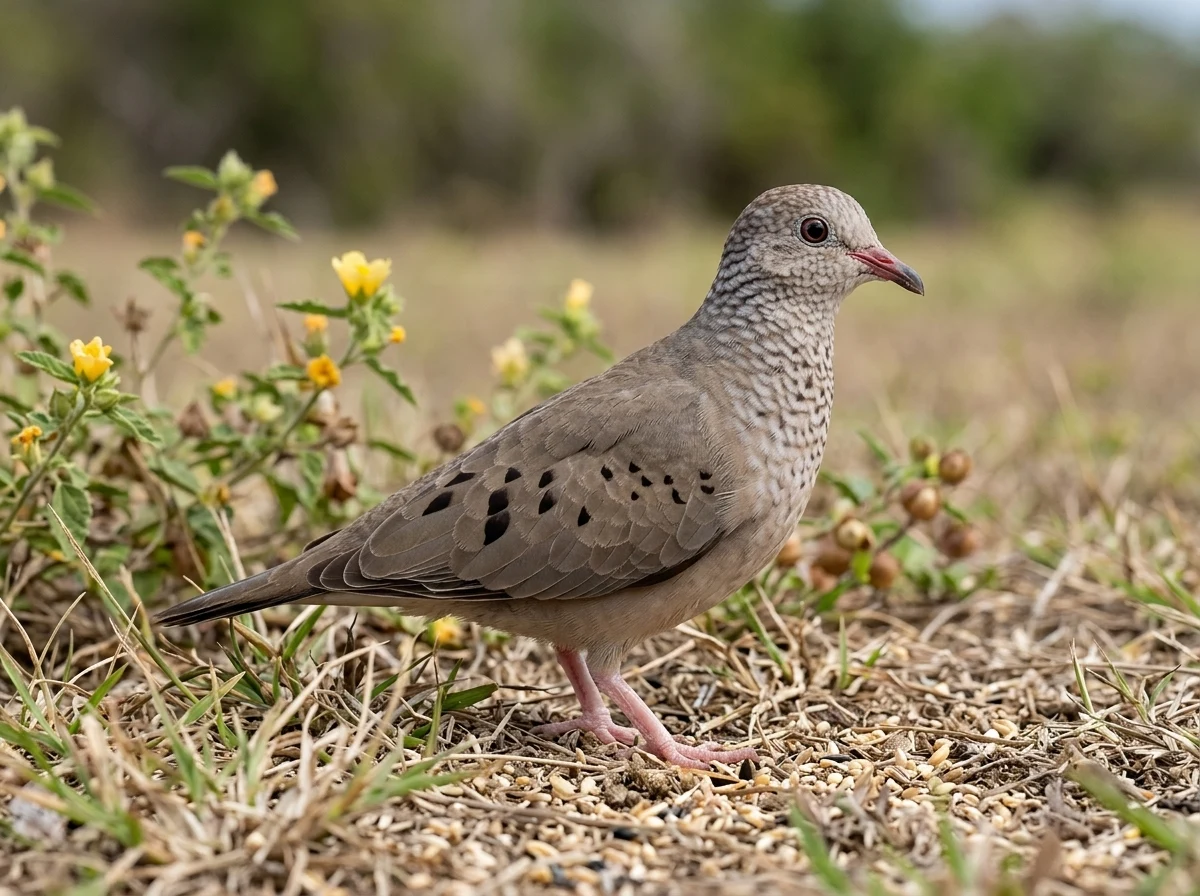
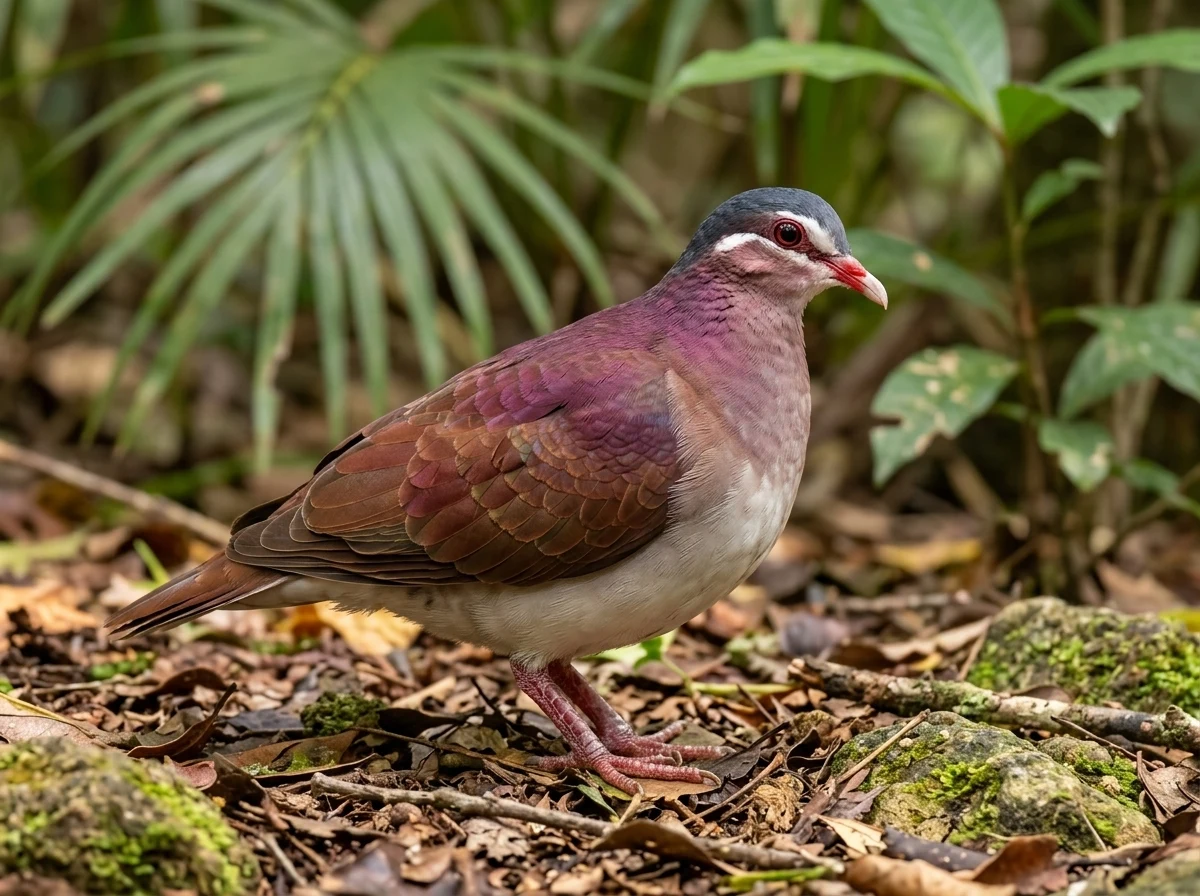
From Zenaida Dove to White-crowned Pigeon: open each profile for size, status, and sounds.
Sound archive
Hear its voice
Explore real songs and calls. The spectrogram turns each sound into a visual trace of time and frequency.
XC796584Recording 1 of 3song

Play: song by Bobby Wilcox
Choose another recording
Sound recorded by Bobby Wilcox · XC796584 · CC BY-NC-SA 4.0. Visualization by Stichting Xeno-canto voor Natuurgeluiden.
Every recording retains the creator, catalogue number, and license published by Xeno-canto. Metadata via GBIF ↗
01
What is the difference between a dove and a pigeon?
There is no scientific difference: both are birds of the family Columbidae. By custom, smaller, more delicate species are called doves and larger, stouter ones pigeons. In Puerto Rico the doves mostly eat seeds on open ground, while the large pigeons eat fruit in trees.
02
Is a dove the same as a pigeon?
They belong to the same family, but each name refers to different species. A Zenaida Dove and a Scaly-naped Pigeon are separate species with different size, diet, and habitat, even though they are relatives.
03
What doves live in Puerto Rico?
Three native doves—Zenaida, White-winged, and Mourning—and two introduced collared-doves, the Eurasian and the African. There are also the Common Ground Dove, the smallest, and the quail-doves of the forest floor.
04
How many kinds of pigeons and doves are in Puerto Rico?
SOPI's 2007 catalog lists 13 species in the family. This site's catalog has 16 profiles because it adds uncommon introduced species such as Diamond Dove, accidental records, and the extinct quail-dove known only from bones.
05
How do I tell a Zenaida Dove from a White-winged Dove?
Look at the wing. White-winged Dove has a broad white stripe along the wing, visible perched and in flight. Zenaida Dove shows only a white trailing edge on the inner wing, which looks like a small white spot on a perched bird.
06
Is the tórtola turca the same as the paloma turca?
No. In SOPI's catalog, Tórtola Turca is the introduced Eurasian Collared-Dove, pale with a black collar. Paloma Turca is Scaly-naped Pigeon, the large gray native forest pigeon with a scaly nape.
Keep exploring
Connected routes
Sources and review
The evidence is one link away.
These sources support the editorial scope of this guide. Bird profiles also retain their own taxonomy, occurrence, and conservation references.
Reviewed:
01↗02↗03↗04↗05↗06↗07↗08↗09↗10↗11↗
Royal Society for the Protection of Birds (RSPB)
Pigeons and doves: an ID guide
Confirms that pigeons and doves belong to the same family, Columbidae, with no scientific distinction between the terms.Sociedad Ornitológica Puertorriqueña (SOPI)
Catalog of the Birds of Puerto Rico
Official Spanish names, SEO/CPO Spanish names, and English names for the 13 pigeons and doves in the catalog (list completed February 2007).U.S. Forest Service Research and Development
Puerto Rico Breeding Bird Atlas
Distribution and breeding timing for 130 species breeding in Puerto Rico and its satellite islands.U.S. Department of Agriculture / Internet Archive (Alexander Wetmore, 1916)
Birds of Porto Rico (USDA Bulletin 326)
Historical local names, voices, nests, and stomach contents of pigeons, doves, ground doves, and quail-doves in the early 20th century.Departamento de Recursos Naturales y Ambientales de Puerto Rico
Public notice: 2022 pigeon and dove hunting season
Game species, daily and possession limits, treatment of Rock Pigeon and collared-doves, and closed areas that protect Plain Pigeon.National Audubon Society
Rock Pigeon field guide
Size, wild-type field marks, color variation, nests, incubation, crop milk, and origin of Rock Pigeon.National Audubon Society
Zenaida Dove field guide
Length, white trailing edge on the inner wing, and short tail of Zenaida Dove compared with Mourning Dove.National Audubon Society
White-winged Dove field guide
Length, white wing patch, and song of White-winged Dove.National Audubon Society
Mourning Dove field guide
Long pointed white-edged tail and black wing spots of Mourning Dove.National Audubon Society
Eurasian Collared-Dove field guide
Black collar, white in the tail, voice, and Caribbean spread of Eurasian Collared-Dove.Sociedad Ornitológica Puertorriqueña
Official bird list
Local names, occurrence categories, and the public summary of 17 endemics.The atlas continues