 AI
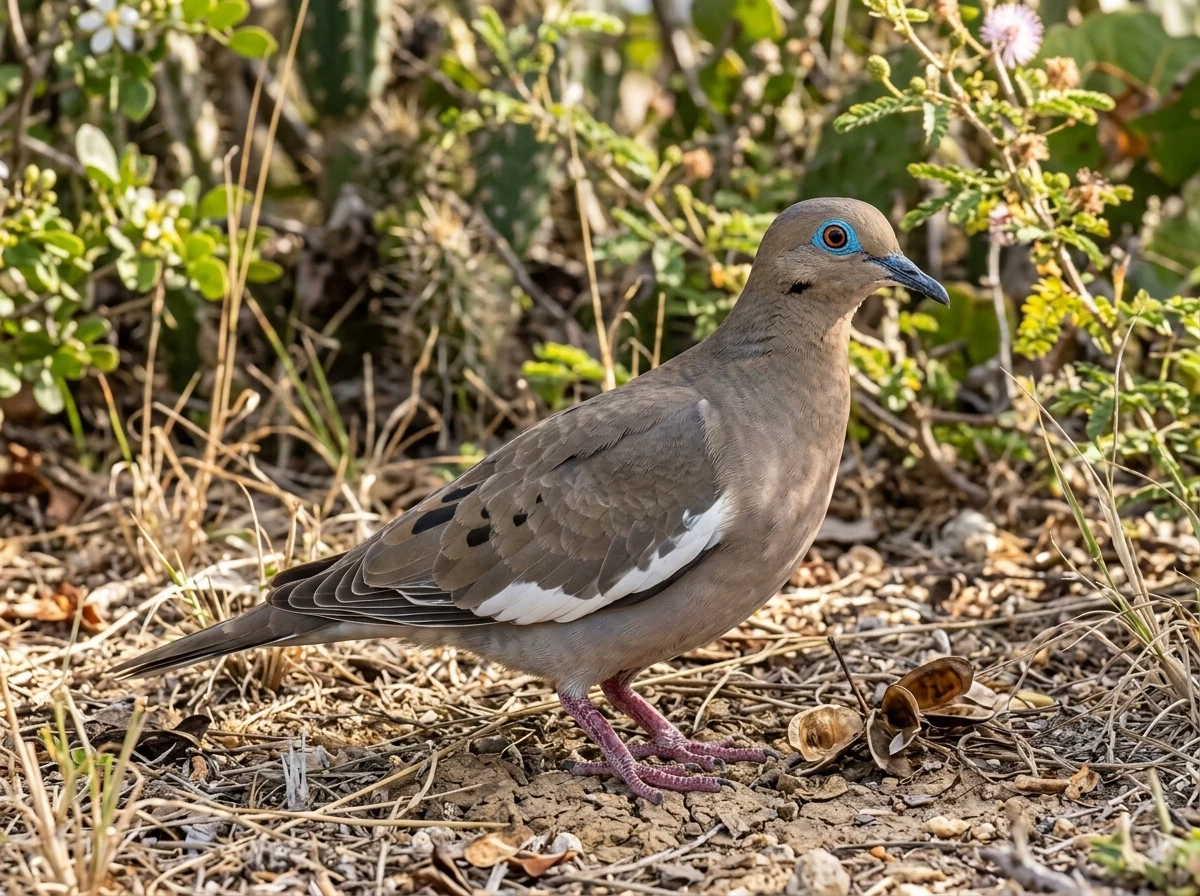
AIAI reconstruction created with Nano Banana 2 · 1K, grounded in the profile’s documented taxonomy, habitat, natural-history sources, and an open-license visual reference when available. It is an interpretive image, not documentary evidence. Image policy →
White-winged Dove
Tórtola Aliblanca
Zenaida asiatica
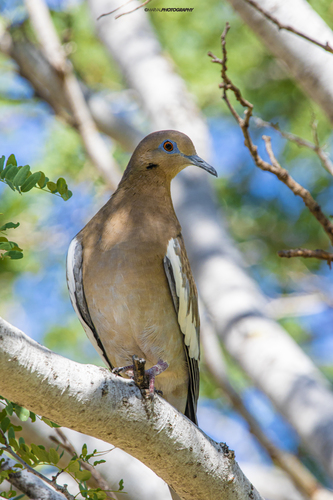
The white-winged dove (Zenaida asiatica) is a dove whose native range extends from the Southwestern United States through Mexico, Central America, and the Caribbean. They are large for doves, and can be distinguished from similar doves by the distinctive white edge on their wings. They have a blue eyering, and red eyes. The plumage is brownish-gray to gray. Juveniles are duller in color, and have brown eyes. The call is likened to English phrase "who cooks for you". There are three subspecies. It was first described by George Edwards in 1743, and given its binomial name by Linnaeus in 1756. It was moved into the genus Zenaida in 1838. They inhabit a variety of environments, including desert, scrub, and urban. Their diet consists mostly of grains, but will also include pollen and nectar, especially from the saguaro cactus, which is a vital source of water. The expansion of humans has greatly affected the white-winged dove. Prior to human presence, their range closely mirrored that of their favorite food: the saguaro. The advent of agriculture in North America greatly expanded its range by providing a reliable food source. This has also led some modern populations to be migratory. Historically, they nested in enormous colonies, but most colonies have been lost due to human action and climatic factors, and most nesting is now isolated. It is hunted for sport, and is the second most shot game bird in the United States. Its population collapsed in the 1960s and 1970s, likely due to the loss of major nesting colonies. The population rebounded however, and despite continued habitat loss and hunting, it has proved adaptable to human environments. The International Union for Conservation of Nature considers it to be a species of least-concern.
Sound archive
Hear its voice
Explore real songs and calls. The spectrogram turns each sound into a visual trace of time and frequency.

Play: dawn song by David Tattersley
Choose another recording
Sound recorded by David Tattersley · XC1000260 · CC BY-NC-SA 4.0. Visualization by Stichting Xeno-canto voor Natuurgeluiden.
Every recording retains the creator, catalogue number, and license published by Xeno-canto. Metadata via GBIF ↗
Island profile
About the White-winged Dove
This atlas includes White-winged Dove (Zenaida asiatica) with atlas status “Native / natural occurrence” within scope “Avibase inferred core 380.” Global trait data associate it primarily with shrub; consult the linked records to resolve its Puerto Rico habitat use.
Conservation
Least Concern
IUCN LC
- Global IUCN
- LC
- Puerto Rico DNER
- No current listing in source crosswalk
- Federal ESA
- No current listing in source crosswalk
- Critical habitat
- Not identified in source crosswalk
Natural history
How it lives
- Habitat
- shrublands
- Elevation
- 0–2592 m
- Nest
- Platform · Tree
- Clutch
- 2–2 eggs
- Social behavior
- Colonial
Keep exploring
This bird belongs to 4 paths through the atlas.
Guides featuring this bird
Follow this record beyond the profile.
Identification, sound, place, and explanatory guides connecting this species to larger questions.
Related in the atlas
Where to fly next
Connected by taxonomy, habitat, occurrence, and conservation.
 AI
AI AI
AI AI
AI AI
AI AI
AI AI
AI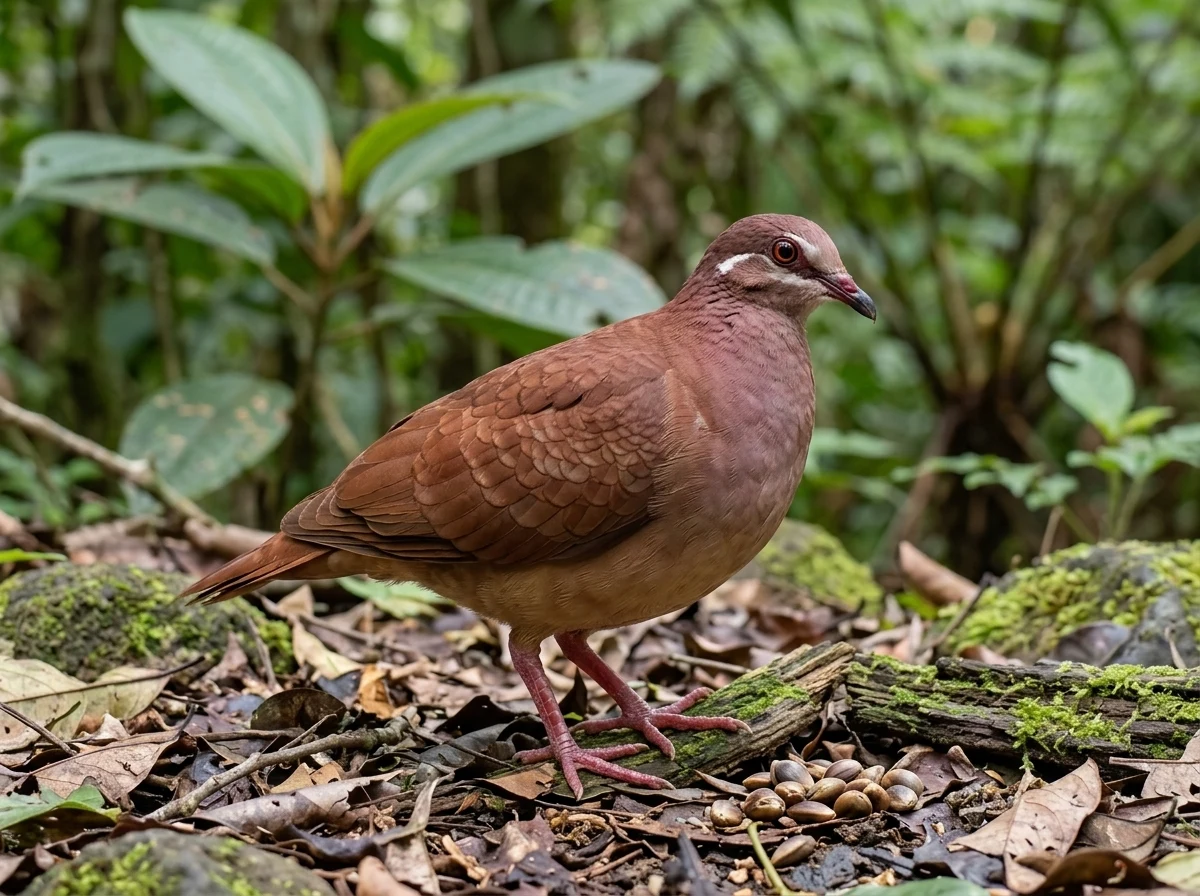
Evidence trail