 AI
AIFieldcraft guide
How to follow mixed-species flocks in Puerto Rico
A mixed flock concentrates the activity of several species into a few minutes. This guide explains how to follow one without losing it, what to record, and how to separate what the evidence supports from what is best observed with caution.
Reviewed: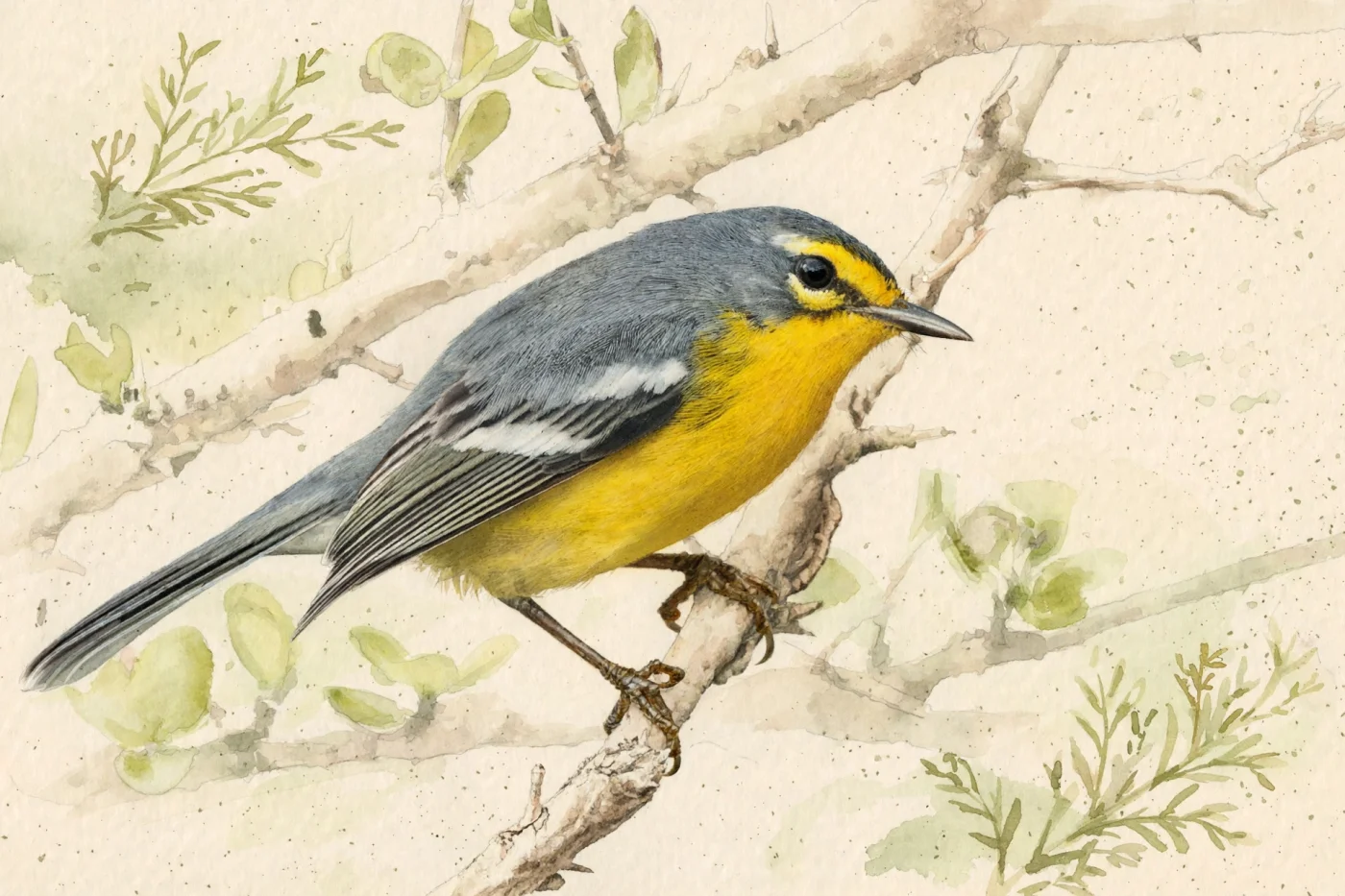
Prepared with AI assistance and linked sources. Illustrations are not field photographs.
Why follow a mixed flock
In Neotropical forests, including those of the Caribbean, mixed-species flocks are common: groups of birds of different species that move and forage together. Scientific literature has noted such flocks on several Caribbean islands, and mentions Puerto Rico among the islands where they have been noted, although the available study describes Cuba's flocks in detail. For a birder, a mixed flock concentrates activity: in a few minutes, species may appear that would otherwise go unnoticed.
Following a flock is not chasing it. It means anticipating its movement, keeping a distance that does not alter its behavior, and recording what happens as it passes. This guide proposes a simple method, with examples from endemic and migrant birds, so that observations are useful and repeatable.
Fieldcraft guide
Three key ideas
Núcleo y acompañantesRoles within the flockResearch distinguishes species that form and direct the group from those that follow it.
Residentes y migratoriasMixed compositionFlocks can include resident and migratory birds.
Registrar sin perseguirObservation ethicsRecord composition and behavior without disturbing the group.
01
What mixed flocks are and why they form
A mixed flock is a group of birds of two or more species that moves and forages in association. Scientific literature on Neotropical mixed flocks has proposed two main benefits: increased foraging efficiency and enhanced predator detection. In the Caribbean, these flocks have been documented on several islands, and Puerto Rico is mentioned among the islands where they have been noted, although the available study focuses on Cuba.
Not every bird that coincides in a tree forms a flock. To speak of a mixed flock, birds must move together in a coordinated way, even briefly, and maintain the association as they travel. That coordination is what distinguishes a flock from a momentary aggregation.
02
Core species and attendant species
Research on mixed flocks distinguishes between nuclear or core species, which participate in flock formation and appear to direct its movements, and attendant or satellite species, which follow the flock. This distinction has been used in studies of flocks in tropical and temperate forests. The available study of Caribbean flocks focuses on Cuba, not Puerto Rico, so its results should not be generalized to all islands.
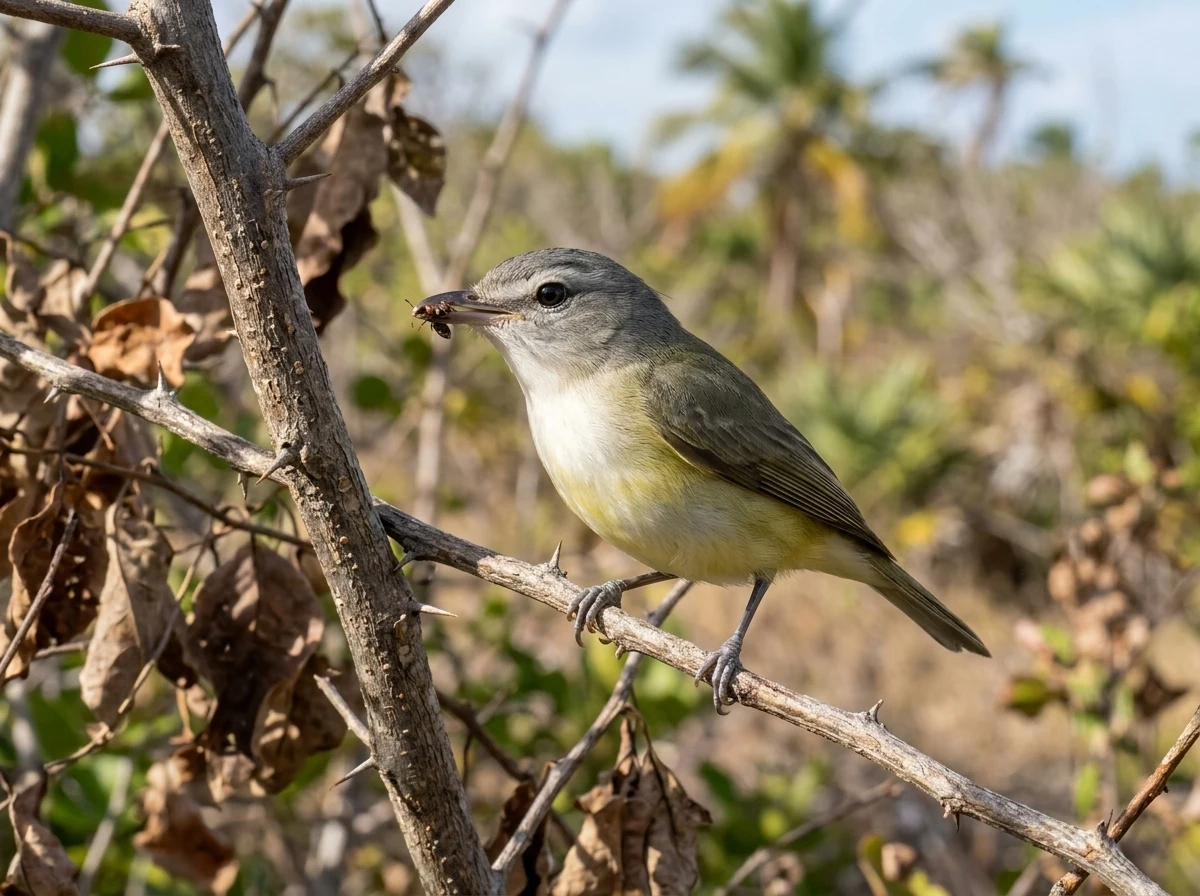
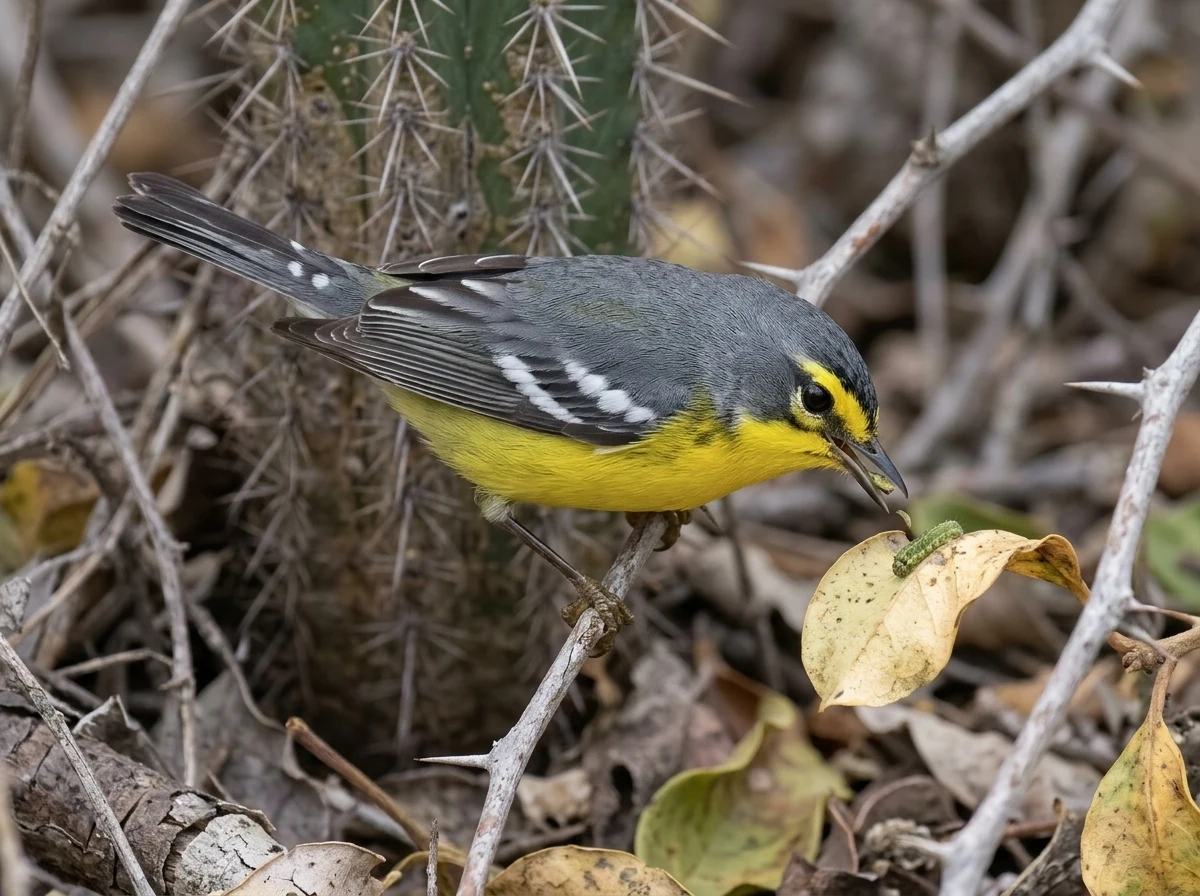
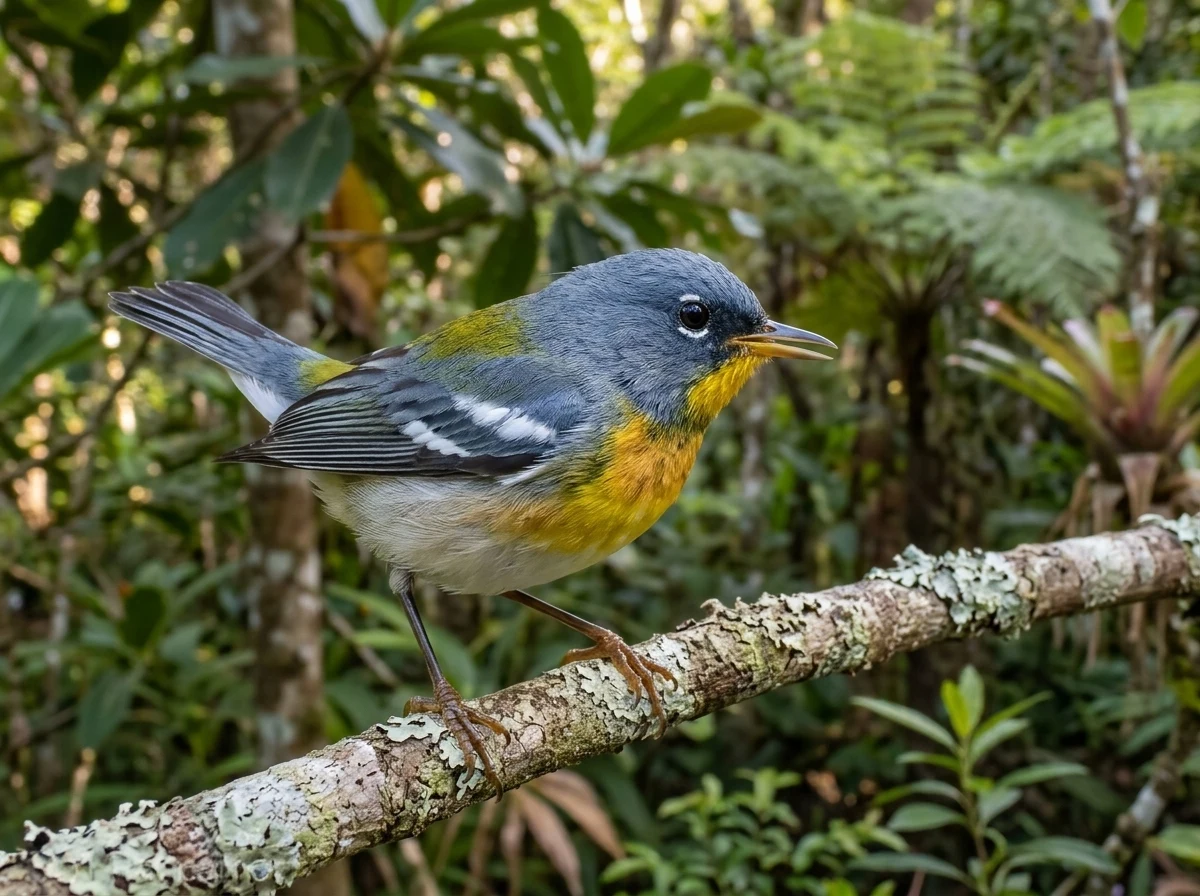
In Puerto Rico, several endemic and resident species can be part of mixed flocks. Among small forest birds, the Puerto Rican Vireo (Vireo latimeri) and Adelaide's Warbler (Setophaga adelaidae) have social or flocking behavior according to the catalog, and the Northern Parula (Setophaga americana) is migratory and also appears with social or flocking behavior. That catalog information is general species background: it does not establish that they form mixed flocks in Puerto Rico or what their role would be. The exact role of each species in a given flock is difficult to assign from brief observations; it is best to note what is seen without assuming a species is always core or always attendant.
03
How to follow a flock without losing or disturbing it
The first step is to detect the flock by sound and movement. Mixed flocks often announce themselves with contact calls and the continuous movement of small birds among branches. Once located, it is best to stay still for a few seconds to identify how many species are present and in which direction they are moving. Rather than chasing the group, one can walk parallel to it, keeping a distance that does not cause alarm or sudden changes in direction.
If the flock moves quickly, it helps to choose a passing point and wait for it to arrive. This is general observation advice, not a conclusion of the cited studies. Avoid getting too close, using playback to attract them, or blocking their route. The goal is to observe natural behavior, not to force a response.
04
What to record: composition, behavior, and associations
For a mixed-flock observation to be useful, record the date, time, location, and habitat. Note each identified species, the approximate number of individuals, and whether it appeared resident or migratory. If possible, note which species seemed to lead the movement and which followed. It is also valuable to record the height at which they foraged and whether the flock moved in one stratum or several.
A simple list can include: species present, number of individuals per species, direction of movement, duration of observation, and any notable interactions, such as perch displacements or following between species. These data, repeated over time, can help understand which species flock most frequently and in which habitats.
05
Practical exercise: follow a flock for ten minutes
Choose a forest trail and walk slowly until you hear calls or see movement. When you detect a flock, stop and time ten minutes. During that time, note all the species you can identify, even if you are not sure of all of them. Mark with a letter whether you think a species is core (C) or attendant (A), and note any doubts. When finished, review your notes and compare with a field guide.
Repeat the exercise in different habitats and times of day. Over time, you will begin to recognize patterns: which species appear together most often, at which strata they forage, and how the flock moves. That local knowledge is more valuable than any general rule.
Linked profiles
Birds you may find in mixed flocks
These species appear in the catalog and may be part of mixed flocks in Puerto Rico's forests. The presence and role of each vary by habitat and season.
01
What is the difference between a mixed flock and an aggregation of birds?
A mixed flock involves coordinated movement and sustained association between species. An aggregation is a momentary coincidence, for example around a food source, without coordinated travel.
02
Should I use playback to attract a mixed flock?
It is not recommended. Playback can alter the flock's natural behavior and affect the observation. It is better to wait and follow the group at a distance.
03
Can I identify the role of each species in a flock?
With careful, repeated observation, you can note which species appear to lead and which follow. However, assigning roles from brief observations is difficult; note what you see without assuming a species is always core or always attendant.
04
What should I bring to record a mixed flock?
Bring a notebook or notes app, a field guide, binoculars, and, if possible, a recorder for calls. A simple list with date, time, location, species, and number of individuals is enough to start.
Keep exploring
Connected routes
Sources and review
The evidence is one link away.
These sources support the editorial scope of this guide. Bird profiles also retain their own taxonomy, occurrence, and conservation references.
Reviewed:
01↗02↗
USDA Forest Service, Research & Development (Treesearch)
Composition of mixed-species flocks of migrant and resident birds in Puerto Rico (Hamel, 2005)
Evidence for cited sections; consult the original document.USDA Forest Service, Research & Development (Treesearch)
Composition of mixed-species foraging flocks (Rudolph) — nuclear vs. attendant species
Evidence for cited sections; consult the original document.The atlas continues