 AI
AIHabitat guides
What Birds Eat on Sandy Beaches
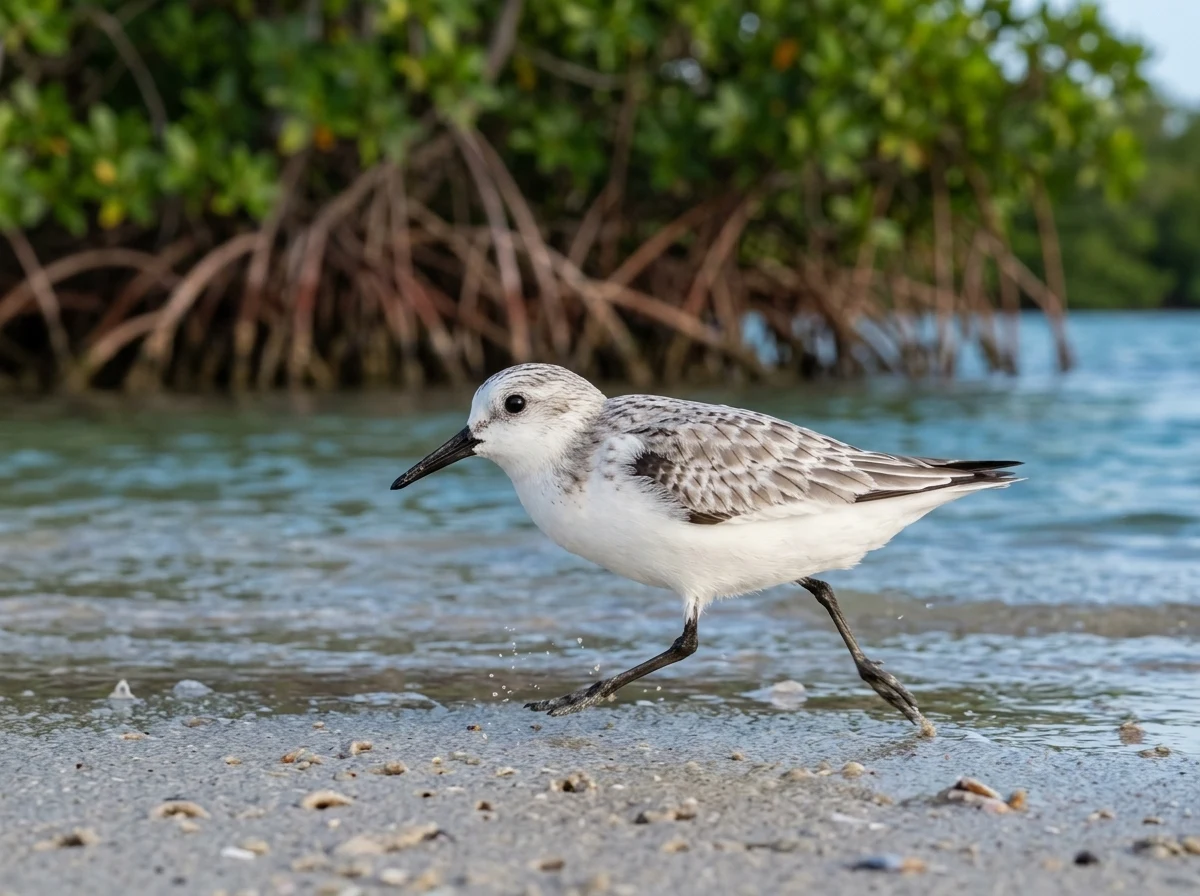
Two shorebirds, two strategies: one chases the waves; the other flips what the sea leaves behind.
Reviewed: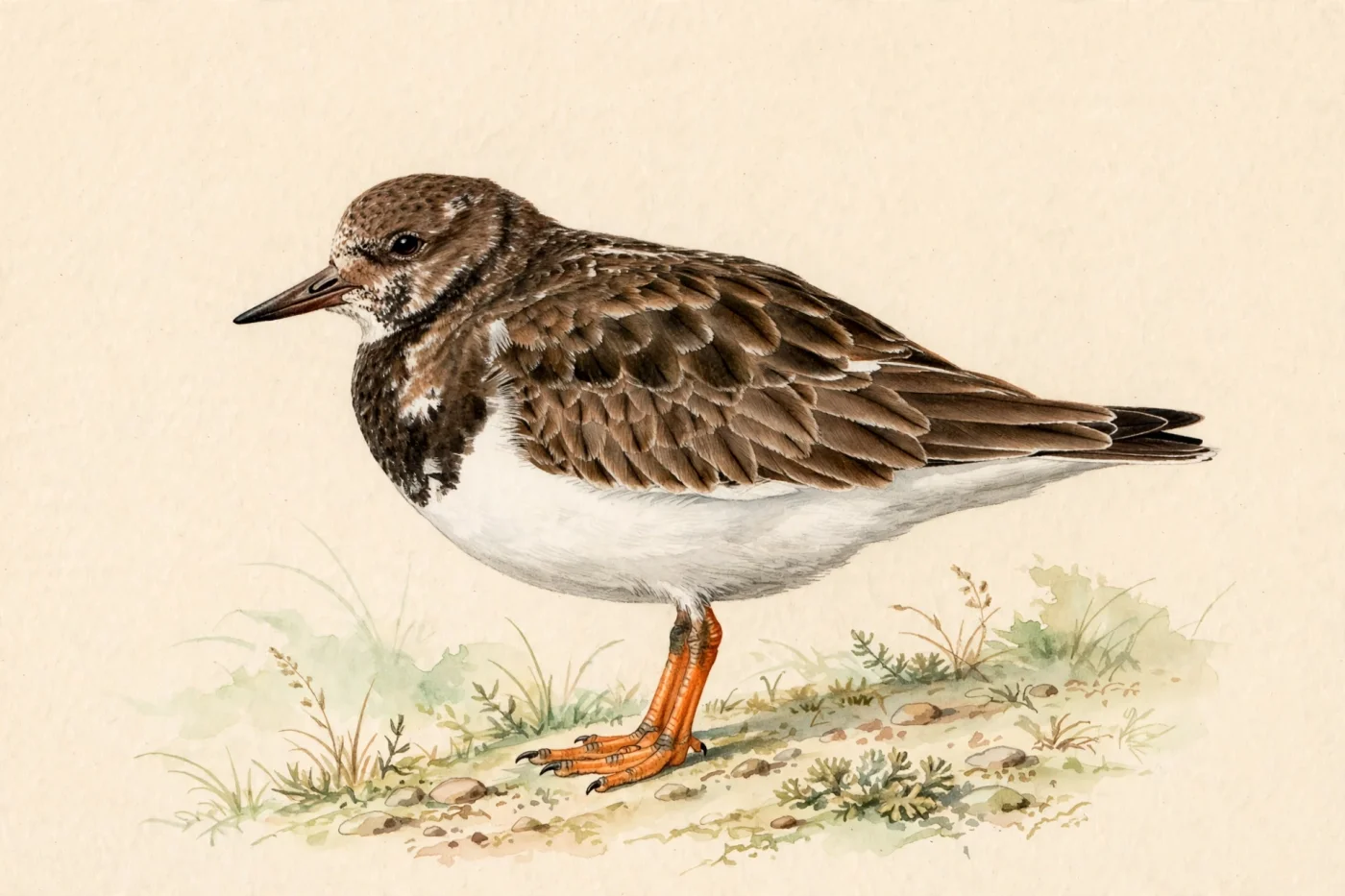
Prepared with AI assistance and linked sources. Illustrations are not field photographs.
The sand is not empty
A sandy beach looks like a desert, but for shorebirds it is a set table. Invertebrates live below the surface; at the waterline, the surf leaves and takes away scraps. The question "what do birds eat on sandy beaches" has a general answer — marine invertebrates and diverse animal matter — and a more precise answer when specific species are compared.
This guide focuses on two migratory shorebirds recorded in Puerto Rico: the Sanderling (Calidris alba) and the Ruddy Turnstone (Arenaria interpres). Both are coastal birds, carnivorous in trophic niche, and both appear in the Puerto Rico bird catalog as native occurrence. Comparing their feeding methods explains why they can share the same beach without competing for exactly the same food.
Habitat guides
Three quick keys
InvertebradosDiet baseBoth species are cataloged with an invertebrate diet.
Dos métodosRun-and-pick vs. flipThe Sanderling picks in the wash zone; the Ruddy Turnstone flips rocks, shells, and seaweed.
MigratoriasNot residentsThe catalog marks them as non-resident and non-breeding in Puerto Rico.
01
What the Sanderling eats
The Sanderling is a small bird, about 61 grams according to the catalog, that runs along the waterline with a characteristic "bicycling" motion and stops frequently to pick. Its cataloged diet is invertebrates. The species description states that it eats small crabs and other small invertebrates, and that in spring, during migration north from South America, it consumes large numbers of horseshoe crab eggs in the Delaware Bay area.
That detail matters for understanding scale: it is not just pecking at whatever appears, but taking advantage of seasonal food pulses. On sandy beaches, its method is to run and pick what is exposed or freshly deposited. It is not documented in the catalog as a resident or breeder in Puerto Rico; its presence corresponds to its migratory condition.
02
What the Ruddy Turnstone eats
The Ruddy Turnstone is heavier, around 126 grams according to the catalog, and its English name —turnstone— describes its technique: flipping stones. The Cornell source states that it is an opportunistic feeder that, in winter and during migration, feeds on rocky and sandy beaches by turning over rocks, pebbles, seaweeds, shells, and other items with its stout, strong, slightly upturned upper mandible, also used to probe, jab, and dig.
Outside the breeding season, its foods are extremely diverse: coastal invertebrates, small fish, carrion, human garbage, and unattended eggs of other avian species. During the breeding season, its diet is predominantly dipteran insects (flies). That breadth explains why it can appear on a sandy beach even though its most famous technique is associated with substrates where there is something to flip.
03
Comparison: two ways of using the same sand
The main difference is not in the type of food — both eat invertebrates — but in how they obtain it. The Sanderling runs and picks; the Ruddy Turnstone looks for objects it can flip and examines what lies underneath. The sources do not document a separation of microhabitats, but it is reasonable to infer that their methods may lead them to use the sand differently.
They also differ in size and body mass, suggesting different energy needs, although the catalog does not provide metabolic rates. What the sources do provide is a food list: for the Sanderling, small crabs and other small invertebrates, with a seasonal peak of horseshoe crab eggs; for the Ruddy Turnstone, coastal invertebrates, small fish, carrion, human garbage, and unattended eggs, plus dipteran insects during breeding.
04
How to observe without interfering
To study what these birds eat on a sandy beach, the most useful method is observation at a distance with binoculars or a telephoto lens. Choose a fixed point, preferably outside the birds' direct line to the water or to their resting areas. Avoid walking toward them to "get closer"; the goal is to record natural behavior, not to provoke a reaction.
A simple procedure: for 10 to 15 minutes, note the species, the microhabitat (wash zone, dry sand, debris line), the substrate it examines, and the number of picks or flips. You do not need to identify every prey item; describing the action is enough. If the bird moves away or interrupts feeding, increase the distance. Repeat at different times of day and compare your notes. This exercise does not require special permits if done from public areas and without handling birds or nests.
Linked profiles
The two species in this guide
Both are migratory shorebirds recorded in Puerto Rico; neither is resident or breeding according to the catalog.
AI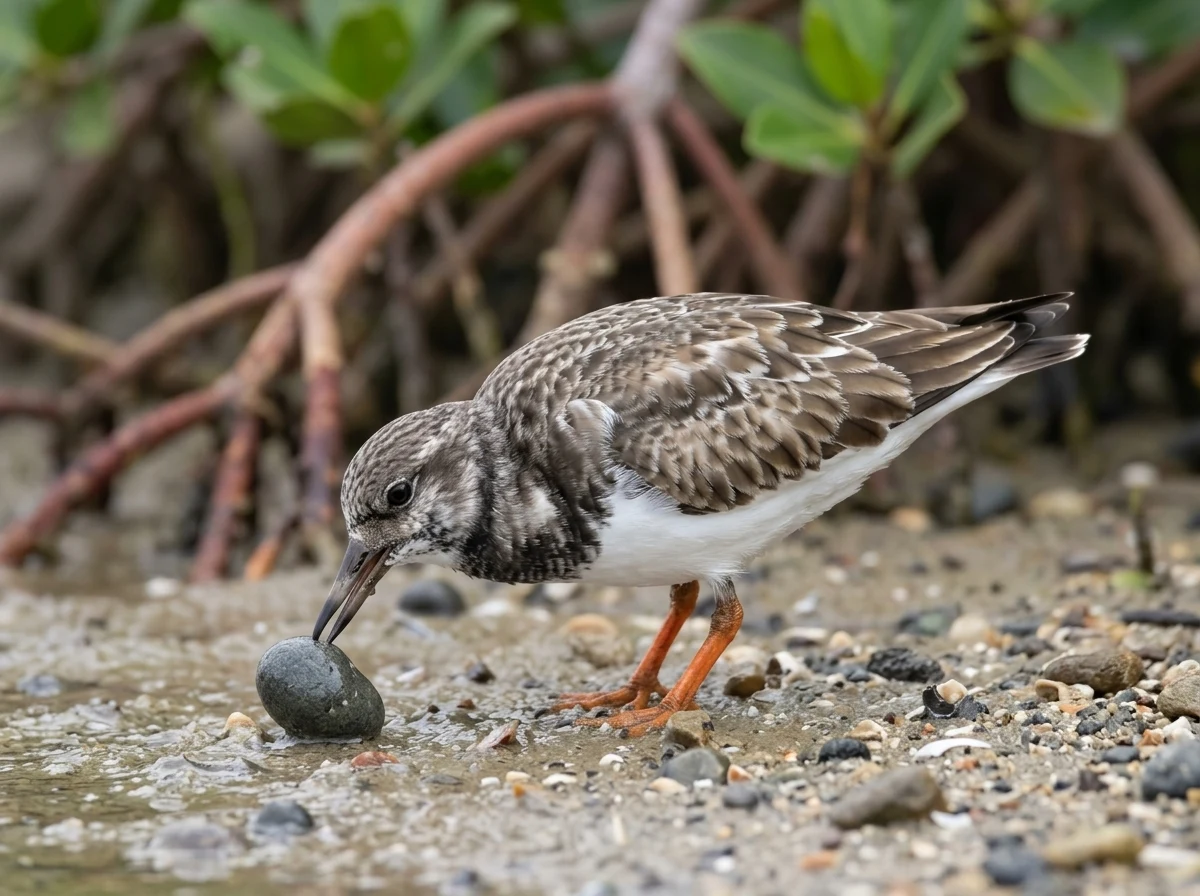 AI
AI01
Do beach birds eat sand?
Not as food. The sources describe diets of invertebrates and other animal matter. Sand is not a documented food.
02
Do the Sanderling and Ruddy Turnstone compete for the same food?
Both eat invertebrates, but their methods differ: one picks and the other flips objects. That difference may reduce direct overlap, although the sources do not quantify competition in Puerto Rico.
03
Can they be seen year-round in Puerto Rico?
The catalog marks them as non-resident and non-breeding in Puerto Rico, with native occurrence. Abundance or specific months should not be inferred from that classification.
04
What should I bring to observe their feeding?
Binoculars or a telephoto lens, a notebook or phone to record time, species, microhabitat, and observed action. Neutral clothing and enough distance not to alter their behavior.
Keep exploring
Connected routes
Sources and review
The evidence is one link away.
These sources support the editorial scope of this guide. Bird profiles also retain their own taxonomy, occurrence, and conservation references.
Reviewed:
The atlas continues