 AI
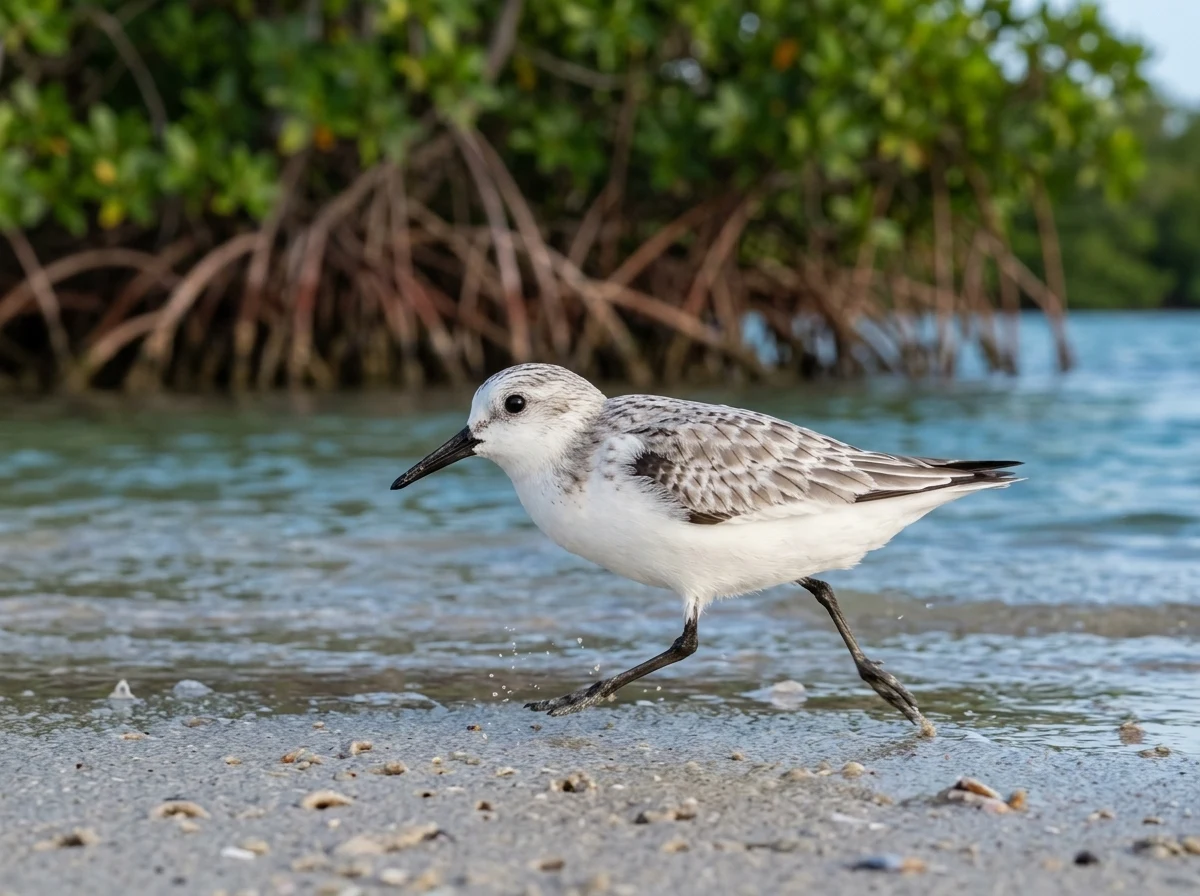
AIAI reconstruction created with Nano Banana 2 · 1K, grounded in the profile’s documented taxonomy, habitat, natural-history sources, and an open-license visual reference when available. It is an interpretive image, not documentary evidence. Image policy →
Sanderling
Playero Arenero
Calidris alba
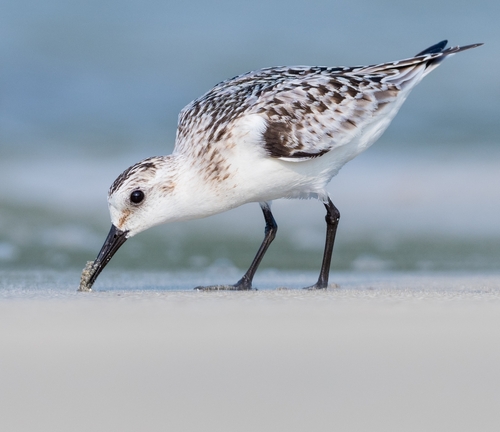
The sanderling (Calidris alba) is a small wading bird. The name derives from Old English sand-yrðling, "sand-ploughman". The genus name is from Ancient Greek: καλίδρις : kalídris or σκαλίδρις : skalídris, a term used by Aristotle for some grey-coloured waterside birds. The species name, alba, is Latin for "white". It is a circumpolar Arctic breeder, being among the most extreme northern breeding birds in the world, nesting only on the coldest tundra, north of the 5°C July isotherm; in Europe, its southernmost breeding locality is Svalbard, where only a handful (5–15) pairs breed. It is a long-distance migrant, wintering south to South America, western and southern Europe, Africa, and Australia. It is highly gregarious in winter, sometimes forming large flocks on coastal mudflats or sandy beaches. It is somewhat unlike other small sandpipers in appearance, in particular in lacking a hind toe, which has led to the suggestion that it should be placed into a monotypic genus Crocethia. More recent reviews indicate that the sanderling is a fairly typical "stint" or small sandpiper and should be retained along with the knots and other relatives in the genus Calidris. This bird is similar in size to a dunlin, but stouter, with a thick bill. It shows a strong white wingbar in flight, and runs along the sandy beaches it prefers with a characteristic "bicycling" action of its legs, stopping frequently to pick small food items. It eats small crabs and other small invertebrates. In spring, birds migrating north from South America consume large numbers of horseshoe crab eggs in the Delaware Bay area. In spring, the birds arrive on their High Arctic breeding grounds (see map) at the end of May or in early June, where they lay 3–4 eggs in a ground scrape from mid June to mid July. On the nesting grounds, these birds mainly eat insects and some plant material. The sanderling was described by the German naturalist Peter Simon Pallas in 1764 and given the binomial name Trynga alba. The sanderling is one of the species to which the Agreement on the Conservation of African-Eurasian Migratory Waterbirds (AEWA) applies.
Sound archive
Hear its voice
Explore real songs and calls. The spectrogram turns each sound into a visual trace of time and frequency.

Play: alarm call, duet by Sonothèque ADVL
Choose another recording
Sound recorded by Sonothèque ADVL · XC1075048 · CC0 1.0. Visualization by Stichting Xeno-canto voor Natuurgeluiden.
Every recording retains the creator, catalogue number, and license published by Xeno-canto. Metadata via GBIF ↗
Island profile
About the Sanderling
This atlas includes Sanderling (Calidris alba) with atlas status “Native / natural occurrence” within scope “Avibase inferred core 380.” Global trait data associate it primarily with coastal; consult the linked records to resolve its Puerto Rico habitat use.
Conservation
Least Concern
IUCN LC
- Global IUCN
- LC
- Puerto Rico DNER
- No current listing in source crosswalk
- Federal ESA
- No current listing in source crosswalk
- Critical habitat
- Not identified in source crosswalk
Natural history
How it lives
- Habitat
- coasts
- Elevation
- 0–60 m
- Nest
- Cup / bowl · Ground
- Clutch
- 3–4 eggs
- Social behavior
- Social / flocking; Singly and pairs
Keep exploring
This bird belongs to 4 paths through the atlas.
Guides featuring this bird
Follow this record beyond the profile.
Identification, sound, place, and explanatory guides connecting this species to larger questions.
See all related guides (1)
Related in the atlas
Where to fly next
Connected by taxonomy, habitat, occurrence, and conservation.
 AI
AI AI
AI AI
AI AI
AI AI
AI AI
AI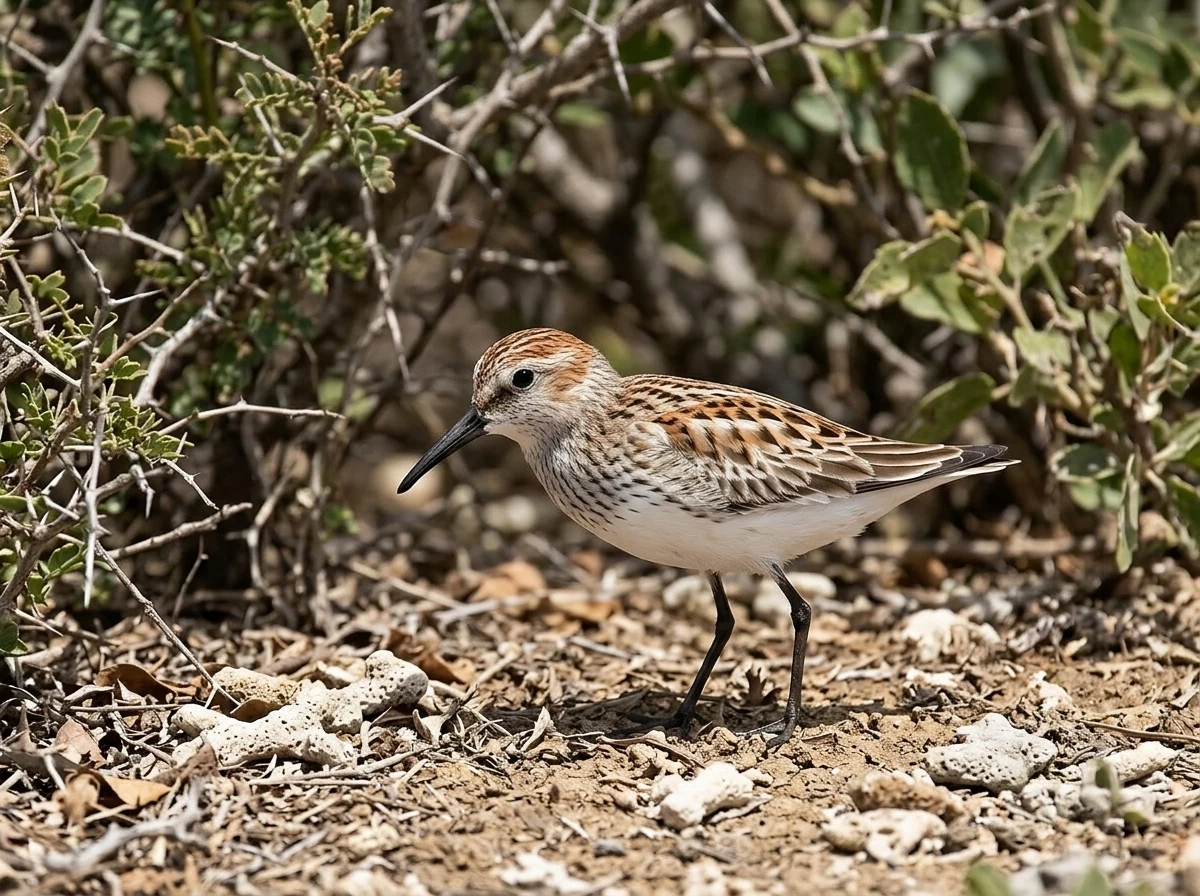
Evidence trail