 AI
AIBehavior
What Kleptoparasitism Means in Birds
Kleptoparasitism is stealing already-caught food. In Puerto Rico, the Magnificent Frigatebird is the most cited example, and the Brown Pelican helps explain why not all seabirds do it.
Reviewed:Prepared with AI assistance and linked sources. Illustrations are not field photographs.
The short answer
Kleptoparasitism is a form of parasitism in which one bird feeds on food another bird has already caught, without killing or recapturing it. Among seabirds, it often involves aerial pursuit: the kleptoparasitic bird chases another until it regurgitates or drops its prey, then catches the food in the air or before it hits the water.
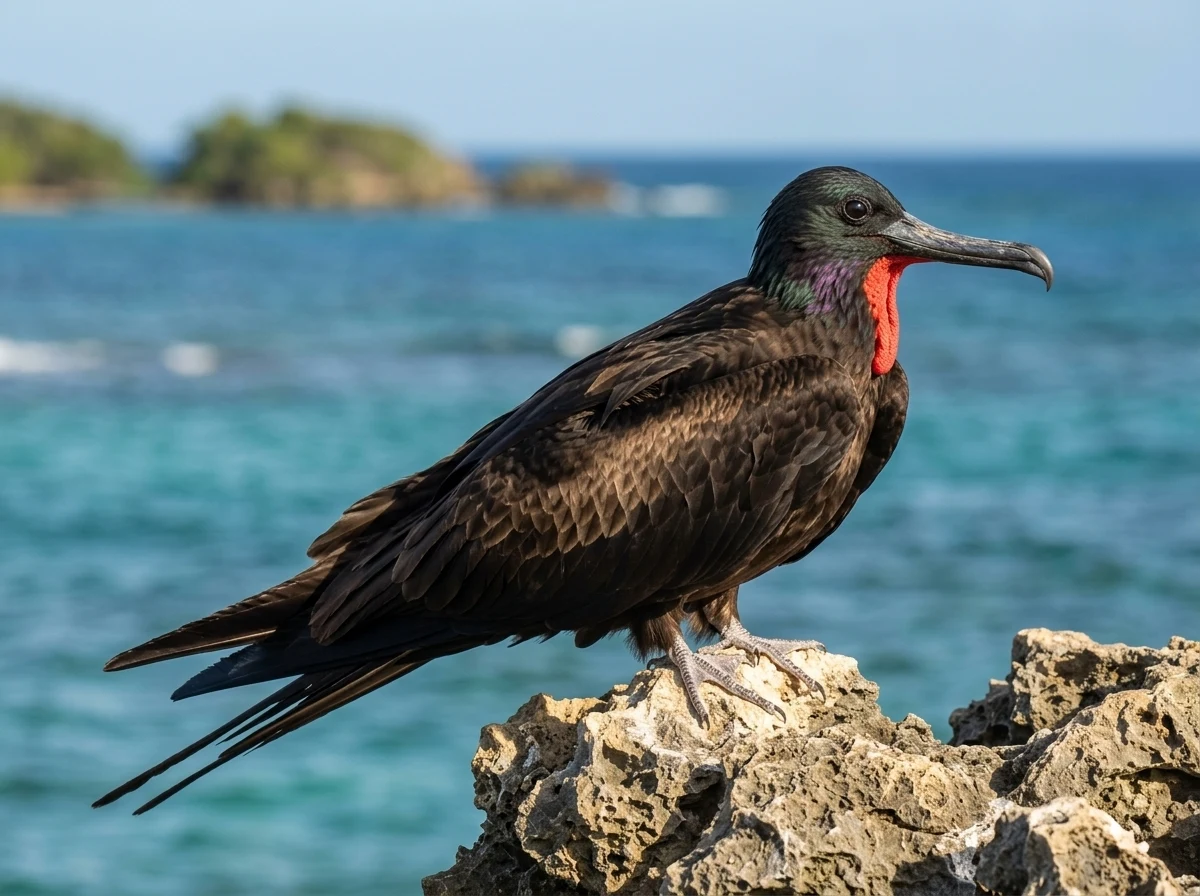
The Magnificent Frigatebird (Fregata magnificens) is the best-known example in the Caribbean and in Puerto Rico. Its light body, long narrow wings, and forked tail give it the speed and agility to harass other birds in flight. The Brown Pelican (Pelecanus occidentalis), by contrast, dives to catch fish and does not depend on stealing food; comparing it with the frigatebird helps show that kleptoparasitism is a specialized strategy, not a general rule among seabirds.
Behavior
Three keys to remember
Robar comida ya capturadaDefinitionThe kleptoparasite does not catch the prey from scratch: it exploits another bird's effort.
Persecución aéreaTypical mechanismThe frigatebird chases and harasses until the harassed bird regurgitates or drops the food.
No es su única fuenteFrequencyThe frigatebird catches most of its food on its own; kleptoparasitism is opportunistic.
01
What kleptoparasitism actually means
The word combines "klepto-" (steal) and "parasitism" (living at another's expense). In birds, it describes feeding on food another bird has already caught. It is not the same as predation: the kleptoparasite does not kill the prey or capture the other bird; it exploits the moment when that bird already has the food in its bill, throat, or talons.
The classic case is the Magnificent Frigatebird. Its long, pointed wings and deeply forked tail let it fly with great agility and chase other seabirds. When the harassed bird regurgitates, the frigatebird darts down and catches the food before it hits the ocean. This description comes from the Birds of the World species account and BirdNote's story on frigatebird kleptoparasitism.
02
How the chase happens, step by step
The typical episode begins when a bird that actively fishes, such as a booby or a tropicbird, emerges from the water with prey. The frigatebird, which often soars over the area, detects it and gives chase. With long wings and a scissor-like tail, it gains speed and positions itself behind the loaded bird.
The chase can last several seconds. The frigatebird closes in and, with its long, hooked bill, may grab the harassed bird's tail or wing. The harassed bird, unable to escape, regurgitates the food. The frigatebird then releases the bird and dives to catch the falling food. BirdNote describes this moment as "one of nature's great chase scenes."
It is important to note that the frigatebird does not always steal. Most of the time it catches its own food, such as flying fish or squid, taking them near the ocean surface without wetting its feathers. Kleptoparasitism is an opportunity it takes when it arises, not its only feeding strategy.
03
Frigatebird and Brown Pelican: two opposite strategies
The Magnificent Frigatebird and the Brown Pelican illustrate two very different ways of getting food at sea. The frigatebird does not sit on the water: its plumage is not waterproof, and it is rarely, if ever, seen sitting on the sea. It catches fish and squid near the surface and, when it can, steals food already caught by other birds. Its light body and long wings are built for sustained flight and aerial pursuit.
The Brown Pelican, by contrast, dives from the air to catch fish in its gular pouch. It is an active fisher that does not depend on stealing. Its body is much heavier, and its strategy is based on plunge-diving, not pursuit. Comparing the two species helps show that kleptoparasitism is not a general seabird behavior but a specialization tied to body shape, flight, and prey type.
In Puerto Rico, both species are documented as native seabirds. The frigatebird occurs in marine waters, bays, mangrove coasts, and offshore cays; the Brown Pelican occurs in marine coasts, bays, mangroves, and cays. Their occurrence is supported by the Puerto Rico bird catalog and local references, not by abundance inference.
04
How to watch for it without inventing the scene
Watching for kleptoparasitism requires patience and a clear stance: not every close approach between birds is a theft. The behavior happens in the air, often far from shore, and may last only seconds. A useful checklist includes: (1) look for seabirds actively fishing, such as boobies or tropicbirds; (2) note whether a frigatebird flies near or behind them; (3) watch whether the loaded bird regurgitates or drops something; (4) see whether the frigatebird dives and catches the object; (5) record time, place, and conditions.
A responsible observation procedure is to stay on land or on a stable boat, use binoculars or a telephoto lens, and avoid approaching colonies or disturbing birds. If the exact moment of theft is not seen, it is better to describe what was observed without claiming kleptoparasitism occurred. Absence of evidence is not evidence of absence.
As an exercise, compare the flight silhouette of the frigatebird with that of the Brown Pelican: the first has long, narrow wings and a forked tail; the second has broad wings and a bulky body. That difference in shape explains why one chases in the air and the other plunge-dives. This exercise does not prove theft, but it helps recognize which species might perform it.
Linked profiles
The birds in this guide
Two Puerto Rico seabirds that help explain kleptoparasitism from opposite angles.
AI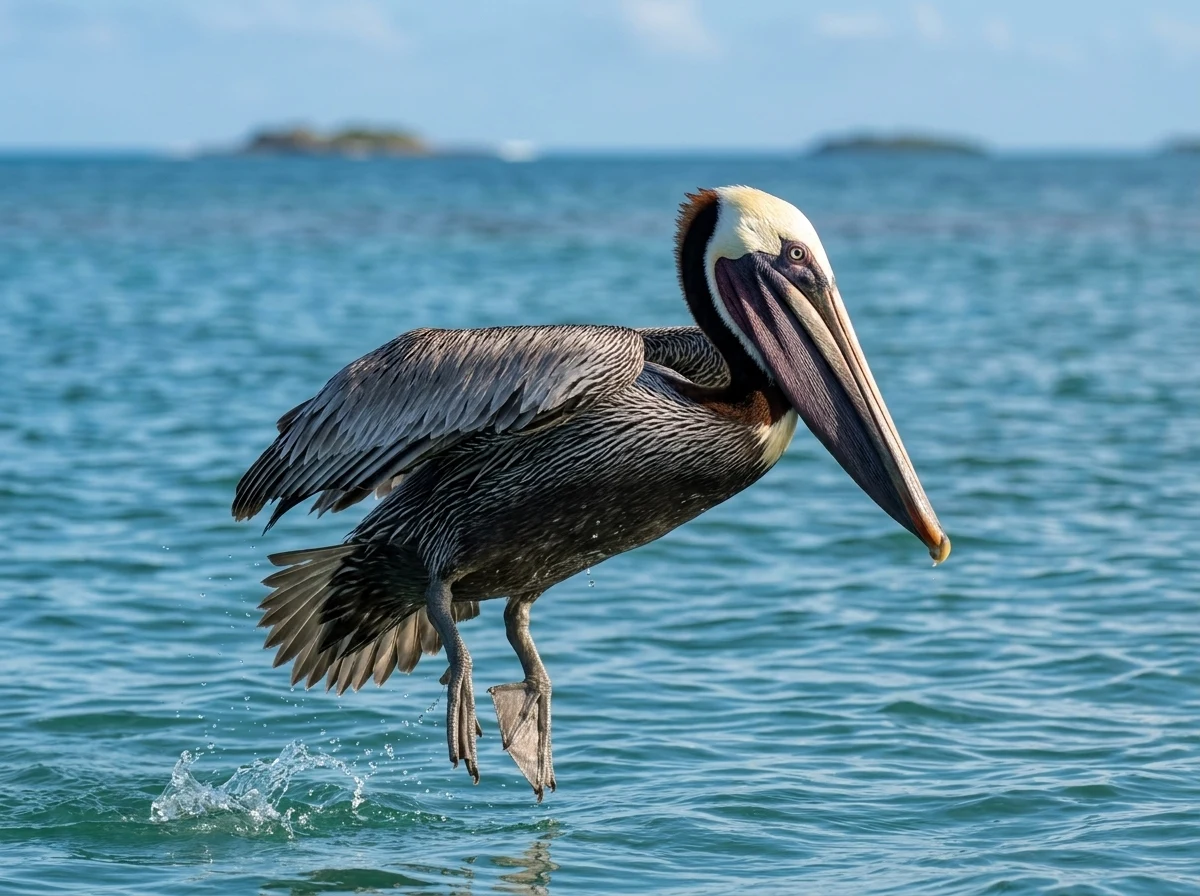 AI
AI01
Is kleptoparasitism the same as predation?
No. In predation, the bird kills and captures its prey. In kleptoparasitism, the bird feeds on food another bird has already caught, without killing or recapturing the prey.
02
Does the Magnificent Frigatebird steal all its food?
No. Most of the time it catches its own food, such as flying fish or squid, near the ocean surface. Kleptoparasitism is an opportunity it takes when it arises.
03
Does the Brown Pelican practice kleptoparasitism?
The Brown Pelican dives to fish and does not depend on stealing food. In this guide it is used as a contrast to show that kleptoparasitism is a specialization, not a general rule among seabirds.
04
Where can I see kleptoparasitism in Puerto Rico?
The Magnificent Frigatebird is documented in Puerto Rico's marine waters, bays, mangrove coasts, and offshore cays. The behavior happens in the air and cannot be guaranteed at a specific place or time. Observe from land or a stable boat, without disturbing the birds.
05
How do I tell a chase from a simple close flight?
A chase involves the harassed bird changing course, accelerating, or regurgitating, and the frigatebird positioning itself behind it or grabbing it. A simple close flight does not include those elements. If the moment of theft is not observed, it is better not to claim it occurred.
Keep exploring
Connected routes
Sources and review
The evidence is one link away.
These sources support the editorial scope of this guide. Bird profiles also retain their own taxonomy, occurrence, and conservation references.
Reviewed:
01↗02↗03↗
Cornell Lab of Ornithology
Magnificent Frigatebird (Fregata magnificens) — Birds of the World
Evidence for cited sections; consult the original document.BirdNote
Frigatebirds' Kleptoparasitism
Evidence for cited sections; consult the original document.BirdsCaribbean
Journal of Caribbean Ornithology — Puerto Rico seabird and bird records
Evidence for cited sections; consult the original document.The atlas continues