 AI
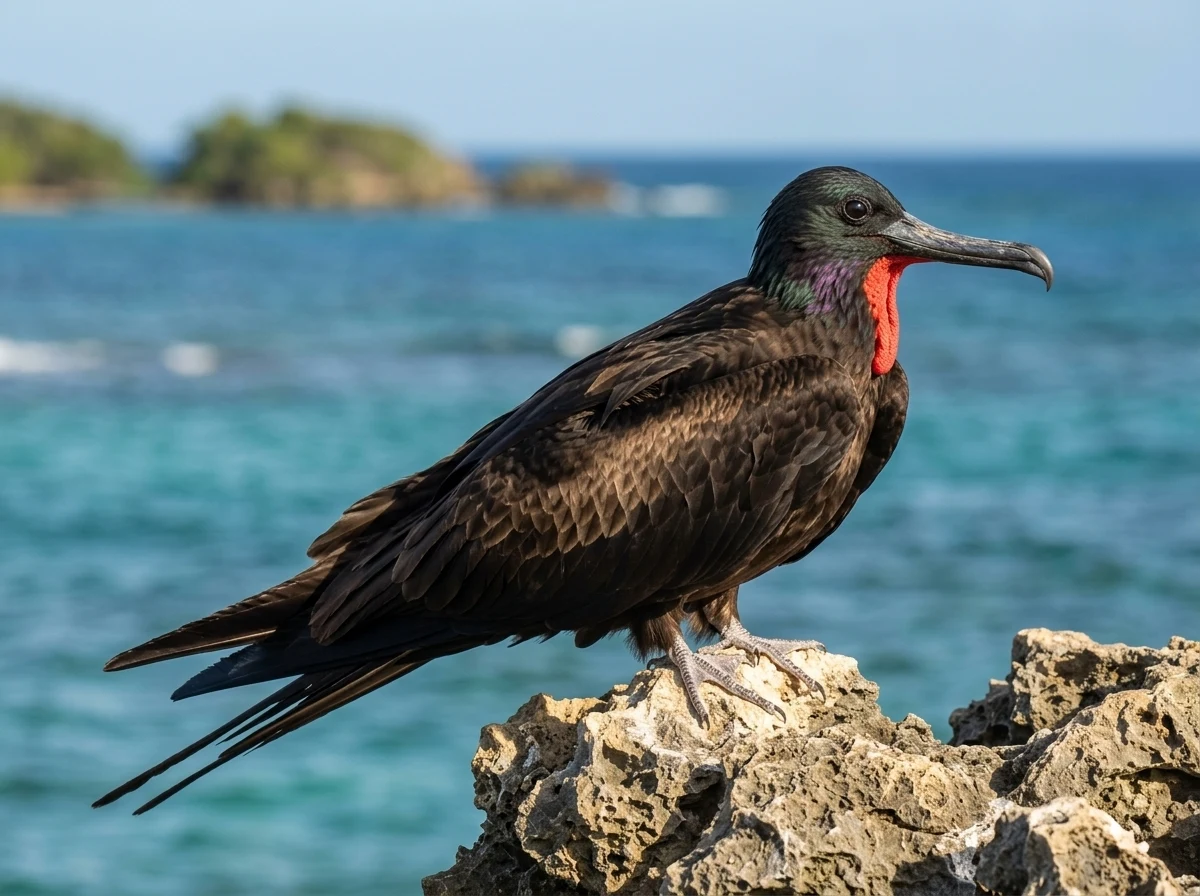
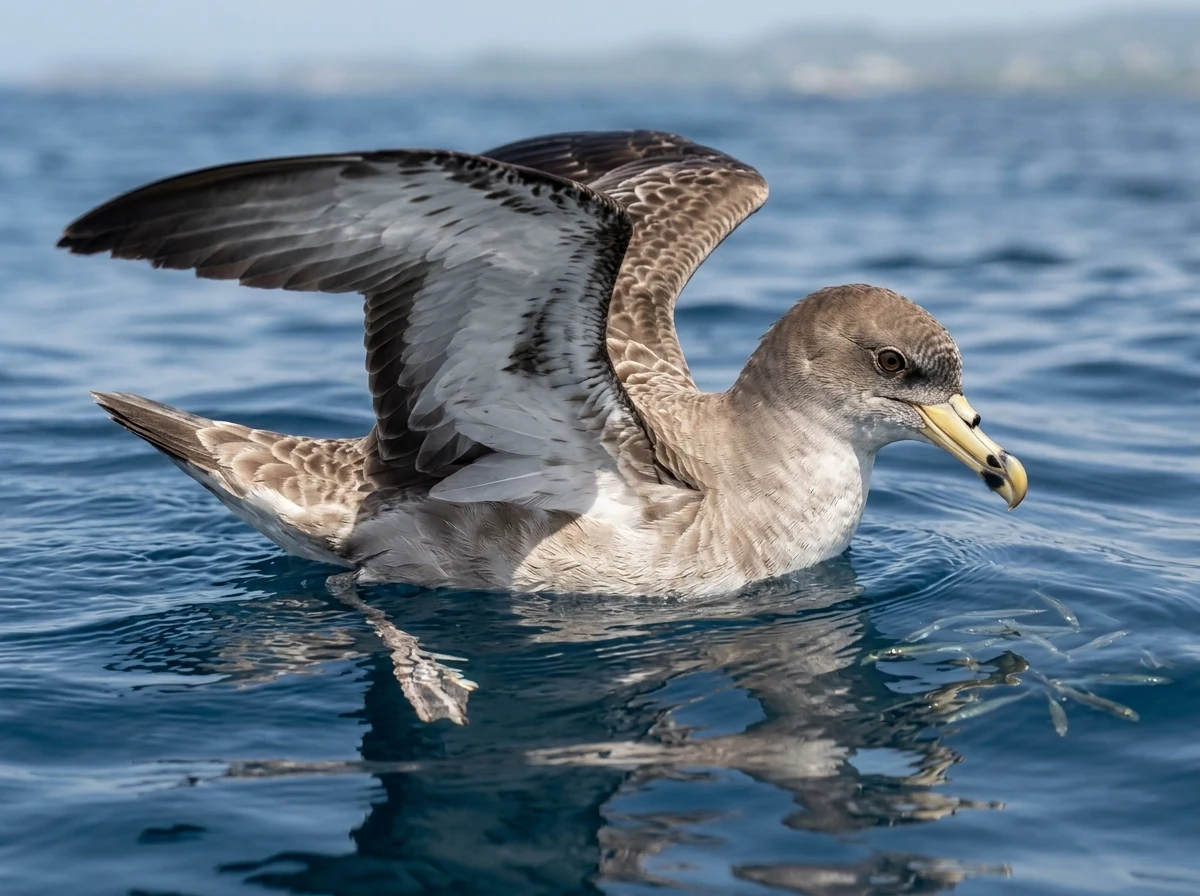
AIAI reconstruction created with Nano Banana 2 · 1K, grounded in the profile’s documented taxonomy, habitat, natural-history sources, and an open-license visual reference when available. It is an interpretive image, not documentary evidence. Image policy →
Magnificent Frigatebird
Tijereta
Fregata magnificens
The magnificent frigatebird (Fregata magnificens), frigate petrel or man o' war is a seabird of the frigatebird family Fregatidae. With a length of 89–114 centimetres (2 ft 11 in – 3 ft 9 in) and wingspan of 2.17–2.44 m (7 ft 1 in – 8 ft 0 in), it is the largest species of frigatebird. It occurs over tropical and subtropical waters off America, between northern Mexico and Peru on the Pacific coast and between Florida and southern Brazil along the Atlantic coast. There are also populations on the Galápagos Islands in the Pacific and the Cape Verde islands in the Atlantic. It is one of the fastest birds in the world, flying at speeds of up to 153 kilometres (95 mi) per hour. The magnificent frigatebird is a large, lightly built seabird with brownish-black plumage, long narrow wings and a deeply forked tail. The male has a striking red gular sac which he inflates to attract a mate. The female is slightly larger than the male and has a white breast and belly. Frigatebirds feed on fish taken in flight from the ocean's surface (often flying fish), and sometimes indulge in kleptoparasitism, harassing other birds to force them to regurgitate their food.
Sound archive
Hear its voice
Explore real songs and calls. The spectrogram turns each sound into a visual trace of time and frequency.

Play: call by JAYRSON ARAUJO DE OLIVEIRA
Choose another recording
Sound recorded by JAYRSON ARAUJO DE OLIVEIRA · XC927123 · CC BY-NC-SA 4.0. Visualization by Stichting Xeno-canto voor Natuurgeluiden.
Every recording retains the creator, catalogue number, and license published by Xeno-canto. Metadata via GBIF ↗
Island profile
About the Magnificent Frigatebird
This atlas includes Magnificent Frigatebird (Fregata magnificens) with atlas status “Resident” within scope “Avibase inferred core 380.” Puerto Rico context sources associate it with Marine waters; bays; mangrove coasts; offshore cays.
Conservation
Least Concern
IUCN LC; DNER VU
- Global IUCN
- LC
- Puerto Rico DNER
- VU
- Federal ESA
- No current listing in source crosswalk
- Critical habitat
- Not identified in source crosswalk
Natural history
How it lives
- Habitat
- Marine waters; bays; mangrove coasts; offshore cays
- Elevation
- 0–0 m
- Nest
- Platform · Tree
- Clutch
- 1–1 eggs
- Social behavior
- Colonial; Solitary
For kids and families
Turn this bird into your own artwork
Download a clean, print-ready coloring page, learn one quick fact, and color this Puerto Rico bird.
Keep exploring
This bird belongs to 9 paths through the atlas.
Guides featuring this bird
Follow this record beyond the profile.
Identification, sound, place, and explanatory guides connecting this species to larger questions.
See all related guides (23)
- Bird Math: Wingspan and Weight Comparisons
- Turkey Vulture in Puerto Rico: What It Is and How to Recognize It
- Are there pelicans in Puerto Rico? The Brown Pelican
- Turkey Vulture vs. Red-tailed Hawk: Telling Them Apart in Flight
- Osprey in Puerto Rico
- Birds Circling in the Sky in Puerto Rico: A Silhouette Guide
- Are there eagles in Puerto Rico?
- Hurricanes and birds
- Mangrove birds
- Birds of Piñones and San Juan
- Birds of Jobos Bay
- Birds of Culebra
- Bird Photography Tips for Puerto Rico
- Large birds of Puerto Rico
- Seabirds of Puerto Rico
- Birds of San Juan's Lagoons: San José, Torrecilla, Condado, Martín Peña
- Birds of Caja de Muertos Island
- Beach Birds of Puerto Rico
- Birds of Mona Island
- Birding San Juan in One Day from a Cruise Ship
- Long-tailed birds
- Fun facts about Puerto Rico birds for kids
- Birds of Old San Juan
Related in the atlas
Where to fly next
Connected by taxonomy, habitat, occurrence, and conservation.
 AI
AI AI
AI AI
AI AI
AI AI
AI AI
AI
Evidence trail
Sources, media & further reading
Research note: Commonwealth VU in cited 2026 compilation