 AI
AICity birds
Wild parakeets in San Juan
White-winged and Monk Parakeets are now Puerto Rico's most successful parrots, and nearly all of their story plays out among neighborhoods, parks, and ornamental trees.
Reviewed:Short answer: escapes that found a home
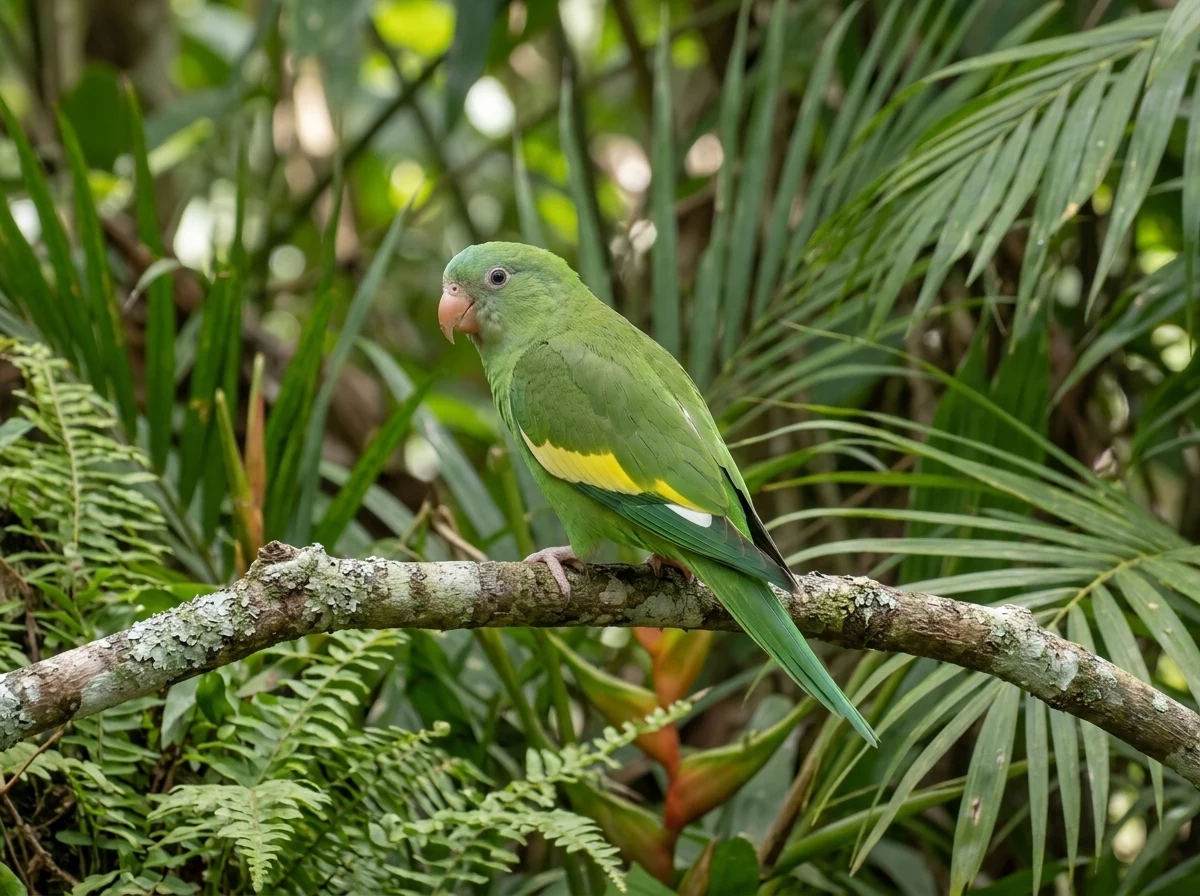
The flocks of green parakeets crossing San Juan are introduced species, mainly the White-winged Parakeet (Brotogeris versicolurus) and the Monk Parakeet (Myiopsitta monachus), descended from pets that escaped or were released. They live in the city because that is where they arrived, because flowering and fruiting trees are available year-round, and because the most successful species do not depend on scarce cavities for nesting.
Puerto Rico has no native parakeet today: the Puerto Rican Parakeet (Psittacara maugei) went extinct in the nineteenth century. According to Falcón and Tremblay (2018), the island has, as far as is known, the highest number of wild-observed and established exotic parrot species in the world. This guide explains which species you will see in the metro area, how they arrived, and what is known about their impact.
City birds
Urban parakeets in numbers
46Parrot species in PRAt least 29 seen in the wild and at least 12 with breeding evidence (Falcón and Tremblay 2018).
360White-winged Parakeets in Guaynabo, 1985Where the San Patricio population lives today.
1979First Monk Parakeet recordsIn coastal San Juan and Ponce; flocks of up to 30 by 1987.
66 %Records in urban areasFor the four increasing species; the rest were in forests near urban areas.
01
The parakeets you will see in the metro area
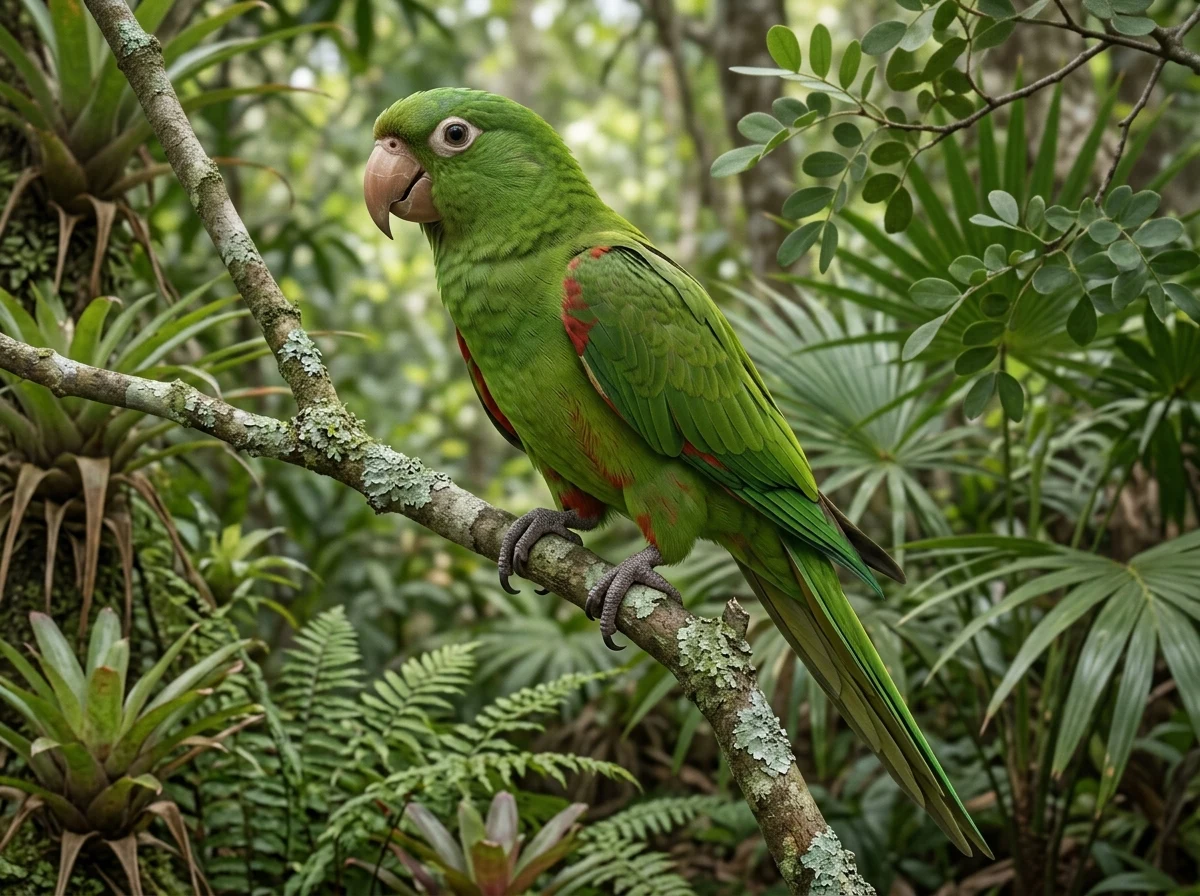
The White-winged Parakeet is small, about 70 grams, green, with a pointed tail and a white-and-yellow wing panel that shows in flight. It is native to the Amazon basin and has formed populations in Lima, Los Angeles, Miami, and Puerto Rico. It usually travels in noisy flocks that feed in treetops and gather at roosts.
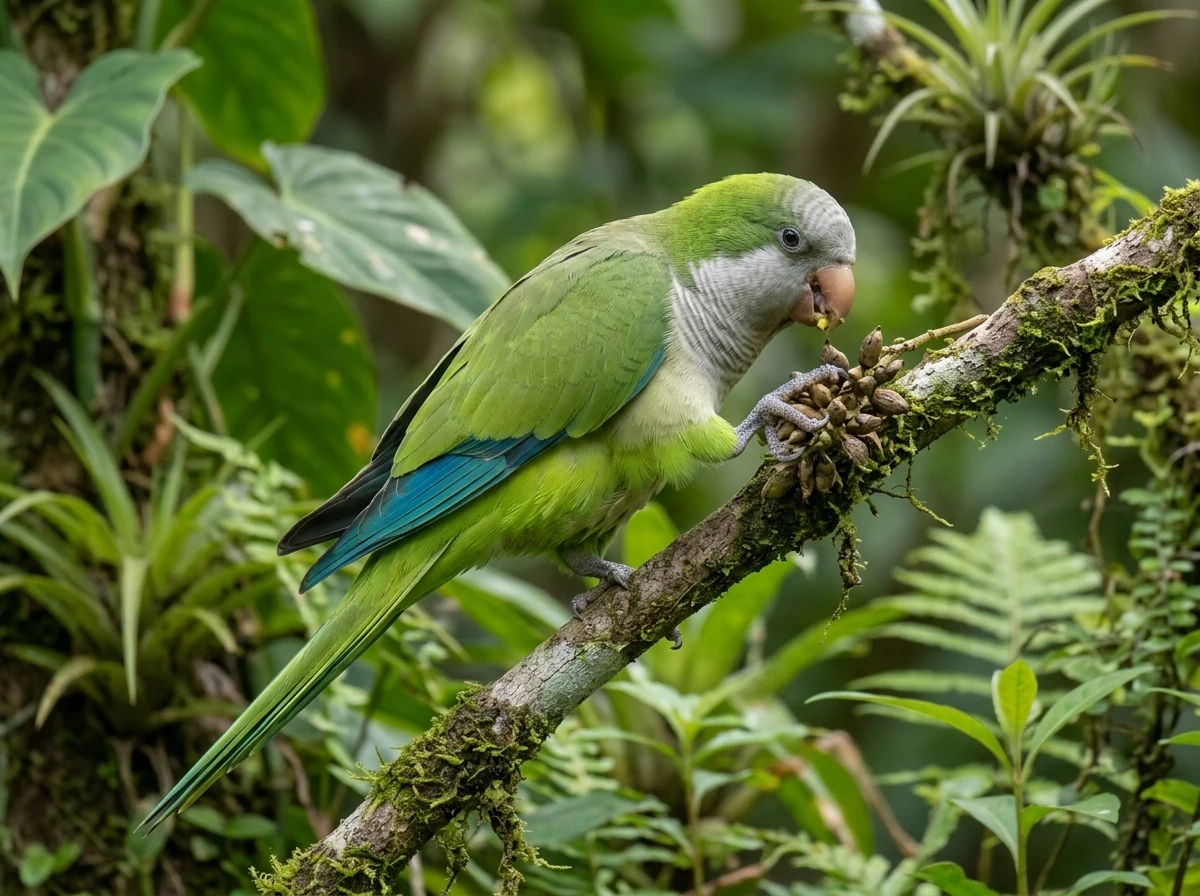
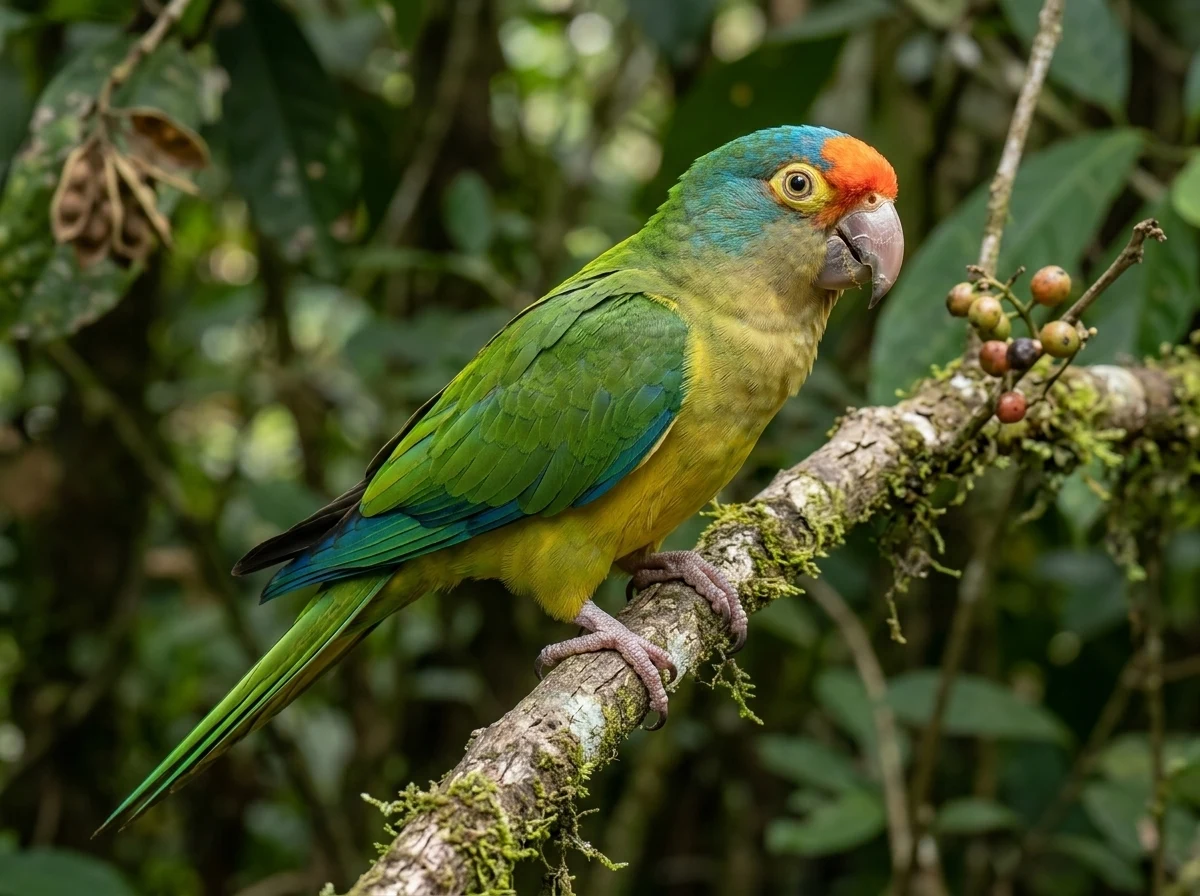
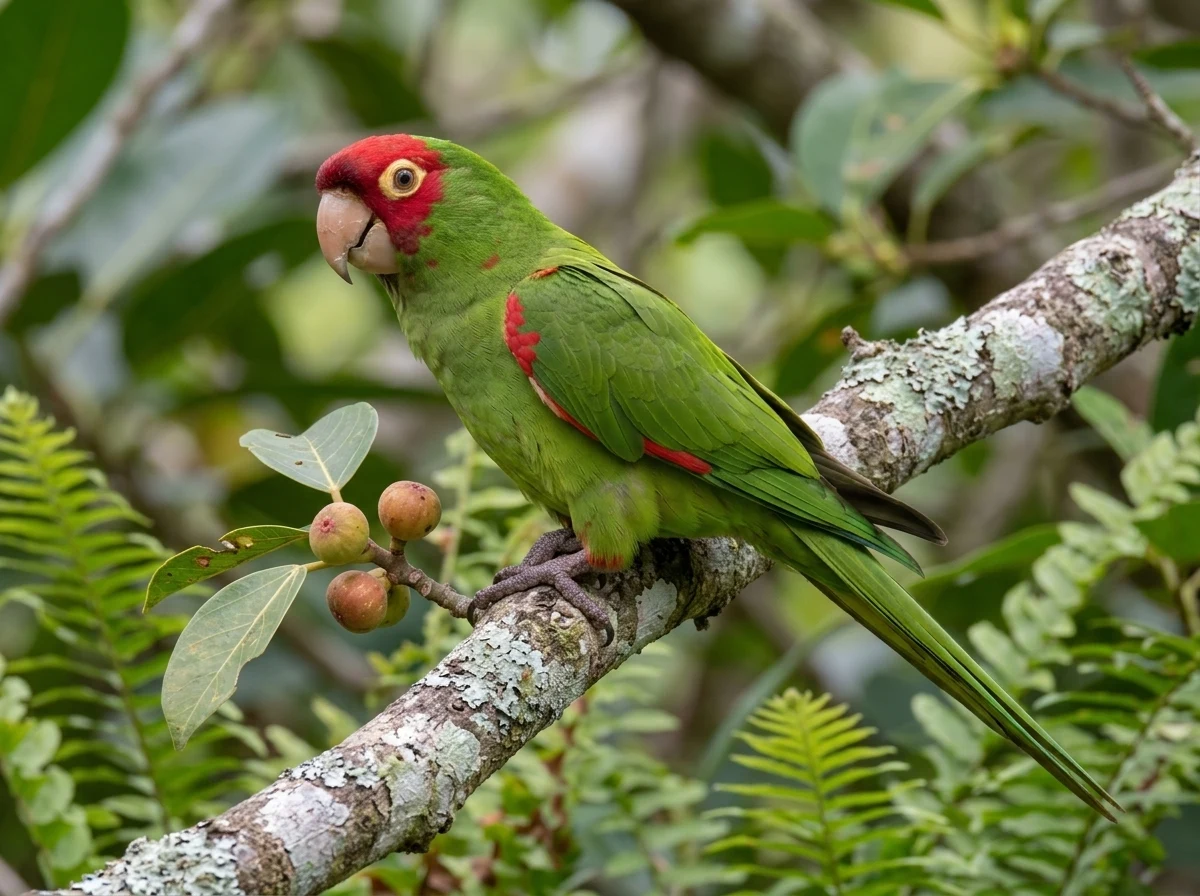
The Monk Parakeet, about 114 grams, has a grayish face and breast and is green elsewhere; it is native to temperate and subtropical South America. It is the only parrot on the island that builds communal stick nests instead of using cavities. Two other introduced parakeets that are increasing are the Orange-fronted Parakeet (Eupsittula canicularis), with an orange forehead, and the Red-masked Parakeet (Psittacara erythrogenys), with a red face.
02
How they arrived: half a century of escapes
Parrots were imported to Puerto Rico as pets especially from the 1950s onward. By 2000, 18 species had been recorded and eight were breeding. White-winged Parakeets were present in small numbers in Luquillo in the 1960s; by 1985 there was a breeding population in Naguabo and about 360 birds in Guaynabo. In San Germán, another population reached about 800 birds by 1995.
Monk Parakeet records began in 1979 in coastal, densely populated areas, mainly San Juan and Ponce. Since then both species have spread: Falcón and Tremblay compiled 2,520 White-winged Parakeet records and described a lag phase followed by exponential growth. Together with the Monk Parakeet, it is one of only two species that appear to be growing exponentially on the island.
03
Why the city works for them
The first reason is geography: escapes happen where people live. Introduced parrots are seen mostly along the coast and in the most densely populated areas, such as metropolitan San Juan. Of the records for the four increasing species, 66% came from urban areas and the rest from forests near them. The same study's climate models point to the north-central part of the island as most suitable for the White-winged Parakeet.
The second is food. Gardens and streets hold ornamental trees that flower and fruit at different times: White-winged Parakeets have been seen eating seeds of the introduced Panama tree (Sterculia apetala) and the native pink trumpet tree (Tabebuia heterophylla), Monk Parakeets eating flower buds of black olive (Bucida buceras), and Orange-fronted Parakeets eating seeds of queen's crape myrtle (Lagerstroemia speciosa). The third is nesting: the most successful species build their own nests and compete less for scarce cavities.
04
Where to see them and how to document them
In the metro area, parakeets are most noticeable early in the morning and at dusk, when flocks move between roosts and feeding trees. The University of Puerto Rico's Río Piedras campus and its surroundings have many public Monk Parakeet observations, and Dorado, Bayamón, and Carolina also have records. Listen before you look: sharp, repeated screeches usually give the flock away.
To make your sighting useful, note species, approximate number, municipality, and behavior (feeding, roosting, building a nest) and upload it to eBird or iNaturalist. That citizen-science data was the basis of the study that measured how these populations grew. Do not feed parakeets or disturb Monk Parakeet nests on poles or palms.
05
Are they a problem? What is known
Introduced parakeets can, in theory, damage crops, affect power lines, transmit diseases, and compete with native birds. But according to Falcón and Tremblay, apart from warnings no studies had documented concrete negative impacts of parrots on Puerto Rican ecosystems or species. In Florida, Monk Parakeet nests on electrical towers have required costly repairs; in Puerto Rico there was no evidence of that.
Their ecological effects are mixed: they eat seeds but also disperse others, such as those of figs (Ficus). Hurricane María in 2017 killed dozens of White-winged Parakeets at a Río Piedras roost, although many flocks survived. Legally, the DNER allows established exotic birds to be trapped only for export and prohibits their sale in the local market.
Linked profiles
Parakeets of the metro area
The most frequent introduced species in San Juan, plus the native parakeet that no longer exists.
Sound archive
Hear its voice
Explore real songs and calls. The spectrogram turns each sound into a visual trace of time and frequency.
XC940017Recording 1 of 3song, call

Play: song, call by Aladdin
Choose another recording
Sound recorded by Aladdin · XC940017 · CC BY-NC-SA 4.0. Visualization by Stichting Xeno-canto voor Natuurgeluiden.
Every recording retains the creator, catalogue number, and license published by Xeno-canto. Metadata via GBIF ↗
01
Why are there parakeets in San Juan?
Because they descend from escaped or released pets that found year-round food in ornamental trees and places to nest. Escapes happen where most people live, so the populations are concentrated along the coast and in the metro area.
02
What parakeets live in Puerto Rico?
All wild parakeets today are introduced. The most common are the White-winged Parakeet and the Monk Parakeet; the Orange-fronted and Red-masked Parakeets are also increasing. The only native parakeet, the Puerto Rican Parakeet, is extinct.
03
What is the White-winged Parakeet?
It is a small South American parakeet (about 70 g), green, with a white-and-yellow wing panel visible in flight. In Puerto Rico it is established and, with the Monk Parakeet, is the island's most successful parrot by population size and range.
04
Do Monk Parakeets cause damage in Puerto Rico?
In Florida their stick nests on electrical towers have caused costly outages, but the Falcón and Tremblay (2018) study found no evidence of that in Puerto Rico. Nor were there studies documenting concrete negative impacts of parrots on the island.
05
Can wild parakeets from Puerto Rico be sold?
Not in the local market. According to the 2018 study, the DNER allows established exotic birds to be trapped only for export and prohibits local sale, although the authors note that illegal online sales are common.
Keep exploring
Connected routes
Sources and review
The evidence is one link away.
These sources support the editorial scope of this guide. Bird profiles also retain their own taxonomy, occurrence, and conservation references.
Reviewed:
01↗02↗03↗
PeerJ (Falcón & Tremblay 2018), via PubMed Central
From the cage to the wild: introductions of Psittaciformes to Puerto Rico
Inventory of 46 psittacines, invasion stage per species, eBird trends, history of White-winged and Monk Parakeets, macaws in San Juan and Orocovis, and Hurricane María effects.Sociedad Ornitológica Puertorriqueña
Official bird list
Local names, occurrence categories, and the public summary of 17 endemics.Xeno-canto Foundation / GBIF
Xeno-canto recordings published through GBIF
Metadata, authorship, licenses, and catalogue records for field recordings used by the atlas.The atlas continues